The Agentic Evolution: AWS Unveils Major Bedrock Enhancements at NYC Summit
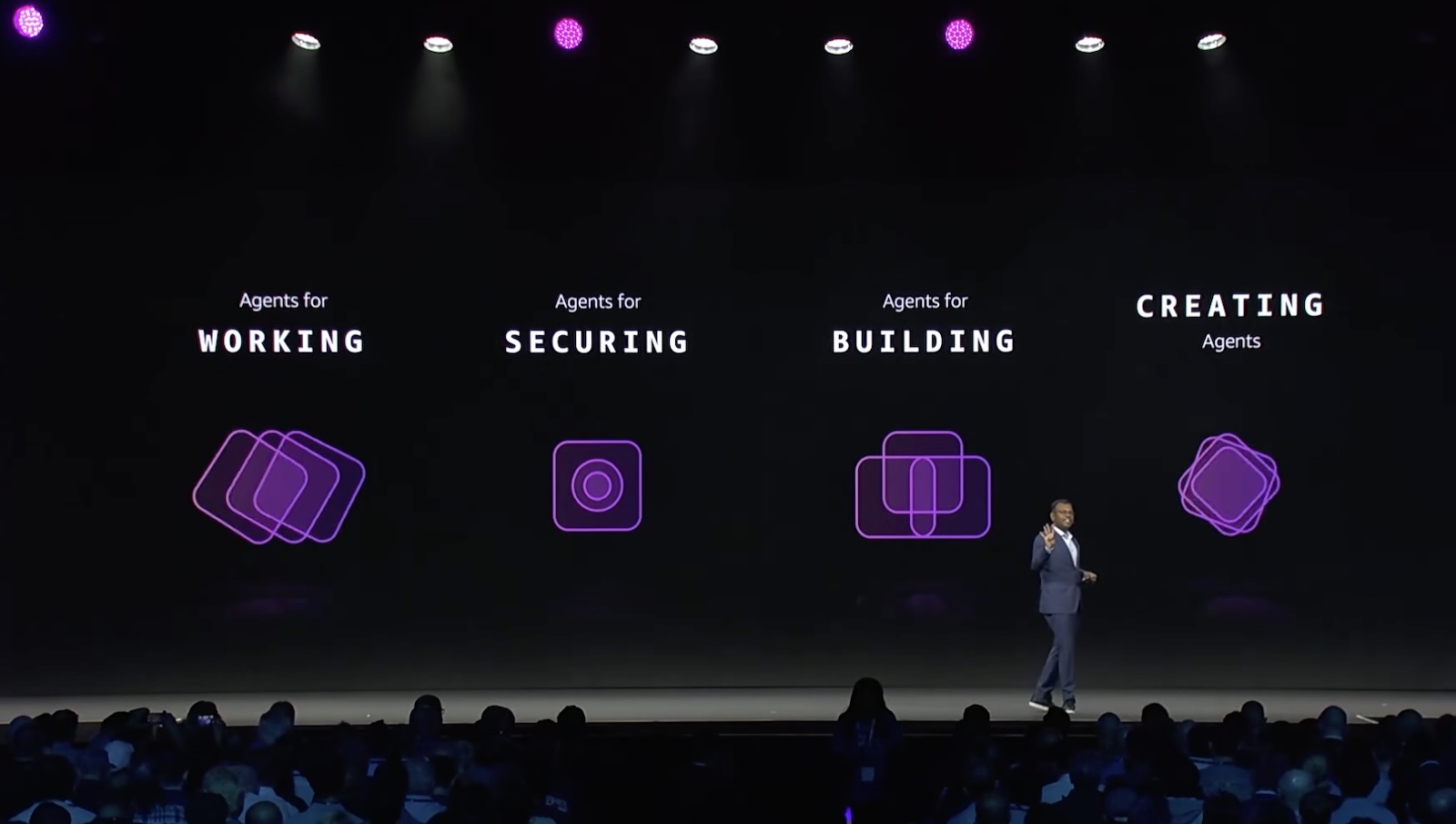
NEW YORK CITY — The landscape of enterprise artificial intelligence shifted significantly this week as Amazon Web Services (AWS) took center stage at the Javits Center for the annual AWS Summit in New York. Amidst a high-energy keynote delivered by Swami Sivasubramanian, the newly appointed VP of Agentic AI, the cloud giant signaled a strategic pivot: the industry is moving past simple "chatbots" and into an era of "Agentic AI"—systems capable of independent reasoning, complex problem-solving, and continuous self-correction.
The headline announcement—a comprehensive suite of upgrades to Amazon Bedrock AgentCore—serves as the cornerstone of this evolution, promising to bridge the gap between experimental AI prototypes and mission-critical production systems.
Main Facts: The Rise of Amazon Bedrock AgentCore
The central theme of this year’s summit was the maturation of autonomous agents. AWS is positioning Bedrock AgentCore not merely as a development tool, but as an operational framework designed to handle the messy, unpredictable nature of real-world business environments.
The new capabilities announced by Sivasubramanian focus on three critical pillars:
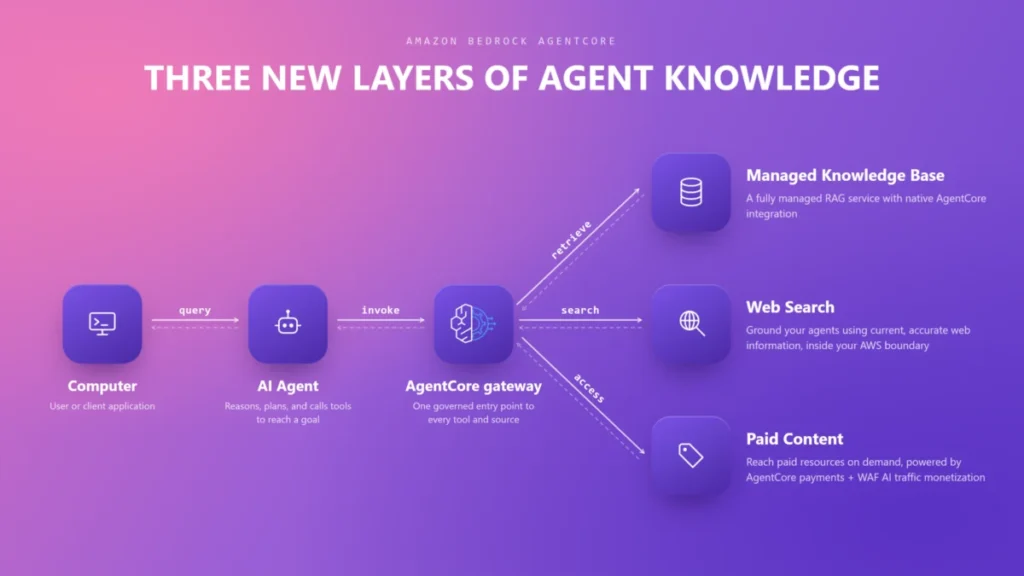
- Contextual Expansion: Agents can now seamlessly integrate organizational, web-based, and paid data sources. This allows AI to operate with a holistic view of the company’s internal knowledge base.
- Operational Observability: New diagnostic tools allow teams to identify and remediate failures in production environments, effectively bringing DevOps-style monitoring to AI workflows.
- Scalable Governance: As AI agents become more autonomous, the risk of "hallucination" or unauthorized actions grows. AWS has introduced robust, scalable controls designed to manage these risks as agent capabilities expand.
These updates represent a significant departure from standard Large Language Model (LLM) implementations, shifting the focus toward reliability and business-process integration.
Chronology: A Morning of Innovation
The summit keynote served as the formal launchpad for these technologies, setting a clear trajectory for AWS’s AI strategy throughout the remainder of 2026.
- 09:00 AM EST: The doors opened to the main hall, with a packed audience awaiting updates on the "Agentic AI" roadmap.
- 09:45 AM EST: Swami Sivasubramanian took the stage, framing the current AI landscape as one transitioning from "generative" to "agentic." He articulated the vision that AI should not just talk, but act on behalf of the user.
- 10:15 AM EST: The official unveiling of the Bedrock AgentCore enhancements. The presentation featured live demonstrations showing agents navigating complex corporate policy documents to solve a mock production error.
- 11:00 AM EST: Technical breakout sessions commenced, where developers were given hands-on access to the new "Knowledge Layers" architecture, which allows for dynamic, real-time data ingestion for agents.
- 01:00 PM EST: Press briefings provided additional color on the security and governance frameworks, emphasizing that these tools are built to comply with existing enterprise security protocols.
Supporting Data: Why "Agentic" Matters Now
The move toward agentic systems is driven by the growing frustration of enterprise developers with "static" AI. According to internal AWS metrics discussed during the summit, over 65% of enterprise AI projects fail to move from pilot to production due to two primary bottlenecks: lack of domain-specific context and difficulty in troubleshooting agent behavior.
The new AgentCore features address these directly:
- Knowledge Integration: By allowing agents to query paid knowledge sources and internal wikis simultaneously, AWS claims a 40% improvement in "task accuracy" for agents handling complex support tickets.
- Continuous Learning: The new observability suite provides a feedback loop. When an agent makes a mistake, the system logs the "reasoning path," allowing developers to refine the underlying prompts and data sources without retraining the entire model.
- Scale: The governance framework supports multi-agent orchestration, enabling teams to deploy hundreds of agents that share a centralized security policy, ensuring consistent behavior across diverse business units.
Official Responses and Strategic Vision
In his keynote, Sivasubramanian emphasized that AWS is not just building models, but building the infrastructure for intelligence.
"Our goal is to move beyond the excitement of generative AI and focus on the utility of agentic AI," Sivasubramanian stated. "We are providing the scaffolding—the guardrails, the knowledge layers, and the observability—that allows companies to trust these agents with real-world, high-stakes tasks."

When pressed by industry analysts on the security implications of autonomous agents, AWS representatives were quick to highlight the new "Governance-at-Scale" initiative. This feature allows administrators to set granular permissions at the function level. If an agent is tasked with a coding update, it can be restricted to specific repositories, and if it exceeds its "authority," the system automatically triggers a human-in-the-loop review.
"We aren’t removing the human," a spokesperson noted. "We are empowering the human to manage a workforce of digital agents."
Implications: The Future of Enterprise Workflow
The implications of the Bedrock AgentCore update are far-reaching. By standardizing how agents connect to data and how they are governed, AWS is effectively commoditizing the "AI Architect" role.
Impact on Developers
For the software developer, the barrier to entry for building complex, multi-step agents has been lowered. Previously, building an agent that could read a ticket, query a database, and execute a fix required custom middleware. Now, that logic is baked into the Bedrock platform, significantly shortening development cycles.
Impact on Corporate Security
Security teams will view these updates with cautious optimism. The ability to audit agent reasoning in production is a "holy grail" for security professionals who have long worried about the "black box" nature of LLMs. With the new observability tools, companies can finally document the "why" behind an AI’s decision, which is critical for audit and compliance purposes.
The Competitive Landscape
This move puts direct pressure on competitors like Microsoft (with its Copilot Studio) and Google (with its Vertex AI Agent Builder). AWS is betting that by focusing on operational maturity—the ability to govern, fix, and scale agents—they will win over the Fortune 500, which has been historically slower to adopt AI due to reliability concerns.
Conclusion: Looking Ahead
The AWS Summit in New York has clarified the next phase of the AI revolution. We are entering a period where the novelty of a chatbot responding to a prompt is being replaced by the utility of a digital worker executing a business process.
As teams begin to integrate these new Bedrock capabilities, the focus will likely shift from what AI can do to how well it can do it within the constraints of a regulated enterprise. AWS has provided the tools, but the onus now shifts to developers and business leaders to define the boundaries of these autonomous agents.
The era of the "Agentic Enterprise" has officially begun, and if the buzz on the show floor is any indication, the race to build the most reliable, capable, and well-governed agent is only just starting. For those looking to keep pace, the documentation for these new Bedrock features is already live, and the industry is watching closely to see which organizations can turn these tools into tangible competitive advantages.