As the artificial intelligence landscape accelerates past simple conversational prompting, professionals across marketing, software development, and enterprise operations find themselves navigating an unprecedented wave of technological advancements. From hidden keystroke features embedded within everyday AI tools to massive foundational model releases by Google and OpenAI, the operational paradigm of digital work is shifting.
This comprehensive report breaks down the most critical developments in the AI ecosystem, examining hidden tool functionalities, strategies for avoiding "intellectual obesity" in content creation, and major industry updates spanning new model architectures, conversational Workspace integration, and advanced cybersecurity thresholds.
Main Facts: The Current AI Landscape
The rapid democratization of artificial intelligence has moved the industry past the initial novelty phase. Organizations are no longer asking if they can use AI, but how to maximize its efficiency without sacrificing quality.
Key developments shaping the current ecosystem include:
Hidden UI Shortcuts: Standard keyboard characters—specifically the @ and / keys—unlock deep, often undocumented utility menus across major platforms like ChatGPT, Claude, and Gemini.
The Quality Crisis in Content: As the marginal cost of generating average text, reports, and digital media approaches zero, volume-based strategies are giving way to advanced, high-context iterative feedback loops.
Google’s Ecosystem Expansion: Google has rolled out Lyria 3.5 for advanced music generation, integrated Gemini Audio across Gmail, Docs, and Keep via conversational "Live" features, and introduced Gemini 3.8 Flash alongside a specialized cybersecurity model.
OpenAI’s Frontier Advancement: OpenAI has deployed GPT-6 Astra, marking a historic milestone as its first widely distributed model to officially cross the "Critical" cybersecurity threshold under its internal Preparedness Framework.
Chronology of Recent Major Releases
The pace of deployment across the technology sector has reached a relentless cadence. A chronological view of recent developments highlights how quickly software platforms are evolving:
Early Week: Productivity experts began highlighting universal command shortcuts—such as typing @ or /—to unearth advanced, hidden feature sets in conversational AI interfaces.
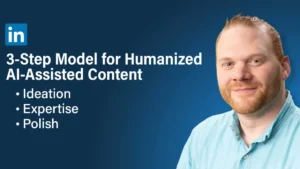
Mid-Week: Industry strategists, including AI consultant Austin Marchese, began sounding the alarm on "intellectual obesity," urging marketers to pivot from volume-heavy content generation to rigorous internal simulation and virtual focus groups.
Google Product Drops: Google officially expanded its generative capabilities, releasing Lyria 3.5 for high-fidelity music creation, rolling out conversational voice models for Workspace (Gmail, Docs, and Keep), and launching Gemini 3.8 Flash alongside its security-focused counterpart, Gemini 3.8 Flash Cyber.
OpenAI Milestone: OpenAI officially unveiled GPT-6 Astra, setting a new benchmark for agentic reasoning, multimodal flexibility, and advanced cybersecurity analysis, while initiating rigorous monitoring protocols for adversarial threats.
Supporting Data and Technical Breakdown
To understand the practical impact of these changes, it is necessary to examine the technical mechanics of both user-level tricks and enterprise-grade infrastructure.
The Keystroke Trick: Unlocking Hidden Menus
Most users interact with AI platforms through surface-level prompt boxes, unaware of underlying command trees. Typing specific characters activates powerful context-switching engines:
+------------------+-------------------------------------------------------------+
| Character Input  | Primary Functions & Features Triggered                      |
+------------------+-------------------------------------------------------------+
| @ (At Symbol)    | - File Attachments                                          |
|                  | - Web Search Triggers                                       |
|                  | - Deep Research Activation                                  |
|                  | - Connected Plugins & Custom Skills                         |
+------------------+-------------------------------------------------------------+
| / (Forward Slash)| - Branching Current Chat Sessions                           |
|                  | - Mid-Conversation Model Switching                          |
|                  | - Project Assignment & Folder Sorting                       |
|                  | - Direct Access to Personalization Settings                 |
+------------------+-------------------------------------------------------------+
These shortcuts are not exclusive to OpenAI’s ecosystem; competitors like Anthropic (Claude) and Google (Gemini) utilize parallel shortcut architectures to streamline user navigation.
Model Architecture and Capabilities Overview
Recent model iterations demonstrate a clear industry focus on specialized reasoning, real-time voice integration, and automated code-patching:
Gemini 3.8 Flash & Flash Cyber: Designed to handle complex coding assignments and autonomous agent workflows without introducing price increases over previous iterations. The specialized Cyber variant introduces automated vulnerability scanning and patching for authorized defenders.
Lyria 3.5: Enhances vocal expressiveness, arrangement depth, and genre selection, transforming the tool from a novelty sound generator into a viable production asset for commercial jingles, backing tracks, and ringtones.
Workspace Live Models (Gmail, Docs, Keep): Leverages real-time audio models to parse unstructured conversational input, transforming spoken brain-dumps into organized project folders, contextual draft documents, and targeted inbox summaries.
GPT-6 Astra: Represents a quantum leap in reasoning capacity, featuring enhanced resilience against jailbreaks and prompt-injection attacks while maintaining sophisticated agentic execution capabilities in simulated computer environments.
Official Responses and Industry Perspectives
The rapid escalation of model capabilities has elicited mixed reactions from enterprise leaders, security researchers, and content strategists.
Combating "Intellectual Obesity"
Addressing the influx of automated content, AI strategist Austin Marchese warns that the temptation to generate endless volumes of text creates a dangerous corporate blind spot. When the cost of production drops to zero, sheer volume ceases to be a competitive differentiator.
Instead, industry leaders are adopting advanced feedback loops. By prompting AI models to simulate specific personas—such as a critical boss, a skeptical buyer, or a hyper-niche target audience—creators can pressure-test their work in a virtual focus group before releasing it into the wild. This iterative refinement elevates output quality rather than merely inflating content quantities.
Security and Safety Concerns: The GPT-6 Astra Threshold
OpenAI’s deployment of GPT-6 Astra has triggered intense discussions regarding safety governance. Reaching the "Critical" cybersecurity threshold under the company’s Preparedness Framework indicates that Astra possesses capabilities sophisticated enough to autonomously identify, exploit, and patch complex software vulnerabilities at scale.
In its official deployment safety documentation, OpenAI acknowledged the dual-edged nature of this advancement:
"While Astra significantly strengthens defensive posture, alignment, and prompt-injection robustness in realistic computing environments, its advanced capabilities can be considerably harder to monitor under adversarial conditions, highlighting a growing industry-wide challenge as autonomous agents grow more powerful."
Concurrently, Google’s release of Gemini 3.8 Flash Cyber under the Fairwind Program reflects a concerted effort to place similar defensive-AI technologies directly into the hands of vetted cybersecurity professionals to preempt malicious exploits.
Implications for Marketers, Developers, and Enterprises
The convergence of hidden software shortcuts, advanced content methodologies, and next-generation foundational models carries profound implications for the future of digital labor.
1. The Shift from Busywork to Strategic Architecture
Marketers and knowledge workers who treat AI merely as a speed-enhancement tool risk falling behind. True productivity gains emerge when professionals transition from executing isolated tasks to building comprehensive, automated systems. By establishing internal feedback loops, utilizing voice-driven Workspace tools to reduce manual sorting, and embedding structured workflows, teams can reclaim valuable cognitive bandwidth for high-level strategy and human-centric decision-making.
2. Redefining Quality in a Post-Scarcity Content Era
As generative text, audio, and visual tools reach parity across consumer platforms, raw output is commoditized. Organizations must leverage AI not to produce more work, but to achieve higher precision. Employing virtual focus groups and iterative prompt refinement ensures that human oversight remains the primary driver of unique brand voice and strategic differentiation.
3. Heightened Vigilance in Enterprise Security
With models like GPT-6 Astra and Gemini Flash Cyber crossing into advanced vulnerability discovery, enterprise IT and security departments must adapt. Automated threat detection and patching will become standard operating procedure, requiring organizations to update their security posture to defend against increasingly autonomous, AI-driven cyber threats.
Conclusion
As the AI ecosystem continues its breakneck evolution, staying ahead requires more than passive adoption. Whether it is uncovering hidden interface shortcuts like @ and /, restructuring content strategies to avoid intellectual bloat, or integrating powerful new audio and reasoning models into daily workflows, professionals who master the systemic integration of AI will dictate the future of their respective industries.