The AI Revolution in Post-Production: How Creators are Slashing Editing Time by 90%
In the rapidly evolving landscape of digital marketing, video content has emerged as the undisputed leader in audience engagement. However, for many entrepreneurs and small marketing teams, the barrier to entry has remained prohibitively high due to the sheer volume of time and capital required for high-quality production. Recent breakthroughs in Artificial Intelligence (AI) are now dismantling these barriers.
According to industry expert Greg Preece, speaking on the AI Explored podcast with Michael Stelzner, the integration of AI into the video editing workflow is no longer a luxury—it is a competitive necessity. By shifting the focus from AI as a mere visual generator to AI as a workflow orchestrator, creators are reporting a staggering 90% reduction in production time, turning 20-hour editing marathons into streamlined two-hour tasks.
Main Facts: The Strategic Shift in AI Video Production
The current discourse surrounding AI in video often centers on "synthetic media"—the generation of surreal landscapes or digital avatars from text prompts. While visually impressive, Preece argues that this focus misses the true economic potential of the technology. The highest return on investment (ROI) for AI in the current market lies in the automation of "invisible" tasks: the tedious, manual labor of cutting, correcting, and optimizing footage.
Three primary pillars define the benefits of this AI-integrated approach:
- Exponential Speed: The transition from a 20-hour edit to a 2-hour edit allows for a high-frequency publishing schedule that was previously reserved for large media houses.
- Cost Democratization: By reducing the need for expensive external post-production houses, small businesses can maintain professional standards in-house, significantly lowering the "cost-per-clip" and improving the bottom line.
- Audience Feedback Loops: High-speed production enables creators to test more content styles. This increased volume leads to faster data collection, allowing brands to pivot their strategies based on real-time audience responses rather than months of guesswork.
Chronology: The 6-Stage AI-Enabled Editing Workflow
To achieve maximum efficiency, Preece outlines a specific, chronological progression. This workflow moves from the foundational structure of the story to the final "polishing" and distribution phases.
Stage 1: The Rough Cut
The process begins with the "subtractive" phase. After recording, the raw footage is often littered with "dead air," false starts, and redundant takes. Traditionally, an editor would have to watch the entire recording in real-time to identify these moments. AI now automates this by transcribing the audio and identifying silences or repeated phrases, allowing for a "paper edit" where deleting text automatically deletes the corresponding video frames.
Stage 2: Correcting Performance Errors
Once the structure is set, the creator must address mistakes that survived the rough cut. In the pre-AI era, a mispronounced word or a factual error necessitated a "reshoot," which involved re-setting lights, cameras, and microphones. AI now allows for "overdubbing," where a cloned version of the creator’s voice can be inserted to fix the error, with the AI simultaneously adjusting the speaker’s lip movements to match the new audio.
Stage 3: Strategic B-Roll Integration
With the "A-roll" (the primary footage) polished, supplemental footage—known as B-roll—is added. B-roll serves to illustrate complex points and hide "jump cuts" where sections of the video were removed. AI tools can now generate custom B-roll on demand, eliminating the need for expensive stock footage subscriptions or time-consuming location shoots.

Stage 4: Visual and Aesthetic Enhancements
This stage focuses on accessibility and engagement. It includes the generation of subtitles—essential for mobile users who view videos on "mute"—and the addition of lower-thirds (name tags) and motion graphics. AI streamlines the "tracking" of these elements, ensuring they move naturally within the frame.
Stage 5: Audio Mastering and Soundscapes
Audio quality is often cited as more critical than video quality; viewers will tolerate grainy footage but will quickly abandon a video with "thin" or noisy audio. This stage involves using AI to remove background hums and "enhance" the vocal profile to studio-grade quality, followed by the generation of unique, copyright-free background music.
Stage 6: Multi-Platform Repurposing
The final stage occurs after the primary video is finished. The long-form content is fed into AI engines that identify "viral-worthy" moments, automatically cropping the video into vertical formats for TikTok, Instagram Reels, and YouTube Shorts.
Supporting Data: The Technical Arsenal of the Modern Editor
To execute this six-stage workflow, Preece recommends a specific "tool stack" that prioritizes interoperability and ease of use.
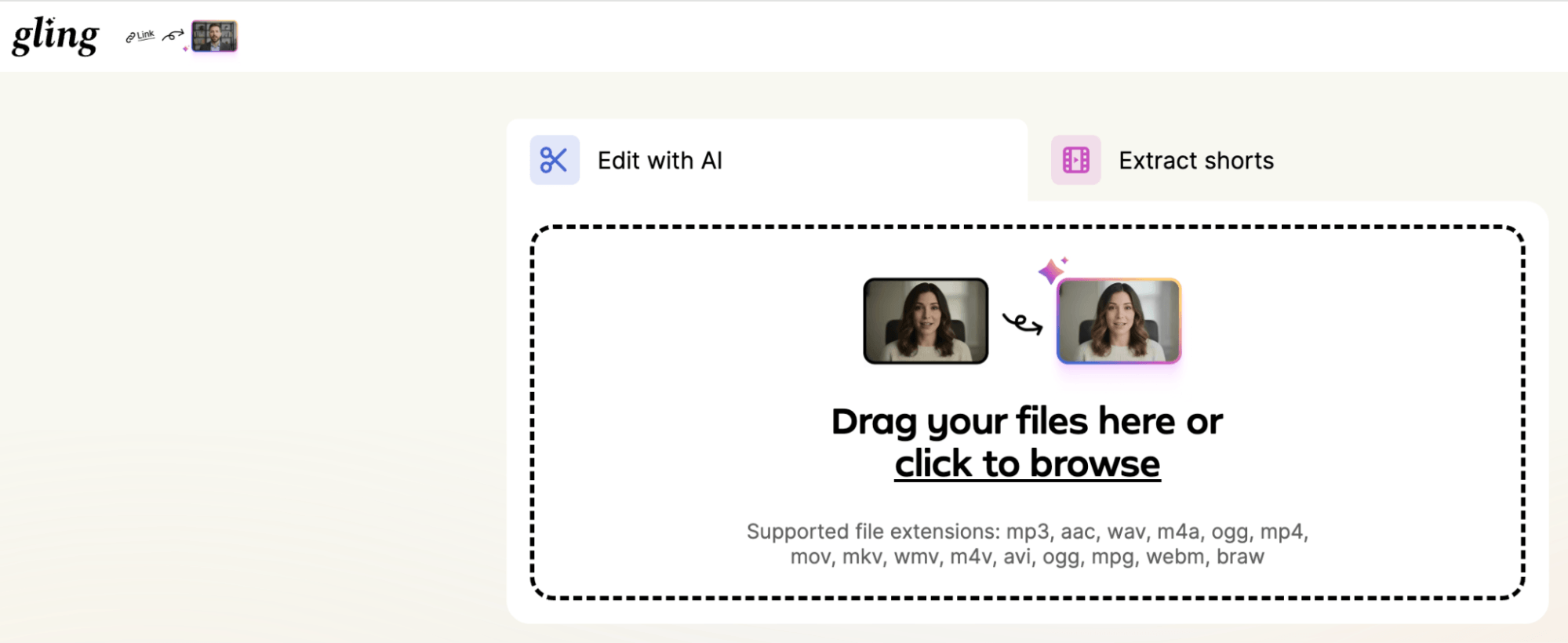
- Gling (Rough Cuts): This tool has become a cornerstone for creators. It processes raw files in approximately three minutes, identifying and removing "filler words" and silences. Crucially, Gling offers non-destructive exporting, meaning the AI’s decisions can be fine-tuned in professional software like Adobe Premiere Pro.
- Descript (Mistake Correction): Descript’s "Underdub" and lip-sync features have revolutionized how creators handle errors. By using a "voice clone," creators can rewrite their script after the video has been filmed, and the AI will "re-perform" the line with perfect visual and auditory fidelity.
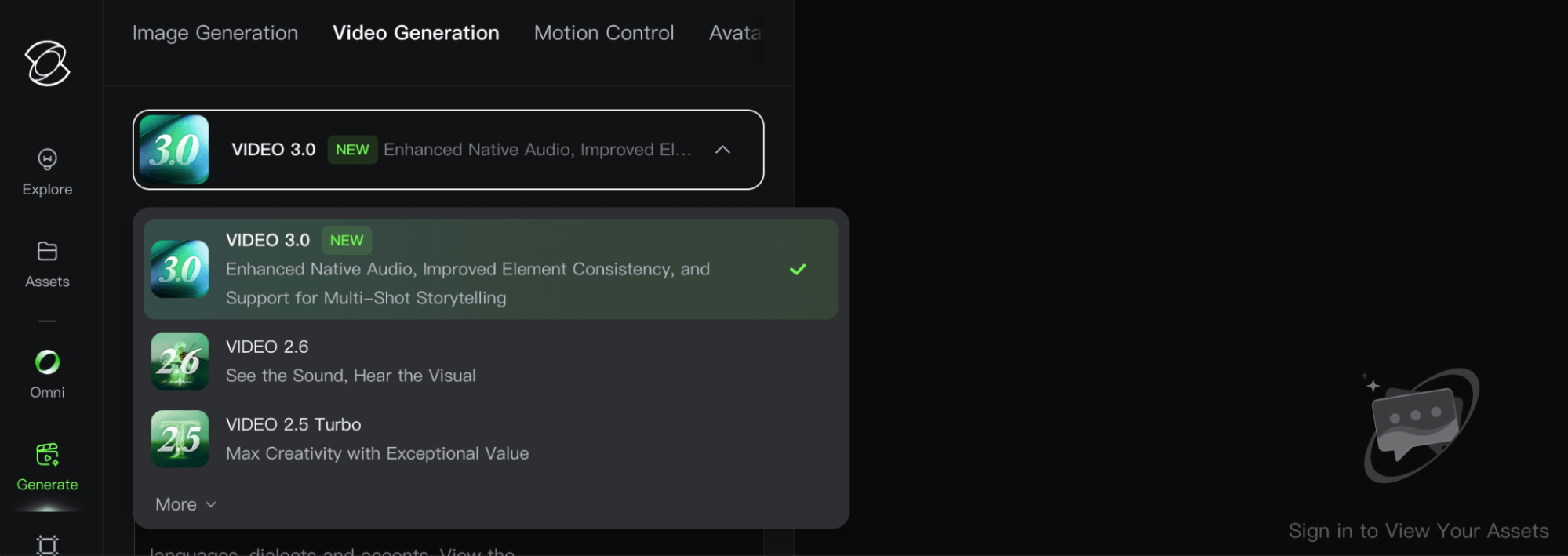
- Kling (AI B-Roll): While the market is crowded with generators like OpenAI’s Sora, Preece highlights Kling for its superior price-to-performance ratio. Its "image-to-video" mode allows creators to upload a still photo of themselves or a specific environment and animate it, ensuring visual consistency that "text-to-video" often lacks.
- Adobe Podcast (Audio Optimization): This free (or low-cost) tool uses neural networks to "reconstruct" audio. It can take a recording made on a smartphone in a noisy room and make it sound as though it were captured in a soundproofed studio with a $1,000 microphone.
- ElevenLabs (Music and SFX): Beyond its famous voice-cloning capabilities, ElevenLabs now allows for the generation of custom sound effects and ambient tracks. Because the music is generated from scratch, it bypasses the "Copyright ID" strikes that often plague creators using popular songs.
- OpusClip (Repurposing): This tool leverages Large Language Models (LLMs) to understand the context of a video. It doesn’t just cut clips randomly; it identifies the "hook," the "build-up," and the "payoff" of a story, ensuring that the repurposed short-form content is optimized for social media algorithms.
Official Responses and Expert Perspectives: A Mindset Shift
The transition to AI-assisted editing is as much a psychological shift as a technical one. Greg Preece emphasizes that the primary goal of an edit is to "serve the message."
"An edit’s only job is to help the viewer receive what you’re trying to communicate, not to impress them with production value," Preece notes. He warns against the "over-editing" trap—the tendency to add flashy effects that actually distract from the core information.
Michael Stelzner, founder of Social Media Examiner, adds that this technology is particularly transformative for the "solopreneur." The ability to produce high-end content without a five-person crew levels the playing field, allowing experts to focus on their unique insights rather than the mechanics of a timeline.
Regarding the displacement of human editors, Preece offers a nuanced view. He suggests that AI and human editors are not mutually exclusive. Instead, AI handles the "low-value" tasks (cutting silences, cleaning audio), allowing human editors to focus on "high-value" creative decisions, such as pacing, emotional resonance, and advanced storytelling.

Implications: The Future of Content and the Death of the "Polish" Barrier
The widespread adoption of these AI workflows carries significant implications for the future of digital media:
1. The End of the "Imperfect" Excuse
Historically, many businesses avoided video because they lacked professional gear or editing skills. With AI "fixing" audio and generating B-roll, the "quality gap" between a novice and a professional is narrowing. The focus is shifting from how a video looks to what the video says.
2. Hyper-Personalization at Scale
As editing time drops by 90%, brands can afford to create "versioned" content. A company could theoretically create 10 different versions of a product video, each tailored to a specific niche audience, without increasing their production budget tenfold.
3. The Rise of "Synthetic Authenticity"
The use of voice cloning and lip-syncing (Stage 2) introduces ethical and brand-trust considerations. While these tools are used for efficiency today, the industry will eventually need to grapple with the transparency of "synthetic" corrections. For now, the consensus among creators is that as long as the information remains accurate, the "correction" is a valid tool for clarity.
4. Economic Pressure on Traditional Agencies
Post-production houses that rely on billing for "manual hours" will face significant pressure to adopt these tools or lower their rates. The value proposition is shifting from "we have the tools to edit" to "we have the creative vision to direct the AI."
Conclusion
The integration of AI into the video editing workflow represents a paradigm shift in how digital stories are told. By automating the mechanical aspects of production, tools like Gling, Descript, and Kling are returning the most valuable asset to creators: time. As Greg Preece demonstrated, reclaiming 18 hours of a 20-hour work week doesn’t just make life easier—it enables a level of creative output and business growth that was previously impossible. For the modern marketer, the question is no longer if they should use AI in their workflow, but how quickly they can master the stack.