The Anatomy of Retention: How Veteran Strategist Adam Ivy’s ‘BINGE’ Method is Redefining Long-Form YouTube Success
In the high-stakes ecosystem of digital video creation, the conventional wisdom has long been anchored to vanity metrics. Creators and digital marketers have historically obsessed over subscriber counts and gross view totals, operating under the assumption that mass market appeal is the primary prerequisite for platform authority.
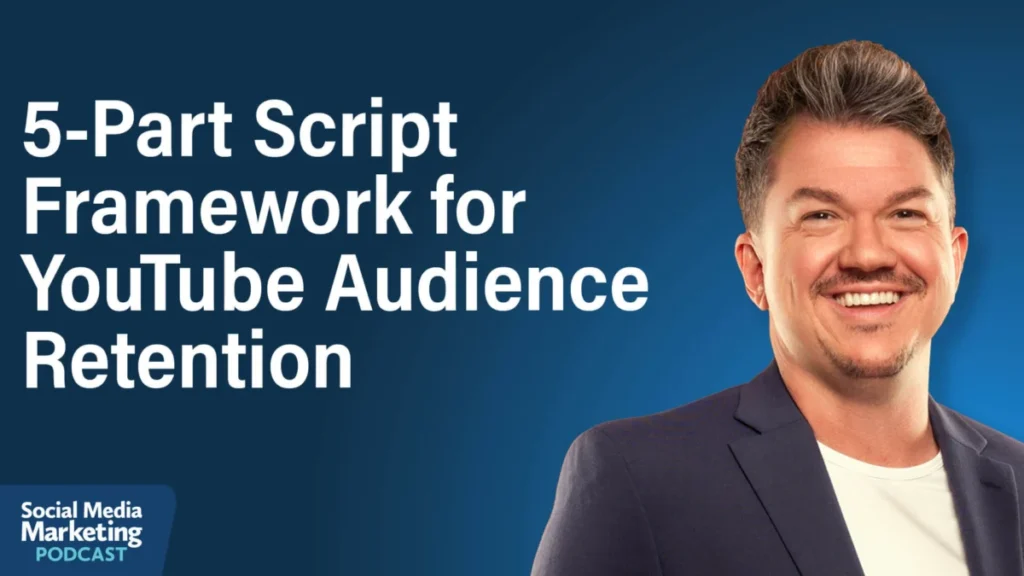
However, veteran YouTube strategist Adam Ivy—who has successfully architected two distinct seven-figure businesses using purely organic platform strategies—argues that this approach is fundamentally flawed. According to Ivy, the metric that truly moves the needle for business-minded creators is not how many people click on a video, but rather how long they stay.
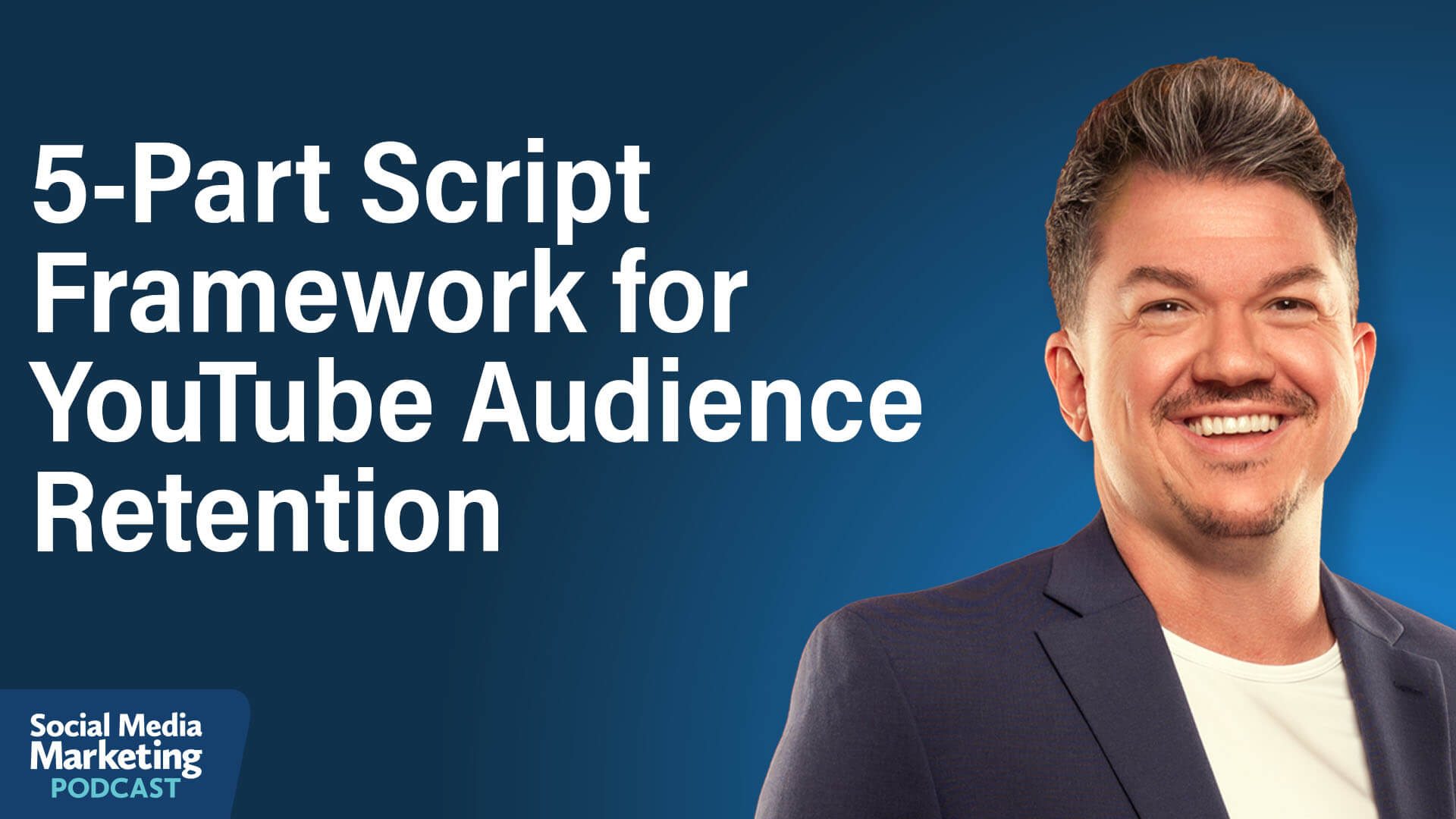
In an extensive breakdown co-created with Michael Stelzner, Ivy reveals that average view duration (retention) dictates algorithmic distribution across browse, suggested, and search feeds. Furthermore, this distribution compounds over time. To solve the riddle of audience drop-off, Ivy has formulated the BINGE method—a five-part scripting framework designed to maximize retention, spark community engagement, and systematically convert passive viewers into high-ticket clients.
Main Facts: The Shift From Vending Machine Dopamine to Deep Attention
The core philosophy underpinning Ivy’s strategy rests on a fundamental psychological divide: the difference between distracted attention and focused attention.
- The Short-Form Trap: Short-form platforms like TikTok or Instagram Reels offer what Ivy equates to eating every meal from a vending machine—providing quick, immediate bursts of dopamine that are instantly forgotten. After an hour of scrolling, most users struggle to name a single creator they watched.
- The YouTube Renaissance: Conversely, long-form YouTube operates like a four-course meal. Data indicates that TV viewership on YouTube has surged by more than 60% over the past year. Audiences increasingly treat the platform like Netflix or HBO, sitting down to give creators their full, undivided attention.
- The Compounding Asset: Demonstrating the power of long-term retention, Ivy retired his primary YouTube channel two years ago. In the 24 months since his last upload, the channel has organically generated over 260,000 views, produced roughly $1,500 in AdSense revenue, and consistently delivered inbound inquiries for high-ticket coaching programs he no longer actively offers.
- The BINGE Framework: To capture and sustain this focused attention, Ivy developed the BINGE scripting methodology, anchored within his overarching ARC model: Attract, Retain, Convert.
Chronology: The Evolution of Attention Spans and the Birth of the BINGE Method
To understand why traditional scripting structures fail today, one must examine how audience behavior has shifted over the past decade.
2016 Math vs. Modern Attention Spans
A decade ago, creators were routinely advised that they had up to 30 seconds to capture a viewer’s attention. Ivy refers to this outdated benchmark as "2016 math." In today’s hyper-accelerated digital landscape, attention spans have compressed dramatically. Creators now have less than eight seconds to make an impact before a user’s thumb gravitates toward the suggested videos sidebar.
The 16-Year Refinement Process
The BINGE method was not born overnight. It is the synthesized result of 16 years of trial, error, and meticulous data analysis on Ivy’s own channels. By analyzing retention graphs to pinpoint exact moments viewers abandoned his content versus moments they stayed, Ivy isolated the structural patterns that mirror classical screenplay construction: alternating precisely between tension and resolution to keep the audience locked into the narrative arc.
Supporting Data: Why Long-Form Video Accelerates the Sales Cycle
The correlation between high YouTube retention and business revenue is not merely anecdotal; it is backed by profound behavioral shifts and foundational consumer research.
The Power of Familiarity in High-Ticket Sales
During his active consulting years, Ivy maintained an astounding 83% close rate on sales calls for nearly three years. The secret to this conversion rate lay entirely in pre-education. Because prospective clients had already spent significant time watching his long-form videos, they were thoroughly familiar with his delivery style, personality, and expertise before the sales call ever began. In one notable instance, a client named Dave watched just eight minutes of a single video before wiring tens of thousands of dollars—transforming the sales call from a pitch meeting into a simple logistical discussion.
Google’s 7-11-4 Rule in Action
Google’s landmark 7-11-4 research establishes that modern consumers typically require 7 hours of content, 11 touchpoints, and interactions across 4 platforms before developing enough trust in a brand to make a purchasing decision.
A handful of well-crafted, high-retention long-form YouTube videos can effortlessly cover a significant portion of those required content hours. This drastically compresses the traditional sales funnel compared to the arduous task of producing hundreds of fragmented short-form clips.
Official Breakdown: The Five Pillars of the BINGE Method
Ivy’s BINGE framework breaks down into five distinct structural elements designed to systematically eliminate drop-off points throughout a video script.
[B]anger Hook ----> [I]ntrigue ----> [N]udge Forward ----> [G]enerate Engagement ----> [E]nd in Momentum1. Banger Hook & Build Intrigue (The "B" and "I")
The Banger Hook (or bombshell hook) must land within the first eight seconds. It aims to provoke a visceral emotional reaction—whether happiness, grief, anger, fear, or FOMO. Crucially, Ivy emphasizes that creators must speak to the feeling of a problem, not just the logical facts.
- The Old Way: "In this video, I’m going to teach you five ways to get unstuck on YouTube."
- The BINGE Way: "So you maxed out a credit card on that fancy camera. You just spent six hours this week that you didn’t have doing a video that nobody’s watching. You did that last week and three weeks before that. And unfortunately, it’s your fault. You just don’t know it yet."
Following the emotional trigger, the Build Intrigue phase acts as hook part two. It teases the overarching transformation without giving away spoilers, smoothly transitioning the viewer into the first talking point without any visible seams. To structure this section, Ivy utilizes the Yo-Yo Method (shifting pronouns through a you, we, I, we, you pattern) to foster deep psychological alignment.
2. The Nudge Forward (The "N")
The greatest enemy of retention is the predictable numbered listicle. When creators outline every step upfront—e.g., "In this video, I’m going to show you steps one, two, and three"—they inadvertently provide viewers with a natural exit point, signaling how much time has passed and how much remains.
The Nudge Forward technique replaces rigid structures with a "useful, but incomplete" approach. Every talking point delivers genuine, actionable value, but the transition into the next segment explicitly signals that a critical piece of the puzzle is still missing. Structurally, the video alternates between opening and closing psychological loops, mimicking a video sales letter by cycling the viewer through dopamine, serotonin, and cortisol states (feeling validated, then slightly challenged, on repeat).

3. Generate Engagement (The "G")
Rather than relying on generic, intrusive prompts to "like, comment, and subscribe," Ivy advocates for active participation techniques that compel the viewer to think and respond:
- The Report Back Technique: Instructing viewers to check their own analytics and report back with specific data points in the comments.
- The Public Proclamation: Creating a scripted moment where the creator challenges viewers to make a public commitment in the comments (e.g., "Proclaim in the comments that today is the day my channel finally breaks free"), leveraging social proof to build a vibrant community ecosystem.
By fostering active engagement, the creator signals to the YouTube algorithm that viewers are genuinely invested—thus earning broader distribution. Furthermore, responding to early comments transforms passive consumption into an intimate, one-on-one relationship, accelerating future conversion rates.
4. End in Momentum (The "E")
A catastrophic error many creators make is signaling that a video is ending long before the runtime actually expires. Telling an audience "we’re about to wrap up" with six minutes left on the clock triggers an immediate mass exodus.
The conclusion of a video should be lightning-fast—wrapping up in roughly seven seconds by flowing directly from the final talking point into end-screen directions. To maximize session duration, Ivy advises against referencing specific video titles on end screens (which can become outdated); instead, use generic teases like "If you liked this video, you’ll love this one next."
Bonus: The Unlisted Video Retargeting Tactic
To maximize lifetime viewer value, Ivy suggests embedding unlisted YouTube videos on lead magnet thank-you pages or purchase confirmation screens. Even if a user watches for only a few seconds, YouTube registers a behavioral connection between the viewer and the creator’s channel—automatically seeding the creator’s public content onto the user’s homepage via browse and suggested feeds without spending a dime on paid ads.
Implications: The Future of Content-Driven Commerce
The widespread adoption of high-retention frameworks like the BINGE method signals a broader maturation of the creator economy. As audiences grow weary of superficial, short-form dopamine loops, the market is experiencing a profound flight to quality.
For service providers, consultants, and entrepreneurs, YouTube is no longer viewed merely as an ad-revenue playground, but as a sophisticated, long-term trust-building asset. By engineering scripts that respect the audience’s intelligence, prioritize deep psychological connection, and maintain unbreakable momentum, creators can build self-sustaining business engines that generate qualified leads, high-ticket clients, and resilient revenue streams for years after the "Publish" button is pressed.