The Architecture of Agnostic Intelligence: Building Portable AI Workflows for the Modern Enterprise
In the rapidly evolving landscape of generative artificial intelligence, a significant operational vulnerability has emerged: platform dependency. As businesses increasingly embed AI into their core operations, the risk of "platform lock-in" grows, leaving organizations susceptible to service outages, price fluctuations, and performance degradation.
This report examines the emerging methodology of Portable AI Workflows, a strategic approach championed by AI expert Nicole Leffer and Social Media Examiner founder Michael Stelzner. By decoupling instructions, context, and logic from specific platforms like ChatGPT or Claude, professionals can build "platform-agnostic" infrastructures that remain functional regardless of which provider is used.
I. Main Facts: The Case for AI Portability
The central thesis of portable AI is that the value of an AI workflow should reside in its design and data, not in the tool used to execute it. Currently, most marketers and business owners build "GPTs" or "Claude Projects" that are native to those specific environments. If that platform goes offline or changes its pricing structure, the entire workflow is lost.
The Four Pillars of Portability
- Stability: Ensuring business continuity during platform outages.
- Performance Optimization: Allowing users to switch models when a specific update causes "model drift" or a decline in output quality.
- Financial Leverage: Avoiding "lock-in" that prevents a company from migrating to more cost-effective models as the market matures.
- Functional Diversity: Leveraging the unique strengths of different models (e.g., Claude’s reasoning vs. OpenAI’s multimodal capabilities) without losing the underlying context of a project.
The Core Methodology
Portability is achieved through three primary technical avenues:
- Externalized Storage: Moving context files and instructions out of AI platforms and into controlled cloud environments (Google Drive, Dropbox, SharePoint).
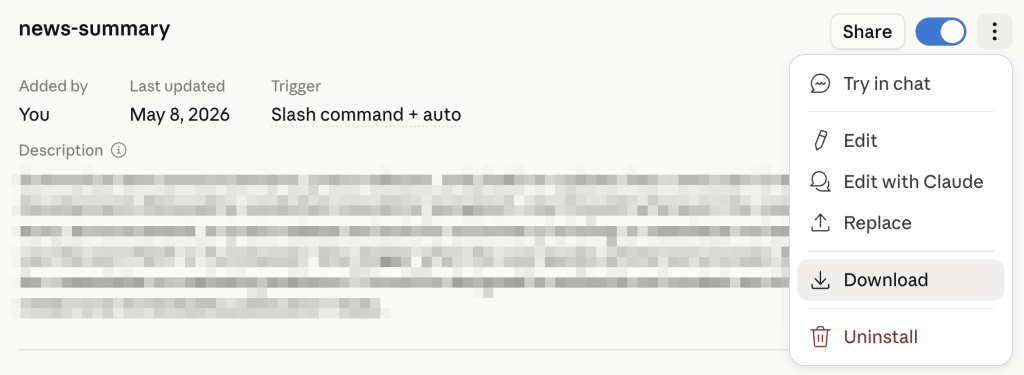
- Portable Skills: Using standardized Markdown (.md) files and JSON data to package instructions into "skills" that can be uploaded to any model.
- Agnostic Agent Hubs: Utilizing third-party software, such as Microsoft Excel, as a centralized "cockpit" where multiple AI plugins can interact with the same data set.
II. Chronology: Implementing a Portable AI Ecosystem
Building a portable workflow is not a matter of rebuilding existing tools, but of reorganizing how those tools are stored and accessed. The following chronology outlines the process of transitioning from a platform-dependent setup to a portable one.
Phase 1: Decentralizing Context
The first step involves moving all reference documents—brand guidelines, past performance data, and templates—out of the "Knowledge" sections of custom GPTs or Claude Projects.
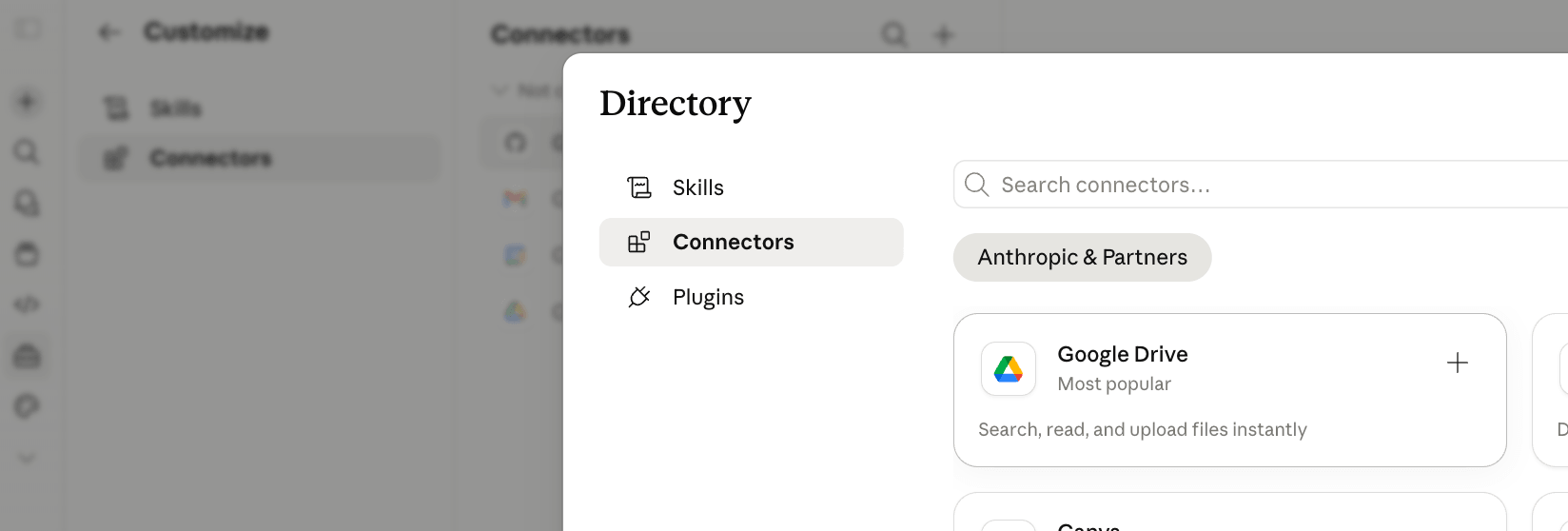
- Setup: Create a dedicated folder in a cloud storage provider (e.g., Google Drive).
- Connectivity: Utilize Model Context Protocol (MCP) connectors. These act as APIs that allow various AI models to "reach out" and read external files.
- Curation: Rather than connecting an entire drive, users must point the AI to specific, curated folders. AI models perform significantly better when provided with exact, relevant documents rather than a massive, unsorted library.
Phase 2: Standardizing Instructions via "Skills"
Once data is externalized, the instructions (prompts) must be standardized.
- The Markdown Shift: Instead of typing prompts into a platform’s interface, users write them in Markdown—a plain-text formatting language.
- Packaging: These instructions are saved as
SKILL.mdfiles. These files can include brand assets, code scripts, or logic calculators. - Deployment: To use the skill, the user simply uploads the .zip or .md file to the chosen AI platform. Like a "software installation" for the AI, the model immediately adopts the persona and capabilities described in the file.
Phase 3: Building the Self-Briefing Agent
The final phase of implementation involves creating a "Self-Briefing" environment, typically within a spreadsheet.
- The Excel Integration: Users activate plugins for Claude, ChatGPT, and Microsoft Copilot within a single Excel workbook.
- Internal Documentation: A specific tab is created within the workbook containing the "Briefing" (the instructions for the AI).
- The History Log: A "History" tab is established where the AI logs every action it takes. This ensures that if the user switches from Claude to ChatGPT mid-project, the new AI can read the history log and continue exactly where the previous model left off.
III. Supporting Data: Technical Frameworks and Protocols
The feasibility of portable AI workflows relies on several key technical standards that bridge the gap between competing tech giants.

The Model Context Protocol (MCP)
MCP is the backbone of portability. It functions as an open standard that allows AI models to connect to data sources, tools, and prompts across different ecosystems. By using MCP, a user can ensure that their Google Drive data is just as accessible to an Anthropic model as it is to a Google model.
Markdown (.md) and JSON
The use of Markdown for instructions is strategic. Because it is plain text, it is lightweight and universally readable by every Large Language Model (LLM) currently on the market. Furthermore, providing supporting data in JSON (JavaScript Object Notation) format allows the AI to parse structured information with near-perfect accuracy, reducing the "hallucination" rate common in unstructured text.
The "Curated Context" Advantage
Internal testing by AI strategists suggests a "less is more" approach to data. When an AI is given access to an entire corporate directory, the "signal-to-noise" ratio decreases, leading to generic outputs. However, by using the portable method of pointing an AI to a specific folder containing 3-5 high-quality reference documents, output relevance increases by an estimated 40-60%.

IV. Official Responses and Expert Perspectives
Nicole Leffer on Operational Risk
Nicole Leffer, a leading voice in AI implementation, emphasizes that portability is not merely a convenience but a requirement for enterprise-level risk management. "A business built entirely around one tool is at risk," Leffer notes. She argues that as AI moves from a "toy" to a "utility," outages become operational crises. Her approach treats AI instructions as "intellectual property" that must be owned by the company, not the platform provider.
The "Matrix" Analogy
Michael Stelzner compares the use of portable skills to the famous scene in The Matrix where characters "download" abilities directly into their brains. By packaging a complex workflow into a SKILL.md file, a user can "upload" 10 years of marketing expertise into a "fresh" AI model in seconds. This eliminates the need for long, repetitive "pre-chats" or training sessions every time a new conversation is started.
Security Warning: The "Public Skill" Threat
Experts issue a stern warning regarding the burgeoning market for "Public Skills" and prompt libraries. Unlike simple text prompts, a portable skill can contain malicious code or "hidden instructions."
- Data Exfiltration: A skill could be programmed to silently connect to a user’s CRM, extract customer data, and send it to an external server.
- Viruses: Skills can include embedded files that contain traditional malware.
- Recommendation: Organizations should only use skills created internally or sourced from verified providers like Anthropic, OpenAI, or Google.
V. Implications: The Future of AI Workflows
The shift toward portable workflows signals a maturing of the AI industry. We are moving away from "chatting" with bots and toward "orchestrating" agentic systems.
1. The Rise of the "Agnostic Architect"
The most valuable skill in the coming years will not be "prompt engineering" (the ability to talk to one bot), but "workflow architecture" (the ability to build systems that work across all bots). Professionals who can design these portable infrastructures will be insulated from the volatility of the AI market.
2. Democratization of Expertise
Portable skills allow for the "standardization of excellence" within a company. A senior copywriter can package their logic, tone of voice, and editing process into a skill file. This file can then be distributed to junior staff, who can upload it to their own AI accounts, instantly elevating the quality of their output to the senior level without direct supervision.
3. Economic Pressure on AI Providers
As users become more portable, AI providers will lose their "moat." If it becomes easy for a million users to switch from ChatGPT to Claude in a single afternoon, providers will be forced to compete more aggressively on price, privacy, and performance rather than relying on user inertia.
4. The Self-Contained Workbook Model
The method of embedding instructions and history directly into Excel workbooks suggests a future where "documents" are also "applications." A spreadsheet is no longer just a place to store numbers; it becomes a living environment where the data, the instructions for processing that data, and the history of those processes all live together in a single, portable file.
Conclusion
Building portable AI workflows is a defensive strategy against a volatile market and an offensive strategy for operational efficiency. By externalizing storage, standardizing instructions via Markdown, and utilizing agnostic hubs like Excel, businesses can ensure that their AI infrastructure remains robust, secure, and ready for whatever the next generation of models may bring. In the words of Nicole Leffer, the goal is simple: "You are never trapped."