The New Frontier of Cloud Compute: AWS Unveils Graviton5-Powered EC2 M9g Instances
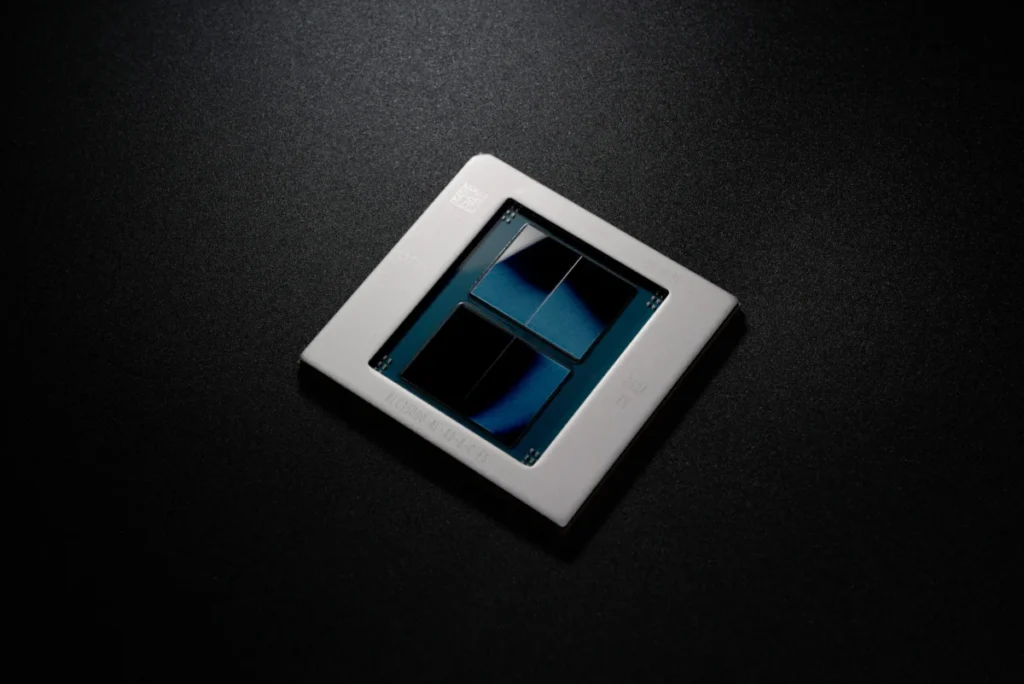
In a major milestone for cloud infrastructure, Amazon Web Services (AWS) has officially announced the general availability of its EC2 M9g and M9gd instances. Powered by the fifth-generation Graviton5 processor, these new instances represent the pinnacle of AWS’s eight-year journey into custom silicon design. As AI workloads evolve from simple conversational models to complex, agentic systems capable of autonomous execution, the M9g series arrives as a high-performance, energy-efficient solution designed to meet the ballooning demand for CPU-intensive computing.
The Evolution of Custom Silicon: A Chronology of Graviton
The journey to the M9g began long before the industry-wide shift toward Arm-based architectures. Over the past eight years, AWS has pursued a strategy of vertical integration, moving away from off-the-shelf processors to bespoke designs that address specific cloud-native bottlenecks.
- 2018: AWS launches the original Graviton processor, signaling the beginning of the end for x86 ubiquity in the cloud.
- 2019-2021: With the release of Graviton2 and Graviton3, AWS begins demonstrating consistent double-digit performance improvements, establishing Graviton as a viable choice for high-performance computing (HPC) and general-purpose workloads.
- 2023: The launch of Graviton4 solidified the architecture’s standing, offering significant leaps in memory bandwidth and cache capacity.
- December 2025: AWS announces the M9g instances in preview at re:Invent, inviting early adopters to stress-test the Graviton5 architecture.
- June 2026: The official general availability of M9g and M9gd instances, marking the most significant performance jump in the history of the Graviton family.
This trajectory reflects a continuous commitment to the "price-performance" mantra that has become synonymous with the Graviton brand. Today, Graviton powers over 350 distinct instance types across the global AWS fleet, serving more than 120,000 customers ranging from scrappy startups to global enterprises.
Technical Prowess: Under the Hood of Graviton5
The M9g and M9gd instances are not merely incremental updates; they are a fundamental re-engineering of how AWS packages compute, memory, and I/O.
Architecture and Performance
At the heart of the M9g is the Graviton5 processor, which features 192 cores—a massive leap in density. To support the high-speed demands of modern AI and data-driven applications, AWS has equipped these instances with a 5x larger L3 cache compared to the previous generation. This is paired with DDR5-8800 memory, delivering the fastest memory performance of any processor currently available in the public cloud.
The result is a tangible performance boost:
- Web Applications: Up to 35% faster.
- Machine Learning Inference: Up to 35% faster.
- Database Performance: Up to 30% faster.
The Role of the Nitro System and Isolation
A critical component of this release is the integration of the sixth-generation AWS Nitro System. Beyond performance, security remains the primary concern for cloud architects. With M9g, AWS has introduced the Nitro Isolation Engine. This new layer utilizes formal verification—a mathematical approach to prove that the hypervisor behaves exactly as intended. By mediating all access to virtual machine memory, CPU registers, and I/O devices, the Nitro Isolation Engine establishes a new industry standard for "mathematically proven" cloud security.
Industry Impact: Real-World Results
The transition to Graviton5 has already yielded impressive results during the preview phase. The data confirms that organizations can realize significant efficiency gains without the need for extensive code refactoring.
- ClickHouse: The data platform reported a 36% performance improvement over the M8g instances with zero code changes, showcasing the architecture’s efficiency for analytical workloads.
- Honeycomb: Through a rigorous six-month A/B test of production observability workloads, Honeycomb observed a 36% increase in throughput per core compared to the Graviton4.
- HubSpot: By migrating their MySQL database workloads to M9g, HubSpot saw a dramatic 60% reduction in query duration, a testament to the processor’s capability in handling high-volume transactional data.
- Meta: In a landmark partnership, Meta has begun deploying Graviton at scale, utilizing tens of millions of cores to fuel their agentic AI initiatives. Meta’s move highlights the critical importance of core density and memory bandwidth for the next generation of AI that requires real-time reasoning and multi-step task orchestration.
Implications for the AI Era
We are currently witnessing a pivotal shift in Artificial Intelligence. The industry is moving from "Chatbot AI"—where models simply answer questions—to "Agentic AI," where models actively run code, use external tools, and orchestrate complex, multi-step workflows.
This shift is inherently CPU-intensive. While accelerators (like GPUs) handle the heavy lifting of model training, the "orchestration" layer—the glue that connects the model to the world—relies heavily on general-purpose compute. Graviton5 is purpose-built for this shift. By reducing inter-core latency by 33% and increasing memory bandwidth, the M9g instances ensure that agents spend less time idling on CPU-bound bottlenecks and more time executing complex logic.

Sustainability and Efficiency
In an era of increasing energy costs and ESG (Environmental, Social, and Governance) mandates, Graviton5 provides a compelling argument for sustainable computing. AWS has designed these processors to deliver more compute per watt than any previous iteration. By packing more performance into the same physical footprint, customers can achieve their performance goals while simultaneously lowering their data center energy consumption, effectively turning sustainability into a measurable business outcome.
Getting Started and Migration Strategies
For organizations looking to adopt M9g or M9gd instances, the barrier to entry has been significantly lowered through a suite of AWS-supported tools.
- AWS Graviton Getting Started Guide: A comprehensive technical manual for building and optimizing workloads on the new architecture.
- AWS Transform: This AI-powered service is a game-changer for legacy systems. It automates the migration of Java applications from x86 to Graviton by handling dependency updates, recompilation, and validation.
- Graviton Savings Dashboard: Available for those who need to justify the ROI, this dashboard allows teams to track the precise cost savings realized by migrating to Graviton-based instances.
Availability and Pricing
The M9g and M9gd instances are now generally available in several key AWS Regions, including US East (N. Virginia), US East (Ohio), US West (Oregon), and Europe (Frankfurt). Customers can procure these instances through various purchasing models, including:
- On-Demand Instances: For flexible, short-term needs.
- Savings Plans: To maximize long-term cost efficiency.
- Spot Instances: For fault-tolerant, interruptible workloads that require the lowest possible price point.
- Dedicated Hosts/Instances: For customers with specific compliance or regulatory requirements.
Conclusion
The release of the EC2 M9g and M9gd instances represents more than just a hardware refresh; it is an endorsement of the Arm-based architecture as the future of the cloud. With its focus on high-core density, formal verification for security, and specialized optimization for agentic AI, AWS has once again set the pace for the cloud computing industry.
As enterprises continue to navigate the demands of high-performance data processing and the rapid advancement of AI, the combination of Graviton5 and the Nitro System provides a stable, efficient, and exceptionally fast foundation for the next decade of digital innovation. For those yet to migrate, the performance data from industry leaders like HubSpot and Meta suggests that the cost of inaction is, quite literally, the performance left on the table.