The Dawn of the Graviton Era: AWS Unleashes the Power of the M9g Processor
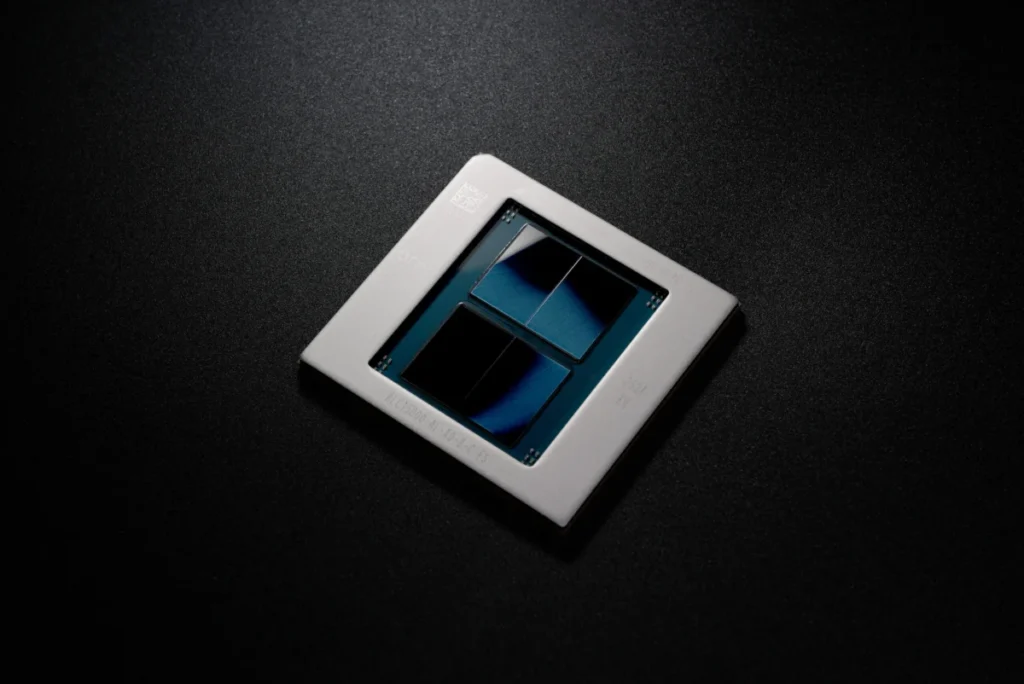
In a significant milestone for cloud infrastructure, Amazon Web Services (AWS) has officially announced the general availability of its M9g and M9gd instances, marking the commercial debut of the Graviton5 processor. This launch represents more than just a hardware refresh; it signifies a pivotal shift in how the world’s largest cloud provider is addressing the burgeoning demands of the agentic AI era. By pushing the boundaries of custom silicon, AWS is setting a new benchmark for performance, power efficiency, and, crucially, mathematically verified security.
The Evolution of Custom Silicon: A Chronology of Innovation
The journey to the Graviton5 processor is a story of eight years of relentless engineering. When AWS first introduced the Graviton processor, it was a modest attempt to provide an Arm-based alternative to the ubiquitous x86 architecture. However, the company’s strategy quickly evolved into a vertical integration play that has disrupted the server market.
- 2018 (The Beginning): AWS introduces the first-generation Graviton processor, signaling a move toward custom silicon to optimize for cost and performance.
- 2019–2021 (Scaling Up): Graviton2 and Graviton3 arrive, proving that Arm-based architectures could handle high-performance computing (HPC) and complex database workloads, not just simple web servers.
- 2023 (Graviton4): This generation cemented AWS’s position as a leader in silicon design, delivering substantial gains in energy efficiency and core density.
- 2025 (The Turning Point): At re:Invent 2025, the M9g instances were unveiled in preview. The industry response was immediate, with early adopters reporting drastic improvements in latency and throughput.
- 2026 (General Availability): The M9g and M9gd instances are now available to all customers, powered by the most sophisticated CPU architecture in the AWS fleet to date.
Today, Graviton powers over 350 distinct instance types across the AWS ecosystem, serving more than 120,000 customers. From lean startups to global conglomerates, the adoption of Graviton has become a hallmark of modern, cost-efficient cloud architecture.
Architecting for the Agentic AI Revolution
As the tech industry pivots from simple large language model (LLM) queries to "agentic" AI—systems that execute code, use external tools, and orchestrate multi-step tasks—the burden on underlying compute infrastructure has shifted. These AI agents require massive CPU overhead for reasoning and planning, often outstripping the capabilities of traditional general-purpose processors.
Graviton5 was designed specifically with this paradigm shift in mind. Featuring 192 cores and a 5x increase in L3 cache compared to its predecessor, the Graviton5 is engineered to eliminate the bottlenecks that plague modern AI pipelines. By reducing inter-core latency by up to 33% and leveraging high-bandwidth DDR5-8800 memory, these processors ensure that CPU-bound agentic tasks—such as code generation or real-time logical reasoning—are no longer held back by memory wait-times.
This is not merely a theoretical advantage. Meta, one of the world’s largest consumers of compute resources, has integrated Graviton at an unprecedented scale. By deploying tens of millions of cores to support their agentic AI initiatives, Meta has validated that Graviton5 is the platform of choice for the next generation of intelligent, action-oriented AI.

Supporting Data: Performance Metrics and Benchmarks
The transition to M9g is yielding significant dividends for early testers. Because the architecture maintains the standard Arm-based instruction set, many organizations have migrated their workloads with zero code changes, reaping immediate rewards.
Performance Gains (vs. Graviton4)
- Web Applications: Up to 35% faster performance.
- Machine Learning Inference: Up to 35% performance improvement.
- Database Query Processing: Up to 30% faster response times.
- Overall Compute: A 25% increase in raw compute performance.
Industry Testimonials
- ClickHouse: Reported a 36% performance boost compared to M8g, demonstrating the processor’s efficiency in high-speed analytics.
- Honeycomb: Through six months of rigorous A/B production testing, the observability platform saw a 36% improvement in throughput per core.
- HubSpot: In a real-world deployment for MySQL database clusters, the company observed query durations drop by as much as 60%.
The introduction of the M9gd variant adds high-speed, low-latency local NVMe SSD storage to the mix. With 30% higher IOPS compared to the M8gd, these instances are tailor-made for high-performance databases, media processing, and batch-logging applications that require rapid temporary storage access.
The Nitro Isolation Engine: A New Security Standard
One of the most profound innovations accompanying the M9g launch is the Nitro Isolation Engine. While the AWS Nitro System has long been the gold standard for cloud isolation, the new engine raises the bar by incorporating "formal verification."
Formal verification is a mathematical technique used to prove that a system behaves exactly as its design specifications dictate, leaving no room for the edge-case vulnerabilities that often haunt hardware-software interfaces. By mathematically demonstrating that the isolation between virtual machines, memory registers, and I/O devices is impenetrable, AWS has created the first "formally verified" cloud hypervisor. This provides enterprise customers with an unprecedented level of assurance regarding data security and multi-tenant isolation, addressing a critical pain point in regulated industries like finance and healthcare.
Implications for the Cloud Landscape
The launch of the M9g series has far-reaching implications for the broader cloud ecosystem:
1. The Sustainability Mandate
As cloud-scale computing consumes an increasing share of global electricity, energy efficiency is no longer a "nice-to-have"—it is a strategic necessity. Graviton5 is the most energy-efficient processor AWS has ever built. By delivering more performance per watt, AWS is helping organizations hit their sustainability and carbon-neutrality targets without sacrificing the computational throughput required to remain competitive.

2. Democratizing High-Performance Computing
The availability of M9g instances across a broad spectrum of sizes—from single-vCPU "medium" instances to massive "48xlarge" configurations—democratizes access to elite-level compute. Startups can now spin up infrastructure that rivals the internal clusters of the world’s largest tech giants, paying only for what they use.
3. Streamlined Migration Paths
AWS is actively lowering the barrier to entry for x86-based shops looking to switch to Graviton. Through tools like the AWS Transform service, which uses AI to automate code re-compilation and dependency updates for Java applications, the "cost of switching" has been effectively mitigated. The Graviton Savings Dashboard further empowers CTOs and DevOps leads to track their ROI, providing a clear business case for migration.
How to Get Started
For organizations ready to modernize their infrastructure, the path forward is clearly defined. The M9g and M9gd instances are now generally available in major AWS Regions, including US East (N. Virginia), US East (Ohio), US West (Oregon), and Europe (Frankfurt).
To facilitate the transition, AWS offers the following resources:
- The Graviton Getting Started Guide: A technical roadmap for optimizing builds and deployments.
- AWS Transform: AI-driven migration assistance for Java environments.
- Savings Plans: Flexible pricing models that allow users to maximize cost efficiency as they scale their Graviton fleet.
Conclusion
The release of the M9g and M9gd instances marks a coming-of-age for custom cloud silicon. By blending the raw power of Graviton5 with the sophisticated security of the Nitro Isolation Engine and the agility of the Nitro System, AWS has built an ecosystem that is not just faster, but more secure and sustainable than ever before. As the industry races toward a future defined by agentic AI, the infrastructure that powers that future will be defined by the very qualities AWS has prioritized here: high core density, massive memory bandwidth, and mathematically proven reliability. For developers and enterprises alike, the move to Graviton5 is no longer just an optimization—it is an evolution.