The Digital Iron Curtain: Dutch Authorities Dismantle Infrastructure Linked to Russian Cyber Warfare

In a sweeping operation that marks a significant escalation in the European Union’s efforts to combat state-sponsored hybrid warfare, Dutch financial crime investigators have arrested the co-owners of two prominent internet hosting companies. The arrests follow a prolonged investigation into the role of these firms in facilitating the technical infrastructure used by Russian intelligence agencies to conduct cyberattacks, spread disinformation, and compromise government entities across the EU.
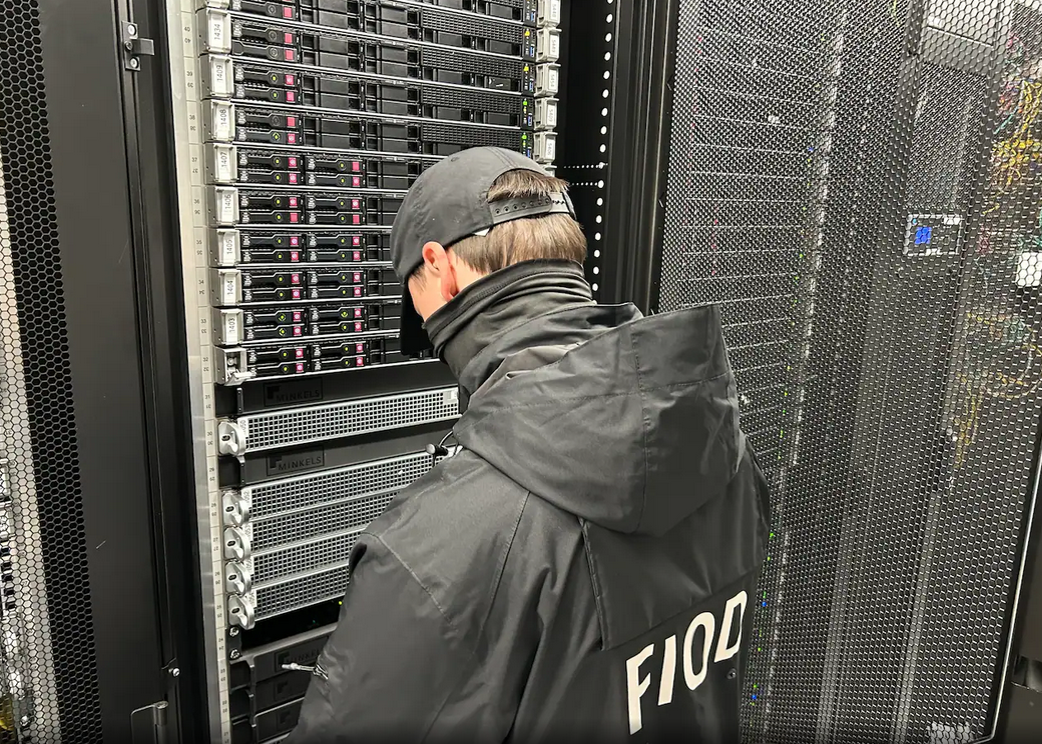
The Dutch Tax Intelligence and Investigation Service (FIOD) confirmed that on May 18, they apprehended a 57-year-old Amsterdam resident and a 39-year-old from The Hague. The suspects, who operated out of the Netherlands, face serious charges of violating international sanctions law by providing economic resources and critical IT services to entities explicitly blacklisted by the European Union for their involvement in hostile cyber activities.
The Nexus of Cyber Conflict: Stark Industries and Beyond
The investigation centers on the activities of "Stark Industries Solutions," a sprawling hosting provider that emerged on the digital landscape just two weeks prior to Russia’s full-scale invasion of Ukraine in 2022. Stark quickly gained notoriety in the cybersecurity community, not for legitimate enterprise services, but for its role as a "bulletproof" host. It became a primary staging ground for massive Distributed Denial-of-Service (DDoS) attacks against European government bodies and a key provider of proxy and anonymity services for Russian-backed hacking collectives.
The Dutch probe reveals a complex web of redirection. Initially, Stark Industries relied on infrastructure provided by the Moldovan-linked entity "PQHosting" and brothers Ivan and Yuri Neculiti. When the EU placed the Neculiti brothers and PQHosting under sanctions in May 2025, the network did not collapse. Instead, it migrated to a new entity, "the[.]hosting," under the control of the Dutch firm WorkTitans BV.
The Dutch authorities’ raid was comprehensive. Investigators searched three business premises in Enschede and Almere, alongside two data centers located in Dronten and Schiphol-Rijk. The resulting seizure of over 800 servers, along with various electronic devices, effectively severed the connectivity that had allowed these networks to persist under the radar of Western regulators.
A Chronology of Subterfuge
To understand how this network maintained its resilience, one must look at the timeline of events that preceded the arrests:
- February 2022: Stark Industries Solutions is established shortly before the invasion of Ukraine, quickly becoming a hub for pro-Russian cyber operations.
- May 2024: Investigative reporting exposes Stark’s role as an "iron hammer in the cloud," linking its infrastructure to widespread DDoS campaigns and state-sponsored espionage.
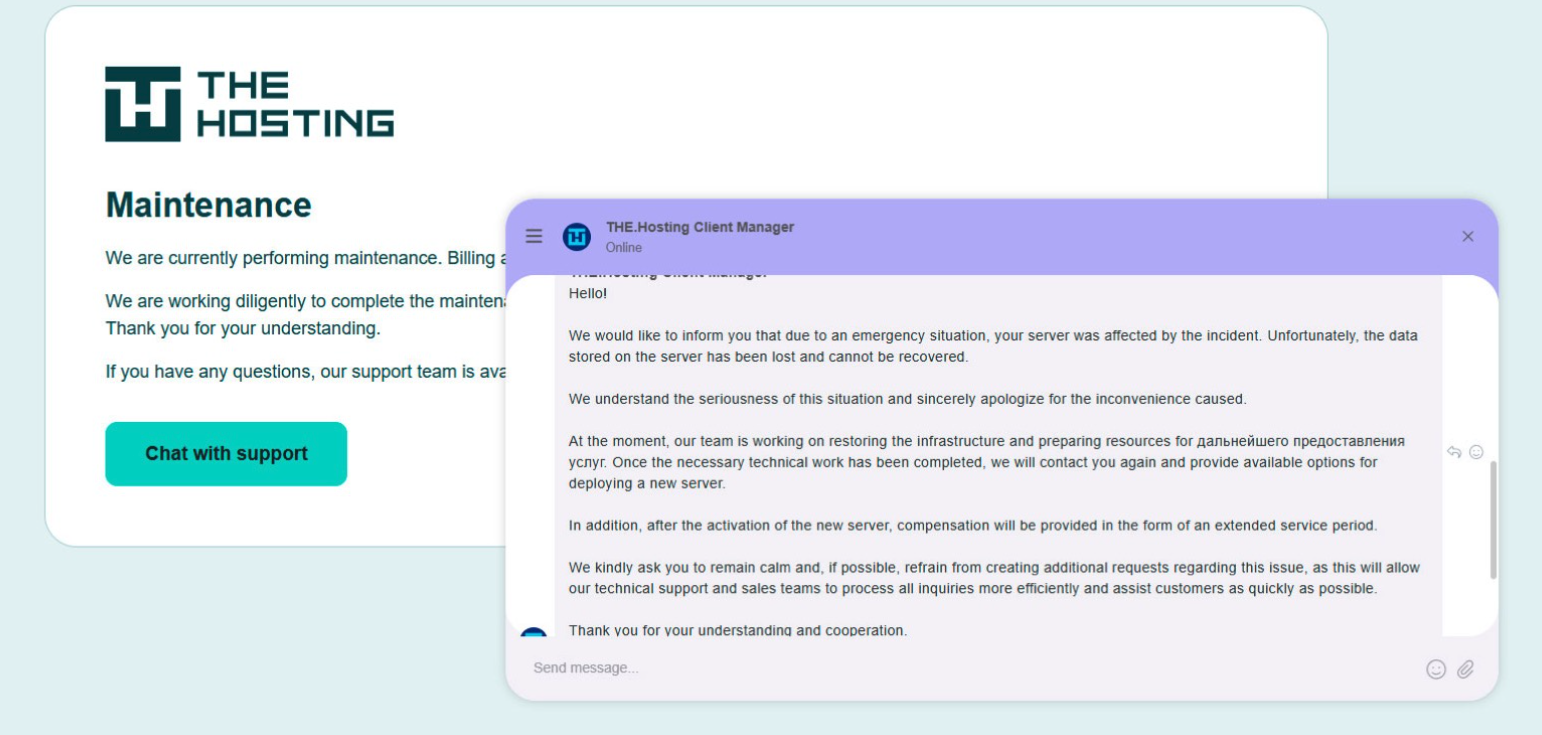
- Early May 2025: News leaks regarding impending EU sanctions against PQHosting and the Neculiti brothers. In a desperate pivot, network assets are transferred from PQHosting to the newly formed "the[.]hosting," managed by the Dutch entity WorkTitans BV.
- May 2025: The EU officially sanctions PQHosting. Stark Industries remains active, now relying on the Dutch provider MIRhosting for its connection to the global internet.
- September 2025: Public reports identify that WorkTitans is controlled by Andrey Nesterenko and Youssef Zinad, both of whom were deeply embedded in the operations of MIRhosting.
- November 2025: During the week of Danish municipal elections, data confirms that WorkTitans and MIRhosting were the most-used networks in pro-Russian cyber campaigns targeting Danish government infrastructure.
- May 18, 2026: FIOD conducts coordinated raids, arresting Nesterenko and Zinad and seizing the server infrastructure, resulting in the immediate "blackout" of the[.]hosting.
The Players: From Piano Prodigy to Sanctioned Operator
The central figure in the Dutch investigation is Andrey Nesterenko, a 39-year-old Russian native. Nesterenko’s background is unconventional; he was a noted piano prodigy in Nizhny Novgorod before pivoting to the technology sector. In 2004, he founded Innovation IT Solutions Corp., the parent company of MIRhosting.
Historical records suggest this was not Nesterenko’s first brush with geopolitics via technology. His company was reportedly responsible for hosting stopgeorgia[.]ru, a website utilized to coordinate cyberattacks against Georgia during the 2008 Russo-Georgian War—a conflict widely cited by historians as the first instance where cyber operations were synchronized with conventional military maneuvers.
The second suspect, 57-year-old Youssef Zinad, maintained a significantly lower profile. As the investigation intensified, Zinad retreated from public life, deleting his LinkedIn profile and ignoring inquiries from journalists and associates alike. Reports from de Volkskrant paint a picture of a man in hiding, with neighbors noting his residence in Almere appeared abandoned as early as the spring of 2026. While Nesterenko attempted to distance himself from Zinad, claiming their relationship was merely a "business-to-business arrangement," internal documents—including email threads where Zinad used a @mirhosting.com address and listings identifying him as a corporate contact—suggest a much deeper integration.
Official Responses and Defenses
In the wake of the arrests, the atmosphere has been one of defensive posturing. MIRhosting issued a formal statement on LinkedIn, claiming it had initiated an internal audit regarding the Danish election attacks. The company asserted that "no anomalies or spikes were observed" in their network traffic during the relevant period, suggesting that if their infrastructure was used, it was done without their knowledge or consent.
Andrey Nesterenko, speaking via email, maintained his innocence. "The transition to the[.]hosting was not intended to evade sanctions," he wrote. "The hardware and customer portfolio had already been transferred to WorkTitans before the sanctions appeared. Closing or damaging a legitimate Dutch infrastructure company will not stop cybercrime, but it will harm many people who have done nothing wrong."
Dutch authorities have not been swayed by these arguments. Their focus remains on the "economic resources" provided to sanctioned actors. By providing the connectivity that enabled Stark Industries to function, MIRhosting and WorkTitans effectively acted as the digital bridge between Russian intelligence and the European targets they sought to destabilize.
Broader Implications for Cyber Governance
The collapse of this hosting network serves as a cautionary tale regarding the "bulletproof" hosting market. It highlights how easily sophisticated actors can exploit the global nature of the internet to establish jurisdictions of convenience. By setting up shop in the Netherlands, these operators utilized a reputable legal environment to mask the malicious nature of their traffic.
The seizure of 800 servers also provides a treasure trove for intelligence agencies. Forensics experts will likely spend months analyzing the recovered data, potentially identifying the specific Russian intelligence officers or "hacktivist" groups who utilized these servers to conduct their operations.
Furthermore, the case sets a legal precedent for the European Union. It demonstrates that the authorities are moving beyond simply blacklisting entities; they are now targeting the intermediaries—the ISPs and hosting providers—that provide the essential plumbing for hybrid warfare. The arrests of Nesterenko and Zinad signal that the era of "plausible deniability" for infrastructure providers is drawing to a close. Any company that chooses to ignore the nature of its traffic, or intentionally facilitates sanctioned entities, now faces the very real prospect of asset seizure and criminal prosecution.
As Europe looks toward future elections and the ongoing challenge of countering disinformation, the dismantling of this specific node of Russian influence is a tactical victory. However, the ease with which these networks migrated across borders in 2025 suggests that the battle for the integrity of the digital ecosystem will remain a permanent fixture of modern geopolitical conflict. The question remains: how many other "Stark Industries" are currently operating in the shadows of the European cloud?