Hyundai Motor India Revolutionizes EV Ownership: Unlocking Access to 30,000 Charging Points Nationwide
Date: July 20, 2026
Location: New Delhi, India
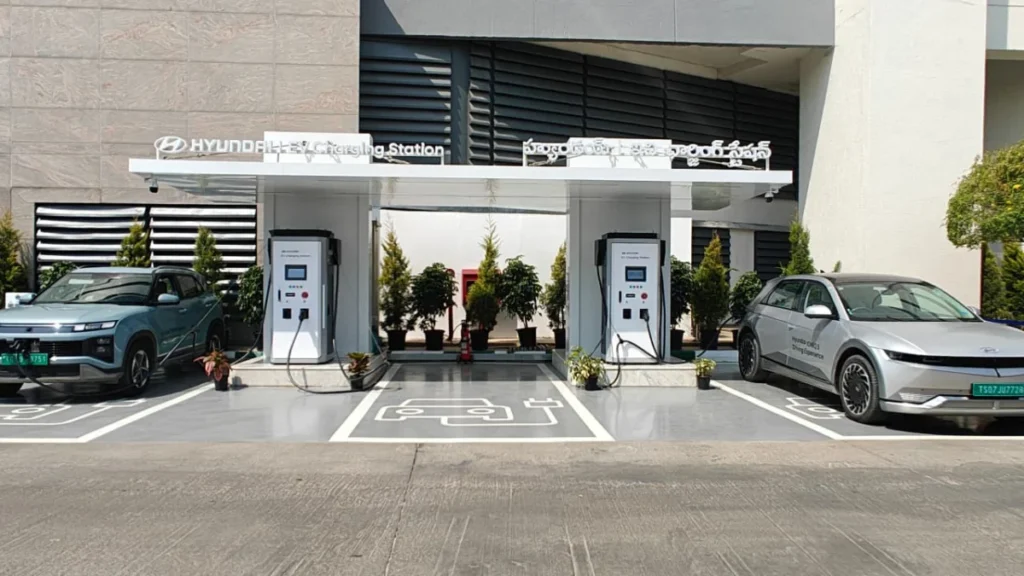
In a landmark move that promises to reshape the landscape of electric mobility in India, Hyundai Motor India has officially unveiled a comprehensive charging integration platform. By consolidating access to a massive network of over 30,000 charging points across the country, the automaker is effectively addressing the single largest barrier to electric vehicle (EV) adoption: range anxiety.
The initiative, developed through strategic partnerships with a wide array of Charge Point Operators (CPOs) and third-party service providers, marks a significant departure from proprietary, brand-exclusive charging ecosystems. By opening this network to electric vehicles of all brands, Hyundai is positioning itself not merely as an automotive manufacturer, but as a foundational pillar of India’s evolving green energy infrastructure.
The Core Facts: Bridging the Infrastructure Gap
The newly launched platform is designed to provide a seamless "one-stop-shop" experience for EV owners. Traditionally, the fragmented nature of the charging market has forced EV drivers to download multiple applications, manage various payment gateways, and navigate incompatible software interfaces.
Hyundai’s platform streamlines this process by centralizing discovery, navigation, and payment protocols. Key features include:
- Universal Compatibility: Unlike closed-loop ecosystems, this network is brand-agnostic. Whether a driver owns a Hyundai, a Tata, a Mahindra, or an imported luxury EV, the platform facilitates access to the grid.
- Massive Scale: With 30,000 points spanning both urban hubs and inter-city corridors, the platform offers one of the most extensive charging footprints in the country.
- Strategic Partnerships: The platform was built in collaboration with leading CPOs and service providers, ensuring that the software reflects the practical needs of hardware operators while prioritizing user experience.
- Real-Time Data: Users can view live status updates for chargers, including availability, power output (kW), and compatibility with specific vehicle connectors, reducing wait times at busy stations.
Chronology of Development: From Concept to National Rollout
The road to this announcement has been marked by years of intensive R&D and aggressive infrastructure lobbying.
Phase 1: The Foundation (2023–2024)
Recognizing that vehicle sales would eventually plateau without a robust support system, Hyundai began mapping the charging deficit in India. During this period, the company shifted its strategy from "private charging" to "collaborative growth," initiating talks with power utility companies and independent CPOs to standardize backend communication protocols.
Phase 2: Pilot Testing and Backend Integration (2025)
In mid-2025, Hyundai launched a localized pilot program in the Delhi-NCR and Mumbai metropolitan regions. The primary goal was to test the "interoperability" of the software—ensuring that the platform could communicate with diverse hardware stacks ranging from slow AC chargers to high-speed DC fast chargers.
Phase 3: The National Launch (July 2026)
Following the successful integration of payment gateways and mapping APIs, the platform reached maturity. On July 20, 2026, the company officially opened the gates, transitioning from a localized trial to a nationwide service available to every EV driver in the country.
Supporting Data: Why Infrastructure is the Catalyst
The Indian EV market is currently at a critical inflection point. Data from the Ministry of Heavy Industries and various automotive research firms suggest that while EV sales have grown by over 120% year-on-year, the density of charging infrastructure remains concentrated in top-tier cities.
- The Current Ratio: As of Q2 2026, the ratio of EVs to public charging points in India is approximately 40:1. Hyundai’s move aims to improve this accessibility, potentially lowering the ratio in underserved areas.
- High-Speed DC Penetration: A significant portion of the 30,000 points included in the new network comprises high-speed DC chargers capable of providing an 80% charge in under 30 minutes, a requirement for long-distance highway travel.
- User Behavior Shifts: Surveys conducted by Hyundai indicate that 72% of prospective EV buyers cite "difficulty in locating functional chargers" as their primary deterrent. By removing this friction, the company anticipates a 15–20% increase in EV adoption rates among its own customer base within the next 18 months.
Official Responses and Corporate Strategy
In an official statement released during the launch, a spokesperson for Hyundai Motor India emphasized the company’s "customer-centric" approach to the energy transition.
"Our mission has always been to simplify the transition to electric mobility," the spokesperson noted. "By partnering with the leading charge point operators in the country, we aren’t just building a network; we are building a community. It is our firm belief that for the Indian market to fully electrify, we must move past the era of proprietary ‘walled gardens.’ We are opening this platform to everyone because the green transition is a collective responsibility."
Industry analysts have lauded the move, noting that it reflects the "Platform-as-a-Service" (PaaS) business model currently dominating the global automotive sector. By owning the interface through which the customer interacts with the grid, Hyundai secures a central role in the future of the automotive energy value chain.
Implications: The Shift Toward Universal Standards
The impact of this initiative extends far beyond convenience. It signals a fundamental shift in how the Indian automotive industry views "competition" in the electric age.
1. Standardization of the Charging Experience
By forcing different CPOs to adopt a unified digital interface, Hyundai is effectively setting a new "gold standard" for the Indian market. This will likely pressure other manufacturers to either join the platform or develop similar, equally robust alternatives, ultimately benefiting the consumer through higher quality of service.
2. Boosting Secondary Market Value
One of the hidden benefits of this platform is the potential impact on EV resale values. Concerns regarding battery health and charging accessibility have historically hurt the resale value of used EVs. A standardized, well-documented, and vast charging network provides assurance to second-hand buyers, thereby stabilizing the used-EV market.
3. Acceleration of the "Green Highway" Initiative
The inclusion of inter-city charging points is a major win for the Indian government’s "Green Highway" initiative. As charging stations become more reliable and easier to locate, the psychological threshold for replacing internal combustion engine (ICE) vehicles with EVs for long-distance travel is significantly lowered.
4. Economic Multiplier Effect
For the CPOs and service providers involved, this partnership is a massive revenue multiplier. By funneling Hyundai’s massive user base toward these stations, operators will see higher utilization rates, leading to faster ROI on their infrastructure investments. This, in turn, will encourage further capital expenditure in the sector, creating a virtuous cycle of infrastructure growth.
Conclusion: A New Era of Mobility
As of July 20, 2026, the landscape for Indian EV drivers has fundamentally changed. The integration of 30,000 charging points into a single, accessible platform is a milestone that marks the maturation of the electric vehicle market in India.
While challenges remain—specifically regarding the grid’s ability to handle peak-load demand and the need for further expansion in rural regions—Hyundai’s strategic move provides a robust blueprint for the future. By prioritizing interoperability and user convenience, the company has cleared a path for a cleaner, more efficient, and fully connected automotive future. As the industry watches, the focus will now shift to how other major players respond and whether this ecosystem can scale to meet the demands of an increasingly electrified India.