The Evolution of Secure Development: A Deep Dive into the AWS Security Agent Ecosystem
In the rapidly shifting landscape of cloud-native development, the boundary between writing code and securing it has become increasingly blurred. At re:Invent 2025, Amazon Web Services (AWS) unveiled a bold vision for the future of DevSecOps: the AWS Security Agent. Now a cornerstone of the broader AWS Continuum initiative, this frontier agent has evolved from a preview concept into a comprehensive, agentic platform designed to secure applications proactively from the initial design phase through to production deployment.
As of June 2026, AWS has significantly expanded the capabilities of the Security Agent, introducing deep repository code reviews, automated threat modeling, and seamless IDE integration through Kiro and Claude Code. This article explores how these updates represent a fundamental shift in how security is integrated into the software development lifecycle (SDLC).
The Core Mission: A Unified Security Philosophy
The fundamental premise of the AWS Security Agent is to eliminate the friction that historically plagued security teams. Traditionally, security was a "gatekeeper" function—a series of manual reviews or automated scans performed at the end of the pipeline, often leading to significant bottlenecks or late-stage vulnerability discoveries.

The Security Agent flips this model by embedding security expertise directly into the tools developers use daily. By performing on-demand, customized penetration testing and deep, context-aware code analysis, the agent provides actionable, verified insights rather than the overwhelming noise of false-positive-heavy scanners.
Chronology of the AWS Security Agent
- November 2025 (re:Invent): AWS announces the preview of the AWS Security Agent, introducing the concept of a frontier agent for proactive application security.
- March 2026: AWS announces the general availability of on-demand penetration testing, allowing teams to verify exploitability in simulated environments.
- May 2026: The preview launch of "Full Repository Code Review" enables deep, context-aware analysis of entire codebases.
- June 2026: AWS introduces enterprise-grade integrations (GitLab, Bitbucket, Confluence), automated threat modeling, and IDE-based "Kiro" and "Claude Code" plugins.
Expanding the Perimeter: Code Review and Enterprise Integration
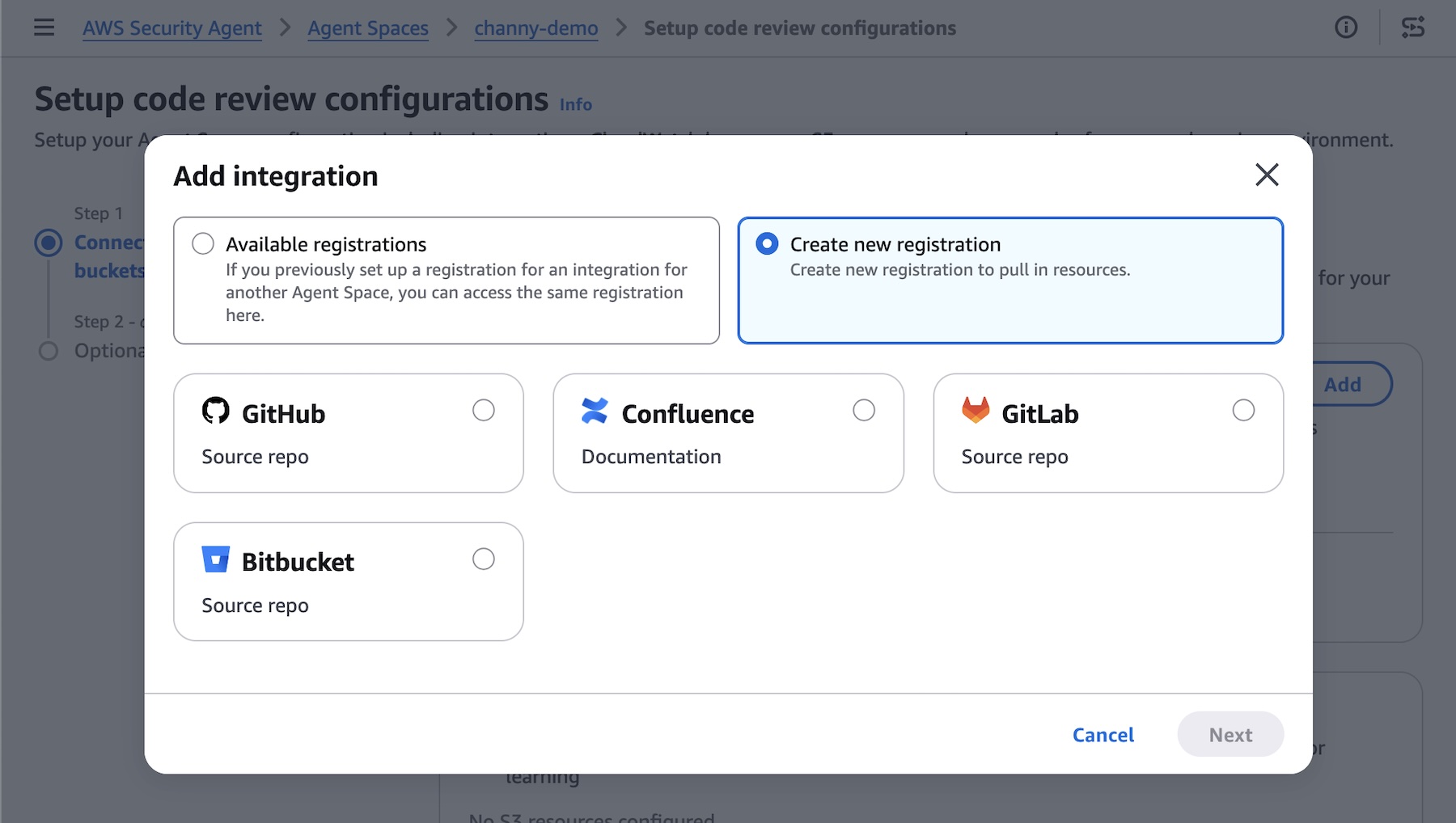
One of the most significant updates in the latest rollout is the expansion of repository support. Previously limited primarily to GitHub, the Security Agent now provides robust support for both SaaS and self-hosted versions of GitLab and Bitbucket. This is a critical development for enterprise customers who maintain complex, hybrid-cloud environments where code is distributed across various platforms.
Context-Aware Analysis vs. Pattern Matching
Unlike legacy static analysis security testing (SAST) tools that rely on static regex or pattern matching, the AWS Security Agent leverages deep, reasoning-based analysis. By integrating Confluence, the agent can reference internal documentation to understand the intent of the code.

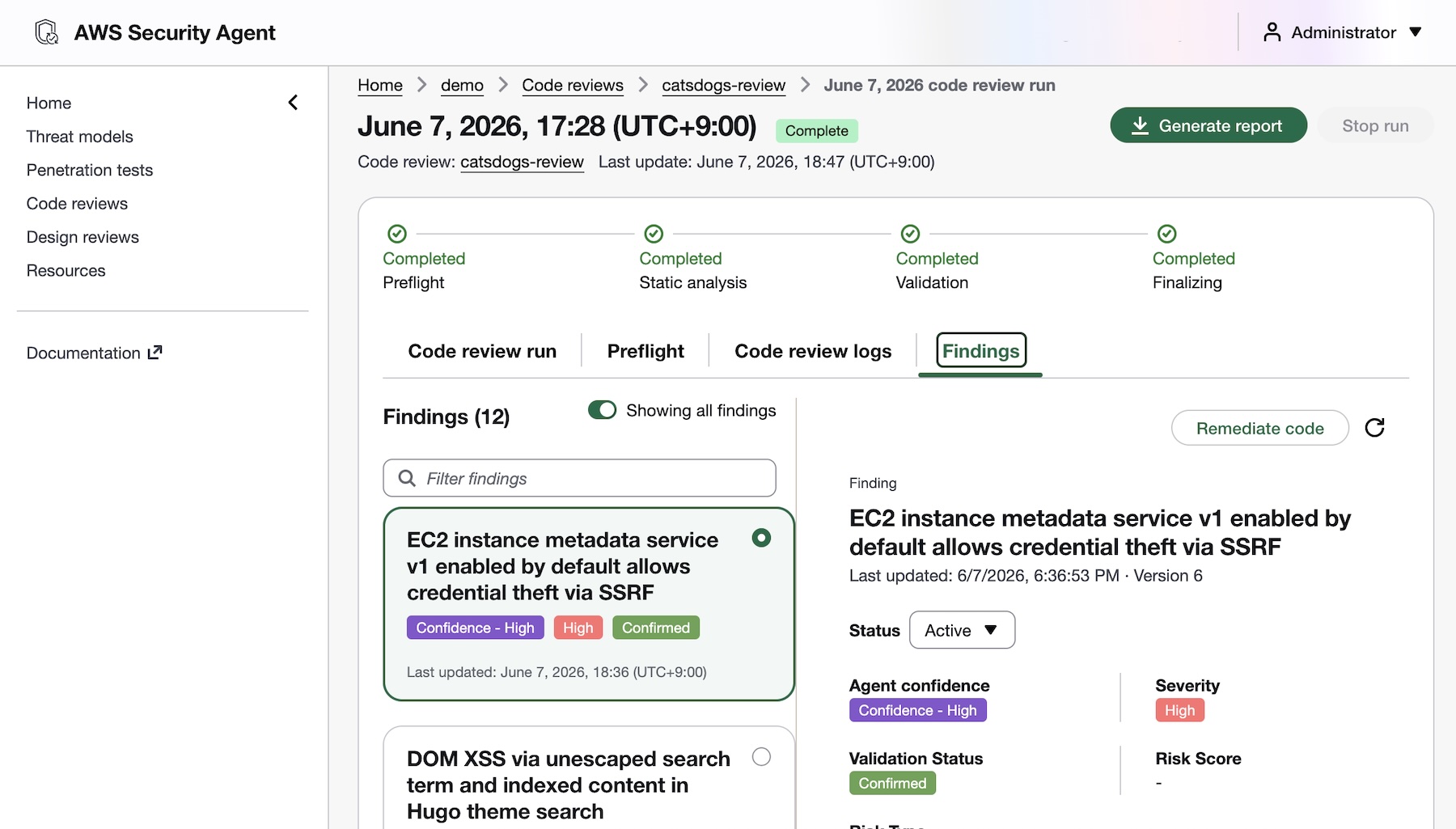
When a developer submits a pull request, the agent doesn’t just look for hardcoded secrets or common vulnerabilities; it analyzes the logic against organizational compliance requirements. If a security risk is identified, the agent doesn’t just flag it—it generates fix commits and remediation guidance directly within the developer’s workflow. This "shift-left" approach reduces the security-related "ping-pong" between developers and security engineers, allowing for faster, more secure deployments.
Design Review and Compliance: Mapping to Global Standards
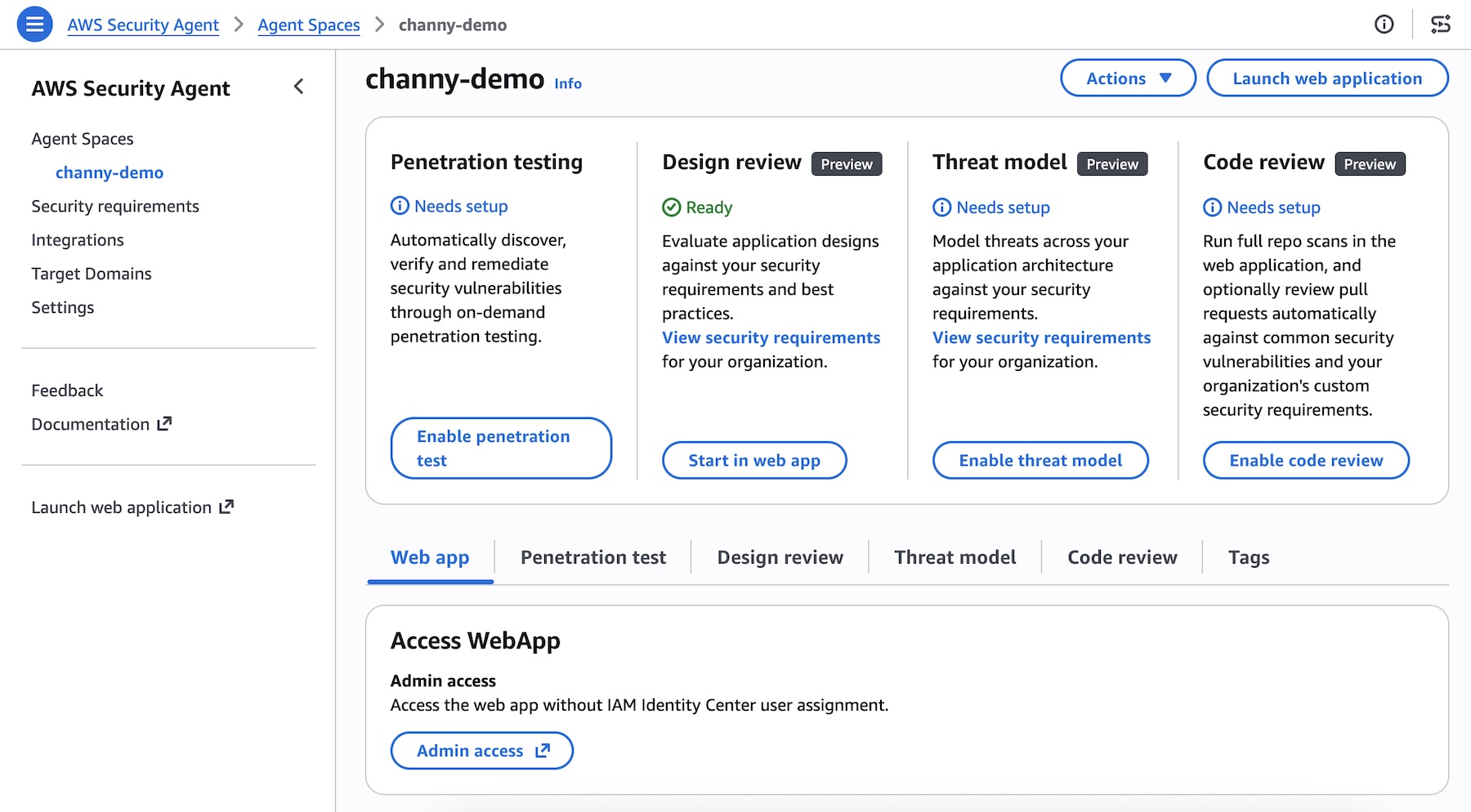
Security is not merely a matter of code; it begins at the architecture level. The updated AWS Security Agent introduces managed compliance packs, allowing teams to continuously validate their design against established frameworks, including:
- AWS Well-Architected Framework: Ensuring cloud best practices are baked into the design.
- NIST CSF: Aligning with the National Institute of Standards and Technology’s Cybersecurity Framework.
- PCI DSS: Simplifying the audit readiness process for payment processing applications.
By importing internal organizational requirements or Confluence documentation, teams can ensure their architectural designs are compliant before a single line of code is written. Every finding is mapped back to the compliance posture, providing auditors with a clear, documented history of security validation.
Automated Threat Modeling: Visualizing the Attack Surface
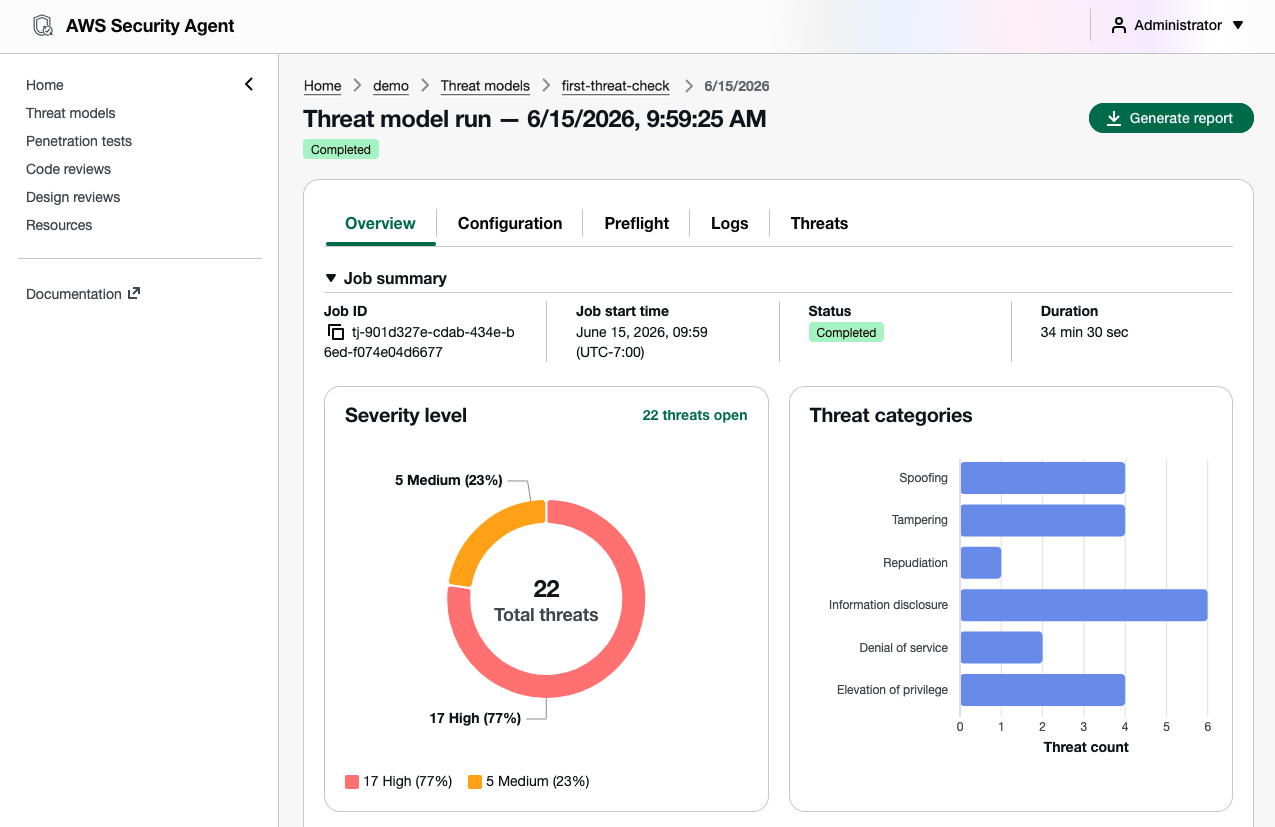
Perhaps the most sophisticated addition is the agent’s ability to generate automated threat models. Historically, threat modeling has been an expensive, manual, and time-consuming exercise conducted in whiteboard sessions.
The AWS Security Agent now automates this by analyzing design documents and source code repositories. It constructs a digital map of the application, including:
- Data Flows: Identifying how sensitive information moves between services.
- Trust Boundaries: Recognizing where security controls are (or should be) placed.
- Attack Vectors: Identifying potential entry points for threat actors.
By prioritizing these threats, the agent enables developers to focus on the most critical risks first, transforming threat modeling from a periodic "check-the-box" activity into a living component of the development cycle.
The Power of the IDE: Kiro and Claude Code
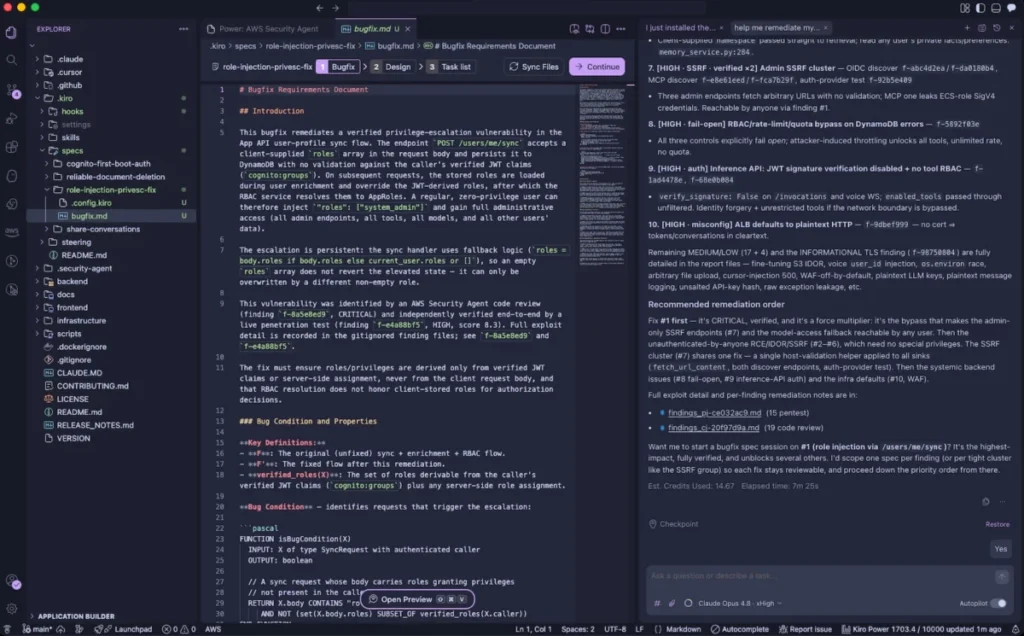
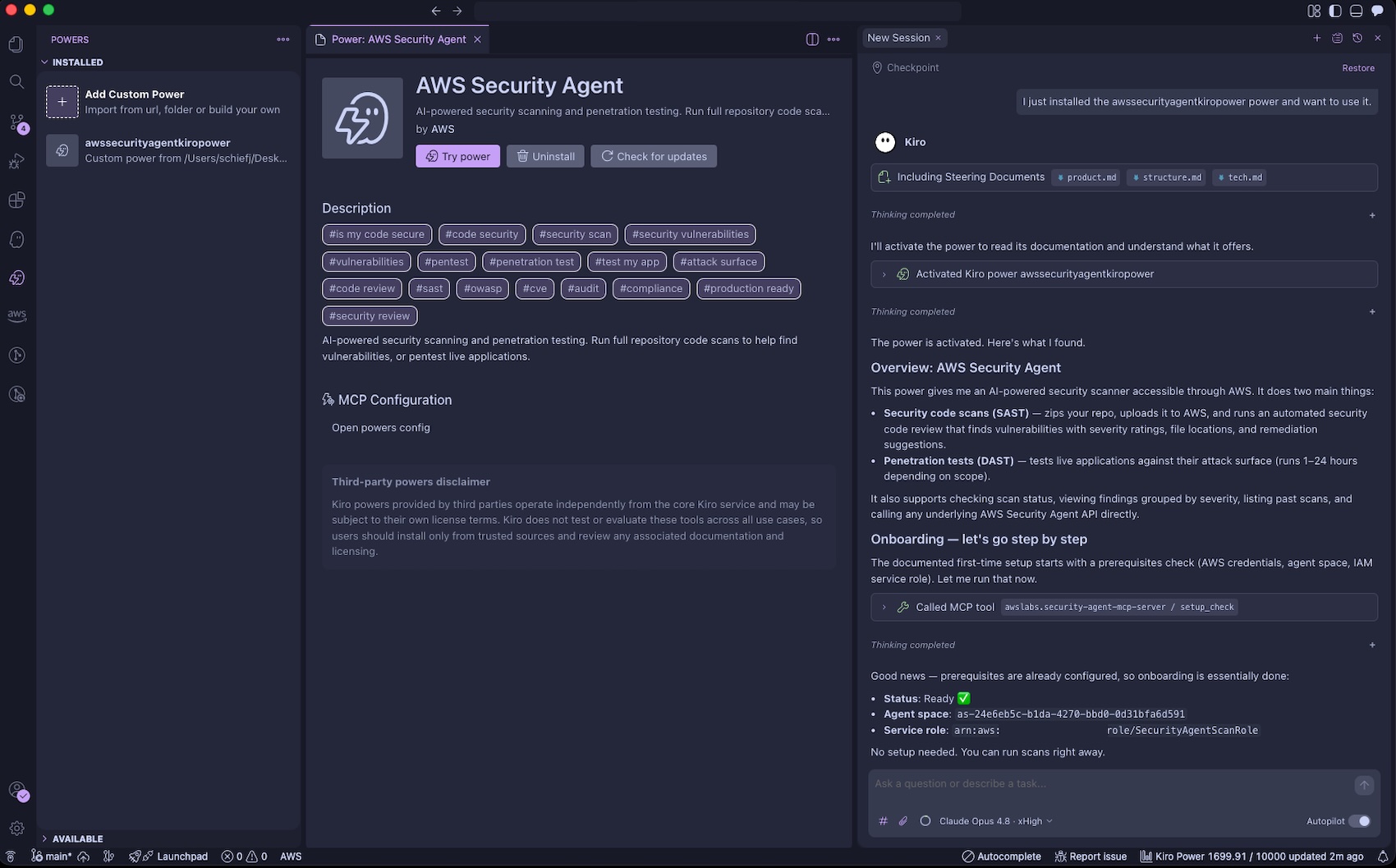
The most transformative change for developer productivity is the integration of the Security Agent into the Integrated Development Environment (IDE). With the launch of Kiro power and the Claude Code plugin, security is no longer an external dashboard; it is a collaborative partner inside the IDE.
Seamless Workflow Integration
Through an open Model Context Protocol (MCP) integration, developers can now:
- Trigger Scans: Ask the AI to "Run a full security scan on this repo" without leaving the IDE.
- Remediate in Real-Time: Request the agent to "help me remediate my findings," which leads to the agent downloading findings, prioritizing the most critical issue, and assisting in the creation of a bugfix spec.
- Interactive Modeling: Build a threat model by simply asking, "Build a threat model for this application," with the result saved directly as a Markdown file in the project folder.
This integration solves the "context-switching" problem that has long hindered developer adoption of security tools. By bringing the agent into the IDE, AWS is essentially providing every developer with an on-demand, specialized security consultant.
Implications: The Future of DevSecOps
The launch of these features signals a departure from the "security-as-a-silo" model. By providing a unified agentic offering, AWS is setting a new standard for what it means to be a "secure" developer.
Implications for Security Teams
Security teams can now shift their focus from manually reviewing every line of code to managing the policies and compliance packs that the agents follow. They become architects of the security process, overseeing critical interventions while the agent handles the heavy lifting of continuous scanning and remediation.
Implications for Business Velocity
For organizations, the primary implication is a significant reduction in deployment risk. By verifying findings through exploitability testing—essentially "proving" that a vulnerability is a real risk rather than a theoretical one—teams can stop wasting cycles on false positives. This, combined with the ability to fix issues within the IDE, effectively removes the "security tax" from the development pipeline.
The Human Element
Despite the high level of automation, the role of the developer remains central. The AWS Security Agent acts as a force multiplier, not a replacement for human judgment. By providing clear guidance and automated fixes, it allows developers to learn secure coding patterns in context, raising the overall security maturity of the engineering organization over time.
Conclusion
The evolution of the AWS Security Agent, culminating in the June 2026 updates, marks a pivotal moment in cloud security. By bridging the gap between design, code, and deployment through a unified, AI-driven interface, AWS is enabling organizations to move faster without sacrificing security.
As businesses continue to navigate an increasingly complex threat landscape, the ability to automate the "boring" parts of security—compliance mapping, threat modeling, and routine vulnerability scanning—will become a competitive advantage. With the addition of GitLab/Bitbucket support, deep repository analysis, and powerful IDE plugins, the AWS Security Agent has positioned itself as an essential tool for the modern, security-conscious development team.
For teams looking to get started, the 2-month free trial offers a low-risk opportunity to test how these agentic capabilities can transform their current development workflows. As Channy and the AWS team continue to iterate on the roadmap, one thing is clear: the future of security is automated, integrated, and profoundly proactive.