The Fall of a Digital Syndicate: Scattered Spider’s Key Operatives Plead Guilty in London
In a landmark development for international cybersecurity enforcement, two prominent members of the notorious cybercriminal collective known as "Scattered Spider" have pleaded guilty in a United Kingdom court. The pair, Thalha Jubair and Owen Flowers, admitted to a litany of charges relating to a massive, multi-year campaign of digital extortion and infrastructure disruption. Their guilty pleas, entered on the first day of what was anticipated to be a rigorous six-week trial, mark a significant turning point in the global effort to dismantle one of the most prolific and disruptive hacking groups of the decade.
The duo’s admission of guilt covers a wide spectrum of criminal activity, ranging from the localized paralysis of London’s critical public transport systems to sophisticated, international conspiracies targeting healthcare infrastructure and major corporate entities across the United States.
The August 2024 TfL Attack: A City Held Hostage
The catalyst for the current UK proceedings was the devastating cyberattack on Transport for London (TfL) in August 2024. The incident, which crippled the digital infrastructure of the Greater London area’s public transport network, served as a stark reminder of the vulnerability of modern urban life.
Thalha Jubair, 20, of East London, and 18-year-old Owen Flowers of Walsall, pleaded guilty to conspiring to commit unauthorized acts against computer systems. More specifically, they admitted to causing a risk of serious damage to human welfare—a charge that reflects the gravity of disrupting a transport network relied upon by millions of commuters daily.
The impact of the TfL hack was immediate and widespread. By infiltrating the backend systems that manage passenger information, payment gateways, and transit operations, the attackers effectively held the city’s mobility infrastructure hostage. For investigators, the arrest and subsequent conviction of Flowers and Jubair serve as a vindication of the collaborative efforts between the UK’s National Crime Agency (NCA) and international partners, including the U.S. Federal Bureau of Investigation (FBI).
A Chronology of Chaos: From Adolescent Hacks to Global Ransom
The criminal trajectory of Jubair and Flowers is both chilling and instructive, illustrating the rapid evolution of digital threats. Their activities were not isolated incidents but part of a calculated campaign that spanned years and crossed continents.
The Early Years: The Rise of "Everlynn" and "Rocket Ace"
Long before they were the faces of a major international criminal investigation, the defendants were honing their skills in the darker corners of the internet. Investigations revealed that at the age of 15, Jubair operated under the handle "Everlynn." During this period, he became infamous for peddling fraudulent "emergency data requests" (EDRs). By compromising government and police email accounts, he and his cohorts would send falsified, urgent demands to major tech companies, claiming that a life-or-death situation required the immediate disclosure of sensitive subscriber data.
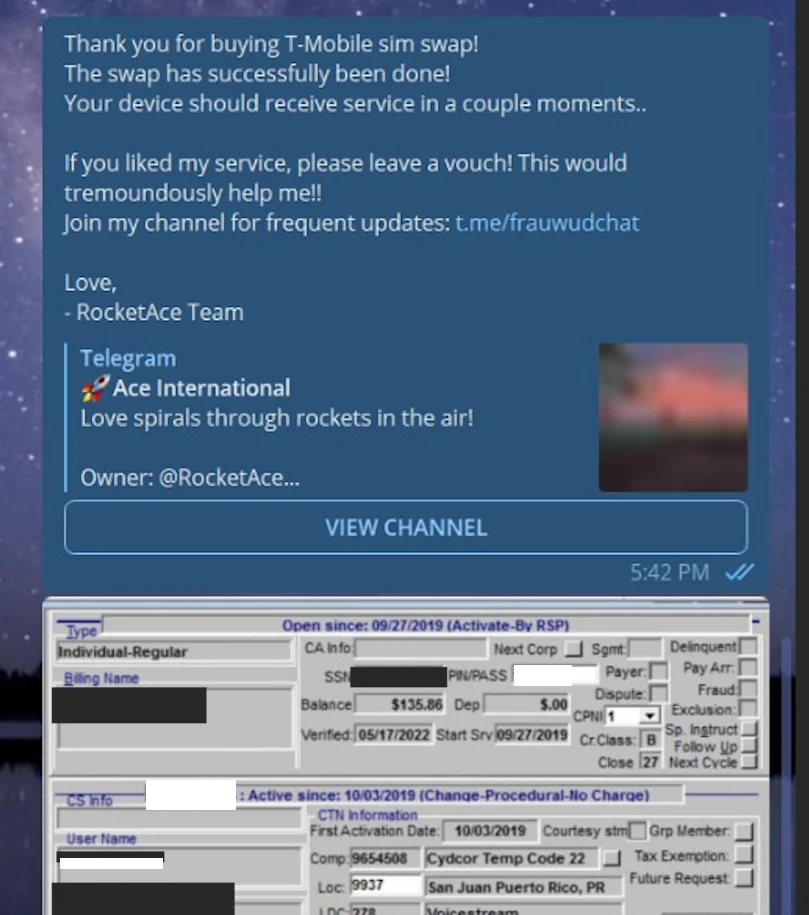
By 2022, the sophistication of these operations had grown exponentially. Jubair, using the handle "Rocket Ace," helped co-run "Star Chat," a Telegram channel that served as a clearinghouse for SIM-swapping services. By phishing credentials from employees at major U.S. and UK wireless providers, the group could redirect a target’s phone number, effectively hijacking their multi-factor authentication (MFA) codes.
The 2022 Phishing Spree
The summer of 2022 marked a significant expansion in the group’s reach. A massive SMS phishing campaign, often referred to as "smishing," targeted employees at hundreds of major organizations. This campaign facilitated breaches at high-profile companies, including LastPass, DoorDash, Mailchimp, Plex, and Signal. The objective was clear: harvest single sign-on (SSO) credentials to gain a foothold in corporate networks, leading to data exfiltration and, eventually, multi-million dollar ransom demands.
The 2023-2024 Ransomware Wave
By late 2023, Scattered Spider had become a household name in cybersecurity circles. Their high-profile attacks on MGM Resorts and Caesars Entertainment in Las Vegas brought global attention to their tactics. Sources familiar with the investigations have identified Owen Flowers as the individual who, in the immediate aftermath of the casino attacks, provided anonymous interviews to the media, effectively taunting the security community and the affected companies.
The subsequent attacks in the UK—targeting Marks & Spencer, Harrods, and the Co-op Group—further cemented the group’s reputation for audacity. Flowers’ guilty plea included an admission of his role in a conspiracy to hack into U.S.-based healthcare providers, specifically SSM Health Care Corporation and Sutter Health, in September 2024, demonstrating that no sector, however critical, was safe from their reach.
Supporting Data: The Cost of the Scattered Spider Epidemic
The sheer scale of the financial damage wrought by Scattered Spider is staggering. According to a September 2025 indictment unsealed by U.S. prosecutors in New Jersey, Jubair and his associates were implicated in 120 separate network intrusions across 47 U.S. entities between May 2022 and September 2025.

The financial footprint of these crimes is estimated at over $115 million in ransom payments alone—a figure that does not account for the billions in lost productivity, remediation costs, and legal fees incurred by the victims.
Furthermore, a related investigation into another Scattered Spider member, Tyler "Tylerb" Buchanan, revealed that the group used harvested credentials to siphon at least $8 million in cryptocurrency from victims across the United States. These figures underscore the transition of cybercrime from a nuisance to a systemic threat to the global financial and operational order.
Official Responses and International Cooperation
The dismantling of the Scattered Spider core is a testament to the effectiveness of the "follow the money" strategy applied to cyber-assets. Following the arrests of Flowers and Jubair in the summer of 2025, law enforcement agencies worldwide have been closing in on the remaining nodes of the syndicate.
The U.S. Department of Justice remains active in pursuing the remaining members of the group. While Noah Michael Urban, a Florida-based accomplice, was sentenced to 10 years in federal prison in August 2025, other defendants—including Ahmed Hossam Eldin Elbadawy, Evans Onyeaka Osiebo, and Joel Martin Evans—still await their day in court.
In the UK, the NCA has emphasized that the guilty pleas of Flowers and Jubair are the result of meticulous forensic work. "These individuals thought they could operate with impunity from behind their screens," a spokesperson for the agency noted. "They were wrong."
Implications for the Future of Cybersecurity
The case of Flowers and Jubair holds several critical implications for the future of digital defense and international law enforcement.
The Death of the "Teenage Hacker" Myth
The youth of the defendants—Flowers was just 18 at the time of his guilty plea—challenges the traditional perception of high-level cybercriminals as state-sponsored actors or seasoned professional mercenaries. Instead, it highlights a generation of "digital natives" who have turned cyber-exploitation into a scalable, profit-driven business model.
The Fragility of Identity Verification
The reliance on SIM-swapping and SMS phishing to bypass multi-factor authentication has exposed a fundamental weakness in modern security. Organizations must move beyond SMS-based authentication and toward more robust, phishing-resistant hardware keys. The "Star Chat" model of selling access to compromised accounts proves that the barrier to entry for cybercrime has been drastically lowered.
Global Jurisdictional Coordination
The fact that Jubair is simultaneously wanted by U.S. authorities while being prosecuted in the UK demonstrates the necessity of cross-border legal cooperation. The digital nature of these crimes means that perpetrators rarely respect national boundaries, and therefore, their prosecution must be equally borderless.
Conclusion: A Turning Point?
As Flowers and Jubair await their sentencing on July 15, 2026, the cybersecurity community remains cautiously optimistic. The removal of key figures like Jubair and Flowers, alongside the sentencing of other members, will undoubtedly disrupt the operations of Scattered Spider. However, the decentralized nature of these syndicates means that the threat is unlikely to disappear entirely.
The lesson for the global community is clear: cyber resilience is no longer an optional IT expense, but a fundamental pillar of national security. As the digital landscape continues to evolve, the cooperation between agencies like the NCA and the FBI will serve as the first line of defense against those who seek to profit from the disruption of our modern lives. The fall of Scattered Spider is a victory, but the war for the integrity of our digital infrastructure is far from over.