The Fall of the Spider: How Two British Teenagers Orchestrated a Global Cybercrime Wave
In a landmark development for international cybersecurity, two young British men have pleaded guilty in a London courtroom to charges stemming from a devastating August 2024 cyberattack against Transport for London (TfL). The admission of guilt by 20-year-old Thalha Jubair and 18-year-old Owen Flowers marks a significant turning point in the years-long pursuit of "Scattered Spider," a prolific and elusive cybercrime collective that has wreaked havoc on corporate and public infrastructure across the globe.
The pleas, entered on the first day of what was originally slated to be a six-week trial, bring to a close a high-profile chapter in the investigation into how a loose-knit group of young hackers managed to extract over $115 million in ransom payments while paralyzing major entities ranging from transit authorities to global casino operators.
The Charges: From Local Transit to Global Extortion
Thalha Jubair, of East London, and Owen Flowers, of Walsall, faced charges relating to their roles in sabotaging the computer systems that manage London’s public transport network. Their actions did not merely cause financial disruption; they were charged with causing a risk of "serious damage to human welfare," reflecting the potential for life-threatening consequences when critical infrastructure—such as transport signaling or emergency communication systems—is compromised.
Beyond the TfL attack, the scope of the defendants’ activities is vast. Flowers admitted to his role in a separate conspiracy targeting two major U.S. healthcare providers: SSM Health Care Corporation and Sutter Health. These admissions provide a rare, documented look into the inner workings of Scattered Spider, a group that has consistently prioritized high-stakes targets, leveraging stolen credentials to hold essential services hostage.
A Chronology of Chaos: The Scattered Spider Timeline
The criminal trajectory of Jubair and Flowers is inextricably linked to the rapid evolution of modern cybercrime, where teenage hackers leverage sophisticated social engineering rather than brute-force technical exploits.
- Summer 2022: The group initiates a massive SMS-phishing (smishing) campaign, targeting hundreds of companies. This campaign resulted in successful intrusions at major tech firms, including LastPass, DoorDash, Mailchimp, Plex, and Signal.
- September 2023: Scattered Spider executes a high-profile ransomware attack on MGM Resorts and Caesars Entertainment in Las Vegas. Investigative reports suggest that Flowers served as a primary spokesperson for the group during this period, granting media interviews that furthered the group’s notoriety.
- May 2022–September 2025: During this three-year window, federal prosecutors in the U.S. allege the group conducted over 120 separate network intrusions across 47 U.S. entities, amassing a collective ransom haul exceeding $115 million.
- July 2025: UK authorities arrest Flowers and Jubair, connecting them to attacks against high-street retailers, including Marks & Spencer, Harrods, and the Co-op Group.
- September 2025: U.S. prosecutors in New Jersey unseal a sprawling indictment against Jubair, detailing his role in wire fraud, computer fraud, and money laundering.
- April 2026: Tyler "Tylerb" Buchanan, another key Scattered Spider operative, pleads guilty to wire fraud and identity theft in the U.S.
- August 2024: The TfL attack occurs, ultimately leading to the arrest and conviction of the duo currently facing sentencing in London.
Supporting Data: The Mechanics of the "Star Chat" Operation
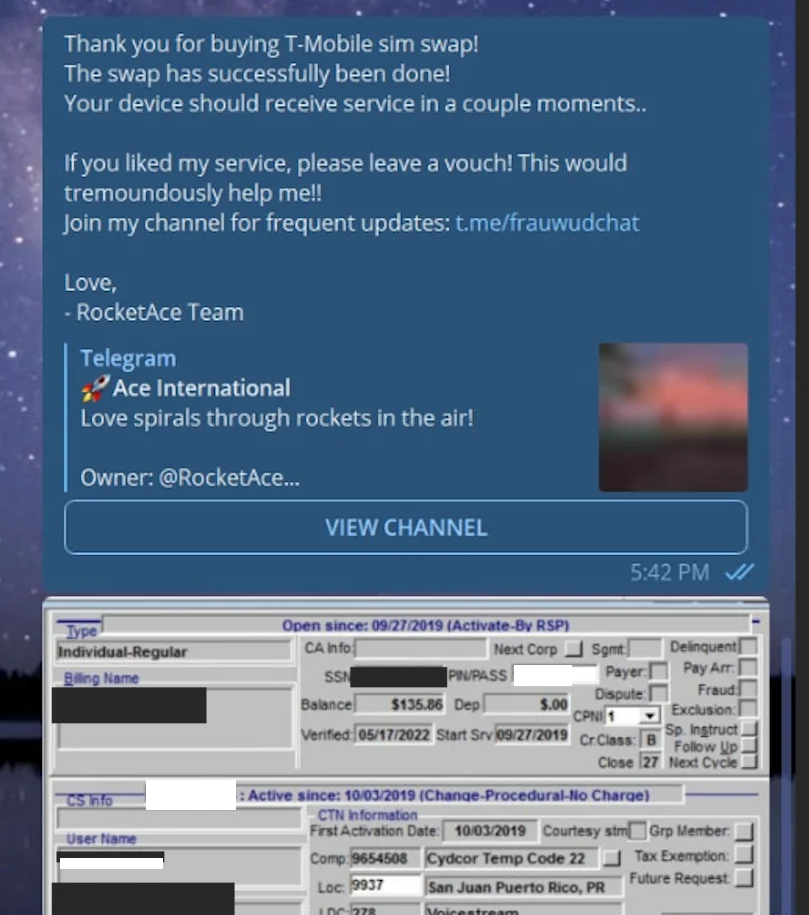
The investigation into Thalha Jubair revealed that he was not merely an operative but a central administrator in the cybercriminal underground. Prosecutors allege he co-managed a Telegram channel dubbed "Star Chat," which functioned as a marketplace and command center for SIM-swapping services.
SIM-swapping—the process of intercepting a victim’s phone number by convincing a mobile carrier to switch the service to an attacker-controlled device—has become the "skeleton key" for modern digital crime. By intercepting SMS-based one-time passcodes, the group bypassed multi-factor authentication (MFA) protocols that many companies deemed impenetrable.
Evidence recovered from the group’s internal communications, including receipts from "Rocket Ace" (one of Jubair’s known aliases), illustrates the brazen nature of these attacks. The group utilized internal employee tools stolen from major wireless carriers to facilitate their swaps, selling access to this service to other criminal actors.
Furthermore, forensic analysis of Jubair’s activities dates back to his teenage years. As a 15-year-old operating under the alias "Everlynn," he was allegedly involved in the sale of fraudulent "Emergency Data Requests." These requests weaponized compromised government and police email accounts to coerce tech companies into surrendering private subscriber data under the guise of "life-or-death" emergencies.

Official Responses and International Cooperation
The dismantling of the Scattered Spider infrastructure is the result of unprecedented cooperation between the UK’s National Crime Agency (NCA) and the U.S. Department of Justice (DOJ).
"The scale of the damage caused by these individuals is immense," a spokesperson for the investigation noted. The DOJ has made it clear that while Jubair and Flowers are being held accountable in the UK, the international dragnet remains active. Three other defendants—Ahmed Hossam Eldin Elbadawy, Evans Onyeaka Osiebo, and Joel Martin Evans—remain under indictment in the United States, highlighting that the "Spider" network is being dismantled from multiple geographic fronts.
The sentencing of previous members, such as Noah Michael Urban, who received a 10-year federal prison sentence and was ordered to pay $13 million in restitution in August 2025, serves as a benchmark for the severity with which these crimes are now being treated.
Implications: The End of the "Teenage Hacker" Myth
The case of Flowers and Jubair challenges the long-standing societal perception of the "bored teenager in a basement." Instead, these individuals acted as key components of a sophisticated, profit-driven enterprise.
Security Vulnerabilities
The success of Scattered Spider underscores the fragility of modern corporate security. By exploiting human psychology through SMS phishing and capitalizing on the inherent weaknesses in MFA, the group proved that technical barriers are often secondary to social engineering.
Legal Precedents
The cross-border prosecution of these individuals signals a new era in international law enforcement. The ability of the UK courts to process these cases while simultaneously coordinating with U.S. federal prosecutors suggests that jurisdictions are moving toward a more unified front against cyber syndicates. This "follow the money" and "follow the identity" strategy has proven effective in stripping away the anonymity that once protected cybercriminals.
The Future of Infrastructure Protection
The attack on Transport for London serves as a warning to governments worldwide: public infrastructure is a prime target for non-state actors. As digital connectivity increases, the reliance on legacy systems makes them vulnerable to the types of disruption demonstrated by Scattered Spider. The conviction of Jubair and Flowers is a victory for law enforcement, but it also serves as a stark reminder of the persistent threat posed by decentralized, highly motivated criminal networks.
As the London court prepares to hand down sentencing on July 15, 2026, the global cybersecurity community will be watching closely. The outcome will not only determine the fate of two young men but will also provide a final measure of justice for the thousands of individuals and dozens of organizations whose data, finances, and security were compromised by the group’s digital siege. The era of Scattered Spider may be drawing to a close, but the lessons learned from their reign of terror will shape defensive strategies for years to come.