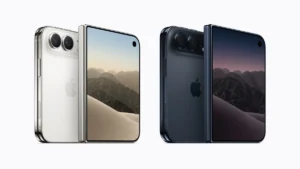
The Foldable Frontier: Samsung Accelerates Innovation Strategy Following Apple’s Entry
The mobile landscape is undergoing its most significant structural shift since the inception of the smartphone. For years, the foldable category was viewed as a niche playground for early adopters and tech enthusiasts—a segment pioneered almost exclusively by Samsung. However, the paradigm has shifted. With the official announcement of the Apple iPhone Duo, the foldable market has transitioned from a experimental fringe to a high-stakes, mainstream battleground.
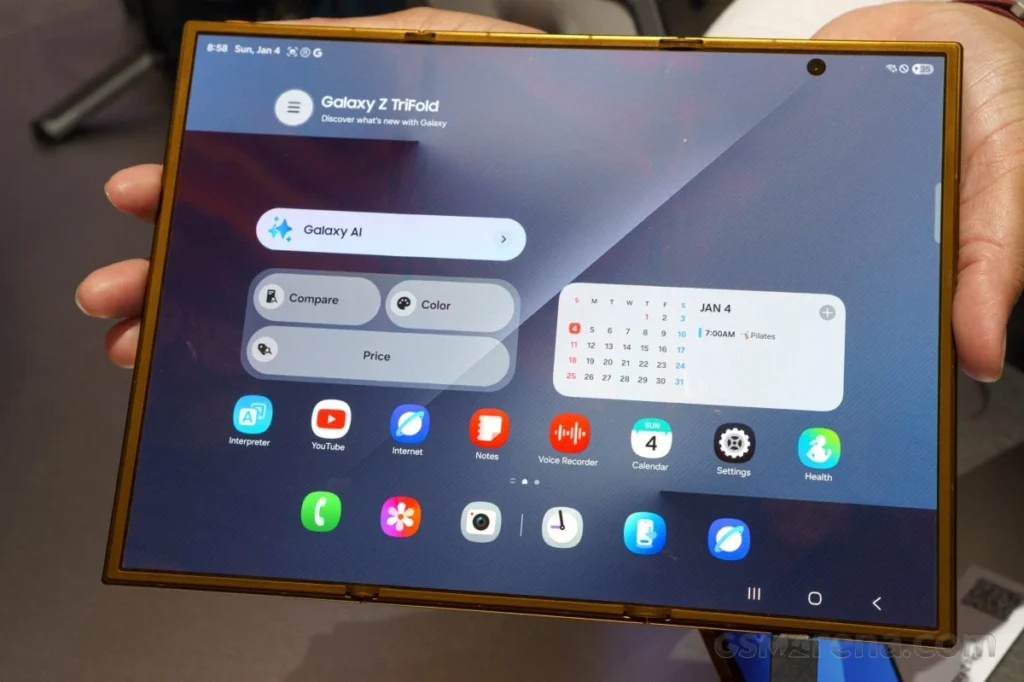
Industry insiders indicate that Samsung, sensing the immediate competitive pressure, is recalibrating its roadmap to maintain its pole position. By accelerating the development of its most ambitious hardware, specifically the Galaxy Z TriFold2, the South Korean giant is signaling that it does not intend to cede its hard-won territory to Cupertino without a fight.
Main Facts: A Pivot in Strategy
Recent reports originating from industry supply chain sources suggest that Samsung is moving to compress its product development cycles. The primary objective is to stay ahead of the "Apple Effect," where the entry of a brand as powerful as Apple inevitably shifts consumer perception and market growth.
The headline development is the accelerated timeline for the Galaxy Z TriFold2. While the original TriFold established a new form factor standard, its successor is slated to be more than a mere iterative upgrade. Engineering objectives for the new device include significant reductions in weight and thickness, as well as advancements in structural durability—a critical pain point for early foldable users.
Crucially, sources suggest that Samsung intends to maintain the aggressive $2,899 price point established by the first generation. This pricing strategy suggests that Samsung is willing to absorb higher R&D costs to ensure the device remains a "halo" product that serves as a testament to its technical superiority over the iPhone Duo.
Chronology: The Evolution of the Foldable Race
To understand the current urgency, one must look at the timeline of the foldable evolution:
- 2019–2021: The Formative Years: Samsung introduces the Galaxy Fold series, weathering initial durability concerns to standardize the "book-style" foldable. During this period, the market remains largely Samsung-centric.
- 2022–2024: The Proliferation Phase: Competitors like Huawei, Honor, and Google enter the fold. However, software optimization remains a hurdle, and the market growth remains moderate.
- 2025: The iPhone Duo Announcement: Apple officially breaks its silence on the foldable segment. The announcement acts as a catalyst, instantly validating the form factor for the general public and signaling that the "iPhone era" of folding devices has begun.
- 2026: The Strategic Pivot: Samsung, responding to Apple’s official roadmap, confirms internal plans to fast-track its "TriFold" and "Slideable" initiatives.
- 2027 (Projected): The Showdown: Analysts expect a major clash in the premium segment, with the launch of the Galaxy Z TriFold2 and the expected retail availability of the second-generation iPhone Duo.
Supporting Data: Market Dynamics and Competitive Pressures
Market analysts from major financial institutions have been quick to revise their growth forecasts. According to recent white papers, the foldable market is expected to grow by nearly 40% year-over-year following the introduction of Apple’s device.
The Apple Effect
Apple’s entry is not merely about hardware; it is about ecosystem lock-in. Historically, when Apple enters a new product category, the "addressable market" expands exponentially. For Samsung, this is a double-edged sword: while it expands the overall market share for foldables, it threatens to capture the high-end demographic that previously gravitated toward Samsung’s premium foldables by default.
Supply Chain Pressures
The supply chain is currently struggling to keep pace with the demand for ultra-thin glass (UTG) and advanced hinge mechanisms. Samsung’s vertical integration—owning its display manufacturing (Samsung Display) and its semiconductor division—provides a distinct advantage in navigating these shortages. However, analysts note that the cost of materials for a "TriFold" device remains exorbitant, making the $2,899 price tag a strategic gamble on scale.
Implications for the Industry
The shift in strategy has profound implications for the mobile ecosystem, from hardware design to software development.
H3: Hardware Innovation vs. Form Factor Utility
The industry is currently obsessed with "thinner and lighter." However, the real battle will be fought over screen crease management and battery density. Samsung’s move to make the Z TriFold2 more portable suggests that the company understands that the "tablet-in-the-pocket" utility is only viable if the device does not become a burden on the user.
H3: The Rise of the "Slideable"
Beyond the TriFold2, the report mentions Samsung’s first "slideable" smartphone. Unlike foldables, which rely on a hinge, slideables use flexible OLED panels that extend horizontally. This represents a hedge against the foldable form factor; if consumers eventually find the "crease" of a foldable display unacceptable, Samsung is positioning itself to pivot to rollable technology instantly.
H3: Software Optimization and the App Economy
The hardware is only as good as the software. With Apple’s entry, developers are now under immense pressure to optimize their applications for multiple aspect ratios. Samsung’s One UI has historically been the gold standard for multitasking on foldables. The company will likely double down on "Pro" features—desktop-class multitasking, improved S-Pen integration, and enhanced continuity between the inner and outer displays—to differentiate itself from the typically more "walled-in" Apple iOS experience.
Official Responses and Corporate Positioning
While Samsung has not issued a formal press release regarding the specific specs of the Z TriFold2, company representatives have historically alluded to their "relentless commitment to innovation." In recent investor calls, Samsung executives emphasized that the company is "doubling down on the premium segment," a clear nod to their foldable strategy.
Conversely, Apple has maintained its characteristic silence regarding future product roadmaps. However, the official announcement of the iPhone Duo suggests that the Cupertino giant is no longer content to observe from the sidelines. The industry is now watching closely to see how both companies balance the delicate trade-off between bleeding-edge innovation and the high standards of reliability that consumers have come to expect.
Future Outlook: A New Golden Age for Mobile Hardware
We are entering a period of hardware renaissance. For nearly a decade, the smartphone market was criticized for stagnation—annual releases were often indistinguishable from their predecessors. The introduction of the iPhone Duo, paired with Samsung’s aggressive response, has effectively ended the era of "safe" smartphone design.
The next three years will be defined by the race to perfect the foldable and rollable experience. Consumers will be the ultimate winners, as competition drives down prices and accelerates the maturation of the technology. Whether the "TriFold" becomes a standard or remains a niche luxury item will depend on how effectively Samsung can solve the remaining pain points of durability and weight.
As we look toward 2027, the rivalry between Samsung and Apple will move beyond mere specifications. It will become a war of visions: Samsung’s vision of a flexible, multi-tasking, hardware-first future versus Apple’s vision of a refined, software-integrated, and highly polished mobile experience. The foldable frontier is officially open, and for the first time in years, the future of the smartphone is once again unpredictable.
Conclusion
Samsung’s decision to accelerate the development of the Galaxy Z TriFold2 is a calculated move to secure its legacy as the architect of the foldable era. By preempting Apple’s potential market dominance with a thinner, lighter, and more robust device, Samsung is laying the groundwork for a long-term battle for the soul of the premium smartphone market. As the industry watches the 2027 horizon, one thing remains certain: the days of static, flat-screen phones are numbered. The future is folding, sliding, and evolving at a pace that few could have imagined just a few years ago.