The Future of Engagement: Mapping the Top Marketing Trends Reshaping E-commerce
The landscape of modern marketing is a volatile, high-stakes environment that mirrors the relentless evolution of the e-commerce industry itself. Every fiscal year brings a fresh wave of innovation, driven by the aggressive strategies of global industry titans and the creative disruption of boutique agencies. As consumer expectations reach an all-time high, the gap between traditional advertising and authentic engagement continues to widen, forcing brands to rethink their entire acquisition strategy.
In recent years, the primary driver of this transformation has been the shift toward social interaction and short-form video consumption. Today, marketing is no longer just about the product; it is about the narrative, the medium, and the immediate relevance of the message. As businesses ramp up their online investments, the mandate is clear: optimize for the right channel, at the right moment, or risk total irrelevance.
The Evolution of Marketing: A Chronology of Change
To understand where we are going, we must analyze the progression of digital marketing over the last decade.
- 2015–2018 (The Data Era): This period was defined by the transition from broad-spectrum advertising to data-driven targeting. The rise of social media advertising allowed brands to harvest granular user data, laying the groundwork for the hyper-personalization we see today.
- 2019–2021 (The Social Commerce Surge): The pandemic accelerated the adoption of social commerce. Consumers stopped viewing social media as a place for discovery and began treating it as a point of sale. Video content—specifically short-form, mobile-first video—became the dominant currency of the internet.
- 2022–2023 (The AI Explosion): The arrival of accessible generative AI forced a paradigm shift. Marketing automation moved from simple email sequencing to complex, predictive content generation and customer support.
- 2024 and Beyond (The Era of Responsibility and Conversational Depth): We are currently entering a phase where AI is not just a tool for efficiency, but a partner in ethics and sustainability, while search engines have evolved into conversational assistants.
1. The Rise of Responsible Artificial Intelligence
Artificial Intelligence has moved from the periphery of marketing tech stacks to the absolute core. However, as the technology becomes more powerful, the industry is pivoting toward "Responsible AI." This represents a commitment to the ethical, transparent, and socially accountable deployment of machine learning algorithms.
The Pillars of Ethical AI
Responsible AI is defined by three major constraints:
- Algorithmic Transparency: Brands must be able to explain how their AI models reach decisions regarding customer targeting.
- Bias Mitigation: Rigorous auditing of training data is essential to ensure that AI-driven campaigns do not perpetuate harmful stereotypes or exclusionary practices.
- Data Privacy Compliance: As global regulations like GDPR and CCPA tighten, AI must be utilized in a way that respects user sovereignty, prioritizing first-party data over invasive tracking.
2. The Sustainability Imperative: A New Brand Mandate
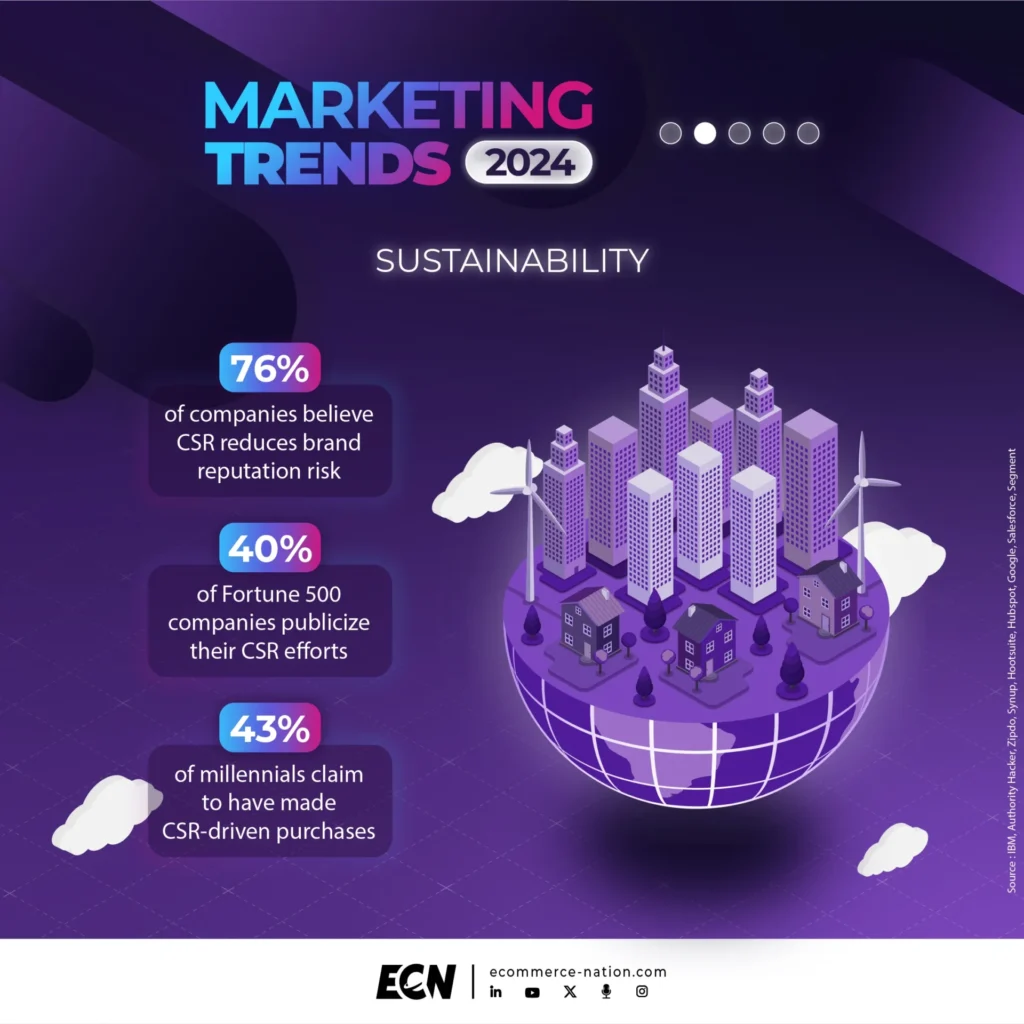
Sustainability is no longer a "nice-to-have" corporate social responsibility (CSR) bullet point; it is a critical marketing differentiator. Modern consumers, particularly Gen Z and Millennials, are increasingly aligning their wallets with their values.
Communicating Value through Transparency
Companies are now utilizing digital channels to provide radical transparency. By leveraging blockchain technology, brands can provide an immutable record of a product’s lifecycle, from raw material sourcing to the final delivery. This traceability allows consumers to verify claims of sustainability, effectively eliminating the specter of "greenwashing" that has historically plagued marketing efforts.
The Role of Social Proof
Influencer marketing has undergone a metamorphosis. The focus has shifted from high-reach, low-relevance celebrity endorsements to partnerships with "values-aligned" micro-influencers. These creators foster deeper trust by showcasing their personal commitment to eco-friendly lifestyles, making the brand’s message feel like a recommendation from a peer rather than a corporate pitch.

3. The Shift to Conversational Search
The days of typing rigid, keyword-stuffed queries into a search bar are rapidly fading. We have entered the era of the conversational search, where users interact with search engines and smart assistants—like Siri, Alexa, and ChatGPT—in natural language.
Optimizing for Intent, Not Keywords
This shift necessitates a change in SEO (Search Engine Optimization). Marketers must now optimize for "semantic search." This involves:
- Addressing the "Why": Creating content that answers the specific questions behind a search query.
- Natural Language Processing (NLP) Compatibility: Writing in a conversational tone that matches how a human speaks to a voice assistant.
- Structured Data: Utilizing schema markup to help AI assistants better understand the context of the information provided on a website.
4. Short-Form Video: The Attention Economy’s Gold Standard
If the average human attention span is shrinking, the response has been the rise of the short-form video. On platforms like TikTok, Instagram Reels, and YouTube Shorts, brands have mere seconds to hook their audience.
The Mechanics of Engagement
To succeed in this environment, marketers must adopt a "hook-first" philosophy. Techniques such as rapid-fire storytelling, high-contrast visual editing, and the use of trending audio have become the industry standard.

Beyond entertainment, we are seeing the rise of immersive video. By integrating Augmented Reality (AR) directly into social platforms, retailers are allowing customers to "try on" glasses, makeup, or even visualize furniture in their homes. This interactivity removes the final barrier to purchase, significantly increasing conversion rates by simulating the in-store experience from the comfort of the user’s sofa.
5. Hyper-Personalization: The AI-Driven Tailoring
The ultimate goal of modern marketing is the delivery of the right message to the right person at the exact moment of need. Hyper-personalization is the realization of this goal, made possible by the processing power of AI and machine learning.
From Segmentation to Individuation
Traditional marketing relied on broad segmentation (e.g., "women aged 25-34"). Hyper-personalization moves to "individuation," where the marketing message is unique to the user’s specific behavioral history.
- Predictive Analytics: Using past purchase behavior to anticipate future needs.
- Dynamic Content: Modifying website landing pages in real-time to show products, colors, or messaging that the specific user is most likely to respond to.
- Triggered Interactions: Sending personalized emails or push notifications based on specific actions, such as abandoning a cart or interacting with a specific piece of educational content.
Implications for the Future of Acquisition
The implications of these trends are profound. For marketing departments, this shift requires a significant realignment of talent and resources. It is no longer enough to have a team of generalist copywriters; companies now require data scientists, AI ethicists, and video production specialists who understand the nuances of the algorithmic social landscape.

Financial and Operational Impacts
Investing in these technologies requires a significant initial capital outlay, but the long-term ROI is clear. Companies that fail to adopt these strategies will find their cost-per-acquisition (CPA) skyrocketing as they continue to rely on outdated, interruptive advertising models. Conversely, those that embrace sustainable, conversational, and hyper-personalized strategies will see improved customer lifetime value (CLV) and brand loyalty.
Final Thoughts
The marketing landscape of the coming period is one defined by balance. Brands must find the equilibrium between the cold, hard logic of AI and the warm, human requirement for sustainability and authenticity. As we look toward the future, the winners will be those who recognize that while the tools of the trade have changed, the core objective remains the same: building a meaningful, lasting connection with the human being on the other side of the screen.
By leveraging the infographic data provided alongside this analysis, brands can begin to map their acquisition channels, ensuring they are not just present in the digital space, but truly influential. The evolution is constant, but for the prepared, it offers a wealth of opportunity.