The Future on Your Face: Snap’s Independent "Specs" Venture Enters the AR Frontier

After years of iterative development, Snap Inc.—the parent company of Snapchat—has officially transitioned its augmented reality (AR) ambitions into a standalone reality. Earlier this year, Snap spun off "Specs Inc.," a dedicated entity tasked with refining and commercializing its long-gestating smart glasses. Today, that division has opened pre-orders for its flagship product, simply titled "Specs."
Positioned not as a mere accessory for a smartphone but as a standalone computing platform, the new Specs represent a pivotal moment for wearable technology. With a premium price tag and an ambitious hardware architecture, Snap is attempting to bridge the gap between science fiction and consumer-grade hardware.
Main Facts: Hardware and Capability
The new Specs are designed to function independently, liberating users from the tether of a smartphone or PC. This is a significant departure from the current landscape of AR wearables, many of which rely on external processing power to maintain a sleek form factor.
Technical Specifications
The device is built around a "dual Snapdragon processor" architecture, providing the necessary compute power to handle complex spatial mapping and overlay rendering without overheating or lagging. Key features include:

- Display Technology: The see-through transparent display offers a 51-degree field of view. To put this into perspective, Snap claims the visual experience is equivalent to viewing a 115-inch screen from a distance of 10 feet.
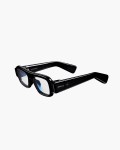
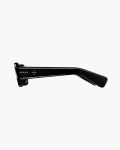
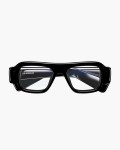
- Design and Ergonomics: The glasses are constructed from TR90, a lightweight and flexible thermoplastic material. They will be available in two sizes—47mm (narrow) and 52mm (wide)—to ensure a comfortable fit for diverse face shapes. Crucially, they are prescription-ready, acknowledging that for smart glasses to be adopted as daily drivers, they must accommodate vision correction.
- Interaction Models: Users can interface with the glasses through a combination of voice commands and intuitive gesture controls. The hardware also includes six integrated microphones for spatial audio and voice input, as well as open-ear stereo speakers.
- Connectivity and Charging: The device supports both Bluetooth and Wi-Fi. It utilizes a magnetic 5-pin charging interface, ensuring a secure and simple connection. Safety and privacy are addressed via a dedicated camera indicator light, signaling to onlookers when the device is capturing footage.
A Chronology of Snap’s AR Evolution
To understand the significance of this launch, one must look back at the decade-long journey of Snap’s hardware department.
- 2016: The Spectacles Debut. Snap launched the original Spectacles—a playful, camera-only device intended for capturing short-form video from a first-person perspective. While a cultural novelty, it lacked AR capabilities.
- 2018–2021: Iteration and AR Integration. Subsequent generations of Spectacles added depth sensors and increasingly sophisticated AR overlays. These versions were primarily targeted at developers and creators, serving as a testbed for software rather than a mass-market product.
- Early 2024: The Spin-Off. Recognizing that hardware requires a different operational cadence than social media software, Snap formally spun off the team into Specs Inc. This move was widely interpreted as an attempt to focus resources and potentially seek external funding or partnership opportunities for the hardware arm.
- Late 2024: The Pre-Order Phase. The official opening of pre-orders marks the end of the experimental phase. Specs Inc. is now transitioning from a research-and-development house into a consumer electronics manufacturer.
Supporting Data: Pricing and Logistics
The pricing strategy for the Specs reflects their status as a premium, high-tech piece of equipment. The base Wi-Fi-only model starts at $2,195.
For users seeking total independence from local networks, a cellular-enabled version is available for $2,395. This cellular version is the result of an exclusive partnership with Verizon. The integration of 5G connectivity into the glasses case allows for high-speed, low-latency cloud rendering and real-time AR collaboration.
The economic barrier to entry for the cellular model is further defined by the data plans:

- Existing Verizon Customers: $10 per month.
- Non-Verizon Customers: $20 per month.
Logistically, the Wi-Fi-only version is expected to begin shipping this fall. However, the timeline for the cellular-enabled variant remains opaque, as neither Snap nor Verizon has provided a definitive shipping date.
Official Responses and Strategic Positioning
The silence regarding the cellular ship date suggests that the hardware integration between Verizon’s network and the Specs may still be undergoing final network optimizations.
In official statements, the company has emphasized that these glasses are not just a peripheral, but a "computing platform." By shifting the focus away from the Snapchat app and onto the operating system of the glasses, the company is positioning itself to compete with industry giants like Meta, Apple, and Microsoft.
The choice to name the product simply "Specs" is a bold branding decision. While some critics argue it creates confusion with the previous iterations of Spectacles, it signals a desire to move away from the "social media toy" label and toward a professional-grade wearable device.
Implications: The Road Ahead
The launch of the Specs has profound implications for the AR industry and for Snap’s long-term corporate viability.
1. The Death of the "Phone-Tether" Era
If the Specs successfully deliver on the promise of a truly standalone experience, it could signal the beginning of the end for phone-dependent AR. If users can navigate, communicate, and interact with digital information solely through glasses, the necessity of pulling a smartphone out of a pocket diminishes. This is a direct challenge to the current mobile-centric economy.
2. The Enterprise vs. Consumer Tug-of-War
At a price point north of $2,000, these glasses are clearly not intended for the casual Snapchat user. They are positioned as a premium tool for early adopters, developers, and potentially enterprise users. The success of this product will likely be measured not by millions of units sold, but by the strength of the developer ecosystem that builds applications for the platform.
3. Privacy and Social Acceptance
The inclusion of a camera indicator light is a necessary, albeit insufficient, nod to privacy concerns. As with the original Google Glass, the social acceptance of face-worn cameras remains a hurdle. Whether society will accept the presence of these devices in public spaces remains to be seen. Snap is betting that the utility of AR will outweigh the initial "creepiness" factor that plagued early AR pioneers.
4. The Verizon Synergy
The Verizon partnership is a calculated move to solve the latency problem. AR relies on the immediate rendering of digital objects onto the physical world. If the latency is too high, the experience is jarring and can cause physical discomfort. By tying the device to a 5G network, Snap is attempting to ensure that the "magic" of AR remains consistent, even when the user is away from a home Wi-Fi signal.
Conclusion
The path for Specs Inc. is far from certain. The augmented reality market is littered with the corpses of ambitious startups and discarded projects from tech titans. However, by spinning off the division and committing to a high-performance, standalone architecture, Snap is placing its biggest bet yet.
The coming months will be critical. As the first wave of pre-ordered units hits the market, the tech community will be watching to see if the 51-degree field of view, the dual-processor speed, and the seamless gesture controls are enough to justify a price tag that exceeds most high-end laptops.
If the Specs can deliver a reliable, intuitive, and truly "smart" experience, they may well redefine our relationship with digital information. If they fall short, they will serve as another cautionary tale in the challenging, expensive, and perpetually evolving quest to replace the smartphone with something that sits closer to our eyes.
For now, the industry waits. Whether these glasses become the future of computing or a niche collectible will depend entirely on how the software ecosystem evolves once the hardware is finally in the hands of the public.