The Great Indian Foodtech Shakeup: Can New Challengers Crack the Swiggy-Zomato Duopoly?
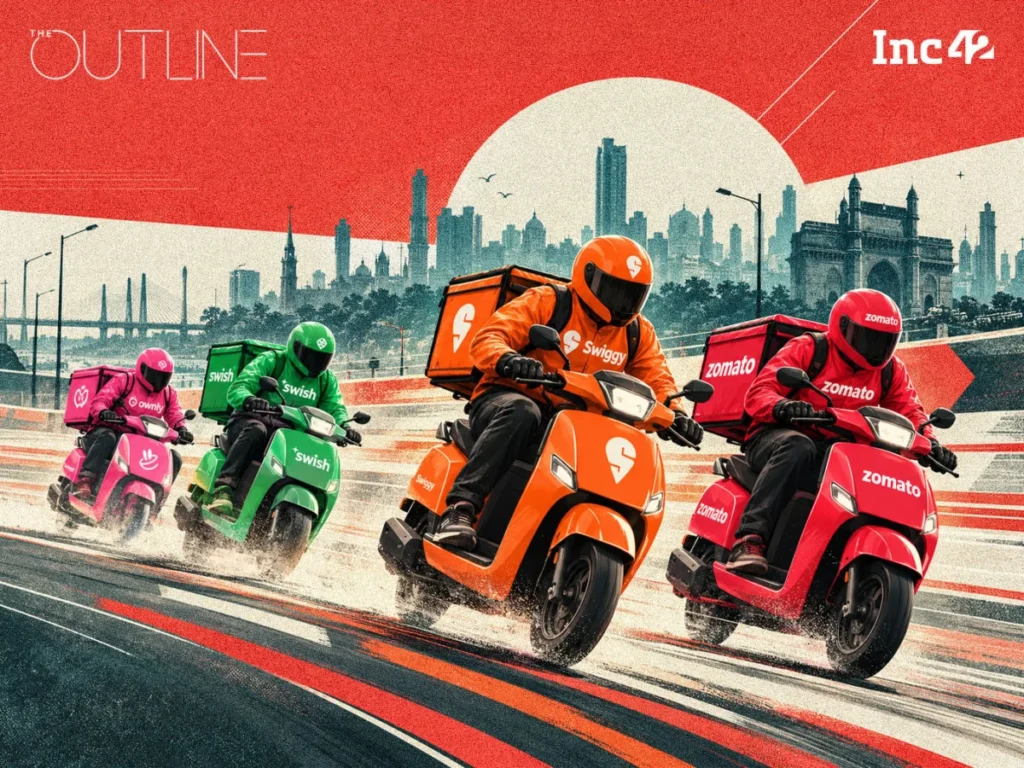
For nearly a decade, Swiggy and Zomato have ruled India’s food technology sector with an iron fist, building vast restaurant networks, hyper-optimized logistics, and deep-seated consumer habits that have long discouraged prospective market entrants. Together, they have operated as an entrenched duopoly, shaping urban dining and convenience culture across hundreds of Indian cities.
However, this fortress is facing its most formidable multi-pronged assault to date. The market is witnessing a fresh wave of competition erupting from three distinct directions: Rapido’s Ownly, food delivery startup Swish’s new marketplace Swish Go, and e-commerce titan Flipkart with its upcoming food delivery pilot, Eat In.
As these deep-pocketed challengers step into the arena, they enter an ecosystem where online food ordering is already a deeply ingrained consumer habit. Crucially, they are capitalizing on a wave of growing discontent among restaurant owners who are increasingly vocal about the heavy commission rates and operational fees charged by Swiggy and Zomato. Yet, while onboarding disgruntled eateries is only half the battle, the true test for these emerging players will be convincing price-sensitive Indian consumers to form regular ordering habits on alternative apps.
Can these aggressive new entrants genuinely challenge the dominance of Swiggy and Zomato? Or does the incumbent duopoly possess enough financial and structural muscle to keep these burgeoning rivals at bay?
Main Facts: The New Contenders Emerge
The competitive landscape of Indian foodtech is undergoing a radical shift as new players attempt to dislodge the incumbents using diverse strategic playbooks.
- Rapido’s Ownly: Leveraging the massive mobility traffic of the Rapido app, Ownly has rapidly scaled up. It is currently handling around 50,000 orders a day in Bengaluru and recently launched in Hyderabad, where it has already onboarded 10,000 restaurants with ambitions to triple that network. Ownly’s primary weapon is a zero-commission model for restaurant partners.
- Swish Go: Originally launched as a quick-service food delivery player focused on ultra-fast timelines, Swish is pivoting toward a broader restaurant aggregation marketplace model. Swish Go introduces flexible commission structures tied to order values and waives packaging and platform fees, directly targeting budget-conscious diners and fatigued restaurant owners.
- Flipkart’s Eat In: E-commerce giant Flipkart is aggressively testing its proprietary food delivery service, Eat In, in Bengaluru. Backed by a massive consumer base of roughly 500 million users and considerable financial firepower, Flipkart is positioning itself for a full-scale market rollout before the end of 2026.
Chronology: The Evolution of Foodtech Disruption
The road to the current duopoly—and the recent flurry of alternative experiments—has been marked by rapid experimentation, scaling struggles, and shifting market dynamics.
- Pre-COVID-19 Era: Online food delivery accounted for a mere 10% of a typical restaurant’s overall business. Swiggy and Zomato expanded rapidly, establishing foundational trust and consumer habits.
- The Pandemic Boom (2020–2022): Lockdowns catalyzed a massive shift toward digital food ordering. By the height of the pandemic and its aftermath, delivery surged to represent up to 50% of total sales for many major restaurant chains, making them heavily reliant on aggregator platforms.
- The Quick-Delivery Experiments (2023–2025): Several players experimented with ultra-fast, 10-to-15-minute food delivery models. However, structural unit economics proved unsustainable. Zomato discontinued Zomato Quick and home-style meal service Zomato Everyday in May 2025, while Rebel Foods shut down Quickies. Swiggy similarly pulled the plug on its standalone 10-15 minute food delivery app, Snacc, in February 2026.
- Late 2025–2026 (The Current Wave): Recognizing the failures of hyper-fast standalone delivery, new challengers pivoted to horizontal marketplace aggregation. Rapido launched Ownly, Swish introduced Swish Go, and Flipkart advanced trials for Eat In, setting the stage for a dramatic market showdown.
Supporting Data: Scale of the Incumbents vs. The Upstarts
To understand the magnitude of the challenge facing Ownly, Swish Go, and Flipkart, one must examine the staggering financial scale and operational footprints of the incumbent duopoly.
Financial Performance (Q1 FY27)
- Eternal (Zomato’s Parent Company): Reported an adjusted food delivery revenue of INR 3,537 Cr in Q1 FY27, representing a robust 33% year-on-year (YoY) growth from INR 2,657 Cr in Q1 FY26 (up from ~INR 3,135 Cr in Q4 FY26).
- Swiggy: Recorded food delivery revenues reaching INR 2,208 Cr in Q1 FY27, growing 23% from INR 1,799 Cr a year earlier and up from INR 2,075 Cr in the preceding quarter.
Restaurant Networks and Reach
- Zomato: Averaged approximately 3.28 lakh monthly active restaurant partners during Q1 FY27.
- Swiggy: Boasts a network of over 2.7 lakh restaurant partners spanning more than 720 cities across India.
- Rapido’s Ownly: Processing over 50,000 daily orders in Bengaluru and actively onboarding 10,000 restaurants in Hyderabad, with a target of scaling that local network to 30,000 partners.
Restaurants Are Hungry For An Alternative
For years, restaurant owners have quietly—and at times vocally—complained about the escalating commissions, hidden advertising costs, and delivery fees levied by Swiggy and Zomato. While online ordering has transformed from a supplementary sales channel into an operational lifeline, aggregators can severely compress restaurant profit margins.
Backing this sentiment, National Restaurant Association of India (NRAI) President and Wow! Momo Co-founder Sagar Daryani highlighted in discussions with industry analysts that delivery has ballooned from 10% of pre-pandemic sales to nearly half of total revenues for several prominent restaurant brands.
New entrants are deliberately exploiting this friction:
- Zero-Commission Strategy: Rapido’s Ownly is capitalizing on merchant discontent by offering a zero-commission model. By integrating food ordering directly into the core Rapido mobility app, the company taps into an existing commuter base while leveraging its established logistics fleet to slash delivery setup costs.
- Sliding Scale Pricing: Swish Go is employing dynamic commission structures where rates vary based on order thresholds (e.g., separating orders below and above INR 100). By waiving packaging and platform fees, Swish Go mirrors low-cost alternatives like Swiggy’s own budget-focused Toing app, making it highly attractive to budget-conscious consumers and independent eateries alike.
However, industry analysts warn that these aggressive, merchant-friendly terms may be temporary. Market observers suggest that as Ownly and Swish Go scale, they will likely introduce standard commission models to achieve sustainable unit economics. The current benevolence is primarily a customer-acquisition and merchant-poaching strategy designed to break the duopoly’s stranglehold.

Official Responses and Industry Perspectives
Industry leaders and market researchers have offered diverse takes on whether these new entrants can alter the structural fabric of India’s foodtech industry.
"Swiggy and Zomato’s biggest advantages are their deeply established customer habits, wide restaurant selection, and hyper-local delivery networks built painstakingly over years."
— Anshika Jain, Principal Analyst at Counterpoint Research
Jain points out that while new market entrants can temporarily undercut incumbents on commercial terms to win over disgruntled merchants, the barriers to entry remain exceptionally high—particularly when scaling operations.
Furthermore, sector experts note that while platforms like Swish have experimented with ultra-fast delivery, the economics of 10-minute food delivery have historically collapsed under the weight of high wastage, complex supply chains, and low order values. This hard market reality is precisely why startups are shifting away from standalone cloud-kitchen experiments and moving toward full-scale restaurant aggregation.
Implications: The Road Ahead for Indian Foodtech
The entrance of Rapido, Swish, and Flipkart carries profound implications for the future of Indian commerce, consumer pricing, and merchant relations.
1. Margin Pressures on Incumbents
Even if Swiggy and Zomato do not lose massive market share overnight, the presence of well-funded rivals offering zero-commission or low-fee structures forces the duopoly to adopt defensive pricing, increase merchant retention incentives, and monitor their service level agreements closely.
2. The Power of Super-Apps and Ecosystems
Flipkart’s anticipated entry underscores a broader industry trend: food delivery is no longer an isolated vertical. With a user base of 500 million, Flipkart can cross-subsidize customer acquisition costs, bundling food delivery with e-commerce loyalty programs, fintech offerings, and quick commerce. Similarly, Rapido is successfully converting urban commuters into hungry diners.
3. Quick Commerce as the Ultimate Moat
According to Counterpoint Research, the true defensive moat for Swiggy and Zomato extends well beyond cooked meals. Their aggressive expansion into quick commerce (through Instamart and Blinkit) requires heavy capital investments in local dark store inventory, complex supplier networks, and real-time replenishment systems. Once these quick commerce hubs achieve local density and profitability, they become exceptionally difficult for horizontal competitors to dislodge.
The Verdict
For Flipkart, Rapido Ownly, and Swish Go, the honeymoon phase of merchant acquisition will soon give way to the ultimate economic reality test: Can early trial traction convert into habitual, repeat orders without burning through endless venture capital?
They do not need to overthrow Swiggy and Zomato nationwide on day one. However, to truly loosen the duopoly’s hold, these challengers must prove they can build sustainable, profitable unit economics in key urban markets—transforming initial consumer curiosity into long-term culinary loyalty.