The Prototype Pivot: How AI-Driven Value-First Selling is Redefining the $12,000 Close
In the traditional landscape of digital agency sales, the "pitch" has long been a game of persuasion, promises, and polished slide decks. However, a new methodology emerging from the intersection of generative AI and performance marketing is flipping the script. By leveraging high-speed AI workflows, consultants are now arriving at initial discovery calls not with questions, but with fully functional, brand-matched prototypes.
This approach recently culminated in a $12,000 deal closed by AI consultant Etan Polinger, who demonstrated that the "future of selling" lies in removing the need for a pitch entirely. By replacing speculative promises with tangible assets, Polinger has pioneered a workflow that allows a single operator to perform the work of a full-scale creative and development team in under four hours.
Main Facts: The Death of the Traditional Pitch
The core of this strategic shift is what Polinger calls "Value-First Selling." In a conventional sales cycle, an agency identifies a lead, schedules a discovery call, spends weeks drafting a proposal, and hopes the client chooses them over competitors. Polinger argues that this creates a "desperation dynamic" where the seller is at a psychological disadvantage.
The AI-driven alternative utilizes a sophisticated stack of Large Language Models (LLMs) and "vibe coding" tools to research, design, and build a working product before the first meeting even occurs. This achieves three primary objectives:
- Immediate Credibility: The prospect sees a working version of their request, instantly proving the seller’s technical capability.
- Psychological Loss Aversion: Once a prospect sees a perfectly branded tool that solves their specific problem, they subconsciously feel they "own" it. Choosing another vendor feels like losing a finished asset rather than simply declining a proposal.
- Efficiency Gains: Tasks that previously required a researcher, a UI/UX designer, and a front-end developer can now be executed by one person using AI agents and design systems.
The $12,000 deal in question began with a simple request for a custom chat widget. Within hours, Polinger had moved from a social media comment to a functional, branded prototype, ultimately leading the client to ask if Polinger even had the "bandwidth" to take their money—a total reversal of the standard sales hierarchy.
Chronology: From Lead Identification to the Signed Contract
The effectiveness of this workflow is rooted in its speed and sequence. Polinger’s process is broken down into a structured timeline that prioritizes high-context output over generic outreach.
Phase 1: Distilling the Outcome (Hour 0–0.5)
The process begins with "The Ask." Whether it is a LinkedIn post, an RFQ (Request for Quote), or a transcript from a preliminary screening, Polinger uses AI to strip away technical jargon. By feeding the prospect’s words into a model like Claude or ChatGPT, he asks for a "one-sentence outcome." This ensures the entire workflow remains focused on the client’s end goal—such as "a lead-capture widget that matches our site"—rather than getting bogged down in the underlying tech stack.
Phase 2: Deep Contextual Research (Hour 0.5–1.5)
Once the goal is clear, Polinger initiates a three-pronged research sprint. This is not a superficial Google search; it involves using deep-research AI agents to scan the internet for:
- The Person: Analyzing the prospect’s public appearances, podcast interviews, and social media stances to understand their communication style.
- The Company: Investigating the business model, current job openings (which signal internal pain points), and existing digital infrastructure.
- The Market: Mapping out competitors and identifying how they are currently utilizing AI to gain an edge.
Phase 3: The Automated Design System (Hour 1.5–2.5)
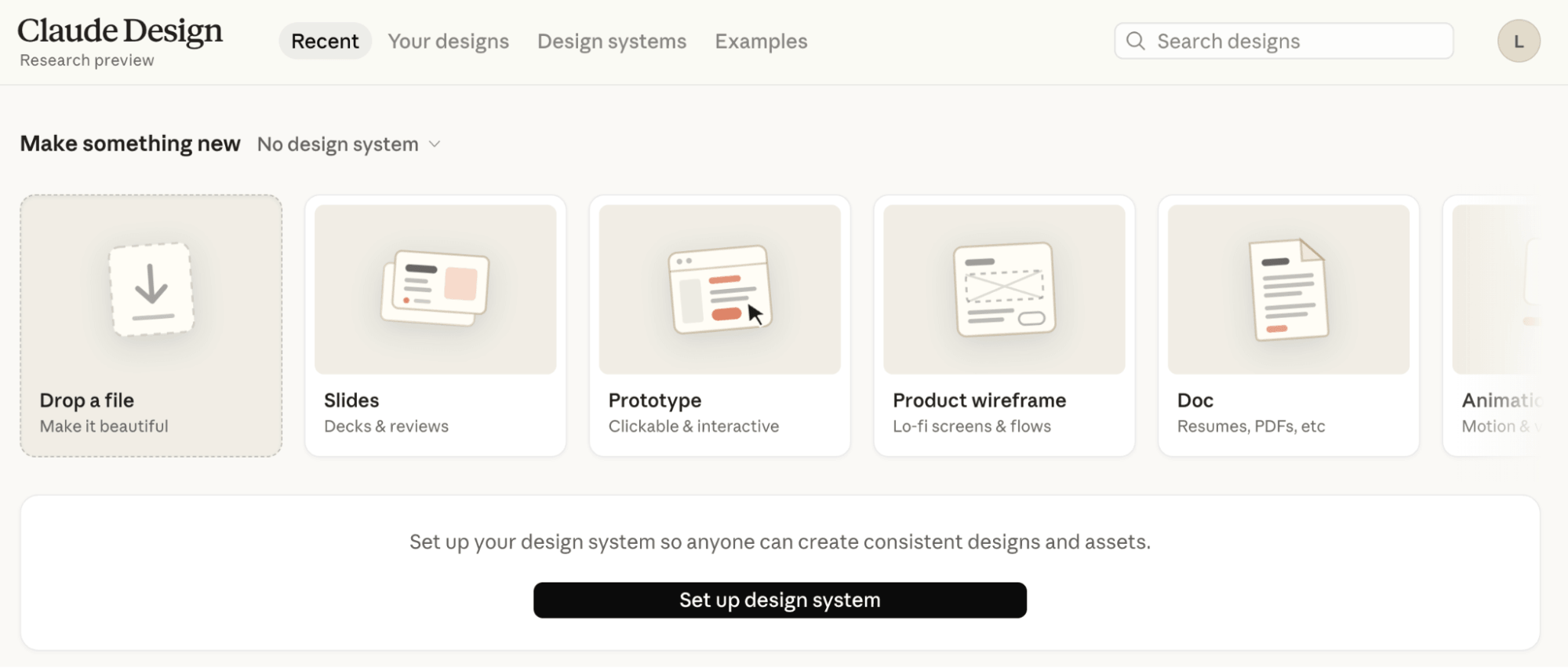
To create the "wow" moment, the prototype must look like it was built by the client’s internal team. Polinger uses browser extensions like WhatFont and ColorZilla to extract the exact hex codes and typography from the prospect’s website. These assets, along with screenshots of the client’s current UI, are fed into Claude Design. The AI then generates a comprehensive design system, including headers, buttons, and data visualizations that mirror the prospect’s brand identity.
Phase 4: Vibe Coding and Prototyping (Hour 2.5–4.0)
The final pre-meeting step involves "vibe coding"—a process where natural language instructions are used to generate functional code. By importing the design system into environments like Replit or Claude Code, Polinger instructs the AI to build the actual mechanism (e.g., the chat widget).

The result is a live URL that the prospect can interact with during the meeting. Simultaneously, the AI generates a tailored pitch deck using the deep research gathered in Phase 2, populated with screenshots of the new widget.
Supporting Data: The Efficiency of the AI Stack
The metrics behind this workflow reveal why it is disruptive to the traditional agency model. In a pre-AI environment, building a functional, branded prototype for a $12,000 pitch would have been financially reckless.
- Labor Reduction: A standard "proof of concept" (POC) typically requires 20–40 man-hours across multiple departments. Polinger’s workflow reduces this to under 4 hours for a single operator.
- Close Rate Acceleration: While traditional cold outreach close rates for high-ticket digital services often hover between 2% and 5%, Polinger reports that showing up with a finished product moves the close rate into a "majority" percentage, as the meeting shifts from "if" the project can be done to "when" it can start.
- Technical Accessibility: The use of "vibe coding" allows performance marketers—who may not have a background in computer science—to produce production-ready code. This democratizes high-end technical sales, allowing consultants to compete with established software houses.
Official Responses: Insights from Etan Polinger
Reflecting on the shift in sales psychology, Polinger emphasizes that the goal is to remove the "hope" factor from the room.
"When you show up with the right preparation and the right assets, you remove the ‘I hope they choose me’ energy entirely," Polinger explains. He notes that the AI allows for a level of personalization that was previously impossible at scale. "You can now come to the table with so much value created that instead of you pitching, the prospect feels like they’d lose something if they went elsewhere."
Polinger also stresses the importance of outcome-oriented communication. "The prospect doesn’t care whether it’s built in JavaScript; they just want the widget. Once you know the outcome, the options open up." This philosophy suggests that the most successful AI integrators will be those who focus on business results rather than the technical nuances of the tools they use.

Michael Stelzner, host of the AI Explored podcast, notes that this workflow represents a fundamental change in how digital assets are sold. It moves the "work" to the front of the sales funnel, using AI as the engine to make that front-loaded effort sustainable and profitable.
Implications: A New Era for Agencies and Freelancers
The success of this $12,000 deal has broader implications for the professional services industry.
1. The End of the "Blind" Discovery Call
The traditional discovery call, where the consultant spends 45 minutes asking "What are your pain points?", is becoming obsolete. Clients are increasingly fatigued by these meetings. The "Prototype Pivot" suggests that the most successful consultants will be those who do the discovery autonomously using AI research tools, arriving at the first meeting with solutions rather than questions.
2. The Rise of the "Full-Stack" Individual
The barrier between "salesperson" and "developer" is dissolving. As AI tools like Claude Code and Replit become more sophisticated, the "Full-Stack Individual"—someone who can identify a business problem, research the context, design the UI, and code the solution—will become the most valuable player in the gig economy.
3. Commoditization of Implementation
As AI makes it easier to build custom widgets and tools, the value of the "build" itself may decrease, while the value of "strategy and integration" increases. Polinger’s workflow highlights that the $12,000 wasn’t just for the widget; it was for the speed, the brand alignment, and the immediate reduction of the client’s anxiety.
4. The "Safety Net" Strategy
A notable takeaway from Polinger’s method is the "built-in safety net." By performing deep market research, the consultant identifies existing off-the-shelf solutions. If a client rejects a custom-built prototype due to budget or complexity, the consultant can immediately pivot to: "No problem, I can configure [Existing Platform] for you for a lower fee." This ensures that the time spent on research is never wasted, as it always leads to a informed recommendation.
In conclusion, the $12,000 deal closed by Etan Polinger serves as a blueprint for the modern salesperson. In an era where AI can synthesize information and generate code in seconds, the ultimate competitive advantage is no longer the "pitch"—it is the ability to prove value before the conversation even begins.