The “Remote Shutdown” Crisis: How Weak BMS Security is Paralyzing India’s EV Fleet
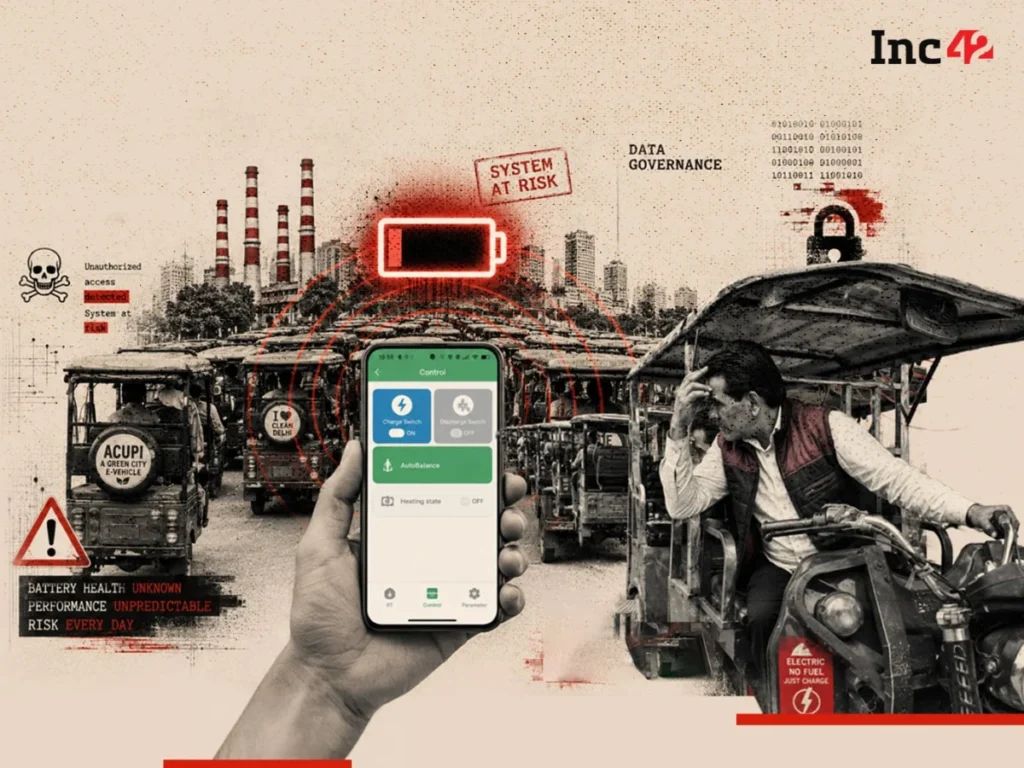
In an alarming trend that has turned from a digital curiosity into a significant public safety concern, electric rickshaw and loader drivers across India have found themselves at the mercy of pranksters and bad actors. Over the past week, social media feeds have been inundated with viral videos showing individuals remotely disabling the Battery Management Systems (BMS) of parked electric vehicles (EVs). While the footage—often framed as a harmless prank—has garnered millions of views, the reality for the drivers is far more dire: vehicles rendered suddenly inoperable, livelihoods disrupted, and a glaring spotlight shone on the fragility of India’s rapidly expanding connected-EV ecosystem.
The Anatomy of the Vulnerability
At the heart of this controversy lies the Battery Management System, an embedded controller vital to the safe operation of lithium-ion batteries. The BMS serves as the “brain” of the battery pack, monitoring critical health parameters such as voltage, temperature, discharge rates, and state-of-charge, while simultaneously acting as a safeguard against thermal runaway and overcharging.
However, the current crisis is not a result of a sophisticated, high-level “hack” in the conventional sense. Instead, it is a case of fundamental negligence in access control. Many budget-tier electric rickshaws and loaders currently operating on Indian roads utilize BMS hardware that communicates via widely available, often Chinese-origin, mobile applications such as BAT BMS, Lossigy, and Epoch Li-ion.
These apps are designed to connect to the vehicle’s battery via Bluetooth, granting the user a dashboard of diagnostic data. The security flaw is simple yet catastrophic: these systems lack robust authentication mechanisms. They rely on default, wide-open access settings that allow any device within a 10–15 meter Bluetooth range to pair with the battery. Once connected, the application does not merely report data; it often grants the user the administrative authority to issue commands, including the ability to cut off the battery’s power output, effectively “bricking” the vehicle on the spot.
A Chronology of Negligence and Exploitation
The exploitation of these vulnerabilities is not a sudden emergence but rather the culmination of years of oversight.
- Pre-2020: Security researchers and enthusiasts began identifying vulnerabilities in low-cost, imported BMS units. GitHub repositories and cybersecurity forums have documented, for several years, the ease with which these Bluetooth-enabled battery controllers could be manipulated.
- Early 2026: As the adoption of electric three-wheelers and loaders surged, the ubiquity of these specific, insecure apps increased.
- The Past Fortnight: The issue reached a tipping point as social media influencers and pranksters discovered that they could replicate these "hacks" with ease, leading to a wave of documented shutdowns of commercial vehicles in public spaces.
- The Regulatory Reaction: By mid-week, the panic among fleet operators and drivers prompted the government to intervene. The Ministry of Electronics and Information Technology (MeitY) directed Apple and Google to remove several of these vulnerable applications from their respective app stores, attempting to stem the tide of unauthorized access.
The Supply Chain Crisis: Who is Responsible?
Cybersecurity experts are unanimous in their assessment: the fault does not lie with the application developers alone, but with the Original Equipment Manufacturers (OEMs) who source and integrate these components.
"The vulnerability isn’t in the app itself, which is a legitimate diagnostic tool; it’s in how battery vendors skipped access control on the BMS firmware," explains Ankush Tiwari, founder and CEO of cybersecurity intelligence provider pi-labs.

Inc42’s independent investigation into the affected vehicles revealed that many OEMs—including brands like Yatri, Mayuri, Vande Bharat, and City Life—are relying on generic, third-party BMS hardware sourced from global marketplaces like Alibaba. These components are frequently imported and integrated into vehicles with little to no modification, effectively bypassing any form of "security-by-design" protocol.
"It is clear that these manufacturers didn’t do any due diligence before importing these batteries or distributing the app," says Karan Saini, a cybersecurity analyst and ethical hacker. "Many of these components are essentially off-the-shelf parts welded together. This is no longer just a technical glitch; it is a critical road safety issue."
The Regulatory Gap and Official Responses
The government’s decision to ban specific apps has drawn sharp criticism from industry experts who argue that it is a "band-aid" solution for a systemic wound. By banning the apps, the government may inadvertently prevent legitimate owners from monitoring their own battery health or resetting their systems in the event of an attack.
"The stronger case is for a mandatory certification or security-standard requirement for BMS units sold in the Indian EV market, similar to how telecom equipment requires type approval," suggests Tiwari.
While India has introduced the AIS-189 standard, which mandates a certified Cybersecurity Management System for new vehicle models starting in October 2025, experts warn that this framework is primarily designed for high-end automotive players. The vast, largely unorganized e-rickshaw segment—estimated at over 2 million vehicles, half of which remain unregistered—falls through the cracks of these regulations. The current enforcement mechanisms for budget EV battery vendors remain largely untested and, according to many, insufficient.
The Hidden Danger: Data Privacy and Surveillance
Beyond the immediate operational disruption, the incident exposes a deep-seated privacy crisis. These BMS apps do not just monitor battery voltage; they collect and store a wealth of telemetry data, including GPS location, driver movement patterns, vehicle usage logs, and operator habits.
Nikhil Jhanji, Principal Product Manager at IDfy, highlights the chilling implications: "Battery health monitoring may sound technical, but when combined with GPS and user identifiers, it can reveal where a person works, their income patterns, and their daily routine. That places it squarely in the realm of data protection."

Under India’s Digital Personal Data Protection (DPDP) Act, organizations are mandated to implement strict security safeguards and consent mechanisms. However, in the "wild west" of the budget EV component market, it is often unclear where this data is stored, who manages the back-end infrastructure, or if it is being sold to third parties. If an unauthorized user can access the BMS to shut down a vehicle, they may just as easily be accessing the location data stream of that same vehicle.
Implications for the Broader IoT Ecosystem
The "remote shutdown" phenomenon is a microcosm of a much larger, systemic threat facing India’s digital transformation. As the country embraces the Internet of Things (IoT), the security of the entire supply chain has become the weakest link.
"This is a broader connected-device governance problem," Jhanji adds. "Any IoT device—from smart locks and home appliances to industrial sensors—that relies on mobile apps with opaque ownership and weak authentication is a public safety risk."
The current crisis highlights the dangers of "white-labeled" hardware. When manufacturers prioritize cost-cutting by sourcing generic, insecure components, they import not just parts, but entire digital vulnerabilities. The industry is now at a crossroads: it can continue to operate on a model of rapid, low-cost deployment, or it can pivot toward a "sovereign hardware" strategy that prioritizes transparency and security.
A Path Forward: Governance and Accountability
To prevent a recurring cycle of such incidents, cybersecurity experts suggest a multi-pronged approach:
- Strict OEM Accountability: Manufacturers must be held legally and financially liable for the security of the components they integrate. Licensing should be contingent upon the auditability of the firmware.
- Role-Based Access Control: BMS systems must move away from universal, open-Bluetooth discovery. Future designs should mandate unique, device-level credentials and encrypted pairing protocols.
- Supply Chain Transparency: Regulatory bodies must demand clear disclosure of where firmware originates, where data is stored, and who holds the master keys to the system.
- Public Awareness: While the primary burden lies with the OEMs, there is an urgent need to educate the fleet operators and drivers about the risks of the digital tools they utilize for their daily work.
The incident has served as a wake-up call for India’s EV sector. As the country moves toward a greener future, the security of its infrastructure must be as robust as the vehicles themselves. As one anonymous expert noted, "India’s EV ecosystem cannot scale on hardware alone. It needs privacy, cybersecurity, and vendor governance built into the design from the very first day. We can no longer afford to import convenience at the cost of national security."
The era of unchecked, "plug-and-play" connectivity is coming to a close. The future of India’s mobility will depend on whether the industry can move beyond the "quick fix" and embrace a culture of digital responsibility.