The Silent Tragedy: How Systemic Failure Drove Odisha’s Vulnerable Tribal Youth into a Deadly Industrial Trap
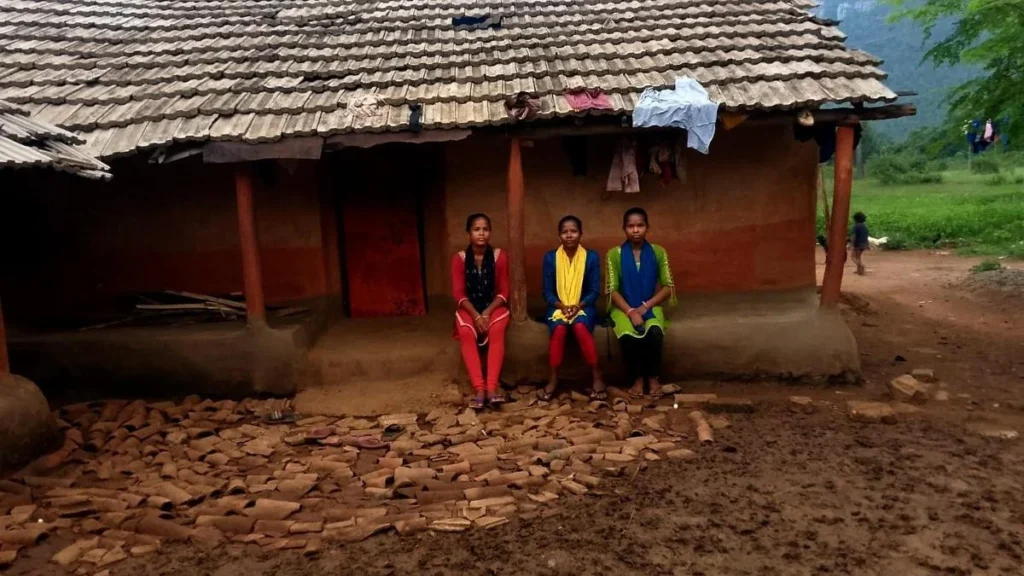
When the MGR Chennai Central–Bhubaneswar Superfast Express pulled into the platform on the morning of June 27, the atmosphere was thick with a grief that transcended the standard exhaustion of a 1,500-km journey. Among the passengers were Sari Juang and her two younger sisters, Sasmita and Ratni. They had just escaped the jaws of death, returning home to the Keonjhar district of Odisha after surviving a horrific ammonia gas leak that decimated their workplace—a seafood processing plant in Tiruvallur, Tamil Nadu—on June 21.
For the Juang community, a Particularly Vulnerable Tribal Group (PVTG), this return was not a homecoming of triumph, but a procession of mourning. The gas leak, which occurred in the dead of night while the workers were asleep in their residential quarters, claimed the lives of 17 migrant workers. Of those, 14 were teenage girls from the Juang community, all hailing from the same impoverished pockets of Odisha. Two victims were from Assam, and one from Jharkhand. As Sari stepped off the train, she carried the crushing weight of reality: by the time she reached her village, Kodipasa, two of her closest friends had already been cremated.
A Chronology of Despair
The tragedy unfolded on June 21, but the roots of this disaster stretch back years. The Juang girls had been lured by labour contractors with the promise of steady income—approximately ₹15,000 per month—and advance payments to their cash-strapped families. In a region where subsistence is often dictated by the vagaries of shifting cultivation and the limited yield of forest produce, this promised salary represented a path to dignity.
The girls, most of whom were in their late teens or minors, were transported to Tamil Nadu to work in the high-pressure environment of the seafood export industry. According to survivor accounts, the industrial unit failed to maintain basic safety standards. The ammonia leak, which originated outside their living quarters, turned their sanctuary into a death trap.
In the immediate aftermath, the Odisha government scrambled to facilitate the return of the survivors. By the end of June, the Labour Department had filed complaints across eight police stations in Keonjhar, initiating a probe into the labour agents who facilitated the recruitment. The investigations revealed a chilling reality: some of the minor girls had been hired using the identification documents of adult women, effectively bypassing age-verification protocols and masking the use of child labour in a hazardous industrial setting.
The Geography of Poverty
To understand why these girls migrated, one must look at the landscape of Banspal block in Keonjhar. Despite the presence of the Juang Development Agency (JDA), established in 1978 to uplift the 5,490 people living across 32 habitations, the socio-economic reality remains stagnant.
Basang Juang, 50, stands outside her home, pointing to a newly installed tin roof. It was paid for by the ₹9,000 sent home by her daughter, Phulamani, 18, one of the first victims of the leak. "My daughter used to walk 10 km every day to Keonjhar town to work as a construction labourer," Basang recounts. "Even that was irregular. She had no choice but to go to Tamil Nadu."

This narrative is echoed across the district. Sujani Juanga, another victim, had managed to send home ₹4,000 in two installments before her death, money intended to support an intellectually challenged sister and an alcoholic brother. In Rimulighat hamlet, 19-year-old Champabati’s parents still sit in their one-room mud house, mourning the daughter who was the family’s first to venture beyond state borders in pursuit of completing a house under the Pradhan Mantri Awas Yojana.
Supporting Data: The Illusion of Development
The tragedy of the Juang girls has ignited a firestorm regarding the efficacy of government-run tribal welfare programmes. Odisha is home to 64 tribes, with 13 groups classified as PVTGs. Over the decades, thousands of crores of rupees have been funneled into these groups through various central and state-sponsored schemes.
The Comptroller and Auditor General (CAG) of India, in its report on the "Functioning of Micro Project Agencies," has painted a damning picture of these initiatives. Between 2019 and 2024, 17 micro-project agencies received ₹387.93 crore. Yet, of the 11,493 projects sanctioned under MGNREGS, only 45% were completed. Crucially, ₹115.02 crore earmarked for labor components remained unspent—funds that could have provided employment within the state, potentially negating the need for the girls to migrate to Tamil Nadu.
Furthermore, literacy rates remain alarmingly low. Despite the establishment of the Kodipasa Ashram School in 1955, the literacy rate among villages under the JDA hovers around 38%. When the state fails to provide education that leads to local livelihood, and simultaneously fails to provide the promised wage-labor opportunities, migration becomes the only rational—if dangerous—choice.
Official Responses and Bureaucratic Stasis
The government has responded with immediate ex-gratia payments, with Chief Minister Mohan Majhi announcing ₹10 lakh for the families of the deceased. While the financial relief is significant for the grieving families, activists argue it is a "band-aid" on a festering systemic wound.
"Migration in itself is not the problem," notes migration expert Umi Daniel. "The problem is the illegal recruitment of minors, the total lack of oversight in hazardous industries, and the failure to implement the Inter-State Migrant Workmen Act of 1979."
The state’s proposed expansion of welfare through the Odisha PVTG Empowerment and Livelihood Improvement Programme (OPELIP-II)—with an estimated budget of over ₹2,400 crore—is currently stalled in the Finance Department. As bureaucrats debate over loan approvals from the International Fund for Agricultural Development (IFAD), the ground reality in villages like Kodipasa remains unchanged. The "handholding" promised by development agencies has proven to be largely non-existent, leaving families to rely on predatory labor contractors.

Broader Implications: A Pattern of Vulnerability
The death of the 14 Juang girls is not an isolated incident; it is symptomatic of a wider crisis affecting India’s tribal communities. In the Bonda Hills of Malkangiri, migration is becoming the "new normal." Youth are increasingly leaving their ancestral lands after failing to find opportunities, with young girls moving to prawn processing plants in Andhra Pradesh and boys seeking work as security guards in urban centers.
This mass movement is fracturing the social fabric of these tribes. Traditional community structures are being eroded, and there is a disturbing rise in cases where tribal youth are marrying outside their communities due to prolonged displacement. "Once we cross 16, we are expected to take care of ourselves," says Sula Juang, 21. "Where will the money come from for clothes, shoes, or even basic necessities? Leaving home is the only option for us, even if the workplaces are unsafe."
Conclusion: The Long Road Ahead
The ammonia leak in Tiruvallur is a stark reminder that development cannot be measured solely by the construction of blacktopped roads or the approval of multi-crore welfare schemes. It must be measured by the ability of a state to protect its most vulnerable citizens from exploitation.
As Sari Juang struggles to reconcile with her loss, she faces an impossible decision: remain in a village that offers no sustenance, or venture out again into an unpredictable, often dangerous, world. The tragedy has shed a harsh light on the "micro-project" model of development, suggesting that unless there is a fundamental shift toward creating local, dignified, and sustainable livelihoods, the cycle of migration—and the potential for future tragedies—will continue.
For now, the silence in the hamlets of Keonjhar is deafening. The girls who left to build houses have returned in coffins, and the funds meant to empower them remain trapped in the labyrinth of government accounts. The tragedy in Tamil Nadu is not just an industrial accident; it is a failure of the social contract, a haunting signal that for the Juang people, the distance between home and safety is becoming increasingly, and tragically, wide.