The Tech Landscape Shifts: Apple’s AI Revolution, Chinese Flagship Battles, and Mobile Innovations
The global technology sector experienced a seismic shift this week, anchored by Apple’s transformative Worldwide Developers Conference (WWDC) and a flurry of aggressive hardware releases from Asian manufacturing giants. From the integration of advanced generative AI models into the core of the Apple ecosystem to the debut of record-breaking battery capacities in mid-range handsets, the industry is currently navigating a period of rapid evolution.
I. Main Facts: The AI-Centric Transformation
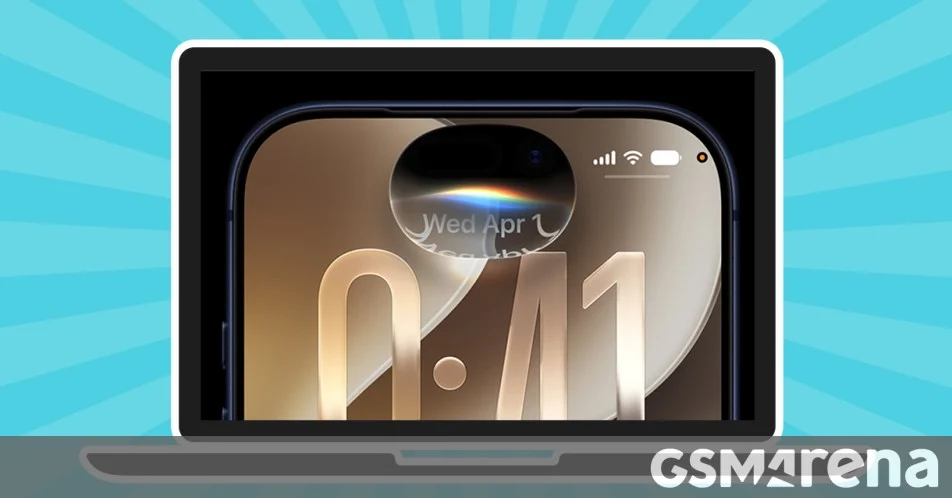
The most significant development of the week centered on Apple’s strategic pivot toward generative AI. At WWDC, the company unveiled a comprehensive overhaul of its operating systems—iOS 27, iPadOS 27, macOS 27, watchOS 27, and visionOS 27—all unified by a singular, ambitious goal: the launch of the "All-New Siri AI."
Unlike previous iterations of Apple’s virtual assistant, the new Siri functions as a standalone application. In a move that surprised many industry analysts, Apple has leaned into a hybrid model, utilizing Google’s Gemini large language models. This integration is bolstered by a dual-layered privacy architecture: on-device processing for routine, sensitive queries, and "Private Cloud Compute" for more intensive computational tasks. This, branded under the umbrella of "Apple Intelligence," promises a deeper, more context-aware integration across first-party applications, signaling an end to the era of reactive, script-based assistance.
Simultaneously, the hardware landscape saw significant movement. The upcoming Samsung Galaxy S27 (model number SM-S952) made its first official appearance in the GSM Association’s IMEI database, confirming that the Korean giant is already deep into the development cycle for its next-generation flagship. Meanwhile, in China, Xiaomi launched the 17T series, pushing the boundaries of mobile power efficiency, while OnePlus introduced the Turbo 6X and 6X Pro, setting a new benchmark for battery density in the sub-$300 segment.
II. Chronology of a Busy Week
The week unfolded in a flurry of announcements and leaks that defined the current tech narrative:
- Monday: Apple kicked off WWDC, announcing the integration of Gemini-powered AI across its entire OS lineup. Simultaneously, Google responded to the market pressure by slashing its AI plan pricing to $5 per month, while doubling cloud storage allotments to 400GB.
- Tuesday: Xiaomi officially debuted the 17T series in China. The vanilla model caught the attention of hardware enthusiasts due to its 7,000mAh Silicon-Carbon (Si/C) battery, outperforming its international counterpart by 500mAh.
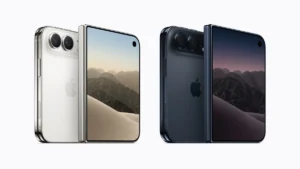
- Wednesday: The rumor mill churned as new dummy unit images of the "iPhone Ultra" emerged. These images provided further evidence regarding the design language of Apple’s long-rumored foldable device, suggesting a departure from traditional form factors.
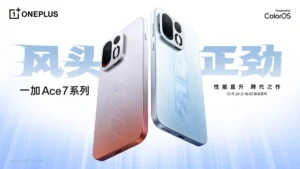
- Thursday: OnePlus dominated the mid-range market conversation with the launch of the Turbo 6X and 6X Pro in China.
- Friday: Samsung moved to maintain its presence in the news cycle, as early leaks regarding the Galaxy S26 FE surfaced, alongside reports that the company has begun internal testing of One UI 9 for the Galaxy A17, A34, and A57.
III. Supporting Data: The Specs Behind the Hype
The OnePlus Turbo 6X Series
The Turbo 6X series represents a major play for the high-performance, mid-range market. The Turbo 6X Pro is particularly noteworthy for its inclusion of an 8,000mAh Si-C battery, a capacity previously unseen in mainstream consumer smartphones. Paired with 80W fast charging and a 6.78-inch M14 AMOLED display (1.5K resolution, 144Hz refresh rate), the device is powered by MediaTek’s Dimensity 7400 Super chip. The camera array consists of a 50MP main sensor paired with an 8MP ultrawide lens. It is positioned at an aggressive price point: CNY 1,999 (~$295) for the base 8/128GB configuration.
The non-Pro Turbo 6X makes necessary concessions to hit its lower price point, utilizing a 7,000mAh battery with 45W charging, a 6.72-inch FHD+ LCD screen, and the Dimensity 7360 Super chipset. The camera system is trimmed to a 50MP main and 2MP macro configuration, with a starting price of CNY 1,899 (~$280).
Xiaomi’s Battery Efficiency
Xiaomi’s 17T release highlights the industry’s rapid adoption of Silicon-Carbon battery technology. By increasing the density of the vanilla 17T to 7,000mAh, Xiaomi has demonstrated that "flagship-tier" battery life is no longer reserved for top-tier devices, forcing international competitors to re-evaluate their capacity targets for the global market.
IV. Official Responses and Industry Sentiment
Apple’s move to incorporate Google’s Gemini models into its ecosystem has been met with both applause and skepticism. While developers praised the "Apple Intelligence" integration as a necessary evolution, some privacy advocates have expressed concerns regarding the reliance on cloud-based processing, even under the "Private Cloud Compute" label. Apple has maintained that its security architecture ensures that no user data is stored on external servers for training purposes.
Google’s swift reaction—lowering the price of its AI subscription plan—is viewed by many analysts as a defensive maneuver designed to prevent churn as Apple users gain access to native, high-quality AI tools. By doubling storage to 400GB, Google is attempting to provide a more compelling value proposition that transcends simple chatbot utility.
Samsung remains largely silent on its upcoming flagship cycle, though the appearance of the S27 in the IMEI database confirms the company is sticking to its annual release cadence. The leak of the S26 FE suggests that Samsung intends to continue its strategy of offering "Fan Edition" variants, which serve as the bridge between its mid-range A-series and the premium S-series.
V. Implications: What This Means for the Consumer
1. The Era of AI-Integrated Hardware
We are entering a phase where the "intelligence" of a device will become the primary differentiator rather than raw processing power. As Apple, Google, and Samsung compete to see who can integrate AI most seamlessly into daily tasks, the consumer will benefit from smarter assistants that can actually manage workflows, summarize emails, and predict user needs.
2. Battery Technology as the New Frontier
The introduction of 7,000mAh and 8,000mAh Si-C batteries by Xiaomi and OnePlus signals that the "battery anxiety" that has plagued smartphone users for a decade may finally be nearing its end. As these battery technologies migrate from niche Chinese releases to global flagship markets, we can expect the standard for a "good battery" to jump from 5,000mAh to the 6,500mAh+ range.
3. The Future of Foldables
The persistent leaks surrounding the iPhone Ultra suggest that Apple is no longer ignoring the foldable segment. While a release date remains speculative, the focus on design dummy units indicates that the form factor is undergoing rigorous testing. For consumers, this implies that the foldable market, currently dominated by Samsung and a few Chinese OEMs, is about to face its most significant competition yet.
4. Market Consolidation
The aggressive pricing of the OnePlus Turbo 6X series in China—offering high-end displays and massive batteries for under $300—is putting extreme pressure on global manufacturers to justify the higher costs of their mid-range devices. As Chinese OEMs continue to optimize their supply chains, international brands will find it increasingly difficult to charge premium prices for mid-range handsets without offering significant software or ecosystem advantages.
In conclusion, this week has highlighted a industry at a crossroads. Apple is betting the farm on an AI-first future, Google is aggressively protecting its service ecosystem, and Chinese manufacturers are winning the hardware war through sheer density and efficiency. For the consumer, this translates to a faster, more capable, and significantly longer-lasting mobile experience on the horizon. The coming months will be defined by how these companies execute their promises, and whether the software can keep pace with the hardware innovations currently hitting the assembly lines.