The Visual Prescription: Top 5 Video Editing Tools Revolutionizing Healthcare Marketing in 2025
In the modern digital landscape, the healthcare sector is undergoing a profound paradigm shift. No longer confined to clinical white papers and static brochures, medical providers, hospitals, and biotech firms are increasingly turning to video content as their primary vehicle for patient engagement. In 2025, video has become the bridge that transforms complex, often intimidating medical data into accessible, human-centric narratives that build trust and improve patient outcomes.
However, healthcare marketing is a minefield of complexity. Marketers must navigate the rigorous requirements of HIPAA compliance, the need for surgical precision in communication, and the ethical responsibility of maintaining absolute credibility. As the demand for high-quality, trustworthy content surges, the barrier to entry for production is falling. With the right suite of video editing tools, healthcare organizations can now produce professional-grade content—from patient testimonials to sophisticated procedure explainers—without requiring a Hollywood-sized budget or an extensive film crew.
The Evolution of Medical Communication: Why Video Matters
The rise of video in healthcare is not merely a trend; it is a necessity driven by audience behavior. Research indicates that patients are significantly more likely to engage with and retain information presented in a short-form video than through text-based medical documentation. By humanizing the healthcare experience, organizations can reduce patient anxiety, showcase physician expertise, and provide clarity on complex surgical or diagnostic procedures.

Yet, for the marketing professional, the technical hurdles remain. How do you maintain the "human touch" while adhering to strict regulatory standards? How do you ensure that a video explainer remains accurate and professional? The answer lies in the democratization of editing technology. Today’s software offers AI-driven features, streamlined workflows, and professional-grade effects that allow marketing teams to translate clinical expertise into visual assets that resonate with a digital-first audience.
The Top 5 Video Editors for the Modern Healthcare Marketer
To assist in this digital transformation, we have evaluated five of the most potent video editing platforms currently available, assessing their utility for the specific, high-stakes requirements of the healthcare industry.
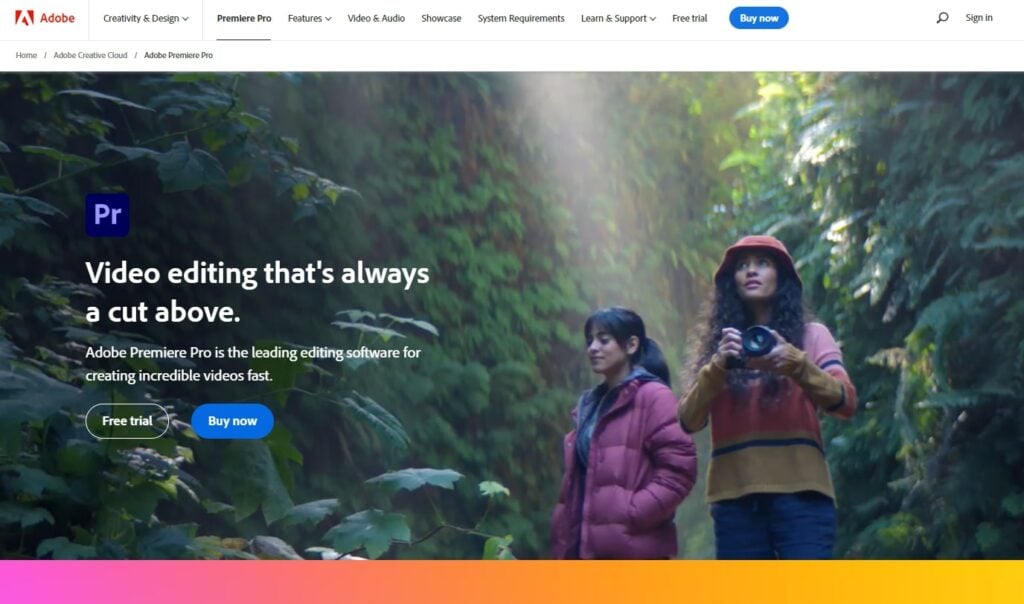
1. Adobe Premiere Pro: The Gold Standard for Professional Production
Adobe Premiere Pro remains the industry titan, setting the benchmark for professional video editing. For large-scale healthcare networks or medical research institutions that require cinematic quality, this platform is unparalleled.
- Key Features: Advanced multi-cam editing, industry-leading audio cleanup, and seamless integration with the Adobe Creative Cloud suite (including After Effects for medical motion graphics).
- The Professional Edge: Its non-linear editing capabilities allow for granular control over every frame, which is essential when dealing with sensitive medical footage that requires precise color grading to ensure accurate representation of skin tones or anatomical imagery.
- Implications for Healthcare: While it demands a steeper learning curve, the output quality provides the credibility and polish required for high-stakes brand campaigns and institutional documentaries.
- Pricing: $20.99/month (Subscription).
2. Animaker: Simplifying the Complex Through Animation
For healthcare providers aiming to explain chronic conditions, pharmaceutical mechanisms, or post-operative care instructions, live-action footage is not always the best solution. Animaker provides an AI-powered, cloud-based platform that excels in medical animation.
- Key Features: An extensive library of medical-related assets, AI-powered voiceover generators, and a drag-and-drop interface that requires zero coding or traditional animation skills.
- The Professional Edge: By removing the need for a live subject, Animaker simplifies HIPAA-related concerns regarding patient privacy while maintaining high engagement levels through visual storytelling.
- Implications for Healthcare: It is the ideal tool for "explainer" videos that need to break down complex physiological concepts into digestible, easy-to-understand visuals for the layperson.
- Pricing: Free plan available; Paid plans start at $15/month.
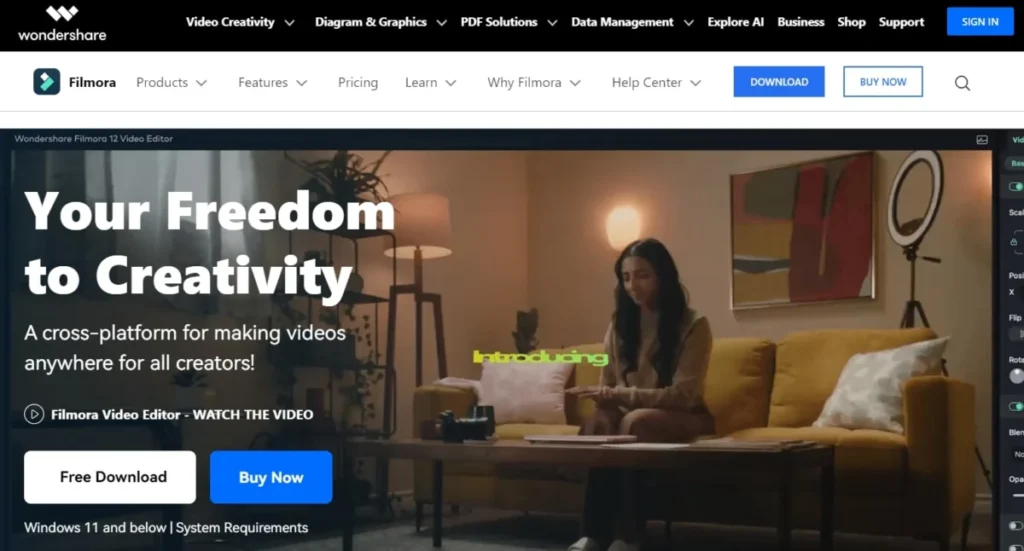
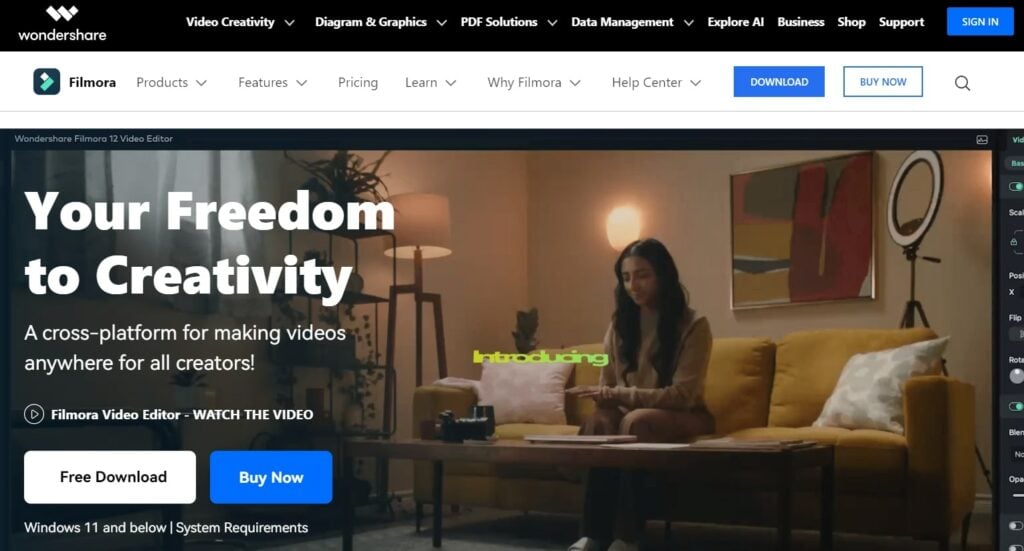
3. Filmora: Balancing Efficiency and Creativity
Wondershare Filmora bridges the gap between novice-friendly interfaces and high-end features. For mid-sized clinics or individual private practices, it offers a robust solution that doesn’t require a dedicated video editor on staff.
- Key Features: Motion tracking, split-screen layouts, and a massive repository of royalty-free stock music and visual effects.
- The Professional Edge: Its intuitive interface allows marketers to pivot quickly—essential for social media campaigns where trends shift rapidly. It excels at creating polished patient testimonials and "day-in-the-life" features for clinic staff.
- Implications for Healthcare: It allows organizations to scale their content production without bloating their marketing budget or sacrificing aesthetic quality.
- Pricing: Starts at $49.99/year.
4. iMovie: The Accessible Entry Point for Mac Ecosystems
iMovie remains the perennial favorite for quick, high-quality edits for Mac users. While it lacks the "pro" depth of Premiere or DaVinci, it is a formidable tool for localized healthcare marketing.

- Key Features: Drag-and-drop simplicity, high-definition resolution support, and a streamlined workflow optimized for macOS.
- The Professional Edge: For quick updates, announcements, or simple facility tours, iMovie’s ease of use means that a doctor or administrator can produce a clean, professional video in minutes.
- Implications for Healthcare: It lowers the psychological barrier to video marketing for smaller practices that may feel intimidated by more complex software suites.
- Pricing: Free.
5. DaVinci Resolve: The Powerhouse for Cinematic Accuracy
DaVinci Resolve has migrated from a high-end color correction tool to a comprehensive editing suite that is being adopted by major media organizations globally.
- Key Features: World-class color grading, Fairlight audio post-production, and advanced visual effects (Fusion).
- The Professional Edge: For medical institutions producing documentaries or high-production-value promotional videos, the color science in Resolve ensures that medical imaging and procedural footage appear accurate and visually stunning.
- Implications for Healthcare: It offers the most "cinematic" look, which is vital for building a premium brand identity in the competitive private healthcare market.
- Pricing: Free version available; Studio version costs $295 (one-time).
Chronology of Adoption: The Shift toward Visual-First Healthcare
The adoption of these tools has followed a distinct trajectory. In the early 2010s, healthcare marketing was largely static. By 2018, the rise of social media platforms like YouTube and LinkedIn forced a shift toward video.
- Phase One (2018–2020): Basic, static-slide-style videos and simple interviews.
- Phase Two (2021–2023): The push for professional editing and motion graphics as patient expectations for content quality rose.
- Phase Three (2024–2025): The current era, characterized by AI-integration and the ability to produce high-end educational content on the fly, driven by the tools outlined above.
Supporting Data and Industry Implications
Data from recent marketing surveys suggests that organizations utilizing video content see a 30% increase in patient engagement compared to those relying solely on textual updates. Furthermore, the use of animation in explaining medical procedures has been shown to reduce pre-operative anxiety in patients, leading to higher rates of treatment adherence.
The implications for the industry are clear: video is no longer an "optional" marketing asset. It is an extension of the care process. When a hospital produces a clear, well-edited video explaining a complex insurance process or a surgical procedure, they are actively participating in patient education and advocacy.
Official Industry Perspectives
Healthcare communications experts emphasize that the technical tool is secondary to the message. "In healthcare, the editing software is merely the brush; the message is the art," notes one industry consultant. "The most important feature of any editing tool is its ability to facilitate transparency and clarity. If the editing is so flashy that it obscures the medical facts, the content fails the patient."
The industry consensus is that 2025 will be the year where "authentic production" wins over "over-produced marketing." Patients want to see real staff, real facilities, and clear explanations. Tools like Adobe Premiere and DaVinci Resolve are becoming popular precisely because they allow for that level of professional authenticity without needing to mask the reality of the healthcare environment.
Final Verdict: Choosing the Right Tool for Your Practice
When selecting your software, consider the following decision-making matrix:
- For Large-Scale Cinematic Branding: Adobe Premiere Pro or DaVinci Resolve.
- For Patient Education and Explainers: Animaker.
- For Rapid, Day-to-Day Social Media Content: Filmora.
- For Small Clinics with Limited Resources: iMovie.
The transition to a video-first marketing strategy is an investment in your organization’s future. By choosing the right video editor, you are not just selecting software—you are selecting a way to communicate care, empathy, and expertise to a world that is increasingly looking for its medical information on a screen. Which of these tools will your team adopt in 2025 to elevate your practice?