Transforming Observability: AWS Launches Amazon CloudWatch Omni to Streamline Incident Management and AI Agent Monitoring
SEATTLE — In a major evolution of its cloud management portfolio, Amazon Web Services (AWS) has officially announced the launch of Amazon CloudWatch Omni. This cutting-edge, AI-powered observability experience is engineered to unify application monitoring, traditional cloud telemetry, and modern generative AI (GenAI) workloads into a single, cohesive workspace.
Designed to combat the modern engineering bottlenecks of tool fatigue, fragmented chat threads, and manual dashboard upkeep, CloudWatch Omni bridges the gap between disparate teams—such as software developers, site reliability engineers (SREs), database administrators, and managers—by anchoring system visibility around whole applications rather than isolated metrics.
Main Facts: What is Amazon CloudWatch Omni?
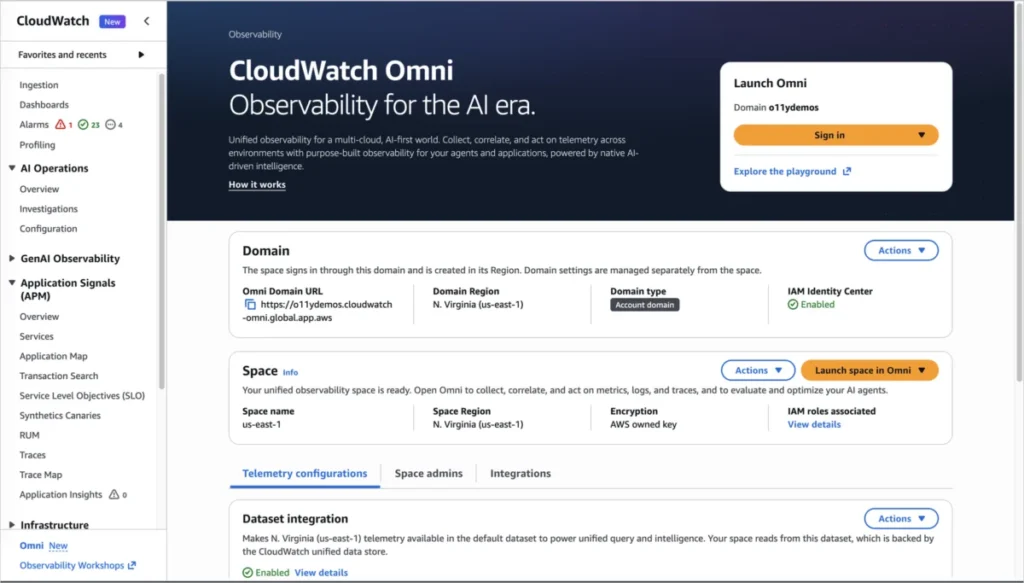
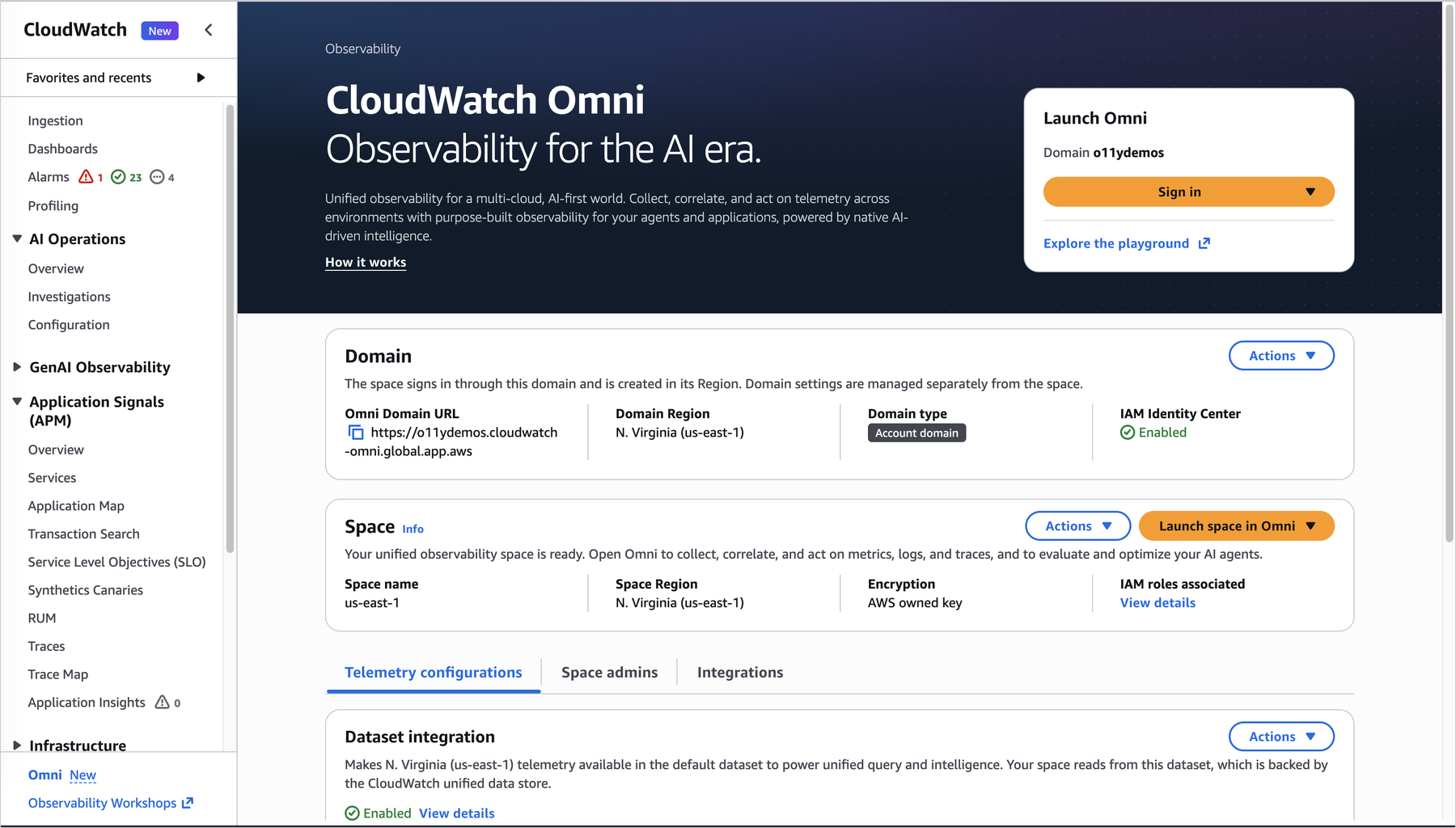
At its core, CloudWatch Omni is a dedicated observability workspace built on top of OpenTelemetry (OTel). It allows engineering organizations to ingest, analyze, and troubleshoot data from AWS infrastructure, hybrid environments, and third-party applications without requiring direct access to the AWS Management Console.
Key Architectural Pillars:
- Decoupled Access via Enterprise SSO: Users log in through a dedicated organizational URL utilizing AWS IAM Identity Center, integrating seamlessly with identity providers like Okta and Microsoft Entra ID. This eliminates the operational friction of provisioning AWS Console credentials for non-infrastructure team members.
- OpenTelemetry-Native Foundation: Telemetry data already dispatched to CloudWatch automatically populates Omni without requiring reconfigurations. Any custom workload instrumented with OpenTelemetry streams data directly via an OpenTelemetry Protocol (OTLP) endpoint.
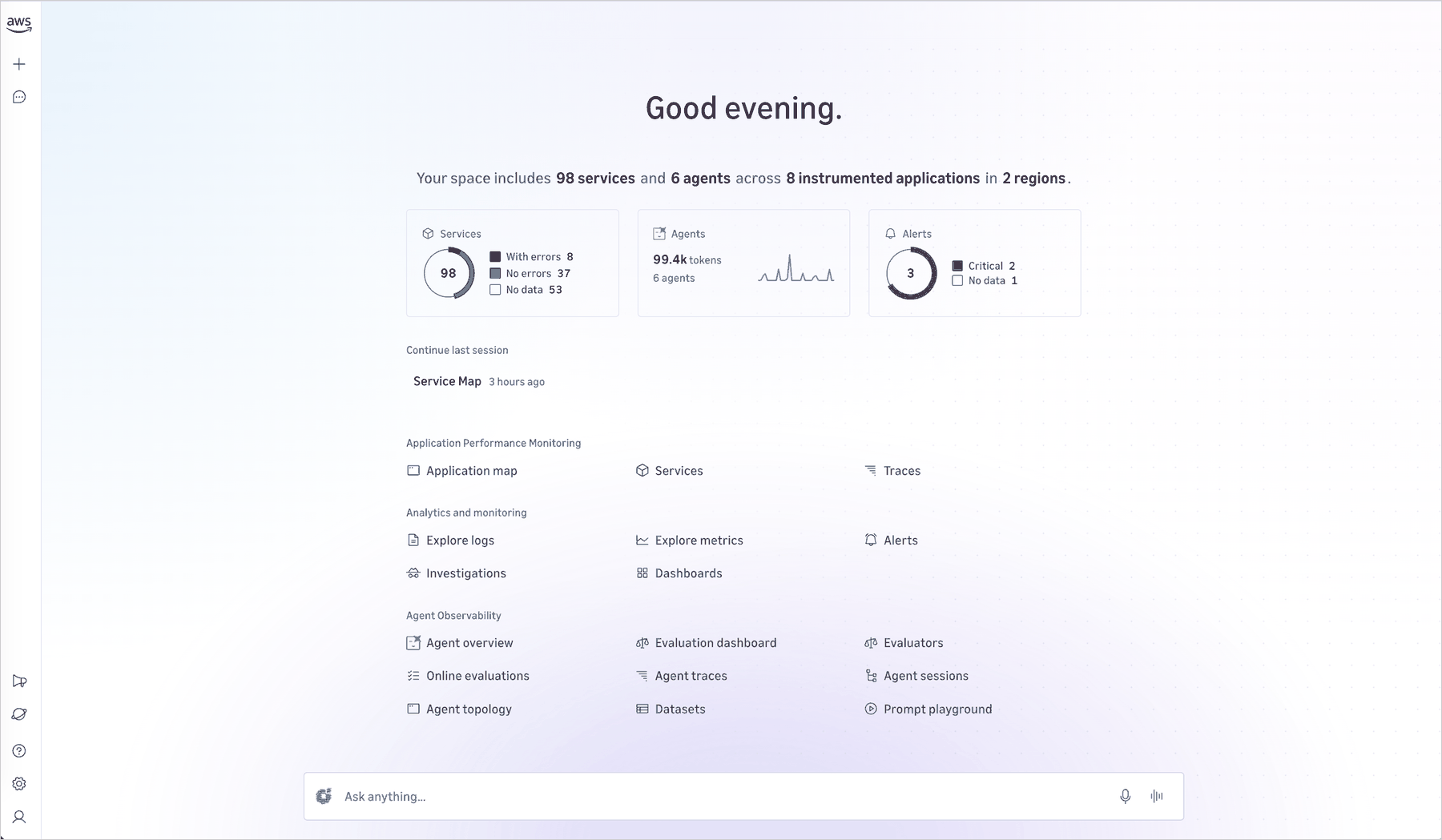
- Unified Application and Agent Observability: Omni merges traditional application performance monitoring (APM) with specialized monitoring for generative AI and agentic workloads, addressing the rapid enterprise shift toward autonomous LLM agents.
- Application-Centric Organization ("Spaces"): Rather than organizing signals by infrastructure components, Omni aggregates them into "Spaces"—customizable workspaces assigned to specific teams or environments that map application topologies and dependencies dynamically.
- Embedded AI Investigation with Amazon DevOps Agent: An autonomous diagnostic assistant works alongside human engineers in real-time investigation sessions, correlating anomalies, parsing trace history, and mapping root-cause paths.
Chronology: The Journey to Unified Observability
The rollout of CloudWatch Omni represents the culmination of years of enterprise feedback regarding the complexities of cloud-native microservices and AI integration.
- The Microservices Boom and Tool Fragmentation: As companies transitioned from monolithic architectures to distributed microservices, the volume of logs, metrics, and traces exploded. Engineering teams increasingly found themselves wasting valuable hours toggling between disparate monitoring screens, maintaining brittle static dashboards, and trying to piece together incident timelines across siloed Slack channels.
- The Rise of OpenTelemetry: Recognizing the need for standardized telemetry collection, AWS expanded support for OpenTelemetry across its ecosystem, laying the groundwork for protocol-agnostic ingestion.
- The Generative AI Inflection Point: With the mainstream adoption of LLMs and autonomous agentic workflows, traditional monitoring tools fell short. Teams required deep tracking of prompt chains, model latencies, and agent decision pathways alongside standard application metrics.
- The Release of CloudWatch Omni: AWS officially unveiled Omni to address these overlapping pain points. The platform rolls out simultaneously with a companion initiative detailing its specialized agentic observability framework, establishing a new paradigm for how complex systems are monitored and managed.
Supporting Data and Technical Workflow
To understand the practical impact of CloudWatch Omni, it is helpful to examine how an incident flows through the system compared to legacy debugging practices.
The Anatomy of an Automated Investigation
In a traditional environment, an elevated error rate triggers a generic alarm. An on-call engineer must manually check deployment histories, query log aggregators, and message downstream teams to identify bottlenecks.

With CloudWatch Omni, the lifecycle of an incident is drastically streamlined:
- Automated Session Initiation: When an alarm fires—for instance, on an e-commerce checkout service—Omni immediately opens a dedicated investigation session. It pre-loads the context, displaying the affected service topology, recent deployments (e.g., a code push 10 minutes prior), and correlated downstream latency from a payment API.
- AI-Assisted Correlation: The embedded Amazon DevOps Agent actively participates in the session. It analyzes telemetry data in real time, identifying that the payment API slowdown correlates with a recent configuration modification at the provider’s API gateway.
- Seamless Team Handoff: The SRE invites a payments engineer into the active session. Because the workspace maintains a persistent audit trail and complete investigative state, the new engineer instantly sees all prior findings without needing a manual debrief or screenshot recap.
- Automated Post-Mortem Generation: The entire chronological history of the investigation, root-cause identification, and mitigation steps are captured automatically, eliminating the need to write manual post-incident reports.
Setup and Integration Metrics
Setting up Omni is designed to take minutes rather than weeks:
- Zero Data Movement: Spaces point directly to existing CloudWatch data lakes (logs, metrics, traces, alarms). Data does not need to be duplicated or migrated.
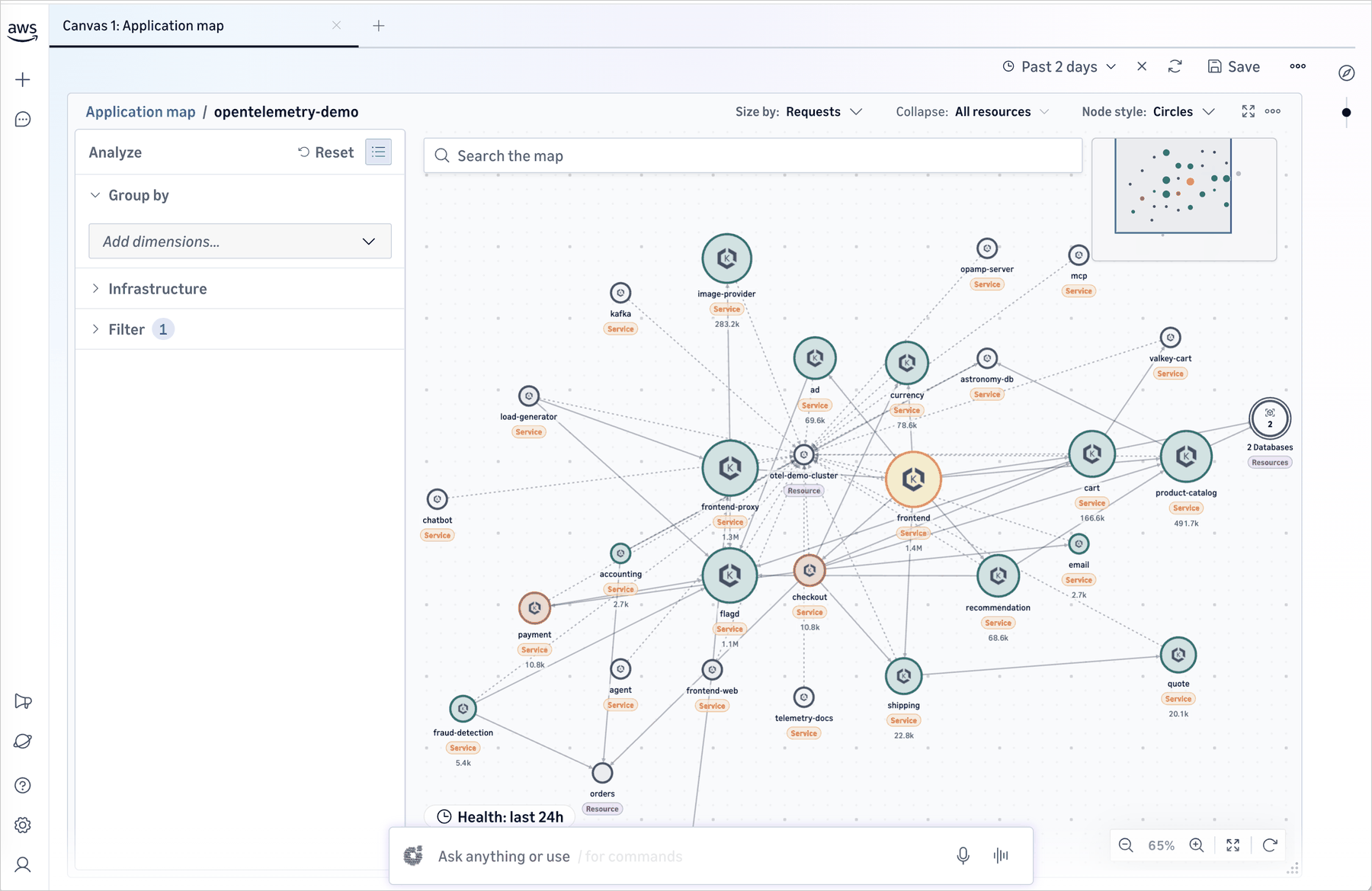
- Dynamic Mapping: Utilizing integrated AWS Config resource discovery and telemetry parsing, Omni automatically draws service dependency maps upon initialization, eliminating the manual labor of building and maintaining static architecture diagrams.
Official Responses and Industry Perspective
AWS engineering leads emphasize that CloudWatch Omni was built in direct response to human-centric bottlenecks rather than purely technical limitations.
"Engineering teams spend a significant portion of their observability time maintaining dashboards, tuning thresholds, and switching between tools to piece together what happened during an incident," notes the AWS CloudWatch product team. "When an issue crosses team boundaries, context gets lost. CloudWatch Omni changes this by organizing observability around your applications rather than individual signals, and bringing your whole team into the same workspace."
Industry analysts point out that as companies scale their generative AI implementations, the attack surface for unexpected behavior expands exponentially. By treating AI agents as first-class citizens within the same architectural topology as traditional databases and microservices, AWS is positioning Omni as a critical control plane for modern enterprise software development.
Furthermore, by decoupling operational visibility from the AWS Management Console via IAM Identity Center integrations (supporting Okta, Microsoft Entra ID, and other SAML 2.0 providers), AWS is lowering the organizational barrier to entry. Product managers, customer support leads, and compliance officers can now safely participate in diagnostic sessions without possessing low-level cloud infrastructure privileges.
Implications for Enterprise Engineering Organizations
The launch of Amazon CloudWatch Omni carries profound implications for how organizations structure their engineering workflows, manage technical debt, and respond to critical outages.
1. The Death of Static Dashboards
For decades, SREs have spent countless hours building, tweaking, and updating custom dashboards for every microservice deployed into production. Omni replaces this reactive maintenance burden with dynamic, application-centric views. By declaring high-level availability targets, error rate thresholds, and latency budgets, engineering teams allow the system to adapt autonomously as underlying infrastructure shifts and scales.
2. Bridging the Gap Between SREs and GenAI Developers
As artificial intelligence transitions from experimental sandboxes to core production infrastructure, isolating AI monitoring from application monitoring has become a major source of system blind spots. Omni’s dual capabilities—providing robust trace exploration and evaluation frameworks for generative AI agents alongside traditional APM—ensure that machine learning engineers and backend developers operate from a single source of truth.
3. Accelerated Time-to-Resolution (MTTR)
By embedding the Amazon DevOps Agent directly into collaborative workspaces, AWS is moving the industry toward "collaborative AI observability." Instead of acting as a passive dashboard, the AI agent acts as an active junior investigator—surfacing root causes, suggesting remediation steps, and packaging insights for human review. This drastically reduces Mean Time to Resolution (MTTR) and minimizes revenue loss during mission-critical outages.
Getting Started and Availability
Amazon CloudWatch Omni is generally available now.
- For Existing Customers: Current CloudWatch users can access the new experience immediately by logging into the Amazon CloudWatch console and selecting "Try CloudWatch Omni." All historical logs, metrics, traces, and alarms are instantly accessible within the new framework with zero migration overhead.
- For Enterprise Administrators: Organization-wide deployment can be orchestrated by configuring a dedicated domain, linking an enterprise identity provider via IAM Identity Center, and defining granular "Spaces" tailored to specific engineering squads or deployment environments.
- For Multi-Cloud and Hybrid Workloads: Out-of-the-box OpenTelemetry Protocol (OTLP) endpoints allow teams to stream telemetry from on-premises servers, edge devices, or alternative cloud providers directly into their central Omni workspaces.
For comprehensive pricing tiers, architectural guides, and deep dives into generative AI agent monitoring, users can consult the official Amazon CloudWatch pricing page or explore documentation via the AWS Management Console.