Vishal Sikka’s Hang Ten Systems Secures $32 Million to Pioneer "Agentic" Enterprise AI
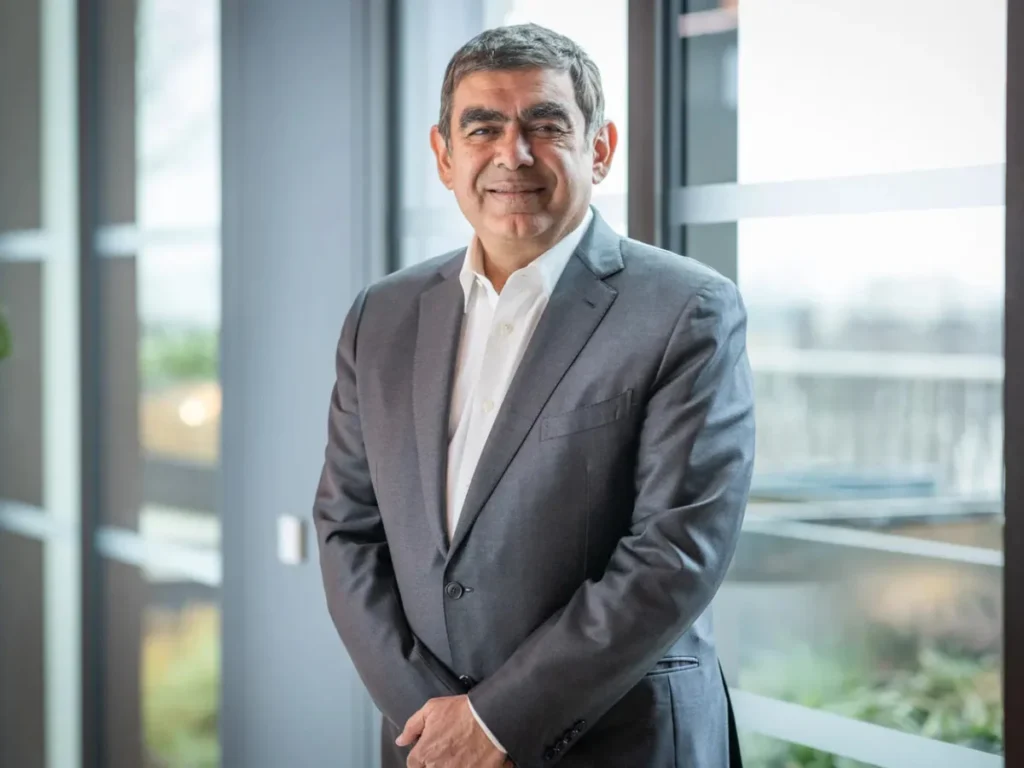
In a move that underscores the rapid maturation of the generative AI sector, Vishal Sikka, the former CEO of Infosys and a veteran of the global technology landscape, has officially unveiled his latest venture: Hang Ten Systems. The startup, which aims to redefine how large-scale enterprises integrate and deploy artificial intelligence, has successfully closed a $32 million (approximately ₹302 Cr) seed funding round.
The funding round was led by the private equity giant Mayfield Ventures, with significant participation from Aramco Ventures—the venture capital arm of the global energy titan Saudi Aramco—alongside a select cohort of prominent angel investors. This capital injection is earmarked for team expansion and the scaling of operations to support a growing roster of global enterprise clients.
The Genesis of Hang Ten: Riding the AI Wave
The moniker "Hang Ten," a surfing term referring to the difficult maneuver of balancing on the very front of a surfboard, serves as a metaphor for Sikka’s vision. In a post on X (formerly Twitter), Sikka explained the philosophy behind the name: "AI is upon us all like a massive new wave. And I learned a long time ago that when there are big waves around, it is time to surf. Not just to surf, but to hang ten—to master the wave so well that you can walk all the way to the front of the board and hang your ten toes off the front."
Hang Ten Systems positions itself as an enterprise AI services company. Unlike generic AI consultancies, the startup leverages a proprietary blend of "agentic code generation" and a reusable skills library. This framework is designed to move beyond simple chatbots or surface-level integrations, instead focusing on "AI-native project delivery"—the creation of software that is fundamentally built, modified, and managed by autonomous AI agents.
Chronology: From Infosys to the AI Frontier
To understand the significance of Hang Ten, one must look at the trajectory of its founder. Vishal Sikka’s career has been marked by a transition from high-level corporate leadership to the cutting edge of technological innovation.
- 2015: Sikka takes the helm as the CEO and Managing Director of Infosys, becoming the IT giant’s first non-founder leader. His tenure was characterized by a push toward automation and AI-driven services.
- 2018: Following a highly publicized period of friction with Infosys co-founder Narayana Murthy, Sikka departs the company.
- 2019: Sikka founds Vianai Systems, a Palo Alto-based startup focused on enterprise-grade generative AI. He continues to serve as its founder and CEO today.
- 2024: Sikka announces the launch of Hang Ten Systems, signaling a pivot toward agentic workflows and specialized enterprise transformation.
The formation of Hang Ten is not a departure from his previous work but an evolution. By bringing together a team of seasoned veterans—including former ANSYS executive Navin Budhiraja, along with Sanjay Rajagopalan, Tao Liu, Frank Yu, Pradeep Panicker, and Yusuf Safdari—Sikka is assembling a "16-member powerhouse" to tackle the complexities of modern enterprise digital transformation. The addition of former Yahoo CEO Jerry Yang to the board further signals the startup’s intent to play at the highest levels of global technology governance.
The "Agentic" Operating Model: A New Paradigm
The core value proposition of Hang Ten lies in its operating model. The company promises that software can be "built, changed, and run at a fraction of the cost and time" compared to traditional methodologies.
How it Works:
- Agentic Code Generation: Rather than relying solely on human developers, the platform utilizes autonomous agents capable of writing, testing, and iterating on code. This reduces the manual "heavy lifting" required in software development.
- Reusable Skills Library: By creating a modular library of AI "skills," Hang Ten allows enterprises to deploy solutions for HR, finance, and product development without starting from scratch.
- Forward Deployed Engineers (FDE): The company pairs its AI technology with an "expert FDE bench." This hybrid model ensures that while AI handles the code, high-level engineering talent provides the necessary context and "judgment" to navigate the nuances of enterprise-scale requirements.
Real-World Validation
Despite being a nascent startup, Hang Ten has already secured high-profile partnerships. The company is currently engaged in AI-native project delivery with Siemens Gamesa Renewable Energy and Fresenius. These early collaborations are crucial; they provide the "training ground" for Hang Ten’s models to prove that they can operate within the highly regulated, security-conscious environments of global industrial and healthcare conglomerates.
Sikka has emphasized that the goal is not just automation, but "real value." In an era where enterprises are often overwhelmed by the sheer pace of technological change, Sikka’s approach seeks to provide the "judgment to deliver real value when everything is changing at once."
Industry Implications and Market Context
The fundraising success of Hang Ten occurs within a hyper-competitive AI landscape. The global generative AI market is expanding at an unprecedented rate, with the Indian GenAI ecosystem alone projected to grow into a $126 billion opportunity by 2030.
Why Enterprises Need Hang Ten Now:
- Sovereignty Mandates: As nations and industries implement stricter data residency and sovereignty laws, companies are moving away from monolithic, black-box AI models toward customizable, transparent architectures.
- Productivity Pressure: Enterprises are under immense pressure to optimize workflows and reduce technical debt. Hang Ten’s promise of "continuous" software evolution addresses the legacy issue where software becomes obsolete the moment it is deployed.
- The Talent Gap: While there is an abundance of AI hype, there is a scarcity of talent capable of building production-grade AI systems. Hang Ten’s strategy of utilizing an expert FDE bench bridges this gap, providing a "managed service" feel that large enterprises prefer over self-serve DIY AI tools.
Strategic Backing: What Mayfield and Aramco See
The involvement of Mayfield Ventures and Aramco Ventures is telling. Mayfield, a veteran in the venture capital space, provides the Silicon Valley pedigree and scaling experience needed to navigate the startup’s growth phase. Conversely, Aramco’s participation hints at the potential for Hang Ten to expand into the energy and heavy industrial sectors, where the digitalization of massive, complex systems is a high-value priority.
Future Outlook: The Path Ahead
As Hang Ten Systems moves forward, its primary challenge will be execution. The transition from "proof of concept" to "enterprise-wide standard" is where many AI startups fail. However, with a founder who has successfully navigated the complexities of both global IT services (Infosys) and deep-tech innovation (Vianai), the startup is well-positioned to avoid common pitfalls.
The integration of Jerry Yang into the governance structure provides a layer of strategic oversight that will likely prove invaluable as the company navigates the regulatory and competitive headwinds of the enterprise AI space. For Sikka, Hang Ten represents the next logical step in a career defined by the pursuit of technological efficiency.
In the coming months, industry analysts will be watching closely to see if the "agentic" model can truly deliver on its promise of reduced costs and accelerated timelines. If successful, Hang Ten may well become the blueprint for the next generation of AI-native services firms, shifting the industry away from traditional "outsourcing" and toward "automated, intelligent partnership."
For now, the capital is secured, the team is assembled, and the mission is clear: to master the wave of generative AI, one project at a time.