Weekly AWS Roundup: Swift Expands to IoT, Bedrock Integrates GPT-5.5, and Enhanced Identity Resilience
In the rapidly evolving landscape of cloud computing, AWS continues to push the boundaries of developer productivity and infrastructure resilience. This week’s announcements highlight a significant shift toward language-specific versatility at the edge and high-stakes improvements in data continuity and artificial intelligence. From the general availability of the AWS IoT Device SDK for Swift to the high-profile integration of OpenAI’s latest models, the ecosystem is signaling a maturation phase for both edge computing and generative AI deployment.
The Rise of Swift: Bridging the Gap Between Edge and IoT
The most notable shift this week is the general availability of the AWS IoT Device SDK for Swift. For years, Swift has been synonymous with Apple’s ecosystem—iOS, macOS, and tvOS. However, its transition into the server-side realm has been a quiet revolution, and now, it is officially arriving at the edge.
Empowering the Developer Ecosystem
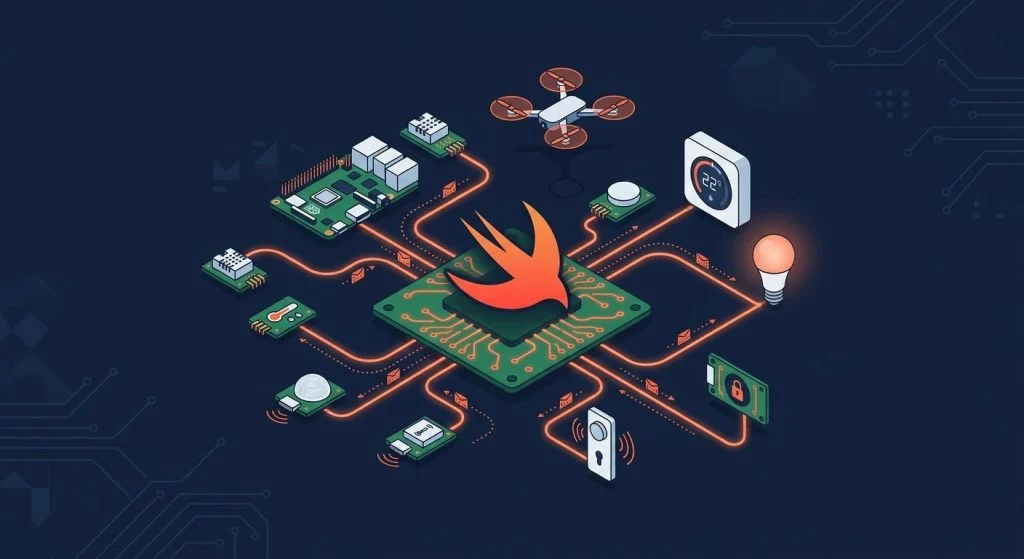
As a member of the Swift Server Workgroup (SSWG), the AWS engineering team has prioritized production-ready features. The new SDK offers comprehensive support for MQTT 5 connectivity, Device Shadow management, Jobs, and fleet provisioning. This allows developers to maintain a consistent language stack across their entire architecture—from the cloud backend down to the physical hardware.
The Broader Trend: Swift at the Edge
The implications of this launch extend far beyond simple connectivity. We are witnessing a paradigm shift where languages once confined to high-level application development are being optimized for low-power, constrained hardware. Projects like WendyOS exemplify this trend, providing an open-source operating system for physical AI that treats Swift as a first-class citizen. By enabling Swift on hardware like the Raspberry Pi and NVIDIA Jetson, AWS is lowering the barrier for developers who want to leverage the language’s safety and performance characteristics in complex edge-computing scenarios.
Strategic Infrastructure Enhancements: RDS and Cognito
Beyond edge computing, AWS has rolled out critical updates to its core database and security services, addressing long-standing enterprise requirements for cost management and high availability.
Amazon RDS for SQL Server: Bring Your Own Media (BYOM)
The introduction of "Bring Your Own Media" (BYOM) for Amazon RDS for SQL Server represents a significant win for organizations undergoing digital transformation. Historically, migrating legacy SQL Server workloads to the cloud often incurred licensing complexities.
With BYOM, customers can now migrate their on-premises applications while retaining their existing Microsoft SQL Server licenses, including those covered by Software Assurance. This is facilitated through Microsoft’s License Mobility program. To ensure governance, AWS has integrated this capability with AWS License Manager, providing a centralized dashboard to track license usage, compliance, and auditing requirements. This move effectively reduces the Total Cost of Ownership (TCO) for enterprises looking to leverage RDS-managed infrastructure without abandoning their existing software investments.
Amazon Cognito: Multi-Region Replication
In an era where downtime is measured in millions of dollars, application resilience is paramount. Amazon Cognito’s new support for multi-Region replication addresses the critical need for disaster recovery in identity management.
- Near Real-Time Synchronization: Users can now replicate identity data—including credentials, pool configurations, and federation settings—to a secondary "standby" region.
- Seamless Continuity: In the event of a regional outage, users do not need to re-authenticate. The transition between primary and secondary regions is designed to be transparent to the end-user, maintaining active sessions and preserving the integrity of the user experience.
- Accessibility: This feature is currently available as an add-on for user pools in both Essentials and Plus tiers across 16 global regions.
The Frontier of Intelligence: OpenAI on Amazon Bedrock
The most anticipated update of the week is undoubtedly the general availability of GPT-5.5, GPT-5.4, and Codex on Amazon Bedrock. This integration marks a significant acceleration in the capabilities available to enterprise developers operating within the AWS environment.
Capabilities of the New Models
The release of GPT-5.5 positions it as the premier model for complex, agentic workflows. AWS notes that this model excels at:
- Agentic Coding: Beyond simple code generation, GPT-5.5 is capable of managing entire multi-step software development lifecycles.
- Autonomous Reasoning: It is optimized for complex data analysis, allowing it to parse massive datasets and synthesize actionable insights with higher accuracy than its predecessors.
- Governance and Security: By deploying these models via Amazon Bedrock, organizations maintain strict adherence to their existing AWS security and compliance frameworks, ensuring that sensitive data remains protected while utilizing state-of-the-art AI.
The Return of Codex
The re-introduction of Codex—available via a dedicated app, CLI, and IDE integrations for Visual Studio Code, JetBrains, and Xcode—serves as a force multiplier for engineering teams. By streamlining the "AI-powered developer" workflow, AWS is betting that the combination of GPT-5.5’s reasoning and Codex’s code-writing precision will become the industry standard for enterprise software construction.
Implications for the Industry
The convergence of these announcements suggests a clear trajectory for cloud infrastructure.
1. From "General Purpose" to "Context Specific"
The adoption of Swift in IoT suggests that AWS is moving away from a one-size-fits-all approach to hardware connectivity. By supporting specialized languages, they are catering to the specific needs of niche but growing sectors like robotics, autonomous systems, and embedded AI.
2. Resilience as a Commodity
With the addition of multi-Region replication for Cognito, AWS is effectively commoditizing high availability. Features that were once the domain of bespoke, expensive custom architectures are now available as a configurable add-on, democratizing enterprise-grade stability for smaller businesses.

3. The AI Consolidation
By bringing OpenAI’s most advanced models onto Bedrock, AWS is making a decisive play for the enterprise AI market. They are positioning themselves not just as a hosting provider, but as the primary governance layer for AI, assuring companies that they can scale their use of GPT-5.5 without sacrificing security or operational control.
Looking Ahead: Building the Future
As we look toward the remainder of the year, the focus will likely remain on these three pillars: Edge Versatility, Infrastructure Resilience, and AI Integration.
For developers, the call to action is clear: the tools are now in place to build systems that are faster, more resilient, and more intelligent than ever before. Whether you are architecting a massive, multi-Region identity system or deploying Swift-based code to an edge device, the AWS ecosystem is rapidly removing the friction that previously hindered innovation.
How to Stay Connected
For those looking to deepen their expertise, the AWS landscape remains vibrant.
- Events: Keep a close watch on AWS-led events and the AWS Builder Center. These platforms offer more than just news; they provide the community-driven solutions that turn these new features into real-world value.
- Resources: Always reference the What’s New with AWS page for granular details on documentation updates and API changes as these new services begin to roll out globally.
As the industry continues to move toward more autonomous and distributed systems, the ability to rapidly adapt to these new technologies will define the next generation of builders. Stay tuned for next week’s roundup, where we will track the adoption of these new features and explore the community’s early success stories with the Swift IoT SDK and the GPT-5.5 deployment cycle.