The Anatomy of a Ransomware Kingpin: Unmasking the Administrator of ‘The Gentlemen’
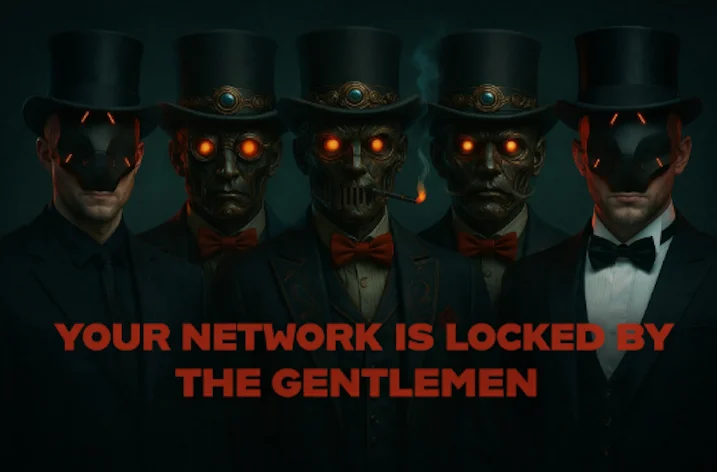
In the shadowed corridors of the dark web, where anonymity is the primary currency, a new, aggressive player has rapidly ascended to the top of the ransomware ecosystem. Known as "The Gentlemen," this ransomware-as-a-service (RaaS) group has emerged in record time as the second most active threat actor globally, measured by the sheer volume of its victim base. By offering a lucrative 90/10 revenue split that shatters industry standards, the group has effectively poached top-tier talent from competing operations, creating a formidable engine for digital extortion.
However, beneath the veneer of sophisticated malware and ruthless efficiency, the group’s leadership has left a trail of digital breadcrumbs that stretch back years. A comprehensive investigation, drawing on findings from security giants Check Point Software, Intel 471, and Constella Intelligence, reveals that the mastermind behind the operation—known by the monikers "Zeta88" and "Hastalamuerte"—may be far less anonymous than his persona suggests.
The Rise of The Gentlemen: A Disruptive RaaS Model
The Gentlemen have achieved a level of notoriety that typically takes years to build, having claimed at least 332 published victims since their inception in mid-2025. In 2026 alone, the group has successfully compromised more than 240 organizations.
According to researchers at Check Point Software, the group’s rapid growth is no accident. While the typical industry standard for RaaS operators is an 80/20 split of ransom proceeds, The Gentlemen offer their affiliates a staggering 90 percent. This aggressive financial incentive has turned the group into a magnet for experienced cyber-mercenaries who are looking to maximize their returns.
Technically, the group focuses on speed and efficiency. Their operational playbook typically involves targeting internet-facing infrastructure—specifically VPNs and firewalls—to gain initial entry. Once a beachhead is established, they demonstrate a high degree of operational maturity, often moving laterally through a network to encrypt entire corporate environments within a matter of hours.
Chronology of a Digital Identity
The persona behind this chaos is centered on the administrator known as Zeta88, who operates the group’s backend, manages the RaaS panel, and facilitates ransom payments. Security analysts have linked this identity to a previous, older handle: Hastalamuerte.
2019–2020: The Formative Years
Intelligence gathered by Intel 471 confirms that the user "Hastalamuerte" began their journey in the cybercrime underground around 2019, registering on various Russian and English-language forums, including Exploit, Breachforums, and Nulled. At this stage, the individual was not a kingpin, but an amateur. Forensic analysis of their Telegram activity from June 2020 shows the user participating in a penetration testing training program, where they openly struggled with the basics of security tools—a stark contrast to the sophisticated operator they would later become.
2022–2025: Consolidation and the Shift to Zeta88
As the user’s skills sharpened, so did their ambition. By August 2022, the handle "Zeta88" appeared on the Breached forum. Security experts at Check Point, having analyzed a breach of The Gentlemen’s internal infrastructure, confirmed that Zeta88 and Hastalamuerte are one and the same. During this period, the operator moved from being a participant in the criminal ecosystem to an architect, building the ransomware locker and the management panel that would eventually power The Gentlemen.
2026: The Global Stage
By May 2026, The Gentlemen were fully operational. A graphic shared by the group’s administrator on Breachforums solidified their presence in the threat landscape. During this time, investigations into their backend confirmed the administrator’s role in skimming 10 percent of every ransom payment—a "tax" that has likely generated significant wealth for the individual behind the keyboard.
Supporting Data: The Paper Trail
The de-anonymization of the administrator relies on a convergence of disparate data points—email addresses, phone numbers, and social media footprints.
The trail begins with the email address [email protected]. The inclusion of "1488" points to a white supremacist ideology, but the utility of the address lies in its metadata. Open-source intelligence service Epieos linked this email to an Apple account and a phone number ending in "04." That same Protonmail address was connected to a private GitHub account under the handle "SantaMuerte," which tracked the development of various malware tools.
Furthermore, the intelligence firm Flashpoint identified that the Telegram handle @hastalamuerte18 was assigned a unique ID: 30907522. Constella Intelligence cross-referenced this ID with a Russian phone number: 79127650004.
When this phone number is queried against leaked Russian government databases, the result is startling: the number is registered to Alexander Andreevich Yapaev, a 36-year-old resident of Izhevsk, the capital of Russia’s Udmurt Republic. Additional digital traces link Yapaev to the username "4apai18" on the Russian social media platform Pikabu and to the email [email protected].
The most damning piece of evidence is the connection of [email protected] to a LinkedIn profile for Alexander Yapaev, who lists himself as the Head of B2B Marketing for Uralenergo Udmurtia, a major Russian industrial supplier.
Official Responses and Industry Silence
Attempts to reach Alexander Yapaev for comment via his professional channels and known contact methods have been met with silence. No official statement has been issued by Uralenergo Udmurtia regarding the allegations that their marketing lead is the central figure behind one of the world’s most active ransomware gangs.
The security community continues to monitor the situation, but the lack of an official response from the subject—or from Russian authorities—is characteristic of the current geopolitical climate regarding cybercrime.
Implications: Why the "Amateur" Mistake Matters
The unmasking of the leader of The Gentlemen raises fundamental questions about the operational security (OPSEC) of modern cybercriminals. Why would an individual orchestrating a multi-million-dollar criminal enterprise fail to mask their identity?
The "Sunk Cost" of Digital History
Many of the most prolific cybercriminals today began as teenagers or young adults experimenting on forums like Nulled or Raidforums. They often use the same handles, email addresses, and phone numbers they used years ago, before they realized the gravity of their actions. By the time they have the resources to cover their tracks, their digital footprint is already set in stone.
The Shield of Geopolitics
The environment in Russia plays a significant role in the cavalier attitude of these actors. As long as cybercriminals do not target Russian entities, the state often adopts a policy of "controlled impunity." For an individual like Yapaev, residing in Izhevsk and focusing his illicit activities on Western targets, the perceived risk of local law enforcement intervention is near zero. They are effectively insulated from international extradition, provided they remain within Russian borders and continue to avoid "home-grown" targets.
The Evolution of the Threat
The transition from an amateur struggling with penetration testing tools in 2020 to a sophisticated ransomware administrator in 2026 highlights the dangerous professionalization of the cyber-underground. The barrier to entry for ransomware is lowering, and the incentive structures—like The Gentlemen’s 90/10 split—are fueling a cycle of rapid innovation and recruitment.
As the digital world grapples with the fallout from The Gentlemen, the case of Alexander Yapaev serves as a potent reminder: even in the age of encrypted messengers and dark web forums, the "real world" and the "cyber world" are rarely as separate as they seem. The digital breadcrumbs left behind during a user’s early, unsophisticated days often provide the exact map needed to bring them into the light.