Telangana Challenges Centre’s New Employment Guarantee Policy: A Potential Standoff Over Rural Development
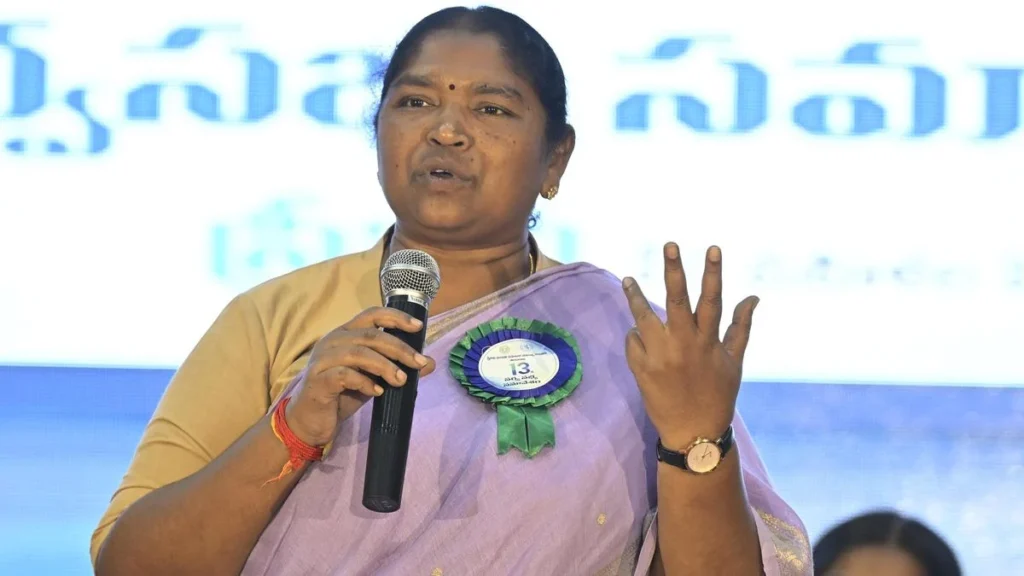
Hyderabad: The Telangana government has officially signaled its intent to challenge the Centre’s newly proposed "VB-G RAM-G" scheme, a policy overhaul of the rural employment guarantee framework slated for nationwide implementation on July 1. Minister for Panchayat Raj and Rural Development, Danasari Anasuya (popularly known as Seethakka), announced on Saturday that the state would formally lodge its objections with the Union government, citing deep-seated concerns over the scheme’s rigidity and its potential to cripple rural development in the state.
The move marks a significant escalation in the ongoing dialogue between the Telangana administration and the Union government regarding the operational autonomy of rural welfare schemes. As the July 1 deadline looms, the state is preparing a multi-pronged strategy to protect its local employment mechanisms while navigating the threat of federal funding constraints.
The Core Conflict: Why Telangana is Resisting
At the heart of the dispute is the VB-G RAM-G scheme, which proposes a standardized, normative approach to distributing employment days for rural workers. The Telangana government’s opposition is rooted in the belief that the Centre’s "one-size-fits-all" model fails to account for the unique socio-economic and geographical requirements of the state.
Minister Seethakka, in a high-level review meeting attended by Special Chief Secretary Dana Kishore and other senior officials, underscored that the state’s primary objection lies in the transition from a "demand-based" system to a "normative" system. Under the current framework, employment is provided based on the genuine requirements of rural laborers. The new policy, however, seeks to impose quotas that the state government argues are arbitrary and disconnected from ground realities.
Chronology of the Dispute
The friction regarding the VB-G RAM-G scheme did not emerge in a vacuum. The timeline of the conflict highlights a growing disconnect between federal mandates and state-level execution:
- Initial Proposal: The Union government unveiled the outlines of the VB-G RAM-G scheme earlier this year, framing it as an optimization of rural employment expenditure.
- Legislative Pushback: Recognizing the potential for administrative overreach, the Telangana Legislative Assembly passed a formal resolution opposing the scheme. This resolution served as the initial warning to the Centre that the policy would face local resistance.
- The July 1 Deadline: Despite state-level concerns, the Union government continued to urge states to initiate the transition to the new framework by July 1.
- Ministerial Review: On Saturday, June 13, Minister Seethakka convened a meeting with the Department of Panchayat Raj and Rural Development to finalize the state’s formal communication strategy.
- The Path Forward: The state is currently awaiting internal consultations between the Minister, Chief Minister A. Revanth Reddy, and the full State Cabinet to finalize the legal and administrative language of their objection.
Supporting Data and Policy Implications
The implementation of the VB-G RAM-G policy carries significant financial weight. Officials have informed the Minister that the receipt of 60% of the funding for employment guarantee programs from the Centre is now tied to the adoption of this new policy. This creates a "take-it-or-leave-it" scenario that complicates the state’s bargaining position.
The "60-Day Break" Contradiction
One of the most contentious elements of the proposed policy is the mandate requiring a 60-day break in employment works during the agricultural season. Minister Seethakka has termed this provision "impractical" for three primary reasons:
- Ecological and Environmental Disruption: In Telangana, the monsoon season is the critical window for Vanamahotsavam (a mass plantation drive) and various afforestation projects. Forcing a two-month work stoppage would effectively halt these environmental initiatives, which ironically align with the Centre’s own environmental goals.
- Geographical Irrelevance: The Minister pointed out that in tribal and hilly regions of Telangana, agricultural operations are not continuous for 60 days. A blanket policy mandating a break ignores the reality of subsistence farming and the specific labor patterns in these difficult terrains.
- Developmental Stagnation: Infrastructure projects, including rural roads, water storage structures, and community buildings, often require sustained labor efforts. A 60-day interruption would lead to cost overruns and delays, potentially leaving critical projects abandoned in a state of incompletion.
Official Responses and Strategic Positioning
The government’s stance is one of calculated defiance. Minister Seethakka has articulated that while Telangana is committed to the spirit of national development, it cannot sacrifice the livelihood of its citizens for the sake of federal administrative convenience.
"Allocating employment days on a normative basis instead of according to demand is not appropriate for a state like Telangana," the Minister stated. "We have requested the Centre to withdraw the mandatory 60-day break provision to allow for regional flexibility."

Furthermore, the state has put forward a bold demand: the Centre must bear the entire expenditure on ongoing employment guarantee works, including buildings and infrastructure projects, until their completion, regardless of when the new scheme is implemented. The state is essentially arguing that projects initiated under previous terms should not be subjected to retroactive policy changes that could lead to financial instability.
The "Safety Net" Strategy
Despite the confrontational rhetoric, the government is pragmatically preparing for the possibility that the Centre may refuse to yield. Minister Seethakka has instructed her department to draft a "contingency framework." If the implementation of the VB-G RAM-G policy becomes unavoidable, the state government plans to step in to ensure that laborers do not suffer financial losses.
"Our officials have been tasked with creating a system where, even if the central policy is implemented, the State government can compensate workers for any income gaps or adverse impacts," the Minister clarified. This indicates that Telangana is prepared to potentially subsidize the employment guarantee program from its own coffers to shield its citizens from the effects of federal policy changes.
Broader Implications for Federalism
This standoff highlights the broader challenges of cooperative federalism in India. While the Centre seeks to streamline expenditures and bring consistency to welfare schemes, states like Telangana are increasingly asserting their right to manage resources according to their specific demographics.
The fact that several other states have already begun issuing notifications for the new scheme adds pressure on Telangana. However, the state’s leadership remains firm. By prioritizing the "demand-based" nature of the employment guarantee, Telangana is positioning itself as a defender of grassroots needs over centralized, bureaucratic standardization.
The upcoming days will be critical. The formal letter to be drafted by the Panchayat Raj department will serve as a litmus test for the Centre’s willingness to engage in a dialogue. If the Union government persists with the July 1 deadline without amendments, Telangana’s proposed compensation framework could become a blueprint for other states facing similar grievances.
Conclusion
As the state awaits a response from the Union government, the atmosphere remains tense. The conflict over the VB-G RAM-G scheme is not merely about administrative protocols; it is a fundamental debate over who should hold the power to define the terms of rural welfare.
For the laborers in Telangana’s villages, the stakes are immediate. They rely on the consistent, demand-driven income provided by the existing employment guarantee framework. The state government’s insistence on flexibility and the protection of worker interests reflects a commitment to maintaining a safety net that has been instrumental in rural upliftment. Whether the Centre will accommodate these specific regional needs or whether it will proceed with its standardized approach remains the defining question of this summer. One thing is certain: Telangana has drawn a line in the sand, and it is prepared to shoulder the financial burden to ensure that the livelihoods of its rural population remain secure.