Navigating Global Commerce: Why Strategic Logistics Are the Backbone of Modern E-commerce
In the hyper-competitive digital marketplace, the distance between a "click" and a "delivery" is the true measure of business success. As e-commerce continues to evolve from a convenience to a global necessity, the backbone of this industry—logistics—has moved from the back office to the boardroom. For merchants operating across borders, the challenge is no longer just selling a product; it is orchestrating a complex symphony of international regulations, last-mile delivery, and sustainable supply chain management.
Enter Spring GDS, a logistics powerhouse designed to bridge the gap between local merchants and global markets. By blending the operational muscle of a legacy postal institution with the agility required for modern e-commerce, Spring GDS has positioned itself as an essential partner for retailers looking to scale internationally.
Main Facts: The Spring GDS Ecosystem
At its core, Spring GDS serves as a specialized gateway for e-commerce businesses seeking to navigate the complexities of cross-border shipping. Unlike traditional freight forwarders, Spring GDS offers a refined, tech-forward approach specifically tuned to the needs of online retailers.
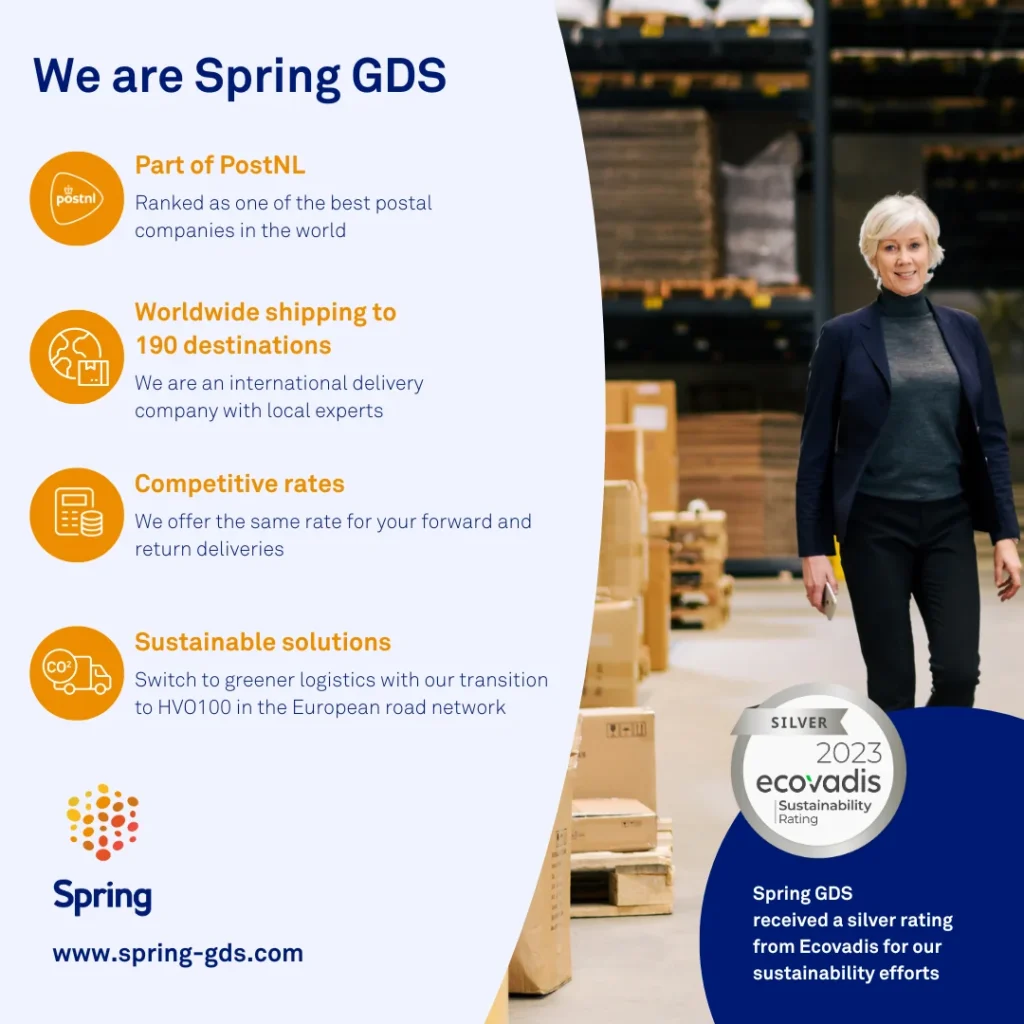
The company operates at the intersection of local expertise and global reach. By leveraging a network of over 230 international logistics partners, Spring GDS provides merchants with a seamless route to 190 destinations worldwide. This is not merely a shipping service; it is a comprehensive logistical infrastructure supported by 18 strategically placed operation centers across three continents. This footprint ensures that whether a merchant is based in Europe, Asia, or North America, their inventory is never far from their customer base.
A Chronology of Reliability: Backed by a Market Leader
The strength of any logistics provider is only as good as the foundation upon which it stands. Spring GDS derives its pedigree from its parent company, PostNL. As the Dutch postal service and parcel corporation, PostNL is a cornerstone of European logistics, listed on the Euronext Amsterdam stock exchange.
- Institutional Stability: PostNL has been consistently recognized by the Universal Postal Union (UPU) as one of the top ten postal companies in the world. This ranking is not awarded lightly; it is based on rigorous assessments of infrastructure, reliability, and service quality.
- The Path to Sustainability: In recent years, the company has pivoted significantly toward environmental, social, and governance (ESG) standards. PostNL’s consistent high ranking in the Dow Jones Sustainability Index (DJSI) underscores a corporate culture that values long-term viability over short-term gains.
- The Evolution of Spring: Spring GDS was born from the necessity to extend this institutional expertise into the specialized realm of e-commerce. It represents the modernization of a legacy postal giant, transforming traditional mail expertise into the dynamic, high-speed world of digital retail.
Supporting Data: The Sustainability Commitment
Modern consumers are increasingly "climate-conscious," demanding that their favorite brands align with sustainable practices. Spring GDS has recognized this shift, embedding sustainability into its organizational DNA rather than treating it as a peripheral marketing tactic.
The Roadmap to Net Zero
Spring GDS has adopted a science-based approach to climate action, aligning its internal policies with the Paris Climate Agreement. The company has set a bold target: achieving net-zero emissions by 2040. To remain within the 1.5-degree Celsius warming threshold, the company has implemented several key initiatives:
- Circular Resource Management: By replacing single-use transit materials—such as traditional cardboard pallet boxes and wooden pallets—with circular, reusable alternatives, Spring GDS significantly reduces its waste footprint.
- Emission Reduction Strategies: The company is actively optimizing its transport routes and investing in lower-emission logistics fleets to minimize the carbon cost of cross-border shipping.
- EcoVadis Recognition: In 2023, these efforts were validated when Spring GDS was awarded a silver medal by EcoVadis. This assessment platform is the gold standard for global supply chain sustainability, evaluating companies on environmental impact, labor and human rights, ethics, and sustainable procurement.
Innovative IT Integration: The XBS Platform
Logistics is essentially a data problem. To solve it, Spring GDS developed the XBS (Cross Border Shipping) platform. XBS is not just a tracking tool; it is an end-to-end management ecosystem that simplifies the often-opaque world of international customs and shipping.
How XBS Benefits the Merchant:
- Unified Dashboarding: Merchants can oversee shipments from multiple origins to dozens of destinations through a single, intuitive interface. This reduces administrative overhead and minimizes the risk of human error in manual documentation.
- Real-Time Transparency: For the modern consumer, "Where is my order?" is the most common customer service query. XBS provides granular, real-time tracking that empowers retailers to provide accurate updates, thereby increasing customer satisfaction and loyalty.
- Regulatory Compliance: Cross-border trade is fraught with complex tax, tariff, and customs regulations. The XBS platform integrates these variables, ensuring that shipments are compliant with international standards, which prevents costly delays at borders.
Implications for the Future of E-commerce
The partnership between a merchant and their logistics provider is no longer a transactional arrangement; it is a strategic alliance. The implications of choosing a partner like Spring GDS are manifold for the modern business owner.
Scalability and Market Entry
For an SME looking to move from domestic sales to international expansion, the barriers to entry—customs, language barriers, and last-mile logistics—can be paralyzing. By utilizing Spring GDS, these merchants gain "plug-and-play" access to global markets. They don’t need to build their own distribution networks in every country they serve; they simply tap into the existing, robust infrastructure of the Spring GDS/PostNL network.
The Competitive Advantage of "Greener" Shipping
As governments tighten regulations on corporate carbon footprints, companies that can prove their sustainability credentials will gain a distinct competitive edge. By outsourcing logistics to a firm with an EcoVadis silver rating and a clear net-zero path, retailers can effectively lower the carbon footprint of their supply chain, which is increasingly being used as a brand differentiator in marketing materials.
Risk Mitigation
The global supply chain remains fragile, as evidenced by recent geopolitical and health-related disruptions. A logistics provider with 18 operation centers across three continents offers a level of redundancy that smaller, regional providers cannot match. If one route is blocked, the breadth of the Spring GDS partner network allows for rapid rerouting, ensuring that the promise made to the customer at the point of sale is kept.
Official Perspective: The Human-Centric Logistics Philosophy
While technology and infrastructure are the engines of Spring GDS, the company’s philosophy remains centered on the individual needs of the merchant and the end consumer.
The company acknowledges that every business is unique. A boutique fashion brand shipping high-value items requires a different logistical approach than a subscription box service or a hardware supplier. Spring GDS emphasizes "tailored solutions," where their logistics consultants work directly with retailers to design workflows that match their specific product cycles, inventory locations, and budget requirements.
By combining the historical reliability of a national postal service with the innovative spirit of a digital-first logistics firm, Spring GDS has established a model that supports the long-term health of the e-commerce sector.
Conclusion: Why Logistics is the Final Frontier
In summary, the journey from a warehouse in Amsterdam or a fulfillment center in Asia to a doorstep in a foreign land is a complex, high-stakes endeavor. As e-commerce platforms continue to democratize access to global markets, the merchant who succeeds will be the one who chooses a logistics partner that offers more than just movement of goods.
They will choose a partner that offers:
- Institutional stability (The PostNL heritage).
- Global operational scale (190 destinations, 18 operation centers).
- Future-proof sustainability (Net zero by 2040, EcoVadis silver).
- Technological command (The XBS platform).
Spring GDS has meticulously built these pillars to ensure that for the online retailer, the world truly is a local market. By offloading the complexities of the supply chain to a proven leader, merchants are free to focus on what they do best: creating products and experiences that delight their customers. In the final analysis, the right logistics partner is not just a cost center; it is the most vital investment a digital business can make.