The State of the Web: Navigating the Rapid Evolution of CSS and Browser Interoperability
The landscape of front-end development is shifting at an unprecedented velocity. As we move through the second quarter of 2026, the intersection of browser-specific nuances, the introduction of powerful new CSS primitives, and the increasing complexity of modern UI design has created a "golden age" of web styling. However, this progress brings with it a paradox: while our toolkits grow more capable, the burden of staying current becomes increasingly heavy.
In this edition of !important, we dissect the latest developments shaping the web, from the persistent challenge of cross-browser testing to the revolutionary shift in how we handle component state and layout logic.
The Persistent Challenge: Cross-Browser Testing in a Proprietary World
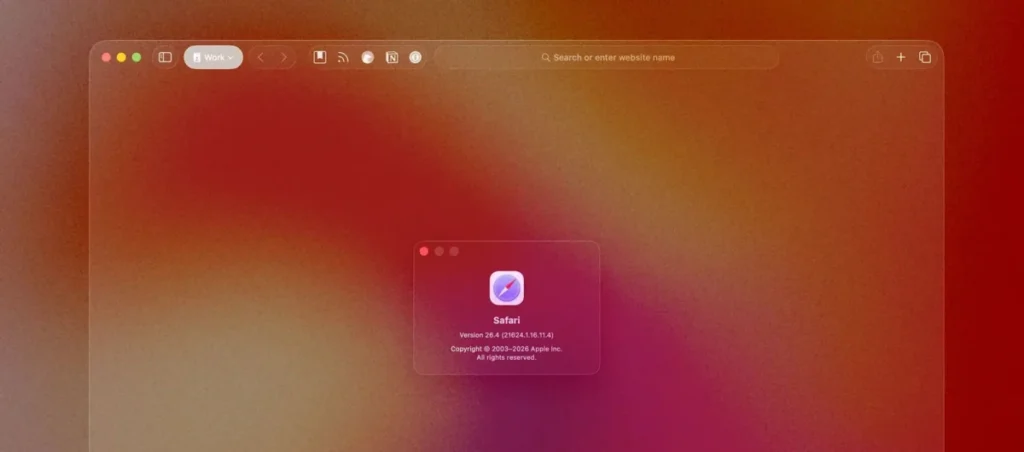
One of the most enduring hurdles for web developers remains the "Safari gap." Despite Safari’s status as the world’s second most popular browser, its deep integration into the Apple ecosystem creates a significant barrier for developers working on Windows or Linux environments.
The Economics of Browser Testing
Because Apple has maintained Safari as a proprietary piece of software, tightly coupled with its hardware and macOS, developers without access to Apple devices often find themselves in a precarious position. When a feature renders flawlessly in Chromium-based browsers but breaks in WebKit, the inability to debug directly in the target environment can lead to prolonged development cycles and "blind" hotfixes.
In a recent deep dive for Frontend Masters, Declan Chidlow outlines the current reality of this landscape. He suggests that while cloud-based testing services have mitigated some of the pain, the fundamental issue remains: web standards are universal, but the platforms that render them are not. The industry is currently weighing the trade-offs between local virtualized environments, browser-testing platforms, and the increasing reliance on automated regression testing to bridge the gap.
Styling the Future: The Rise of ::checkmark and Advanced Geometry
For years, the styling of form elements—specifically checkboxes, radio buttons, and select menus—has been a source of frustration, often requiring complex "hidden input" hacks to achieve custom UI designs.
Introducing ::checkmark
The introduction of the ::checkmark pseudo-element marks a turning point in UI accessibility and design. Sunkanmi Fafowora recently provided a comprehensive look at how this element aims to solve the age-old problem of styling check-states. By allowing developers to hook into the indicator state of an input without sacrificing native accessibility, ::checkmark offers a clean, performant path toward custom-branded components.
Geometric Flexibility with border-shape
Designers have long been restricted by the box model. While clip-path has provided some relief, it often results in complex, non-responsive shapes that are difficult to manage. Temani Afif’s recent analysis of border-shape paired with the shape() function demonstrates a superior approach. By decoupling the shape of an element from its overflow constraints, developers can now switch between varying geometric styles—solid, outlined, or cutout—with minimal CSS overhead, enabling a new level of fluidity in layout design.
Mathematical Layouts: The Power of sibling-index() and sibling-count()
The web has long awaited a way to handle element logic based on its relationship to its peers. Durgesh Pawar’s recent exploration of sibling-index() and sibling-count() highlights a shift toward "mathematical layouts" where CSS can handle complex arithmetic that previously required JavaScript intervention.
Implications for Dynamic UI
These functions allow for context-aware styling. Imagine a container that automatically adjusts the size or spacing of its children based on the total number of items, or a grid that applies different colors to elements based on their index in the list. This isn’t just about aesthetics; it is about reducing the reliance on DOM-manipulation scripts to handle basic layout responsiveness. As these functions reach Baseline status, we expect to see a drastic reduction in the boilerplate code required to maintain dynamic, data-driven interfaces.
The Evolution of Anchor Associations
The recent decision to deprecate the anchor attribute—which many hoped would standardize how popovers and tooltips attach to elements—left a gap in the CSS specification. However, the community has responded with clever, standards-compliant workarounds.

A New Approach to attr()
In recent experiments, we have explored how to manage anchor associations using data- attributes combined with the advanced attr() function. By leveraging custom identifiers and the ident() function, developers can create robust relationships between triggers and their floating counterparts without needing a dedicated HTML attribute.
This approach serves as a bridge, allowing for "declarative UI" patterns while we wait for the W3C to formalize a more permanent solution. The syntax is cleaner, more portable, and adheres to the spirit of progressive enhancement that keeps the web resilient.
The State of CSS 2026: A Shift in Philosophy
Perhaps the most important event in the current development cycle is the release of the State of CSS 2026 survey. This year, the organizers have made a conscious, strategic decision to pivot away from "feature overload."
The "Less is More" Mandate
The opening message of the survey acknowledges a growing sentiment among developers: burnout. With new CSS properties launching every few months, even the most dedicated engineers are struggling to maintain a complete mental model of the language.
The survey team states:
"Take a deep breath. Calm down. It’s ok if you don’t know every single new CSS property. The truth is, very few of us do."
This shift in tone is indicative of a broader industry maturity. Instead of measuring success by the volume of features adopted, the industry is beginning to value "depth over breadth"—focusing on which tools provide the highest ROI for maintainability and user experience.
Supporting Data and Industry Trends
- Browser Interoperability: According to recent data from global traffic analytics, Safari remains a critical "must-test" environment for over 30% of global web traffic, particularly in high-value e-commerce and mobile sectors.
- Performance Metrics: Implementation of native CSS primitives like
sibling-count()has been shown to reduce "Time to Interactive" (TTI) by up to 15% in complex, data-heavy dashboard interfaces by offloading logic from the main JavaScript thread to the browser’s style engine. - Developer Sentiment: Early polling from the State of CSS 2026 suggests that developers are prioritizing "CSS Nesting," "Container Queries," and "View Transitions" as the most impactful features of the last 18 months.
Implications: Where Do We Go From Here?
The web is evolving into a more declarative and capable platform. As we integrate these new tools, the implications for the future of development are threefold:
- Lower Barrier to Entry: By moving logic from JavaScript into CSS, we are lowering the complexity required to build sophisticated interfaces, making the barrier to entry lower for junior developers.
- Performance by Default: Browser engines are heavily optimized. Using native CSS functions like
sibling-index()is inherently more performant than usingforEach()loops in React or Vue to manage DOM styling. - The Sustainability Challenge: As the language grows, the industry must develop better documentation and curriculum paths to ensure that the next generation of developers isn’t left behind by the sheer volume of new features.
The current climate of web development is, by all accounts, overwhelming. Yet, it is an overwhelm born of abundance. We are no longer asking "Can we do this in CSS?" but rather "What is the most maintainable way to do this in CSS?"
As we look toward the remainder of 2026, the focus must remain on quality over quantity. Whether you are navigating the quirks of Safari, experimenting with ::checkmark, or participating in the latest industry survey, remember that the goal is not to master every tool, but to build a web that is accessible, performant, and, above all, maintainable.
Stay tuned to !important as we continue to track these developments. There has never been a more exciting—or more challenging—time to be a web developer.