The Echoes of War: How Manipur’s Forgotten Battlefield Still Shapes Its Future
GUWAHATI — As the 19th Mumbai International Film Festival (MIFF) draws to a close this Sunday, June 21, 2026, the spotlight is firmly fixed on a cinematic achievement that bridges the gap between the mid-20th century and the volatile present. Among the curated selections of South Asia’s oldest and most prestigious documentary festival is Borun Thokchom’s 80-minute magnum opus, Battlefield.
A project spanning thirteen years of painstaking research, filming, and emotional labor, Battlefield is more than a historical account of the World War II clashes in Imphal and Kohima. It is an anti-war treatise that argues a sobering, often uncomfortable truth: that for regions like Manipur, the war never truly ended.
The Turning Point: 1944 and the Theater of Conflict
In 1944, the hilly terrains of Manipur and Nagaland became the stage for one of the most significant and brutal confrontations of World War II. The Battles of Imphal and Kohima, fought between the Allied forces and the Imperial Japanese Army—supported by Subhash Chandra Bose’s Indian National Army (INA)—represented a pivotal shift in the war in Asia.
For the British Empire, these were the "greatest land battles" ever fought by their forces, famously ranked in 2013 by the United Kingdom as surpassing even the historical significance of Waterloo and D-Day. However, for the local populations of Northeast India, the legacy was far more complex than a strategic victory or defeat.

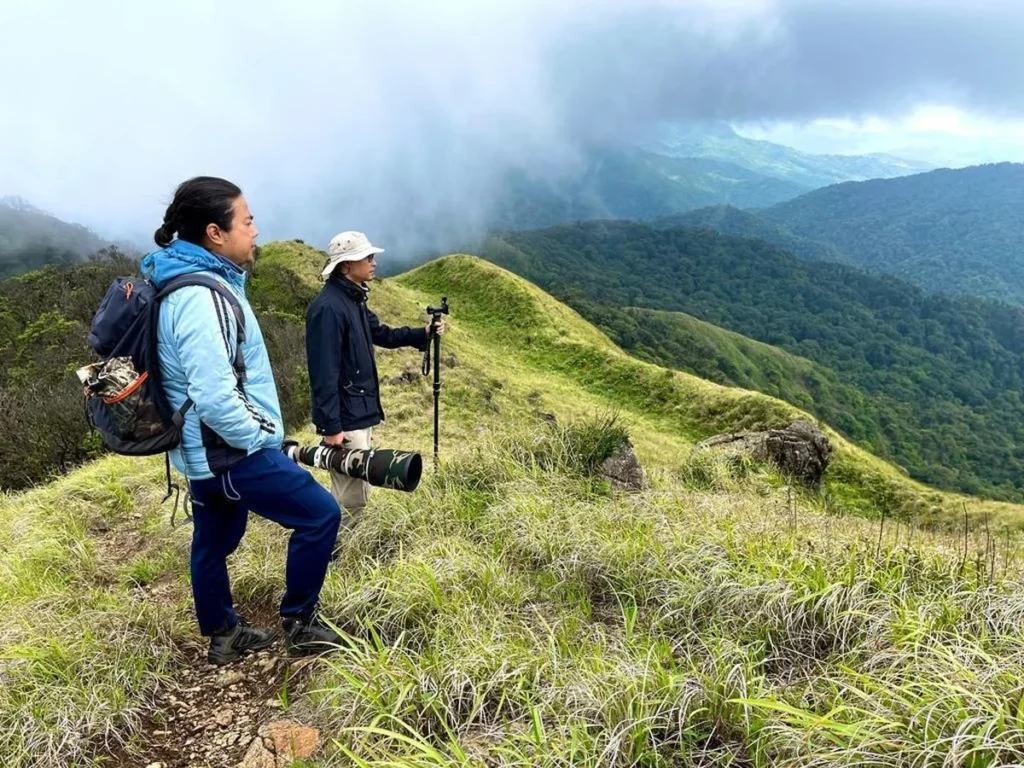
The documentary follows the journey of Rajeshwar Yumnam, an amateur war researcher from Imphal. His life’s work—excavating rusted relics, mapping trenches, and documenting the memories of the elderly—forms the backbone of the film. Through his lens, the audience is transported back to a time when Manipur was suddenly thrust into the center of a global cataclysm, its villages bombed and its people displaced by the mechanical might of foreign armies.
A Chronology of Trauma: From World War II to Modern Unrest
The film masterfully weaves together the timeline of historical trauma, suggesting a direct lineage between the scars of 1944 and the contemporary ethnic tensions that have gripped the region.
- 1944: The Battles of Imphal and Kohima turn the landscape into a frontline. The conflict introduces high-powered weaponry to the local geography.
- Post-1945: Following the end of the war, the region faces the vacuum left by the departing colonial powers. Manipur’s subsequent merger with India becomes a flashpoint for long-standing political grievances.
- The Mid-20th Century: The presence of arms left behind by the war facilitates the rise of early resistance movements, turning local anger into an organized, armed pursuit of self-rule.
- May 3, 2023: Ethnic violence erupts between the Meitei and Kuki-Zo communities. While Battlefield was nearing completion during this period, the urgency of the film takes on a haunting, prophetic quality in the wake of the ongoing strife.
- June 20, 2026: Battlefield is screened at the 19th MIFF, serving as a mirror to a society currently struggling to reconcile with its own internal divisions.
The Persistence of Memory: Why the War Never Left
For filmmaker Borun Thokchom, the war is not a static event confined to the pages of history. It is a living, breathing entity. "World War II turned Manipur into a frontline battlefield," Thokchom explained in an interview with The Hindu. "Villages were bombed, people were displaced, and locals watched big foreign armies fight for their own freedom. That experience gave people new ideas about self-rule and nationhood."
Thokchom posits that the destruction wrought by the war, coupled with the political uncertainties of the post-colonial merger, created a foundation of "deep anger." This anger, he suggests, provided the fuel for the ethnic and separatist movements that have characterized the region’s history for decades.

In local parlance, the conflict is still remembered as Japan Lan—the Japan War. It is a term that carries the weight of a generation that saw their paddy fields turned into graveyards and their homes into firing lines. The documentary highlights that even today, farmers occasionally unearth unexploded ordnance, a physical reminder that the danger of the past is never more than a few inches beneath the soil.
Supporting Data: The Impact on Human Geography
The significance of the film is bolstered by its departure from traditional military history. Instead of focusing on troop movements or tactical victories, Battlefield prioritizes the human cost.
- Historical Recovery: Rajeshwar Yumnam’s work is characterized as an act of "historical recovery." By helping the descendants of both the fallen soldiers and the local victims, he performs a form of reconciliation that official government archives often overlook.
- Cultural Legacy: The documentary is part of a growing movement of Northeast Indian filmmakers who are reclaiming their history. Along with the short animation Story of a Forest by Trishul Yumnam and Yaso Sharma—also featured at this year’s MIFF—there is a concerted effort to document the ecological and psychological toll of conflict in the region.
- The Institutional View: The international recognition of these films at MIFF signals a shift in how the Indian film fraternity views the Northeast. No longer a peripheral subject, the region’s history is being recognized as central to the broader Indian experience of the 20th century.
Implications: A Call for Reconciliation
The implications of Battlefield are far-reaching. As the film industry and critics discuss its merits, the core message remains: war leaves deep, structural, and generational scars that cannot be healed by treaties alone.
Critics have praised the film for its quiet, haunting delivery. It does not engage in the loud, performative condemnation of war often found in mainstream cinema. Instead, it invites the audience to observe the silence of the landscape, the rust on a discarded helmet, and the weary eyes of a villager who remembers the roar of bombers.

"There are wars that end with treaties, and there are wars that remain buried in the earth," noted one reviewer. "Long after armies retreat and history books close, fragments endure—unexploded shells beneath village soil, rusted helmets buried in paddy fields, and stories carried by grandparents who survived the devastation."
Official Perspectives and Future Directions
The selection of Battlefield for the 19th MIFF, which serves as the largest festival for documentary and short films in South Asia, highlights the importance of archiving oral histories and regional memories. By providing a platform for narratives from Manipur, the festival fosters a national dialogue on the complexities of conflict.
As the festival concludes on June 21, the conversation surrounding the film is expected to intensify. With the ongoing ethnic conflict in Manipur, the film’s themes of displaced populations and the lingering consequences of war provide a poignant backdrop for current political discussions.
Ultimately, Borun Thokchom’s Battlefield serves as a crucial intervention. It asks us to consider whether a society can truly move forward if it hasn’t fully accounted for the ways in which its past conflicts are still being fought in the minds and hearts of its people. By connecting the dots between the global tragedy of 1944 and the local struggles of the present, the film does not offer a solution, but it provides something perhaps more vital: an honest reflection on the enduring, transformative power of memory.

In an era of rapid technological advancement and historical revisionism, Battlefield stands as a testament to the endurance of the human spirit and the necessity of remembering—not just for the sake of the past, but for the possibility of a future where the soil no longer holds the shells of yesterday.