The Great Pivot: Decoding the Financial Maturity of India’s Startup Ecosystem in FY26
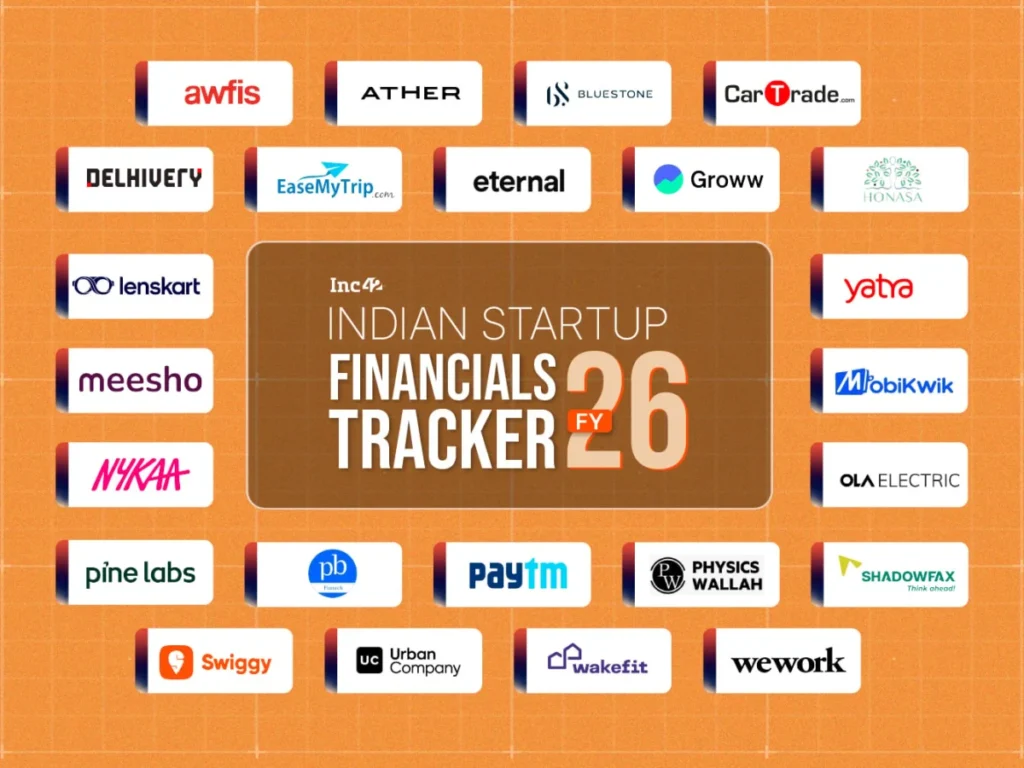
The Indian startup ecosystem reached a pivotal inflection point in FY26. Moving past the "growth-at-all-costs" era that defined the previous decade, the nation’s new-age tech companies have pivoted toward a more disciplined, fiscally prudent model. This shift is not merely anecdotal; it is evidenced by a robust surge in public market debuts—22 new-age tech companies went public in FY26, a significant jump from the 13 recorded in FY25—and a decisive trend toward profitability among established unicorns and soonicorns.
While geopolitical headwinds and global economic volatility created a challenging environment, particularly in the fourth quarter, the aggregate financial performance of the ecosystem suggests a maturing market. Of the 24 prominent startups tracked by Inc42, 17 (approximately 70%) achieved profitability in FY26. However, the path to sustainability remains bifurcated: while the profitable cohort generated a cumulative net profit of ₹5,657.3 Cr, the remaining seven startups reported cumulative losses of ₹8,168.7 Cr, illustrating that for a segment of the ecosystem, the "path to profitability" remains a work in progress.
The Financial Landscape: Scale vs. Sustainability
The scale of India’s startup economy continues to be impressive. The 24 companies analyzed generated a combined operating revenue of ₹1.71 Lakh Cr in FY26, a staggering 54% increase from the ₹1.11 Lakh Cr recorded in FY25. This growth indicates that despite aggressive cost rationalization, these companies have successfully maintained their competitive edge and market penetration.
To provide stakeholders with a comprehensive view of this transition, Inc42 has launched the FY26 Financial Tracker. This resource serves as a centralized repository for key financial metrics, offering transparency into how these companies are balancing top-line growth with bottom-line health.
Chronology of Performance: A Sectoral Analysis
The fiscal year was characterized by distinct operational strategies. While some companies focused on aggressive expansion, others prioritized margin improvement through operational efficiency.
1. The Profitable Titans
Companies like Groww and PB Fintech have cemented their status as financial powerhouses. Groww saw its net profit surge to ₹2,083 Cr, crossing the ₹2,000 Cr mark, while PB Fintech reported a profit of ₹670 Cr, a near 90% increase YoY. Nykaa also showcased stellar performance, with revenue crossing the ₹10,000 Cr milestone and profits jumping over 182% to ₹203.9 Cr.
2. The Turnaround Stories
Several companies that were bleeding cash in previous years achieved their first full year of profitability. BlueStone stands out as a success story, posting a net profit of ₹13.2 Cr against a loss of ₹221.8 Cr in the previous year. Similarly, Paytm turned the tide, reporting a net profit of ₹552 Cr compared to a net loss of ₹663 Cr in FY25. Pine Labs also joined the profitable club, moving from a ₹145.5 Cr loss to a ₹112.5 Cr profit.
3. The Scaling Challenges
Conversely, companies like Swiggy and Meesho continue to grapple with high capital expenditure. Swiggy’s loss expanded to ₹4,154 Cr, largely attributed to the aggressive scaling of its quick-commerce vertical, Instamart. While these companies are growing their top lines, the cost of customer acquisition and logistics remains a heavy drag on profitability.
Data Deep-Dive: Key Financial Metrics (FY26)
| Company | Operating Revenue (₹ Cr) | YoY Revenue Growth | Net Profit/Loss (₹ Cr) | Total Expenses (₹ Cr) |
|---|---|---|---|---|
| Ather Energy | 3,671.8 | 62.83% | -517.2 | 4,335.2 |
| Delhivery | 10,508.3 | 17.65% | 152.5 | 10,707.8 |
| Eternal (Zomato) | 54,364.0 | 168.56% | 366.0 | 55,145.0 |
| Lenskart | 8,814.0 | 32.49% | 500.9 | 8,287.9 |
| Shadowfax | 4,202.4 | 69.10% | 111.7 | 4,127.9 |
Note: Data represents select high-growth entities.
Strategic Shifts and Official Perspectives
The underlying trend across these companies is the "operational leverage" play. Lenskart, for instance, leveraged its premiumization strategy and international expansion to boost profits by 69%. In contrast, Ola Electric focused on aggressive cost-cutting, trimming its total expenses by 48% to reduce its net loss, despite a 50% drop in revenue due to cooling demand for its e-scooters.
PhysicsWallah represents the successful integration of offline and online models. By expanding its physical coaching centers—which now account for 45% of its top line—the company successfully narrowed its net loss by 90% to ₹24.2 Cr.
The Cost of Innovation
Not all investments paid off immediately. Urban Company slipped into the red with a loss of ₹234.8 Cr, primarily due to the heavy investment in its new "Insta Help" service. Similarly, Meesho saw its marketplace EBITDA loss soar as it funneled capital into AI-driven features and logistics consolidation.
Implications for the Ecosystem
The FY26 data provides several critical takeaways for the Indian startup ecosystem:
- The End of "Cheap" Growth: Investors are no longer rewarding pure revenue growth. The market is signaling a clear preference for companies that can demonstrate a clear path to unit economics profitability.
- The Rise of Quick Commerce: The massive revenue growth at Eternal (Zomato), which recorded a 168% jump, highlights the dominance of the quick-commerce sector. However, the associated costs remain the highest in the industry, suggesting that the "inventory-led model" requires significant scale to break even.
- Regional and Global Ambitions: Companies like Lenskart and Pine Labs are successfully de-risking their portfolios by expanding internationally. This geographical diversification is becoming a hallmark of mature, resilient startups.
- Logistics as the Backbone: The profitability of players like Shadowfax (19x profit jump) highlights that as e-commerce matures, the logistics layer is becoming the most efficient part of the value chain.
Conclusion: A New Era of Maturity
FY26 will be remembered as the year Indian startups stopped acting like "startups" and started acting like "corporations." The transition from burning cash to generating cash is painful, as seen in the red ink at EaseMyTrip and Urban Company, but the aggregate data proves that the ecosystem is far more resilient than it was even two years ago.
As we move into FY27, the focus will likely shift from simple "profitability" to "sustainable cash flow generation." Investors are increasingly looking at free cash flow (FCF) metrics—a shift already seen in companies like WeWork India, which posted a 44% growth in FCF. The Indian startup story is no longer about how fast you can run, but about how long you can sustain the pace. With 22 new IPOs and a growing number of profitable unicorns, the Indian tech sector is not just surviving the funding winter—it is emerging from it with a renewed sense of purpose and fiscal discipline.
Disclaimer: This analysis is based on financial filings and public disclosures. It is not an investment advisory. The tracker will be updated periodically as more companies release their annual reports.