Beyond the Workout Floor: How Cult.fit is Redefining the Fitness Ecosystem to Reach Profitability
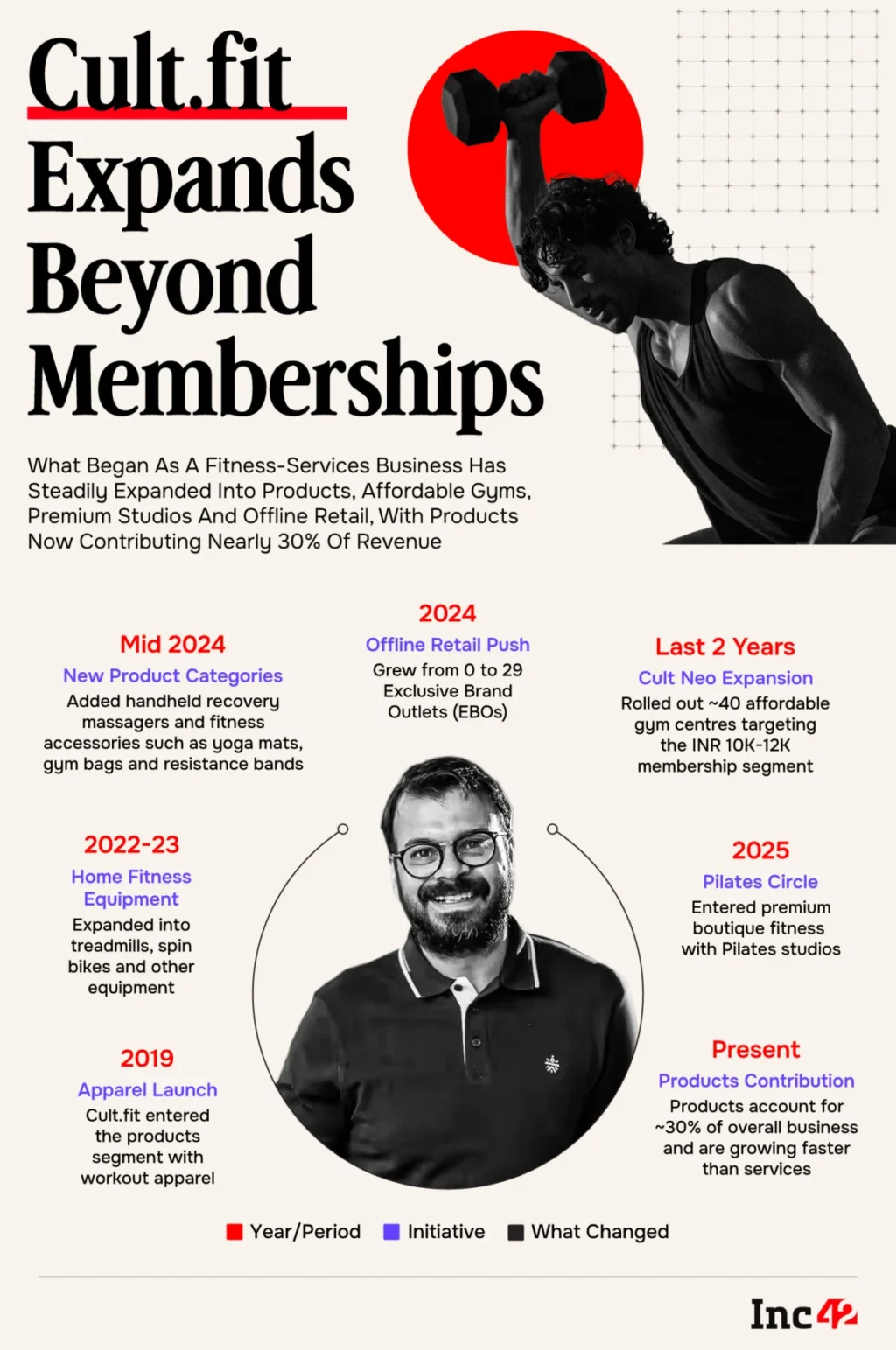
For nearly a decade, the name "Cult.fit" was synonymous with high-intensity group workouts and a premium gym membership model. Founded in 2016 by former Flipkart stalwarts Mukesh Bansal and Ankit Nagori, the startup revolutionized the Indian fitness landscape by digitizing the gym experience and making wellness accessible through a seamless app-based ecosystem. However, as the company matures, its playbook is undergoing a radical transformation.
Cult.fit is no longer just a gym chain; it is aggressively pivoting toward becoming a comprehensive lifestyle brand. With a vision to emulate the success of global retail giants like Decathlon, the company is betting heavily on its burgeoning products business, an affordable gym format, and a diversified retail footprint to cement its path to profitability.
The Strategic Pivot: Building Multiple Growth Engines
The shift in Cult.fit’s strategy is not merely anecdotal; it is reflected in the balance sheet. In a landscape where fitness startups often struggle with high overheads and fickle customer loyalty, Cult.fit is leveraging its existing community to build a "flywheel" effect. By transitioning from a service-only provider to a hybrid product-and-service entity, the startup is tapping into the entire lifecycle of a fitness enthusiast.
Under the leadership of CEO Naresh Krishnaswamy, the company has seen its products division surge. What began as a cautious entry into apparel in 2020 has blossomed into a diversified portfolio spanning footwear, home-fitness equipment, recovery massagers, and lifestyle accessories. Today, products contribute approximately 30% of Cult.fit’s total revenue—a significant uptick that underscores the success of its diversification strategy.
A Chronology of Expansion: From Gyms to Goods
The evolution of Cult.fit has been methodical rather than impulsive. The company’s journey from a workout-focused startup to a retail powerhouse can be traced through several key milestones:

- 2016: Cult.fit is founded with a focus on group fitness and tech-enabled gym management.
- 2020: The startup makes its first foray into the D2C space by launching its own line of athletic apparel.
- 2021-2022: The portfolio expands into footwear and home fitness equipment, supported by strategic acquisitions such as the purchase of Tread, a connected fitness startup.
- 2023: Recognizing the need for a mass-market play, Cult.fit launches "Cult Neo," an affordable gym format designed to capture the price-sensitive Tier-2 and Tier-3 markets.
- 2024-2025: The company pivots to an omnichannel retail strategy, launching its own Exclusive Brand Outlets (EBOs) to bridge the gap between digital discovery and physical experience.
Supporting Data: The Numbers Behind the Transformation
The fiscal trajectory of Cult.fit highlights the scale of its ambition. Between FY22 and FY25, the company witnessed a staggering jump in operating revenue, climbing from ₹215.7 Cr to ₹1,215.5 Cr. During this same window, revenue from its product sales witnessed a near five-fold increase, rising from ₹64.2 Cr to ₹326.4 Cr.
This growth is supported by a sophisticated understanding of consumer behavior. By interacting with thousands of members daily across its gym network, Cult.fit has acquired a unique data set on what fitness enthusiasts prioritize. Whether it is the need for high-performance yoga mats or recovery massagers for muscle relief, the company uses this first-party data to iterate on its product design, manufacturing, and inventory management.
The startup’s asset-light model further bolsters its financial standing. By keeping design and material selection in-house while outsourcing the heavy lifting of manufacturing, Cult.fit maintains agility without the capital intensity usually associated with large-scale consumer goods manufacturing.
Official Perspective: CEO Naresh Krishnaswamy on the Path Ahead
In a recent discourse regarding the company’s future, CEO Naresh Krishnaswamy emphasized that the shift is rooted in operational leverage rather than cost-cutting. "Expenses do increase every year—employee costs rise, and rents increase contractually. We are not cutting expenses to drive profitability. Instead, our revenue is growing significantly faster than our costs," Krishnaswamy noted.
He points out that the "Cult Neo" format is a critical component of this strategy. By hitting a "sweet spot" of ₹10,000 to ₹12,000 for an annual membership, the company is successfully penetrating demographics that were previously priced out of the premium Cult experience. With 40 centers already operational and plans to scale to 100 cities, Neo is positioned as the volume driver for the company’s services business.

Regarding the retail expansion, Krishnaswamy views physical stores as essential trust-builders. "An EBO gives you the ability to touch and feel. In categories like treadmills, it gives you the ability to try the product," he explained. With 29 stores currently active and 30–35 more in the pipeline for the current fiscal year, the brand is clearly betting on the offline experience to convert digital shoppers into loyalists.
Implications for the Fitness Industry
The implications of Cult.fit’s strategy are far-reaching. By diversifying into products, they are effectively insulating themselves from the seasonality and high churn rates inherent in gym memberships.
1. The "Decathlon" Ambition
Cult.fit is positioning itself to be the go-to destination for the "everyday athlete." By populating its stores with everything from resistance bands to spin bikes, it aims to capture the customer’s wallet not just at the point of exercise, but at the point of preparation and recovery. This broadens the company’s Total Addressable Market (TAM) significantly.
2. Operational Efficiency
The focus on "revenue per gym" is a vital metric for the company. By optimizing space usage and ensuring that each location serves as a hub for both training and retail, Cult.fit is squeezing maximum value out of its real estate. As the company continues to scale its EBO network, it expects these stores to break even within nine to twelve months, providing a stable foundation for further geographical expansion.
3. Niche Segments
While the mass-market push through Cult Neo dominates the expansion strategy, the company is not abandoning premium users. The launch of "Pilates Circle," a specialized, high-ticket offering, demonstrates that Cult.fit intends to serve the entire spectrum of the fitness pyramid. While Pilates may not scale with the same velocity as Neo, it keeps the brand relevant among high-income, fitness-conscious urbanites.

Challenges and the Road to Profitability
Despite the optimism, the road ahead is not without obstacles. The primary challenges for Cult.fit remain the rising costs of real estate and talent. Because the business is inherently service-heavy, maintaining the quality of service while scaling across 100+ cities will require rigorous operational discipline.
Furthermore, competing with established global sporting goods giants requires more than just good products; it requires building a brand that can hold its own in a highly fragmented retail market. The company’s ability to maintain high margins in the product business while simultaneously managing the logistical complexities of a growing chain of gyms will be the ultimate test of its leadership.
However, the trend is clear: Cult.fit has successfully moved beyond the "gym membership" trap. By building a symbiotic relationship between its physical workout spaces and its product retail network, the company is no longer just selling a workout—it is selling a comprehensive fitness lifestyle. As it marches toward its potential IPO and continued market dominance, the success of its retail push will likely be the deciding factor in whether it can truly clear the profitability bar.