Strengthening the Fortress: CISF to Expand Security Umbrella Across Jammu and Kashmir Prisons
By Strategic Affairs Desk
Updated: June 21, 2026
In a significant strategic move to bolster the internal security apparatus of Jammu and Kashmir, the Union Ministry of Home Affairs (MHA) has initiated plans to extend the deployment of the Central Industrial Security Force (CISF) to five additional correctional facilities across the Union Territory. This expansion, which aims to create a standardized, high-tech security architecture, marks a paradigm shift in how the Indian government manages high-risk detention centers.
The proposed expansion includes the high-security prison at Mahanpur in Kathua—a facility specifically designed to house individuals involved in terrorism and other grave offenses—along with district jails in Jammu, Anantnag, Kupwara, and Baramulla.
The Evolution of Prison Security in J&K: A Chronology
The decision to entrust the CISF with prison security is not an isolated event but the culmination of a multi-year effort to professionalize the management of sensitive detention facilities in a region prone to complex security threats.
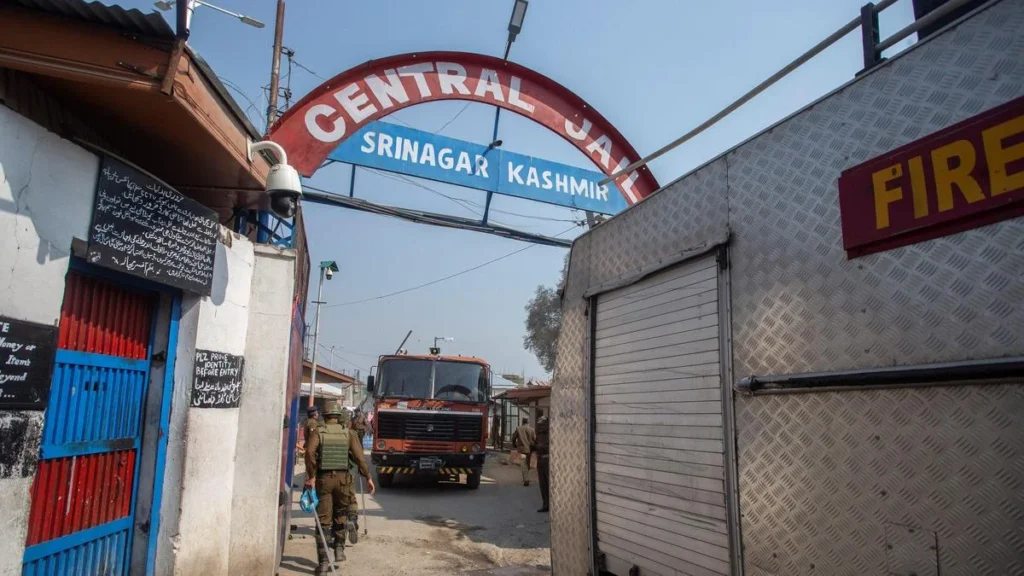
- October 2023: Recognizing the vulnerabilities in regional prison management, the MHA officially handed over the armed security mandate for the Central Jails in Srinagar and Jammu (Kot Bhalwal) to the CISF. This marked the first time a central paramilitary force took over the perimeter security of major prisons in the UT.
- 2024–2025: Throughout this period, the CISF focused on stabilizing its presence, upgrading perimeter defenses, and conducting deep-dive security audits of the existing infrastructure in Srinagar and Kot Bhalwal.
- June 8, 2026: CISF Director General Praveer Ranjan conducted a high-level review at the Central Jail in Srinagar. During this visit, he assessed the integration of new technological assets and held detailed operational briefings with prison authorities to evaluate the effectiveness of the current security model.
- June 21, 2026: A formal announcement by a CISF spokesperson confirmed that the MHA is actively considering the expansion of this security cover to five additional locations, signaling that the initial pilot program in Srinagar and Jammu has met government benchmarks for success.
Technological Upgrades and Modernization
The deployment of the CISF has moved beyond the traditional concept of armed guards on watchtowers. The force has introduced a multi-layered security grid designed to neutralize modern threats, including the smuggling of narcotics, contraband electronics, and the potential for internal coordination of militant activities.
The Digital Perimeter
To combat the persistent threat of illicit communication and contraband within prisons, the CISF has implemented a sophisticated suite of detection tools:
- Non-Linear Junction Detectors (NLJDs): These devices are capable of identifying concealed electronic circuits, such as hidden mobile phones or SIM cards, even if they are powered off.
- Dual-View X-Ray Inspection: All baggage and supply chains entering the facilities are subjected to dual-view scanning to ensure that no prohibited items reach the inmates.
- Electronic Surveillance: The integration of AI-enabled CCTV systems and advanced video analytics allows for real-time monitoring. These systems are programmed for anomaly detection, meaning they can automatically alert security personnel to unusual patterns of movement or unauthorized gatherings in yard areas.
Tactical Mobility and Response
Security is no longer static. The CISF has integrated mobile bulletproof vehicles into its patrolling rotation. These vehicles ensure that the outer perimeter is never left vulnerable to external breach attempts. Furthermore, round-the-clock Quick Reaction Teams (QRTs) are now a staple of the security architecture, trained specifically for rapid intervention in the event of riots, escape attempts, or external attacks.
Standardizing the Security Architecture
The move to expand the CISF’s footprint is driven by the necessity for a "standardized security architecture." In the past, prison security often relied on local manpower and disparate operational procedures. By placing the CISF—a force primarily known for securing critical national infrastructure like airports and power plants—in charge of prisons, the MHA is applying an industrial-grade security standard to the correctional sector.
According to the CISF spokesperson, the expansion will include specialized training modules for personnel. This training is not merely limited to marksmanship or perimeter defense; it encompasses:
- Behavioral Analysis: Training staff to recognize shifts in inmate temperament that could precede unrest.
- Inmate Profiling: Creating comprehensive digital dossiers to monitor the radicalization levels and behavioral history of high-risk detainees.
- Anti-Sabotage Measures: Advanced protocols to prevent the physical compromise of the jail infrastructure, such as tunneling or the undermining of electronic sensors.
Official Responses and Strategic Intent
The MHA’s decision to move forward with this expansion reflects a broader policy of insulating the prison administration from the localized pressures and logistical limitations that have historically plagued correctional facilities in conflict-prone zones.

"The effectiveness of the current deployment in Srinagar and Kot Bhalwal has been a primary driver for this decision," the CISF spokesperson noted. "Our mandate is to ensure that these facilities remain impenetrable. The complex security challenges associated with high-security prisons require a level of professional, disciplined, and tech-forward surveillance that the CISF is uniquely equipped to provide."
During his June 8 visit, DG Praveer Ranjan emphasized that the objective is to create a seamless "unified command-and-control system." By integrating the security protocols of all seven facilities (the two existing and five proposed), the MHA aims to create a centralized grid where intelligence and security data can be shared and acted upon with near-instantaneous speed.
Implications for the Union Territory
The transition of prison security to the CISF carries profound implications for the security environment in Jammu and Kashmir.
1. Neutralizing Internal Networks
High-security prisons have historically been cited as potential "command centers" for militant organizations. By tightening access control and eliminating the flow of contraband electronics, the government aims to sever the lines of communication between inmates and their handlers outside the prison walls.
2. Preventing Radicalization
The focus on "behavioral analysis" and "inmate profiling" suggests that the government is taking a long-term approach to the ideological containment of radicalized inmates. By managing the internal environment more strictly, the authorities hope to prevent the prisons from serving as recruitment or training grounds for extremist ideologies.
3. Professionalism in Correctional Management
By delegating security to a central force, the prison administration can focus more on the administrative and rehabilitative aspects of incarceration. This separation of duties—security handled by the paramilitary and management handled by the prison department—is a model that the MHA appears keen to replicate nationwide in high-risk zones.
4. A Deterrent to External Threats
The physical presence of the CISF, with its modern weaponry and QRTs, serves as a powerful deterrent. It sends a clear message to elements attempting to destabilize the region that the state’s correctional facilities are no longer weak links in the security chain.
Conclusion: The Road Ahead
As the MHA moves toward operationalizing the CISF’s role in the Kathua high-security prison and the district jails, the focus will likely shift toward the successful integration of these new units. The challenges remain significant; managing a prison is fundamentally different from securing an industrial plant or an airport. It requires a delicate balance between maintaining absolute security and upholding the human rights and basic standards of the incarcerated.
However, as of June 2026, the trajectory is clear: the central government is committed to a "zero-tolerance" approach toward insecurity within the prison system. With the integration of AI, advanced detection technology, and the disciplined oversight of the CISF, the prison network in Jammu and Kashmir is undergoing an unprecedented transformation, effectively turning these facilities into high-tech citadels of the state.
The successful implementation of this expansion will likely serve as a blueprint for the rest of the country, proving that in the modern era of asymmetrical threats, the perimeter of a prison is as critical to national security as the borders of the nation itself.