The Outlier Video Method: How AI Agents Are Transforming Creator Economics
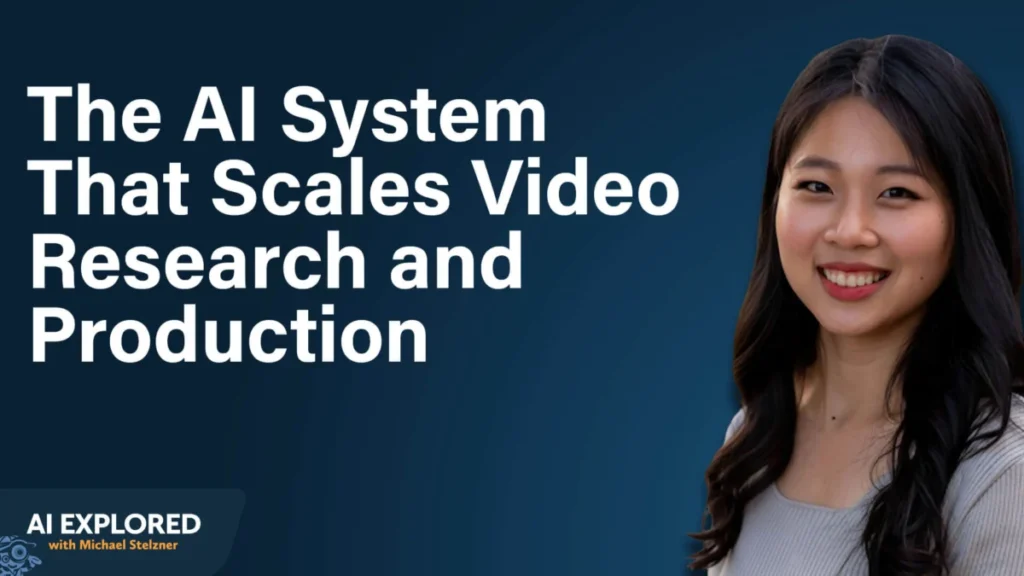
In the hyper-competitive landscape of digital content, the traditional "grind"—the endless cycle of brainstorming, scripting, filming, and editing—has become a bottleneck for growth. For many creators, the demand for high-frequency, high-quality output is a recipe for burnout. However, a new paradigm is emerging, spearheaded by creators like Sandy Lee, who are moving away from manual production toward an automated, AI-augmented ecosystem.
By leveraging "Claude Code" and a sophisticated architecture of autonomous AI agents, Lee has developed what she calls the "Outlier Video Method." This strategy doesn’t just automate tasks; it reverse-engineers the DNA of successful content to ensure that every video produced has a statistically higher probability of resonating with an audience.
The Genesis of the Outlier Method
The story of the Outlier Method begins with a necessity born of constraint. Sandy Lee, an experienced educator who built a massive following across YouTube, TikTok, and Instagram, found herself at a crossroads in 2025. With a full-time career, the responsibilities of motherhood, and a desire to relaunch a content brand, the manual approach was no longer sustainable.
"The grind is a trap," Lee notes. "If your content system relies entirely on your own willpower to research trends and write scripts from a blank page, you will eventually hit a ceiling."
Rather than choosing between her professional commitments and her creative output, Lee pivoted to a technical solution. By integrating Claude Code—an advanced AI environment that allows for complex, multi-step agentic workflows—she replaced the manual labor of content research with an automated pipeline. The results were immediate: within a single month of implementing this system, she grew a new YouTube channel from 200 to 11,000 subscribers, simultaneously generating $10,000 in revenue through a mix of channel performance and client consulting.

The Architecture of AI Agents
The power of Lee’s system lies in its structure. She doesn’t view AI as a simple chatbot, but as a team of specialized agents. She conceptualizes this as a hierarchy:
- Senior Agents: These handle high-level strategic decisions, such as identifying overarching content trends and refining the brand’s voice.
- Sub-Agents: These are task-specific entities that execute the "heavy lifting," such as analyzing thumbnail performance, auditing video hooks, and drafting scripts based on proven engagement frameworks.
This agentic approach mirrors the structure of a high-performing production studio, where individual departments operate with autonomy under a unified strategic vision.
Phase 1: Finding Your Content Identity
Before the AI begins its work, the creator must provide the "North Star." Lee advocates for the "Inside Out" method, heavily inspired by the Japanese concept of Ikigai—a reason for being.
Defining the Pillars
Creators are tasked with answering four foundational questions in a notebook, disconnected from any digital distraction:
- What do you love?
- What are you good at?
- What does the world need?
- What can you be paid for?
Once these answers are synthesized, they are fed into the AI to establish two critical assets: the Ideal Customer Profile (ICP) and Content Pillars. The ICP defines the audience’s demographics, challenges, and search behaviors, while the content pillars act as a gatekeeper for future topics. By mapping every prospective video to these pillars, creators ensure that they are not just chasing trends, but building a brand that remains cohesive and authoritative.

Phase 2: The Data-Driven Research Workflow
One of the most innovative aspects of the Outlier Method is its objective approach to research. Instead of browsing YouTube manually and relying on intuition, Lee’s system uses an API-driven workflow to identify "outliers."
Calculating the Outlier Score
The system tracks a curated list of ten top-performing channels within a niche. Every 48 hours, it pulls performance data and applies a specific formula:
Outlier Score = (Video Views in First 48 Hours ÷ Channel’s Average Views in First 48 Hours) × 100
A score significantly above 100 indicates that a video is an "outlier"—a piece of content that is vastly over-performing relative to the channel’s baseline. This is the crucial distinction: many creators mistake high views for success, when in reality, those views may simply be the result of a large existing subscriber base. By identifying content that succeeds despite the channel size, Lee uncovers the topics and formats that have inherent, viral potential.
Phase 3: The Anatomy of a Successful Script
Once an outlier video is identified, the system moves to analysis. It breaks down the thumbnail, the title, and the critical first 30 seconds of the video. It identifies the "why" behind the engagement—was it a bold claim? A specific curiosity gap? A shared pain point?

Using this data, the AI generates a new script that adheres to Lee’s brand voice while adopting the proven structural "skeleton" of the outlier video. Central to this is a seven-part hook framework, designed to maximize viewer retention from the very first frame.
Implications for the Creator Economy
The implications of the Outlier Video Method are significant for the broader creator economy. We are moving toward an era where "creative labor" is bifurcated into two distinct categories:
- Algorithmic Synthesis: The repetitive, data-heavy work of research, competitive analysis, and structural formatting.
- Human Essence: The delivery, the storytelling, and the unique perspective that only a human can provide.
By offloading the former to AI agents, creators are free to double down on the latter. Lee’s experience suggests that the most successful creators of the future will not be those who produce the most content, but those who build the most efficient systems to identify, refine, and iterate on what is already proven to work.
Official Perspectives and Future Outlook
While some critics argue that AI-assisted content creation risks homogenizing the creator landscape, Lee disagrees. She maintains that the AI acts as a mirror, reflecting the creator’s voice back at them in a more polished, effective format.
"The system doesn’t replace my creativity or my story," Lee explains. "It removes the friction. It takes the research and the formatting work off my plate so I can focus on the part only I can do: showing up on camera with authentic energy."
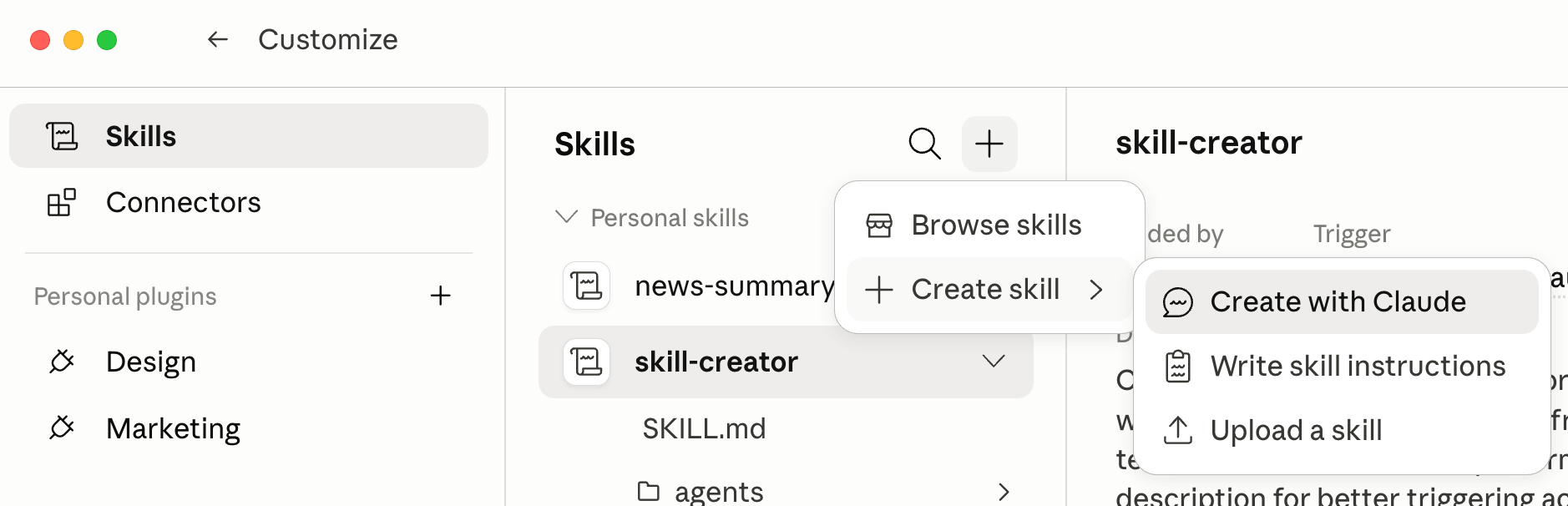
As AI tools like Claude Code continue to evolve, the barrier to entry for high-level content production is lowering. For the solo entrepreneur or the small business owner, the "Outlier Video Method" offers a blueprint to compete with larger media entities by using precision, data, and automation to punch above their weight class.
The transition to an AI-assisted workflow is no longer a futuristic concept—it is a present-day reality for those willing to architect their own systems. As more creators adopt these agentic workflows, the standard for what constitutes "high-quality content" will continue to shift, favoring those who treat their content creation as a scalable, data-informed business rather than a purely intuitive craft.
This article is based on insights shared by Sandy Lee and Michael Stelzner, exploring the intersection of AI, strategic content production, and the evolving creator economy.