The Future of Agentic AI: Highlights from AWS Summit New York 2026
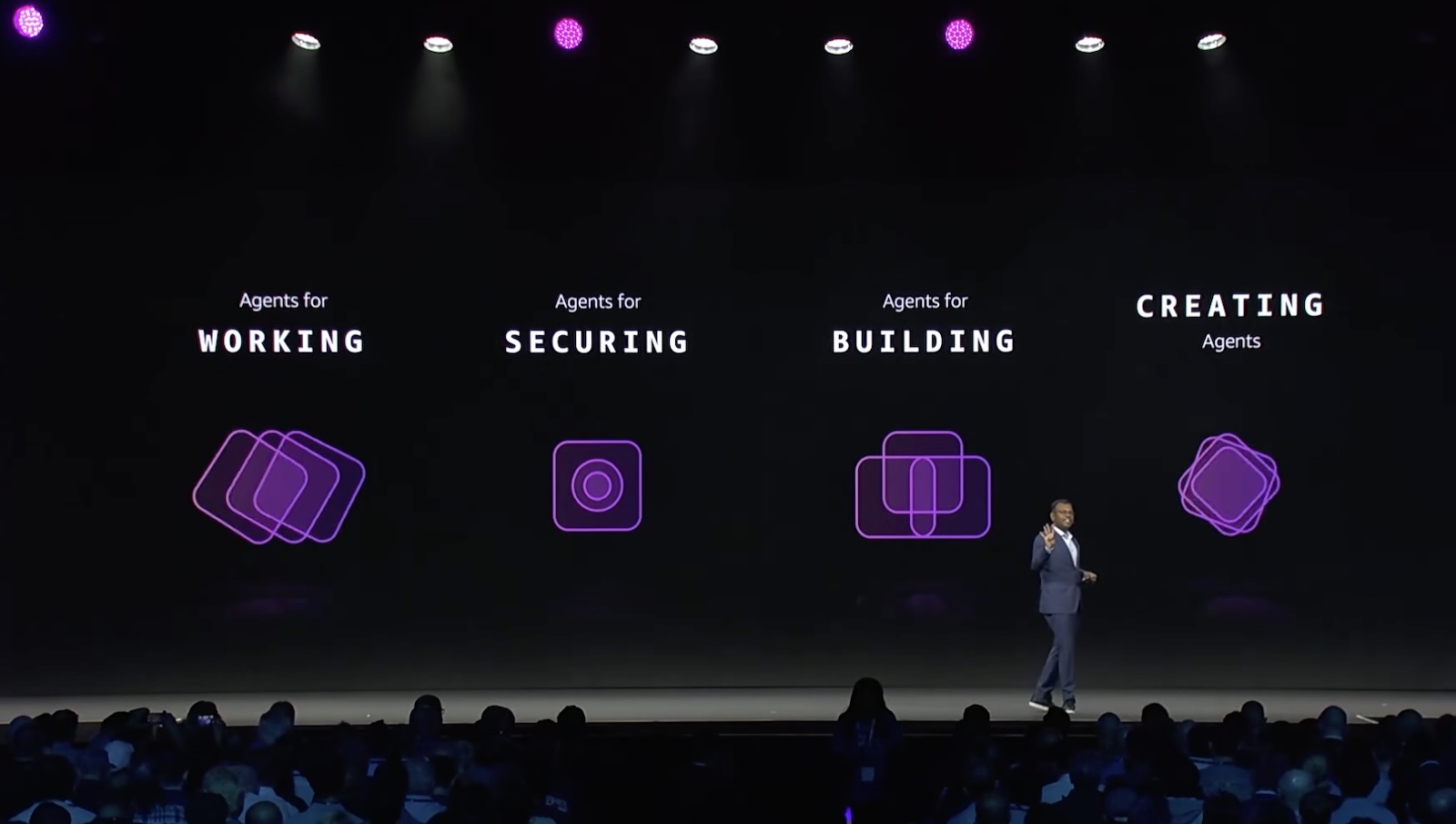
The landscape of generative AI is undergoing a fundamental shift. No longer content with simple chat interfaces and static text generation, the industry is pivoting toward "agentic AI"—autonomous systems capable of executing complex workflows, accessing proprietary data, and making decisions with minimal human intervention. This evolution took center stage at the AWS Summit in New York City, where Swami Sivasubramanian, AWS VP of Agentic AI, unveiled a suite of transformative tools designed to integrate intelligence directly into the fabric of enterprise operations.
Main Facts: The New Frontier of Amazon Bedrock and Quick
The keynote in New York served as a platform for two major product pillars: the expansion of Amazon Bedrock AgentCore and the launch of Amazon Quick’s autonomous agents. These announcements mark a transition from "AI that talks" to "AI that acts."
Amazon Bedrock AgentCore: Scaling Intelligence
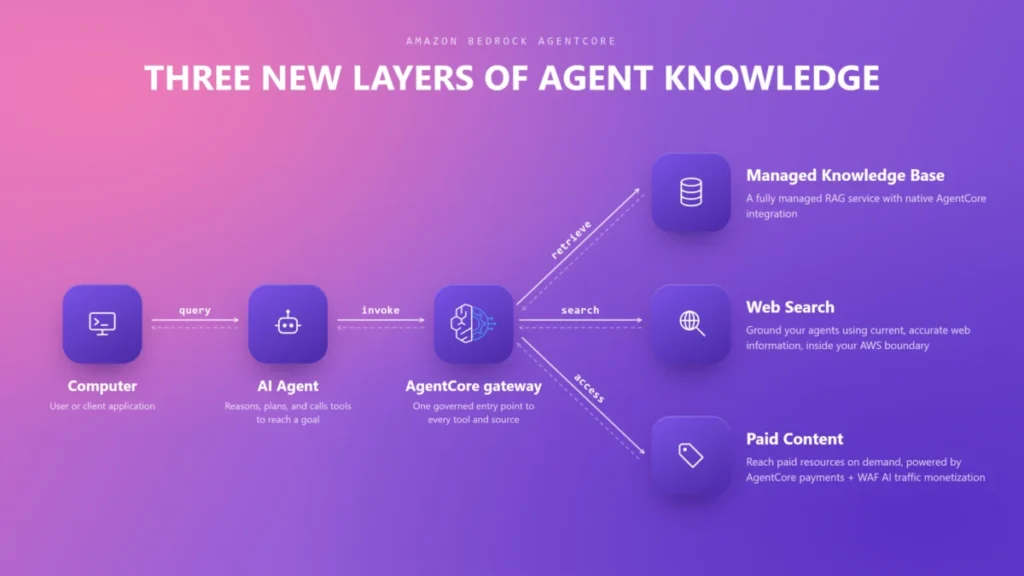
The updates to Amazon Bedrock AgentCore focus on three critical pillars: data connectivity, production resilience, and governance at scale. AWS is enabling developers to bridge the gap between foundation models and organizational reality. By allowing agents to ingest organizational data, live web content, and paid external knowledge sources, Bedrock is becoming a centralized intelligence layer.
Crucially, these updates address the "black box" problem of AI. The new capabilities include enhanced observability tools that help engineering teams identify precisely where an agent fails in a production workflow, allowing for rapid iteration and remediation.
Amazon Quick: The Autonomous Workforce
Perhaps the most disruptive announcement was the unveiling of autonomous agents within the Amazon Quick ecosystem. These agents are designed to function as specialized digital employees. Unlike generic chatbots, these agents are equipped with specific operational expertise, a defined professional tone, and gated access to internal tooling.
For instance, a finance-focused agent can now autonomously process purchase orders as they arrive, while a sales-oriented agent can monitor high-volume communication streams across CRM platforms, email, and Slack to flag risks or draft proactive client responses. Complementing this is a new "Activity Feed" that uses machine learning to prioritize a user’s daily workflow, filtering noise from critical tasks based on historical interaction patterns.
Chronology: A Week of Accelerated Innovation
The AWS Summit in New York acted as the focal point for a broader wave of releases that spanned the entire week.
- June 16, 2026: Initial previews and technical documentation were released regarding the "Knowledge Layers" feature for Amazon Bedrock, setting the stage for the keynote.
- June 17, 2026: Swami Sivasubramanian took the main stage at the Javits Center in NYC to deliver the keynote, officially launching the AgentCore enhancements and the Amazon Quick autonomous agents.
- June 18, 2026: AWS issued a follow-up series of technical launches, expanding the ecosystem with supplemental tools for developers focusing on security and infrastructure integration.
Supporting Data and Technical Implications
The shift toward agentic AI is not merely a branding exercise; it is backed by significant architectural changes in how AWS handles data.
The Role of "Knowledge Layers"
The introduction of Knowledge Layers represents a move toward RAG (Retrieval-Augmented Generation) 2.0. By allowing agents to query paid and web-based knowledge sources alongside internal silos, AWS is tackling the "hallucination" problem. Data is no longer just static; it is version-controlled and categorized, ensuring that agents act upon the most accurate, real-time information available.
Governance and Compliance
As agents take on more responsibilities—such as processing financial transactions or managing sensitive customer data—the governance framework must be robust. AWS has integrated granular control mechanisms that allow administrators to define the "blast radius" of an agent. If an agent’s performance deviates from established norms, these controls automatically intervene, preventing unauthorized actions. This is a vital step for enterprises in highly regulated industries like banking and healthcare.
Official Responses and Strategic Vision
During the keynote, Swami Sivasubramanian emphasized that the goal of these updates is to return time to the human workforce. "We are moving past the era of the chatbot," Sivasubramanian stated. "We are entering the era of the agent—systems that don’t just answer questions, but drive business outcomes by executing the steps required to get the job done."
Internal AWS documentation suggests that these tools are designed to reduce the "context-switching" tax that plagues modern knowledge workers. By consolidating fragmented communication channels—Slack, email, calendars—into a unified activity feed, Amazon Quick is effectively attempting to serve as an "operating system for work."

Implications for the Enterprise
The announcements in New York have far-reaching implications for how businesses will be structured in the coming decade.
1. The Rise of the "AI-Augmented Team"
With the ability to deploy specialized agents, organizations can effectively scale their capacity without necessarily scaling their headcount. A small finance team can now handle the throughput of a much larger department by delegating repetitive, rule-based tasks to an autonomous agent.
2. The Shift from Development to Orchestration
For software engineers, the focus is shifting away from building models from scratch and toward "agent orchestration." The challenge is no longer just about the quality of the model, but about how well the agent is integrated into the company’s internal tools and data sources. The developers who win in this new environment will be those who master the art of designing robust workflows for these agents to navigate.
3. Security and Trust
As agents gain more autonomy, the security landscape becomes more complex. AWS’s emphasis on "controls that scale" indicates that the company is keenly aware of the risks involved. Enterprises will need to adopt a "zero-trust" approach to AI agents, ensuring that even the most "intelligent" systems are subjected to the same rigorous access controls as human employees.
4. Continuous Learning Loops
One of the most profound implications of the Bedrock updates is the move toward "continuous learning." By providing feedback loops in the production environment, agents can learn from their own failures. This iterative cycle—build, observe, govern, and improve—is set to become the standard lifecycle for enterprise AI.
Looking Ahead: The Future of the Workplace
As the dust settles from the AWS Summit, it is clear that the industry has reached a tipping point. The tools unveiled in New York provide a roadmap for the next two years of digital transformation. We are moving toward a future where the distinction between "software" and "employee" blurs significantly.
For business leaders, the message is clear: the technology for agentic AI is no longer experimental. It is ready for production. The competitive advantage will go to those who can integrate these agents into their core workflows today, rather than waiting for the technology to mature further.
The commitment from AWS to provide a secure, scalable, and observable framework for these agents suggests that Amazon intends to be the primary engine for the autonomous enterprise. Whether these agents will ultimately replace traditional workflows or simply act as force multipliers remains to be seen, but the trajectory is unmistakable. The "Age of Agents" has officially arrived, and it promises to reshape the modern workplace in ways that we are only beginning to comprehend.
For those interested in exploring these new capabilities, AWS has published detailed documentation and demo videos regarding the Amazon Quick AI Assistant and the new features within Amazon Bedrock AgentCore on their official machine learning blog.