The New Frontier of Automation: How AI Agents Are Mastering the Web
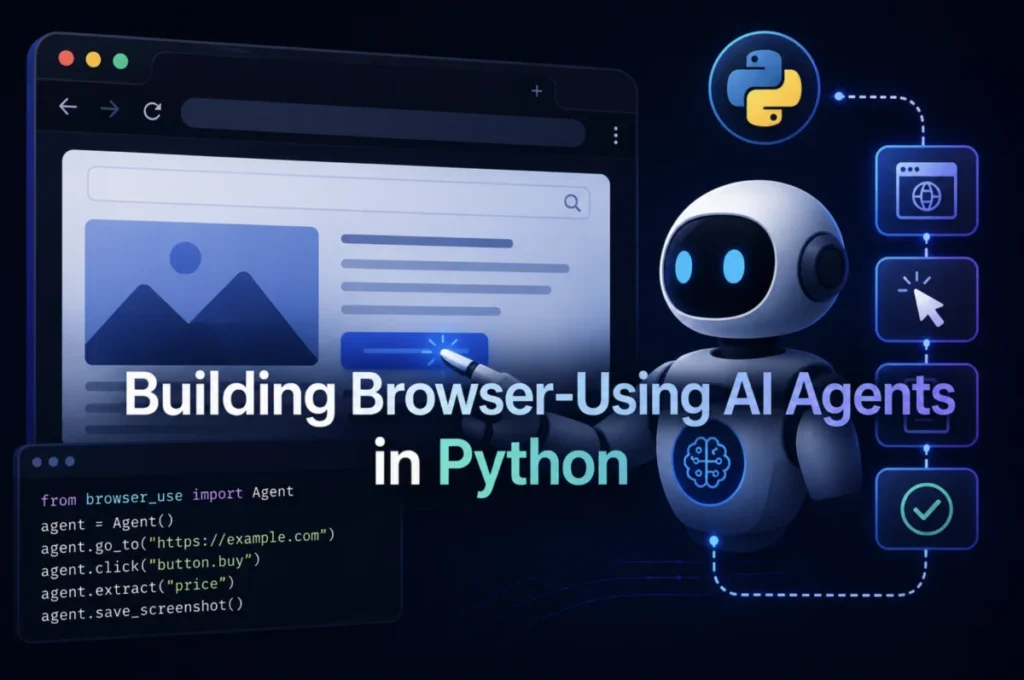
In the landscape of modern software development, the definition of an "API" has quietly shifted. For decades, developers relied on structured endpoints—REST, GraphQL, or SOAP—to facilitate communication between machines. But as we move into the latter half of the 2020s, a new paradigm has emerged: the Browser-Using AI Agent.
With the global AI agents market projected to surge from $10.91 billion in 2026 to over $50 billion by 2030, the ability for an autonomous system to "see" and "interact" with the web is no longer a niche hobby for data scrapers; it is becoming a cornerstone of enterprise operations. Nearly 28% of modern enterprises now deploy agentic browsers to perform tasks that traditional APIs simply cannot touch.
The Limitation of API-First Logic
For years, AI agent tutorials have focused on the "low-hanging fruit" of automation: calling the OpenWeather API, hitting a Stripe endpoint, or pulling repository data from GitHub. While these are excellent starting points, they suffer from a fundamental constraint: they only work where a developer has explicitly built an exit ramp for data.
Think about the daily tasks of a human worker: filing complex government forms, monitoring competitor pricing across legacy portals, or conducting deep-web research on sites that guard their data behind aggressive JavaScript rendering. There are roughly 1.1 billion websites on the internet. A vanishingly small fraction of them offer public APIs. The rest of the digital world speaks only one language: the browser.
An agent limited to API calls handles perhaps 5% of the cognitive labor required in a modern enterprise. Give that same agent a browser, and its operational coverage expands to encompass virtually everything a human can do.
Why Playwright Has Become the Industry Standard
If you built browser automation in the late 2010s, you likely used Selenium. While Selenium remains a robust, battle-tested tool, it has been eclipsed in the AI era by Playwright. The shift is not merely aesthetic; it is architectural.
The Technical Edge
Selenium communicates with the browser via individual HTTP requests sent to a WebDriver. Every action—clicking a button, typing a string, scrolling a div—involves a discrete round-trip. In contrast, Playwright utilizes a persistent WebSocket connection for the entire session. Independent benchmarks indicate that Playwright is 30–50% faster than Selenium at the test-suite level, averaging ~290ms per action compared to Selenium’s ~536ms. For an AI agent executing hundreds of logical steps to complete a research task, this performance gap compounds into a significant competitive advantage.
Resilience and Human-Like Interaction
Modern websites are increasingly hostile to automation. They utilize "anti-bot" heuristics that look for synthetic DOM clicks or unnatural mouse movements. Playwright’s interaction model is fundamentally different: it fires real mouse and keyboard events that mirror human behavior, making it significantly harder for site-security systems to distinguish the agent from a legitimate user. Furthermore, Playwright’s built-in auto-waiting mechanism—which checks if an element is visible, enabled, and stable before interacting—eliminates the "flaky" code that previously plagued automated testing.
Orchestration: The Role of LangChain and LangGraph
Raw browser automation is brittle; if a website changes its HTML structure, a hardcoded script breaks. The "Agentic" shift occurs when we connect the browser to a Large Language Model (LLM) via frameworks like LangChain and LangGraph.
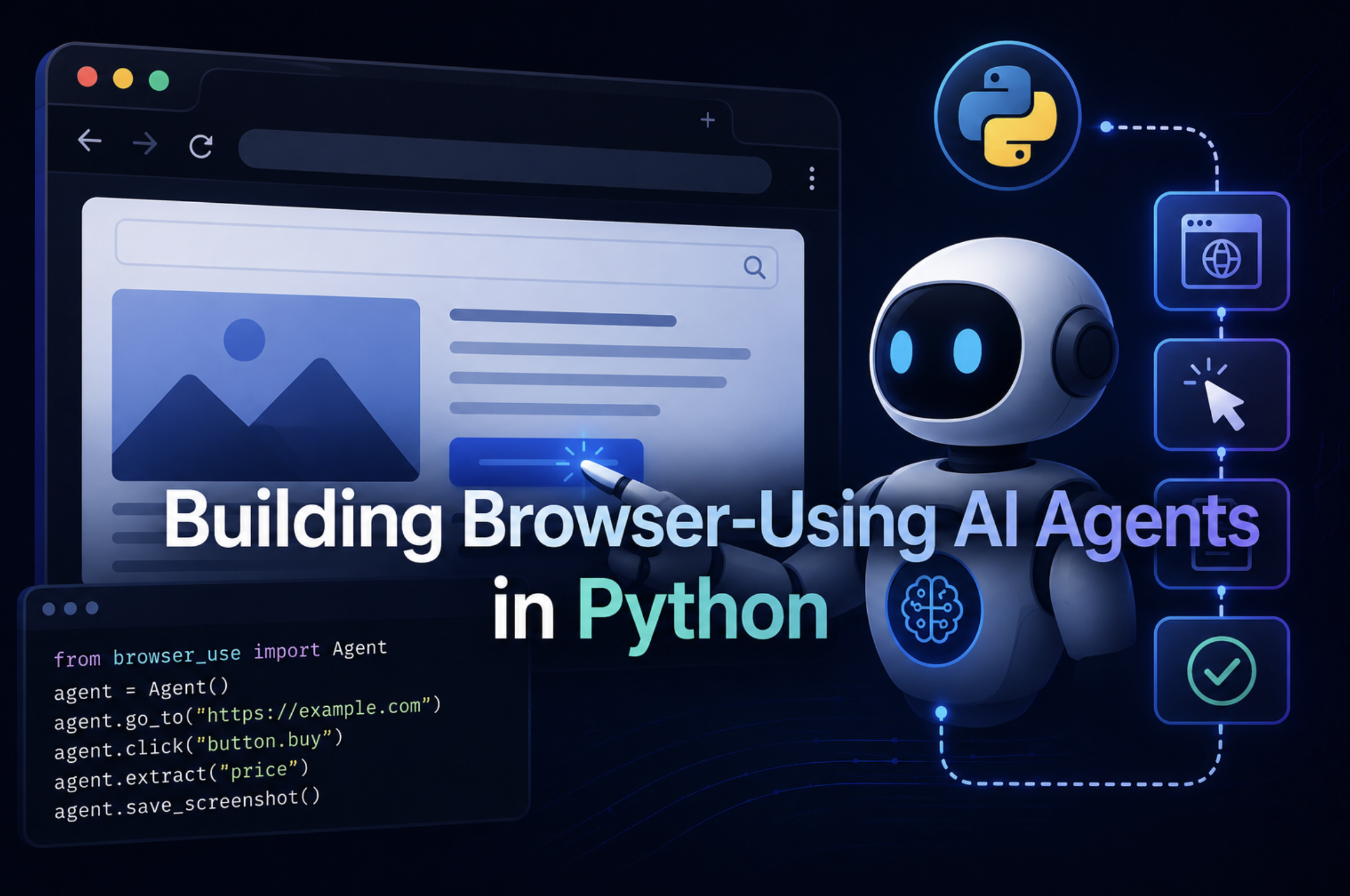
By treating browser actions as "tools," we enable the LLM to reason through a task. The agent reads the page state, decides which action is required, observes the result, and iterates until the goal is met. This loop allows the system to handle dynamic web environments where the location of a "Submit" button might change, but the semantic purpose of the page remains the same.
Strategies for Production-Grade Agents
Deploying these agents in a production environment requires more than just a script; it requires infrastructure that can handle the realities of the web.
1. Navigating Anti-Bot Detection
Sophisticated sites check for the navigator.webdriver property and analyze browser fingerprints. Developers must configure their headless sessions to mimic real user environments. This involves:
- Setting a legitimate User-Agent string.
- Disabling the
AutomationControlledflag at the browser engine level. - Using
add_init_scriptto override browser properties before the page’s JavaScript even initializes.
2. The "Smart Wait" Philosophy
The most common point of failure for an agent is timing. Relying on time.sleep() is a recipe for disaster. Production-grade agents utilize event-driven waiting:
- Selector Waiting: Waiting for the DOM to render a specific CSS class.
- Network Waiting: Hooking into the browser’s
expect_responseto verify that a specific API call has completed successfully. - Logic Waiting: Executing a snippet of JavaScript within the page context to confirm a variable (like
window.__dataLoaded) has flipped to true.
3. Session Persistence
Re-authenticating on every run is a primary cause of account lockouts and rate-limiting. A mature agent must treat session cookies as a persistent asset, saving them to disk after a successful login and loading them into the browser context at the start of each subsequent session.
The Rise of Higher-Level Abstractions: browser-use
While Playwright provides the "muscles," libraries like browser-use provide the "brain." By abstracting away CSS selectors and DOM structures, browser-use allows the LLM to view the webpage as a human would. Instead of the developer needing to know the ID of a search bar, the agent simply receives a natural language instruction: "Find the price of the latest model." The agent identifies the input, types the query, and extracts the result, regardless of how the page is styled. This decoupling is essential for long-term maintenance in an era of rapid web UI changes.
Implications for the Future
The ability to build "Browser-Using" agents effectively marks the end of the API-only era. As we look toward 2030, we are entering a phase where the web itself becomes the API. Organizations that can harness these tools to automate the "last mile" of data collection and workflow execution will find themselves with a distinct operational edge.
However, this transition comes with responsibility. The ability for an agent to fill out forms and extract data at scale necessitates a rigorous approach to ethical scraping and security. As developers, our challenge is not just to build agents that can perform these tasks, but to ensure they are robust, reliable, and compliant with the evolving standards of the digital ecosystem.
In conclusion, the path to building a powerful browser agent is clear: start with Playwright for reliable control, layer in LangGraph for intelligent reasoning, and leverage abstractions like browser-use for resilience against site updates. Whether you are automating research, data entry, or competitive intelligence, the browser is no longer just a window to the web—it is the workspace for the next generation of artificial intelligence.