Decoding the New LinkedIn: How the Rebuilt Algorithm is Rewriting the Rules of Reach
For years, LinkedIn users operated under a relatively straightforward assumption: if you were connected to someone, your content would, in theory, appear in their feed. That era has officially come to an end. In one of the most significant architectural overhauls in the platform’s history, LinkedIn has dismantled its legacy content distribution system, replacing five distinct, fragmented systems with a single, unified AI-powered brain.
For marketers, creators, and business leaders, the message is clear: the rules of the game have shifted from "who you know" to "what you represent." Understanding this new algorithmic landscape is no longer optional—it is the prerequisite for professional visibility.
The Core Shift: From Social Graphs to Interest Graphs
Historically, LinkedIn prioritized the social graph—the network of connections and followers you cultivated. If you posted an update, the platform looked at your connections and served your content to them.
The new system, however, operates on an interest-based distribution model. Drawing inspiration from the discovery-driven feeds of platforms like TikTok and YouTube, LinkedIn’s new AI-driven engine focuses on a user’s "professional journey over time." It does not merely react to the last post a user clicked; it constructs a multi-dimensional map of their professional interests and intent.
The Death of the Generalist
This shift fundamentally changes the return on investment for content creation. Under the old system, a "generalist" approach—posting about AI one day, industry news the next, and personal anecdotes the third—could occasionally yield high engagement.
In the new ecosystem, that strategy is a liability. The algorithm now seeks to categorize you. When you consistently publish content within a specific niche, you "train" the AI to associate your profile with that subject matter. Once that association is cemented, the algorithm serves your content to the right audience with far greater reliability. Generalists who scatter their focus across unrelated topics fail to build this cumulative authority, effectively resetting their "relevance score" with every disparate post.
The Rise of "Invisible" Engagement Signals
Perhaps the most critical insight for modern LinkedIn strategy is the devaluation of "vanity metrics." While public engagement—likes, shares, and superficial comments—has traditionally been the north star for content success, the new algorithm has shifted its gaze toward "invisible signals."
Data-Driven Insights
An analysis of over 600,000 posts from more than 63,000 accounts reveals a startling trend: while visible interactions are trending downward, overall distribution is being driven by behaviors that leave no public trace. These include:

- Dwell time: How long a user spends reading your post.
- Carousel swipes: Tracking the progression through a document or slide deck.
- The "See More" expansion: The act of clicking to read the full text of a post.
- Video completion rates: How much of your media is actually consumed.
These invisible interactions account for an engagement boost of nearly 14% compared to posts relying solely on public likes. The algorithm interprets these actions as a stronger indicator of content value than a perfunctory "like" button click.
Strategies for the New Algorithm: How to Optimize Your Content
To thrive in this environment, creators must transition from "broadcast" thinking to "engagement engineering." Here is how to adapt your content strategy for the new feed.
1. Leverage Carousels and Document Posts
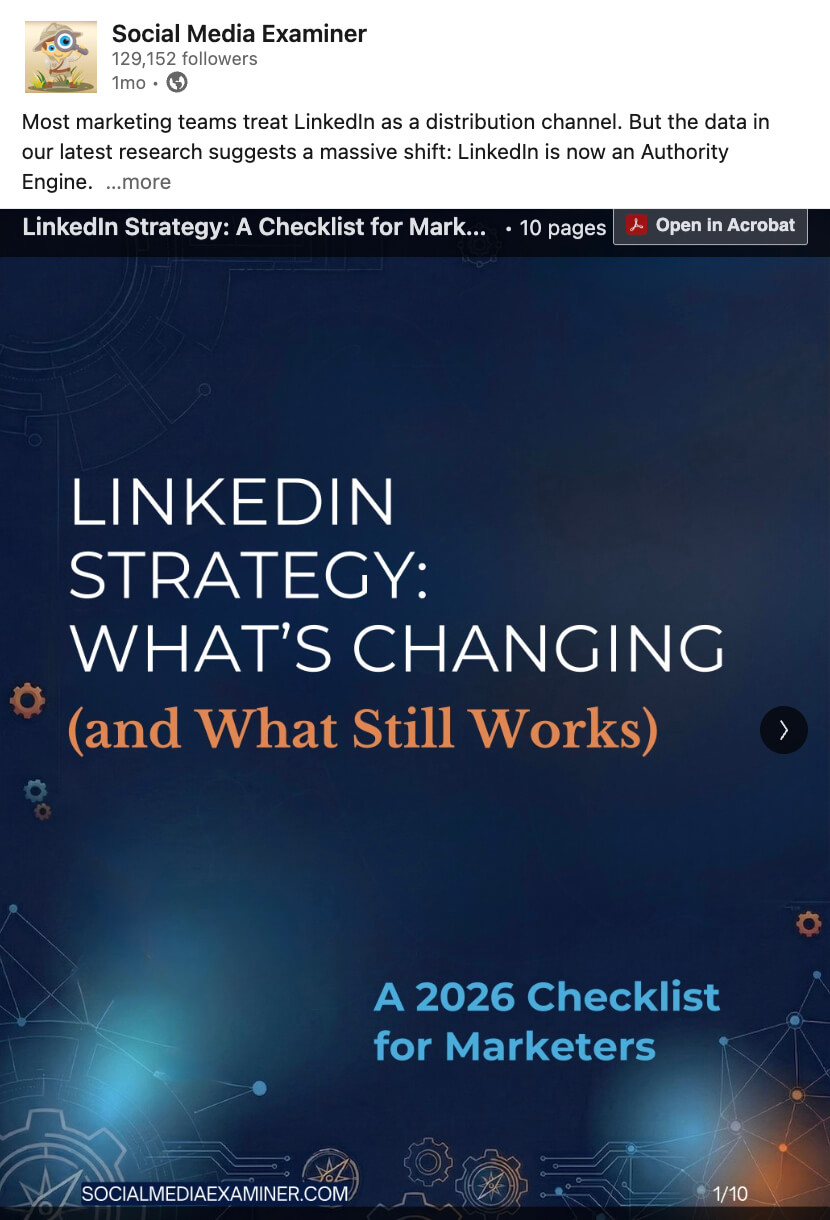
Document posts (PDFs) and carousel-style images are currently the gold standard for triggering invisible signals. Because they require the user to actively swipe to view the next slide, they provide the algorithm with multiple, granular data points about user interest. Posts designed in a multi-page format outperform single-image posts by a factor of eleven.
2. The Art of the "See More" Hook
The first 48 hours are the "make or break" window for any LinkedIn post. Because the algorithm prioritizes content that is actively being engaged with, your opening sentence is the most important piece of copy you write.
To maximize the "See More" click, your opening must create a curiosity gap that is only bridged by clicking to expand the text. Avoid front-loading all your value in the first two lines. Instead, use the hook to pose a problem, share a controversial opinion, or highlight a counter-intuitive finding that demands the reader commit to the full post to find the resolution.
3. Cultivating Comment Density
It is no longer enough to generate a high volume of comments. The algorithm is now sophisticated enough to distinguish between "shallow" exchanges and "deep" dialogue.
- Prioritize Depth: A conversation involving multiple back-and-forth replies is weighted significantly higher than a series of one-off comments.
- The One-Hour Rule: Early engagement is a massive signal of quality. Responding to comments within the first 60 minutes of publication tells the algorithm that your post is currently "hot," prompting it to push the content to a wider, colder audience.
- Avoid the Spam Trap: Be wary of engagement pods or bot-driven comments. The AI can identify synchronized, repetitive, or generic comments (like "Great post!") and will discount them, or worse, penalize your reach for suspicious activity.
Overcoming Content Fatigue: The "Specialist" Mindset
A recurring frustration among B2B marketers is the fear of repetition. If you have been speaking on a core subject for years, how do you keep it fresh?
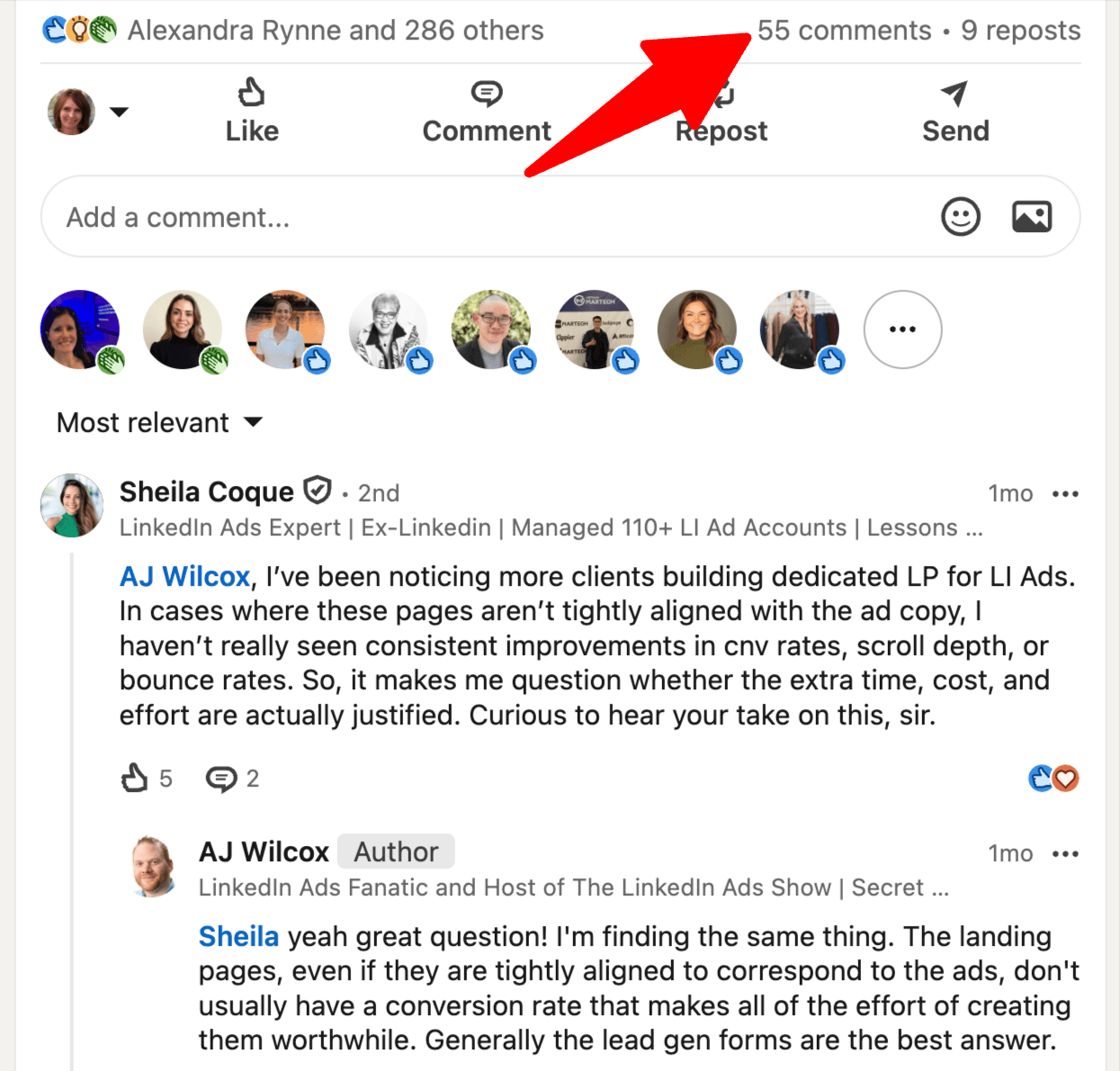
Industry expert AJ Wilcox suggests a two-part reframe for the battle-hardened creator:
- The Audience is Fluid: Even if you feel you are repeating yourself, your audience is constantly shifting. The person reading your content today may be encountering your core philosophy for the first time. Unless your audience explicitly tells you the content feels "stale," you are likely under-communicating your message, not over-communicating it.
- Vary the Angle, Not the Subject: The goal is to remain a specialist while avoiding monotony. Use AI tools to brainstorm different perspectives, metaphors, or formats for your core topics. By approaching the same subject through different lenses—such as a case study, a personal failure, a technical breakdown, or a high-level trend analysis—you signal to the algorithm that you are an authority, not a bot.
Implications for the Future of B2B Marketing
The transition to this AI-powered feed signals a maturation of LinkedIn from a professional resume site into a full-scale content discovery engine.
What This Means for Business Leaders
Companies can no longer rely on the personal brands of their executives to do the heavy lifting via "occasional" posts. Authority must be built through a rigorous, consistent, and topical content strategy. If your leadership team is not posting with a clear, niche-specific focus, they are essentially invisible to the algorithm.
The Verdict on AI and Originality
The irony of the current environment is that while AI powers the algorithm, the algorithm is explicitly designed to reward human originality. As Large Language Models (LLMs) saturate the internet with generic, recycled content, LinkedIn’s system is being tuned to identify and elevate original thinking.
Those who use AI as a research and brainstorming partner to sharpen their unique perspectives will thrive. Those who use AI to mass-produce generic, keyword-stuffed content will find their reach dwindling as the algorithm recognizes the lack of genuine authority.
Final Summary
LinkedIn has moved to an era where the platform decides, on your behalf, what is valuable. To succeed, you must:
- Choose a lane: Establish your niche and stay in it to build topical authority.
- Design for the swipe: Use document posts and carousels to trigger "invisible" engagement.
- Engineer the hook: Master the art of the truncated post to earn the "See More" click.
- Engage in depth: Prioritize substantive back-and-forth conversations over superficial likes.
By aligning your strategy with these signals, you shift from fighting the algorithm to working in tandem with it—ensuring your professional expertise reaches the audience that needs it most.