Bridging the Data Gap: Integrating Facebook Ads with Google BigQuery for Scalable Analytics
In the modern digital landscape, data is the lifeblood of marketing strategy. For growth-focused teams, Facebook Ads remains a primary engine for customer acquisition. However, a persistent "data silo" problem plagues many organizations: while Facebook Ads Manager is powerful for immediate campaign adjustments, it remains a closed ecosystem. Analyzing performance at scale or correlating ad spend with long-term customer lifetime value (CLV) and internal revenue data is nearly impossible within the native platform.
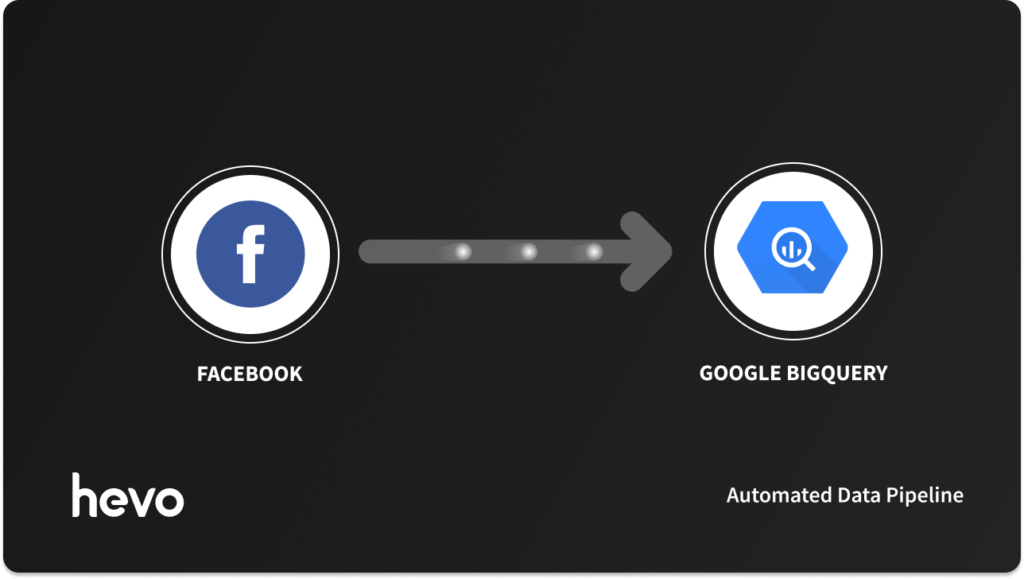
The solution favored by data-mature enterprises is migrating Facebook Ads data into a cloud data warehouse like Google BigQuery. By centralizing disparate data streams, businesses can transform raw ad metrics into a coherent narrative.
The Core Challenge: Why Ads Manager Isn’t Enough
For most marketers, the Facebook Ads Manager interface is the daily home for campaign management. It provides real-time feedback on clicks, impressions, and conversions. Yet, as campaigns expand, the limitations become clear. The platform struggles with:
- Limited Lookback Windows: Native reporting often lacks the granular historical depth required for year-over-year trend analysis.
- Data Fragmentation: Facebook data exists in isolation. Without a connection to your CRM (like Salesforce or HubSpot) or your transactional database, you cannot truly calculate the Return on Ad Spend (ROAS) based on actual closed-won revenue.
- Scalability Constraints: As you manage hundreds of ad sets across different regions and products, the latency of manual reporting or the fragility of ad-hoc spreadsheets creates a bottleneck for decision-making.
Moving your Facebook data into BigQuery solves these friction points. Once your ad data resides alongside your product and revenue numbers, reporting becomes faster, more accurate, and cost-effective.
Three Methodologies: From Manual to Automated
Organizations generally adopt one of three strategies to bridge this gap. Each carries distinct implications for engineering resources and data reliability.
1. Automated ETL Pipelines (The Scalable Choice)
Platforms like Hevo Data provide a no-code, automated approach to data integration. By establishing a fully managed pipeline, companies can stream Facebook Ads data into BigQuery without writing a single line of code.
- The Advantage: These tools handle API changes, schema evolution, and incremental data loading automatically.
- The Verdict: Ideal for teams that prioritize data freshness and reliability without wanting to divert engineering talent toward pipeline maintenance.
2. Custom Engineering (The "Full-Control" Route)
For enterprises with specific security requirements or highly customized data transformations, building a bespoke pipeline using Python, the Facebook Marketing API, and Google Cloud Functions is an option.
- The Reality: While this offers total control, it is a significant engineering commitment. API version deprecations (which Meta executes regularly) and schema changes require constant monitoring.
- The Verdict: Recommended only for organizations with dedicated data engineering bandwidth.
3. Manual Export/Import (The Ad-hoc Solution)
Small teams often begin by downloading CSV reports from Ads Manager and uploading them to BigQuery.
- The Risk: This method is prone to human error, introduces significant data latency, and is entirely unscalable. It is a stop-gap measure at best.
Implementation: Setting Up Your Data Pipeline
Regardless of the method chosen, the transition to a centralized data architecture follows a standard sequence.
Phase 1: Prerequisites
To integrate effectively, you must ensure both environments are prepared.
- Facebook Ads: You require a valid Ad Account ID, an App ID, and a User Access Token with the necessary permissions (
ads_read,read_insights). - BigQuery: You need an active Google Cloud Project, a designated dataset, and a Service Account with the appropriate Identity and Access Management (IAM) roles to allow the data to be written.
Phase 2: Configuration (The Hevo Approach)
Automated pipelines like Hevo simplify the process significantly:
- Source Selection: Authenticate your Facebook account within the tool.
- Destination Setup: Connect your BigQuery project using a service account JSON key.
- Pipeline Activation: Define your synchronization frequency—ranging from daily batches to near-real-time streams—and let the platform handle the back-filling of historical data.
Phase 3: The Role of Webhooks
For organizations requiring real-time insights, Webhooks are a critical component. By subscribing to Facebook’s callback URLs, your system receives "push" notifications whenever a change occurs in your ad account (e.g., a status change or a sudden spike in spend). This allows your warehouse to mirror the actual state of your marketing operations with minimal delay.
Strategic Implications: What You Gain
Once your data is centralized in BigQuery, the analytical capabilities shift from reactive to proactive.
Advanced Pattern Recognition
Using Standard SQL in BigQuery, analysts can perform multi-dimensional queries that are impossible in Ads Manager. You can correlate "time-of-day" ad performance with specific inventory levels or regional demand, uncovering nuances that might otherwise remain buried in aggregated averages.
Holistic Multi-Channel Analysis
BigQuery acts as the "Single Source of Truth." By joining Facebook Ads data with metrics from Google Ads, LinkedIn, and organic search, you can conduct true cross-channel attribution. You can determine, for example, how an initial Facebook touchpoint influences a conversion that ultimately closes via a search campaign.
Machine Learning and Forecasting
With data structured in a warehouse, you can leverage Google’s built-in BigQuery ML. This allows you to train predictive models on your historical ad spend to forecast future CPA (Cost Per Acquisition) or identify the optimal budget allocation for upcoming product launches.
Real-World Use Cases
Why are businesses rushing to implement these integrations?
- Hyper-Personalized Targeting: By importing CRM conversion data back into your analysis, you can segment audiences based on actual purchase history rather than just clicks. This data can then be used to create highly effective "Lookalike" audiences.
- Competitive Benchmarking: By integrating public market data into your warehouse, you can create performance dashboards that compare your current metrics against industry-wide benchmarks, allowing for rapid pivots when your campaigns lag behind competitors.
- Efficiency at Scale: The primary goal of integration is optimization. By automating the reporting loop, marketing teams stop being "data janitors" (cleaning CSVs) and become "data strategists" (optimizing high-value campaigns).
Future-Proofing Your Marketing Data
The digital advertising environment is in flux. With Meta frequently updating its API and privacy regulations changing the landscape, maintaining a "do-it-yourself" pipeline is becoming increasingly risky. As we move toward 2026, many older API versions will face full deprecation.
For businesses that rely on Facebook Ads, the decision is no longer if they should migrate to a warehouse, but how they should do it. Automated ETL tools represent the industry standard for maintaining data continuity. By offloading the technical burden of API management to platforms like Hevo, teams ensure that their data remains clean, compliant, and—most importantly—ready for the next generation of predictive analytics.
Frequently Asked Questions
How can you get real-time streams of your Facebook Ad statistics?
You can build a near-real-time pipeline by using webhooks. By subscribing to real-time API updates, your warehouse receives performance data the moment a change occurs, ensuring that your bidding strategies and reports are based on the most current information available.
How do I prepare Facebook Ads data for BigQuery?
Ensure your data is cleaned and mapped to supported formats (CSV or JSON). BigQuery enforces strict schema definitions (STRING, INTEGER, FLOAT, etc.). If your data originates from disparate sources, normalizing these schemas before loading is critical to avoid integration errors.
Why is BigQuery preferred over other warehouses?
BigQuery is a serverless, highly scalable, and cost-effective data warehouse. Its ability to process petabytes of data using standard SQL, combined with seamless integration into the broader Google Cloud ecosystem (including Looker Studio and Vertex AI), makes it the natural choice for marketing-heavy organizations.
What is the biggest risk of custom-coded pipelines?
The biggest risk is "technical debt." As Facebook updates its API versions, custom scripts will inevitably break. Without a team dedicated solely to maintaining these connections, you risk losing access to your data, which can result in days or weeks of blind decision-making.
Can I visualize this data easily?
Yes. Once your data resides in BigQuery, it can be connected to any leading visualization tool, such as Looker Studio, Power BI, or Tableau, allowing you to build the interactive, real-time dashboards necessary for executive reporting.