Beyond the Dashboard: Rethinking Data-Driven Marketing in the Age of "Safe Bets"
For decades, the digital marketing landscape has been defined by the pursuit of the "measurable." CMOs and marketing managers have anchored their strategies to the reliable pillars of Google Ads, LinkedIn lead generation, and Meta’s retargeting pixel. These platforms offer a seductive promise: clear attribution, predictable ROI, and reporting that easily satisfies stakeholders.
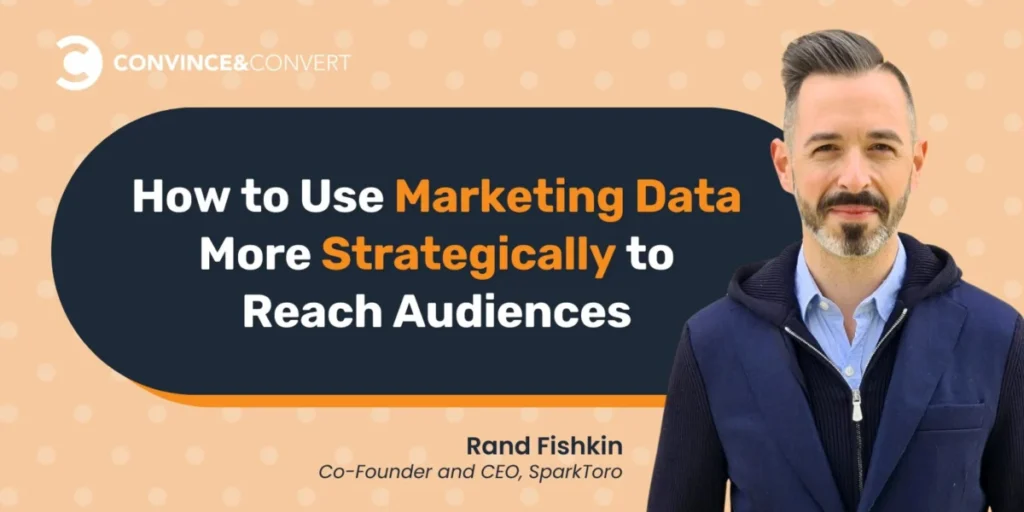
But is this obsession with measurable "safe bets" actually blinding brands to where their customers truly live, breathe, and make decisions? According to Rand Fishkin, co-founder of SparkToro and a veteran of the digital marketing industry, the answer is a resounding yes. In a recent episode of the Data-Driven Decisions podcast, Fishkin argued that modern marketing is suffering from a massive misallocation of capital, fueled by a misunderstanding of how the customer journey actually works.
The Illusion of Attribution: Why Your Data Might Be Lying to You
The core of the issue lies in how we interpret attribution. Marketers frequently view Google search results as the primary driver of value. When a user clicks a paid ad and converts, the attribution model rewards the ad platform. However, Fishkin suggests that this is a fundamental misreading of human behavior.
"A ton of what happens in Google is actually a response to something else," Fishkin explains. "People who performed a search query in Google, very rarely was that a spontaneous first-touch thing. It was like, ‘Oh, I heard about this software,’ so I went to Google and searched for it and clicked on it. And of course, the attribution looks like Google drove all the value. No, Google was just the middleman."
This "middleman" phenomenon creates a dangerous feedback loop. Marketers continue to pour money into channels that claim credit for the final click, while ignoring the authentic touchpoints—podcasts, industry conferences, niche newsletters, and community discussions—where the customer actually formed their opinion. By optimizing exclusively for what is easy to measure, brands are neglecting the places where they could be building genuine, lasting influence.
Chronology of a Shift: From Paid Dominance to Community-Centric Strategy
The evolution of digital marketing has moved from broad-reach traditional media to hyper-targeted digital advertising, and now, to the current pivot toward community-led growth.
The Era of "Spray and Pray" (Early 2000s)
In the early days of the internet, display advertising and email blasting were the primary tools. The goal was volume.
The Rise of the Algorithm (2010–2020)
The proliferation of social media and search engine dominance brought the era of precise targeting. Brands could follow users across the web, leading to an over-reliance on Meta and Google. Metrics became the god of the marketing department.
The Zero-Click Era (Present Day)
We are now entering a phase where consumers are increasingly resistant to traditional ads. As privacy regulations tighten and ad-blocker usage increases, brands are finding that "buying" attention is becoming more expensive and less effective. The new strategy involves meeting users in their native environments without the friction of a "click-through" mandate.
The SparkToro Philosophy: Mapping the Audience’s Digital Footprint
To move away from this reliance on "safe bets," brands must first understand where their audience spends their time. This is the premise behind SparkToro. Instead of asking, "Where should I buy ads?" the tool asks, "Where does my audience already gather?"
By aggregating data on what websites a specific audience visits, which podcasts they listen to, and which influencers they follow, SparkToro allows marketers to bypass the "middleman" and reach customers at the discovery phase of their journey.
Case Study: Driving Revenue through Guest Strategy
A podcaster looking to increase sponsorship revenue did not simply pay for social ads to drive downloads. Instead, they used audience data to identify influential figures within their niche who commanded the attention of the sponsors’ target demographic. By bringing these influencers on as guests, the podcaster leveraged the existing trust of those influencers, simultaneously attracting a new audience and creating a compelling case for sponsors.
Case Study: Event Curation
Similarly, an event organizer in the tech space began using audience data to select speakers. By identifying thought leaders with high engagement rates within specific sub-sectors, they ensured that the resulting event would naturally attract the sponsors eager to reach that demographic. In both cases, the strategy was not about buying ads; it was about being present in the right places.
Supporting Data: The Efficiency of "Zero-Click" Marketing
A revolutionary concept in this new approach is "zero-click marketing," a term coined by Amanda Natividad, VP of Marketing at SparkToro. The strategy is simple: provide value directly on the platform where the user is, without the expectation of an immediate click to your website.
Consider the example of Chartr, a data-storytelling company. Rather than running ads to drive traffic to their site, they engaged with the Reddit community "r/dataisbeautiful." They shared high-quality, relevant data visualizations that added value to the community conversation.
The results were twofold:
- Credibility: By showing, not selling, Chartr established itself as a thought leader in the space.
- Cost-Effectiveness: The effort required to create these posts was a fraction of the cost of a sustained paid ad campaign, yet the engagement was higher because the content was native to the platform.
When a brand consistently shows up in the right places with high-quality content, they build "top-of-mind" awareness. When the customer is finally ready to buy, they don’t need a retargeting ad to remind them of the brand—the brand is already a trusted authority.
Official Perspectives: The Role of Data-Informed vs. Data-Driven
Despite his critique of modern advertising models, Fishkin is not anti-data. He distinguishes between being "data-informed" and "data-driven" in a way that suggests a more nuanced approach is required.
"I’m not saying don’t be data-informed," Fishkin says, "but I think it pays to be responsible in your recognition of what problems data can solve and what it can’t solve."
Data is excellent at showing you the "what"—what pages people visit, what links they click, and where they convert. However, data often fails to explain the "why." For deeper insights, organizations must supplement their digital analytics with:
- Direct Customer Interviews: To understand pain points that aren’t captured in conversion funnels.
- Qualitative Surveys: To gauge brand sentiment beyond click-through rates.
- Community Engagement: To learn what non-users or frustrated users actually want.
As Zontee Hou, author of Data-Driven Personalization, notes, the most successful companies are those that integrate data into a holistic strategy that includes human intuition and customer-centric storytelling. Data should be a compass, not the autopilot.
Implications for the Future of Marketing
The implications of this shift are significant. If marketers continue to dump the majority of their budgets into platforms that only capture the "bottom-of-the-funnel" intent, they will continue to see diminishing returns.
1. The Death of the "Safe Bet"
Companies that cling to the safety of Google and Meta reporting will find themselves in an increasingly crowded and expensive environment. The "safer" the channel, the more expensive it becomes as competitors crowd into the same space.
2. A Shift in Talent Requirements
The marketing teams of the future will require more than just technical proficiency in ad managers. They will need community managers, researchers, and content creators who can navigate niche environments and build trust without relying on the crutch of a "call-to-action."
3. Long-term Brand Equity
By focusing on zero-click marketing and community presence, brands build equity that is independent of any single platform’s algorithm. If Google changes its search algorithm or Meta changes its ad-targeting parameters, brands that have built their reputation in the community are far more resilient than those that have built their reputation on paid clicks.
Conclusion: Redirecting Your Energy
The message from experts like Fishkin and Hou is clear: stop optimizing for the metrics that are easiest to report, and start optimizing for the places where your customers actually exist.
If you find that your current ad spend is failing to produce incremental growth, take a step back. Analyze the customer journey from the perspective of the user—not the platform. Where do they go to learn? Where do they go to solve problems? Where do they hang out with their peers?
By redirecting even a portion of your "safe bet" budget toward more creative, audience-focused strategies, you can stop fighting for every click and start building a brand that customers seek out on their own terms. The data is waiting to show you the way—you just have to be willing to look in the right places.
For more insights on the future of data and marketing, listen to the full conversation with Rand Fishkin on the Data-Driven Decisions podcast. To explore how data influences broader organizational strategy, including culture and cross-functional collaboration, you can learn more about Zontee Hou’s book, Data-Driven Personalization.