From "One-Click" Myths to Professional Systems: How Marketers Can Master AI Image and Video Workflows
In the rapidly evolving landscape of digital marketing, a dangerous misconception has taken root: the belief that AI image and video tools are "magic buttons" capable of generating campaign-ready assets with a single prompt. For many marketers, the reality has been disappointing—resulting in flat, inconsistent, or "uncanny" visuals that fail to align with professional brand standards.
However, as AI educator and content creator Jerrod Lew explains, the gap between amateur results and professional-grade content isn’t a lack of software capability, but a lack of structured workflow. By treating AI tools with the same rigor as traditional production software like Adobe Premiere Pro or After Effects, marketers can transform these engines into reliable, scalable systems.
The Reality of AI Creative Production
The polished, high-fidelity clips showcased in AI tool launch videos often represent hundreds of hours of labor by professional filmmakers and creative teams. They operate from a position of "creative intent"—a clear vision established long before the software is ever opened.
For the modern marketer, AI tools represent a democratization of technical barriers. You no longer need to be a master of lighting or complex animation software to tell a story. Whether you are a writer, a musician, or a brand strategist, these tools allow you to manifest professional-quality visuals from a laptop. The human element remains the heartbeat of the operation; the machine provides the execution, but the marketer must provide the story, the brand identity, and the objective.
The Current AI Toolkit: A Chronology of Capability
The ecosystem of generative AI has shifted from simple text-to-image models to complex, multimodal production environments. According to industry analysis, the current gold standard involves a multi-tool approach.
1. The Video Generation Vanguard
- Google Flow & Omni Flash: Announced during the May 2026 Google I/O, these tools represent a shift toward project-based management. Google Flow acts as a creative environment that organizes assets—images, character references, and brand guidelines—into a single space. Meanwhile, Omni Flash serves as the video equivalent of Imagen 2, allowing for targeted edits, such as removing background elements or altering visual styles through natural language instructions.
- Seedance 2.0: Currently ranked as a top-tier video model by industry experts, Seedance stands out for its multi-input versatility. It processes text, images, video footage, and music simultaneously. Crucially, it generates synchronized audio and dialogue, solving the "silent movie" problem that plagues many competing platforms.
- Kling 3.0: Setting the benchmark for character consistency, Kling 3.0 is widely recognized for its ability to generate realistic, high-definition (up to 4K) video of human subjects from static reference photos.
2. The Image Generation Powerhouses
While the market is crowded, Imagen 2 and ChatGPT Images 2.0 remain the primary contenders for professional workflows. ChatGPT Images 2.0 has gained significant ground due to its superior text-rendering capabilities—an essential feature for creating storyboards, animation references, and marketing graphics that require readable, coherent text overlays.

Scaling Through Aggregation: The "Magnific" Workflow
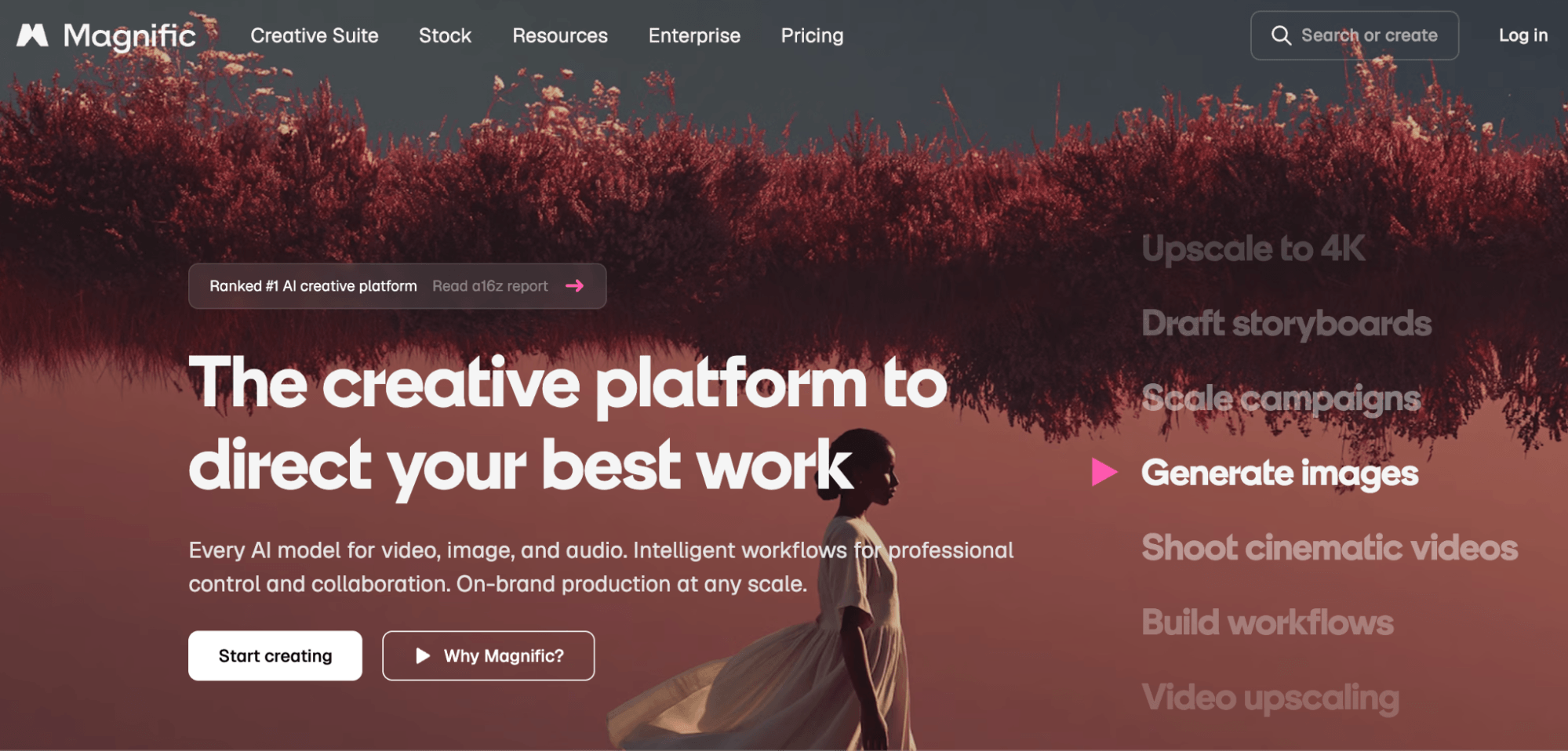
The most common mistake marketers make is fragmenting their budget across dozens of disparate subscriptions. The industry shift is toward "Platform Aggregators" like Magnific.
Magnific serves as an API-integrated hub that grants users access to a dozen or more image and video models under a single roof. More importantly, it features "Spaces"—a node-based canvas environment. This allows marketers to build automated sequences. For example, a user can simultaneously run 30 iterations of a YouTube thumbnail using different models, identify the five that align with their brand, and establish those as the "visual reference standard" for all future content.
Establishing the Brand Foundation
Before interacting with any AI model, the foundational work remains unchanged from traditional marketing:
- Define the Core: Clearly articulate the brand’s mission and target audience.
- Consolidate Assets: Use tools like CoreDesigner to synthesize scattered brand assets—logos, color palettes, and fonts—into a cohesive design system.
By starting with a formal brand style guide, AI models produce output that feels unified rather than random. This consistency is what separates a professional campaign from a disjointed collection of AI-generated images.
The "Reference Asset" Methodology
To achieve predictable results, marketers must move away from "blind prompting" and toward "reference-based generation." This involves two critical categories:
Product Reference Assets
You do not need studio photography to train an AI on your product. A simple composite sheet—a single image containing multiple angles and use cases of your product—serves as the "North Star" for the model. Once this sheet is uploaded into a chat session, every subsequent generation adheres to that specific product’s geometry and branding.
Human Likeness and Character Sheets
Human faces are complex; without proper reference, models often distort expressions. To mitigate this, marketers should collect a range of reference photos:
- Angles: Front-facing, profile, and back-of-head.
- Expressions: A variety of emotional states (smiling, determined, shocked, curious).
- Composite Sheets: Similar to product sheets, these should be generated early and used as the primary upload for every new project. This eliminates the need to constantly re-upload individual photos.
The Strategy: Storyboard, Then Generate
One of the most profound shifts in professional AI workflows is the move toward image-first video production. Video generation is resource-intensive and expensive in terms of time and computing credits. Images, by contrast, are fast and cheap to produce.
Marketers should utilize their character and product sheets to "storyboard" an entire video using still images. This phase allows the creator to refine the pacing, the camera angles, and the character placement without burning through video generation credits. Once the story is locked in, the text-to-video prompts become short and highly specific, focusing only on motion and pacing rather than trying to describe the character or environment from scratch.
Implications for Marketing Teams
The move toward these "production-ready" workflows has significant implications for how agencies and internal marketing teams are structured:
- Shift in Skill Sets: The "Prompt Engineer" is evolving into the "Creative Director." Technical skill is becoming secondary to the ability to curate, direct, and maintain visual consistency.
- Increased Output, Higher Standards: As the cost of creation drops, the volume of high-quality content will rise. Brands that fail to adopt these workflow systems will quickly find themselves unable to compete with the speed and volume of those that have.
- The Rise of Internal Tooling: Larger organizations are increasingly building custom, internal "Spaces" within aggregation platforms to ensure that all team members are working from the same approved brand style guides and character sheets.
Conclusion: The Human Edge
Despite the sophistication of models like Omni Flash or Seedance, the "human in the loop" is more important than ever. AI is not a replacement for creativity; it is a force multiplier for it. By establishing a firm brand foundation, building robust reference libraries, and utilizing node-based workflow aggregators, marketers can move past the limitations of "one-click" AI and begin producing professional, high-impact campaigns at scale.
The tools are no longer the bottleneck; the strategy is. The marketers who succeed in this new era will be those who treat AI as an instrument, and themselves as the conductors of a new, highly efficient, and creatively boundless production system.