Kerala’s Power Crisis: Regulatory Commission Mandates Transparency as State Secures New Energy Sources
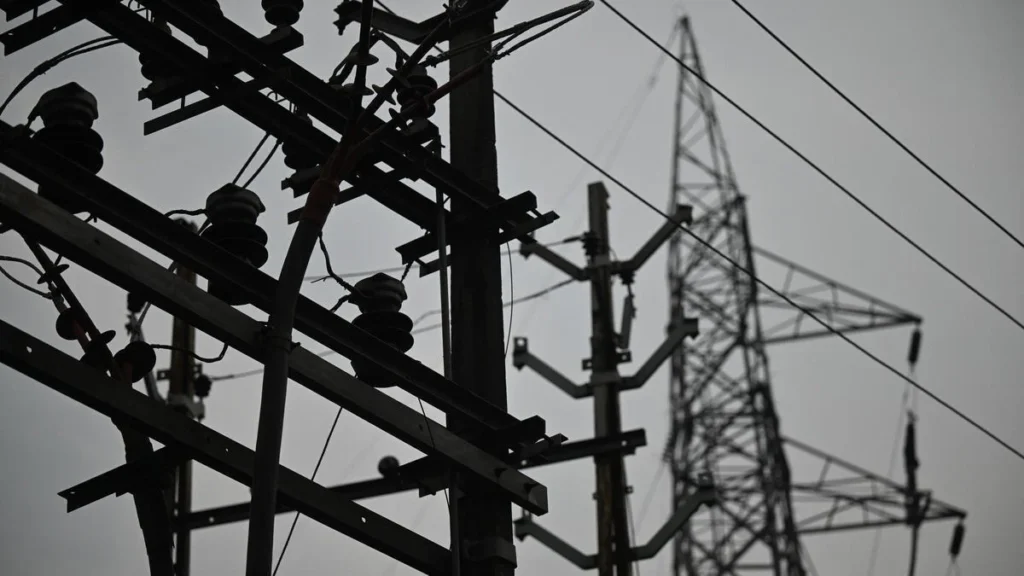
THIRUVANANTHAPURAM — As the state of Kerala faces an increasingly precarious energy landscape, the Kerala State Electricity Regulatory Commission (KSERC) has issued a stern directive to the Kerala State Electricity Board (KSEB), demanding an end to the "erratic and unpredictable" load-shedding practices currently plaguing consumers. The intervention follows widespread public outcry regarding the arbitrary nature of power cuts, which have disrupted daily life, businesses, and essential services across the state.
Simultaneously, in a move aimed at stabilizing the grid, the KSEB has confirmed that the state will begin receiving an additional 200 MW of power from two external sources starting Sunday, July 19, 2026. This procurement comes as a stopgap measure to address a persistent round-the-clock (RTC) power deficit exacerbated by a weak monsoon and critically low reservoir levels.
The Regulatory Crackdown: Demanding Accountability
The KSERC, led by Chairman T.K. Jose and Member B. Pradeep, held a public hearing this week to address the mounting grievances regarding the state’s management of the power crisis. The Commission did not mince words, explicitly criticizing the KSEB for its failure to provide a structured, predictable schedule for power interruptions.
"The public faces profound uncertainty when they are left in the dark about when the power will go out," stated Mr. Pradeep during the proceedings. The Commission highlighted that the current ad-hoc nature of load-shedding is not merely an inconvenience but a significant hardship for vulnerable populations, particularly patients requiring home-based medical equipment and students preparing for examinations.
A Mandate for Predictability
The KSERC has officially directed the KSEB to transition from its current "reactive" model to a "proactive" communication strategy. The board has been instructed to:
- Establish a Predictable Pattern: Develop a consistent load-management schedule that residents can anticipate.
- Advance Notification: Utilize digital platforms, media, and localized alerts to inform consumers of the specific timings and durations of planned outages at least 24 hours in advance.
- Reasonable Estimation: Improve the utility’s internal forecasting mechanisms to better estimate daily demand, ensuring that if cuts are unavoidable, they are executed with minimal disruption to the public.
KSEB representatives present at the hearing acknowledged the legitimacy of these concerns and committed to complying with the Commission’s directives, promising a more transparent approach to load management moving forward.
Chronology: A Season of Deficit
The current crisis did not emerge overnight. It is the culmination of several months of environmental and logistical challenges that have pushed Kerala’s energy infrastructure to its limits.
- Early 2026: KSEB identifies a growing gap between peak demand and internal generation capacity, largely due to aging infrastructure and rising consumer consumption.
- May–June 2026: The monsoon season, typically the backbone of Kerala’s hydroelectric power generation, arrives with significant delays and lower-than-average rainfall.
- July 2026: Reservoir levels across major dams drop to critical lows, severely hampering the state’s ability to generate sufficient hydroelectric power.
- July 15, 2026: Public frustration reaches a boiling point as unannounced power cuts occur multiple times a day in various districts.
- July 18, 2026: The KSERC holds a public hearing to address the KSEB’s procurement proposal and the public’s complaints regarding load-shedding.
- July 19, 2026: Integration of 200 MW from NTPC Vidyut Vyapar Nigam Ltd (NVVNL) and Power Pulse Trading Solutions Ltd commences.
Supporting Data: Why the 200 MW Procurement is Critical
The KSEB’s proposal for short-term power procurement, which covers the period until July 14, 2027, is predicated on a grim technical assessment. According to the utility’s internal projections, Kerala faces a "persistent base round-the-clock (RTC) power deficit of approximately 200 MW."
Financial and Operational Breakdown
The procurement involves two key players: NTPC Vidyut Vyapar Nigam Ltd (NVVNL) and Power Pulse Trading Solutions Ltd. The agreed-upon cost for this power is ₹5.96 per unit. While this price point is higher than the average cost of self-generated hydroelectric power, the KSEB maintains that the emergency nature of the current shortage leaves them with little room for negotiation.

The Commission has asked the KSEB to provide a granular financial analysis of whether these procurements—and the subsequent load-shedding—are economically sustainable. The regulators are pushing for a balance sheet that demonstrates whether the utility is incurring deeper losses by opting for short-term market purchases rather than investing in long-term infrastructure and grid efficiency.
Official Responses and Internal Debates
During the hearing, the tension between the regulator and the utility was palpable. Mr. T.K. Jose, the KSERC Chairman, noted that while the Commission has granted "verbal assurance" to move forward with the procurement to avert a total grid collapse, the formal orders would be contingent on the KSEB’s ability to prove they have explored all other alternatives to load-shedding.
The KSEB’s Defense
KSEB officials argued that the "erratic" nature of the cuts was, in fact, a result of the extreme volatility in the power market. When the grid hits a critical frequency threshold, manual load-shedding becomes an automatic necessity to prevent a statewide blackout. However, the Commission rejected this as a blanket excuse, insisting that "reasonable estimation" is a standard requirement for any state-run utility of KSEB’s scale.
The Question of Sustainability
A critical part of the hearing focused on the long-term viability of the state’s power strategy. The KSERC asked a poignant question: Is there an alternative to load-shedding? The Board is now tasked with exploring:
- Demand-Side Management: Incentivizing industrial consumers to shift their heavy load operations to off-peak hours.
- Renewable Integration: Evaluating the feasibility of fast-tracking solar and wind projects to reduce reliance on hydro-dependence.
- Efficiency Audits: Investigating whether transmission losses are contributing to the perceived deficit.
Implications: A New Era for Consumers
The immediate implication for the citizens of Kerala is that while the power crisis persists, the management of that crisis is set to become more transparent. By July 19, the additional 200 MW is expected to alleviate some of the pressure on the grid, potentially reducing the frequency of daily outages.
For the Common Citizen
For the average resident, the directive means that the days of "surprise" power cuts may be numbered. Patients relying on oxygen concentrators or nebulizers, businesses dependent on uninterrupted cooling, and households planning their daily chores can now look forward to a more reliable schedule. This shift represents a significant win for consumer advocacy in the state.
For the Energy Sector
For the KSEB, the challenge is now two-fold: they must prove their operational competence by maintaining a predictable schedule, and they must demonstrate financial responsibility by managing the high costs of short-term power procurement. The Commission’s scrutiny suggests that the utility will be under a microscope for the coming year, with quarterly reviews expected to assess whether the 200 MW infusion is sufficient to stabilize the grid or if further, more drastic measures are required.
As Kerala moves forward, the intersection of climate change—manifested in the failing monsoon—and infrastructure management will remain the defining challenge for the state’s energy policy. The events of July 2026 serve as a stark reminder that in an age of climate uncertainty, utility providers must evolve from merely managing power to managing the public’s trust through transparency and foresight.
The KSERC has set the tone: in a crisis, the burden of adaptation must fall on the utility, not the consumer.