The Battle for Autonomy: Tensions Rise as Delhi High Court Denies Plea to Shift Activist Sonam Wangchuk
NEW DELHI – The ongoing standoff between the family of activist Sonam Wangchuk and the Indian state reached a critical juncture on Sunday, July 19, 2026, as the Delhi High Court declined to intervene in the medical management of the fasting activist. Wangchuk, who has been on a hunger strike for 21 days, was forcibly relocated by Delhi Police from his protest site at Jantar Mantar to Safdarjung Hospital on July 18.
The legal defeat has sparked a wider conversation regarding the fundamental rights of citizens, the scope of state intervention in the lives of political dissidents, and the growing chasm of trust between public institutions and the individuals they serve.
The Judicial Stance: No Immediate Relief
In a special Sunday hearing, Justice Mini Pushkarna dismissed the interim plea filed by Gitanjali J. Angmo, the activist’s wife, which sought permission to transfer Mr. Wangchuk to a private medical facility of the family’s choosing.
Justice Pushkarna’s ruling emphasized that the court’s primary concern was the preservation of Mr. Wangchuk’s life. The court noted that doctors at Safdarjung Hospital—a premier government facility—are actively and closely monitoring the activist’s deteriorating health. The bench asserted that the state’s action in moving Mr. Wangchuk from Jantar Mantar to the hospital could not be classified as "arbitrary," nor did it constitute an infringement of his "bodily integrity."
The court has scheduled the next hearing for July 24, providing the family a window to present further arguments. However, for the family, this delay is seen as a significant setback in their efforts to ensure transparency and choice in his medical care.

Chronology: From Jantar Mantar to the Hospital Bed
To understand the gravity of the situation, it is essential to trace the events of the past 48 hours:
- Day 21 of the Hunger Strike: Mr. Wangchuk, who had been leading a high-profile protest, entered his third week of fasting. His physical condition had become a point of urgent concern for his supporters and family.
- The Forced Relocation (July 18): On Saturday, Delhi Police intervened, removing Mr. Wangchuk from his protest site at Jantar Mantar. The activist was transported to Safdarjung Hospital against the expressed wishes of his family.
- The Legal Filing (July 19): Following his admission to the hospital, Ms. Angmo filed a petition seeking his transfer to a private facility, such as Medanta, citing a lack of trust in state-run medical protocols and a desire for greater access to his own personal physicians.
- The Sunday Hearing (July 19): Justice Pushkarna heard the arguments, ultimately deciding that no interim order was necessary, citing the adequate care already being provided at the state facility.
A Question of Rights: The Family’s Perspective
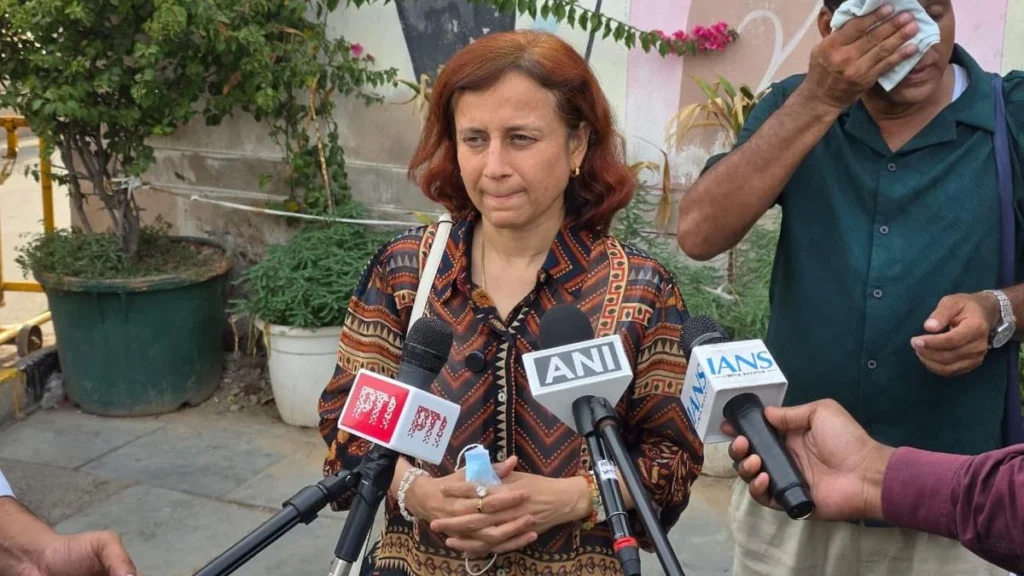
Speaking to the press outside the Delhi High Court, Gitanjali J. Angmo articulated a profound disillusionment with the state’s handling of her husband. Her argument transcends the specific request for a hospital transfer, touching upon the constitutional rights of a citizen in a democracy.
"We went to the High Court with the plea that a free Indian citizen has the liberty to be treated where he wishes, by doctors he is comfortable with," Ms. Angmo stated. She pointedly questioned why the government, if it felt compelled to intervene for health reasons, did not do so in a manner that garnered the family’s trust.
"There is a trust deficit in this country. People don’t trust government institutions," she added. She described the current situation as one where the activist is being treated as if he were in detention—recalling his previous experiences in Jodhpur jail—rather than as a citizen receiving medical care. She highlighted the intrusive presence of police at the hospital, noting that their belongings and personal technology, including Mr. Wangchuk’s tablet, had been seized.
The Broader Implications: Democracy and Oversight
The case of Sonam Wangchuk has become a flashpoint for several systemic issues:

1. The Right to Choice in Healthcare
At the heart of the legal dispute is the autonomy of a patient. The family argues that a conscious, albeit fasting, citizen should have the final say in their medical trajectory. The state, conversely, maintains a "duty of care" that overrides personal preference when an individual’s life is deemed to be in imminent danger. This creates a dangerous precedent where the state’s paternalistic intervention could be used to silence or isolate political figures under the guise of "medical safety."
2. Transparency and State Surveillance
The presence of police on hospital floors and the confiscation of personal items have raised serious concerns about the extent of state surveillance. Critics argue that when the police control the environment of a hospital room, it effectively turns a place of healing into a site of state custody, chilling the ability of the activist to communicate with his supporters or legal counsel.
3. The Trust Deficit
Ms. Angmo’s remarks highlight a disturbing trend in Indian public life: the erosion of public faith in state-run institutions. When citizens feel they must seek the intervention of a private hospital to feel "safe" from government-appointed doctors, it indicates that the perceived neutrality of state medical institutions has been compromised by political interests.
Official Responses and Next Steps
While the government maintains that its actions were taken in the interest of preserving Mr. Wangchuk’s life, the opposition and civil society groups are closely watching the case. The government’s position, as reflected in the court, is that the doctors at Safdarjung are professionals acting according to standard medical ethics, and that the state has no malicious intent in its management of the patient.
However, the family remains undeterred. Ms. Angmo has confirmed that they are preparing to file another petition on Monday, July 20, 2026. They are seeking to ensure that Mr. Wangchuk has free, unrestricted access to his chosen doctors, arguing that the current level of isolation is not only detrimental to his morale but also a violation of his fundamental rights.

Conclusion: A Test for the Judiciary
As the July 24 hearing approaches, the case of Sonam Wangchuk serves as a litmus test for the independence and sensitivity of the judicial system. The court must balance the state’s legitimate role in preventing self-harm with the individual’s right to liberty and dignity.
For the supporters of Mr. Wangchuk, this is not merely about a hospital room; it is about the space for dissent in a democracy. As Ms. Angmo poignantly asked, "Is India truly democratic and free?" The events of the coming week may well provide a partial answer to that question.
The medical status of the activist remains the primary concern for the public, but the legal and ethical questions raised by his wife will likely echo long after the hunger strike concludes. The fight for transparency, choice, and the right to trust in one’s own care continues in the corridors of the Delhi High Court.
Timeline Summary for Context:
- July 18, 2026: Forcible relocation of Sonam Wangchuk to Safdarjung Hospital.
- July 19, 2026: Delhi High Court refuses to order transfer; hearing scheduled for July 24.
- July 20, 2026: Anticipated filing of a follow-up petition by the family.