The LinkedIn Algorithm Revolution: How to Master the New Rules of Reach
For years, LinkedIn users operated under a relatively predictable set of rules: post consistently, engage with your network, and watch your reach grow. However, a seismic shift has occurred behind the scenes. LinkedIn has officially retired its legacy feed architecture, replacing a patchwork of five separate systems with a singular, AI-driven engine.
This overhaul represents the most significant change in the platform’s history. By moving away from relationship-based distribution—where you primarily saw posts from people you followed—to an interest-based model, LinkedIn is fundamentally altering how professional influence is built. For marketers, creators, and business leaders, this transition requires a complete departure from "old school" social media habits.
Main Facts: The Death of the "Relationship" Feed
The core of LinkedIn’s new AI-powered brain is its ability to map a user’s "professional journey." Previously, the algorithm prioritized your direct connections. If you followed an account, you were highly likely to see their content.
Today, the algorithm functions much like YouTube or TikTok: it evaluates content based on relevance to a user’s current interests, regardless of whether a connection exists. The system builds a long-term psychological and professional profile of every user, tracking their evolving interests rather than merely reacting to the last post they clicked.
Crucially, the platform now utilizes semantic understanding. It doesn’t just look for keywords; it understands the meaning behind your text. A post discussing "reducing customer churn" will now be served to a user interested in "customer retention strategies," even if the specific words don’t match. This means the algorithm is no longer a simple matching machine—it is a cognitive engine designed to curate professional value.
Chronology: The Evolution of LinkedIn’s Distribution
To understand where we are, we must look at how the platform has matured:
- The Early Days: The feed was chronological and strictly connection-based. If you were connected to 500 people, you saw their posts in order.
- The "Engagement" Era: LinkedIn introduced weighted metrics, where likes and shares boosted content visibility. This led to the "engagement bait" culture of the late 2010s.
- The Specialist Shift (Present Day): With the recent rebuild, the platform has pivoted to "Topical Authority." By publishing a series of related posts, creators train the AI to associate them with a specific niche. This, in turn, guarantees more reliable distribution to an audience that actually cares about that topic.
Supporting Data: The Rise of "Invisible" Engagement
A comprehensive analysis of over 600,000 LinkedIn posts across 63,000 accounts has revealed a startling truth: the metrics we have been tracking for years—likes, public shares, and basic comments—are becoming less relevant to the algorithm.
The data shows that "invisible" interactions are now the primary drivers of reach. These include:

- Carousel swipes: The act of moving through a document or multi-image post.
- Clicking "See More": Expanding a truncated post, which indicates a high level of interest in the copy.
- Video completion rates: Watching a video to the end rather than just scrolling past it.
Collectively, these invisible behaviors are driving overall engagement metrics up by nearly 14%. While vanity metrics like "Likes" provide a dopamine hit, the algorithm is secretly prioritizing the users who take the time to pause, swipe, and read.
Implications for Your Content Strategy
The shift toward interest-based distribution creates a "winner-take-all" environment for specialists, while making life significantly more difficult for generalists.
1. The Death of the Generalist
If your feed is a mix of AI commentary, pet photos, industry rants, and personal reflections, the algorithm struggles to categorize you. Because the AI builds authority based on topical consistency, a fragmented strategy prevents you from being "indexed" as an expert in any single field. To gain traction today, you must commit to a lane.
2. The "Fresh Angle" Imperative
A major frustration for creators is the feeling of repetition. AJ Wilcox, a leading expert on LinkedIn advertising, suggests that marketers should not fear repeating their core messages. "Your audience is constantly changing," Wilcox notes. "The person reading your post today may be seeing your core idea for the first time."
The key is to vary the format and the angle, not the subject. Use metaphors, case studies, or different data visualizations to approach the same pillar content. AI models now assess whether content represents original thinking or low-effort repurposing. By consistently tackling a core topic from fresh perspectives, you signal to the algorithm that you are a definitive authority.
3. Engineering Invisible Signals
To capitalize on the new algorithm, your post architecture must change:
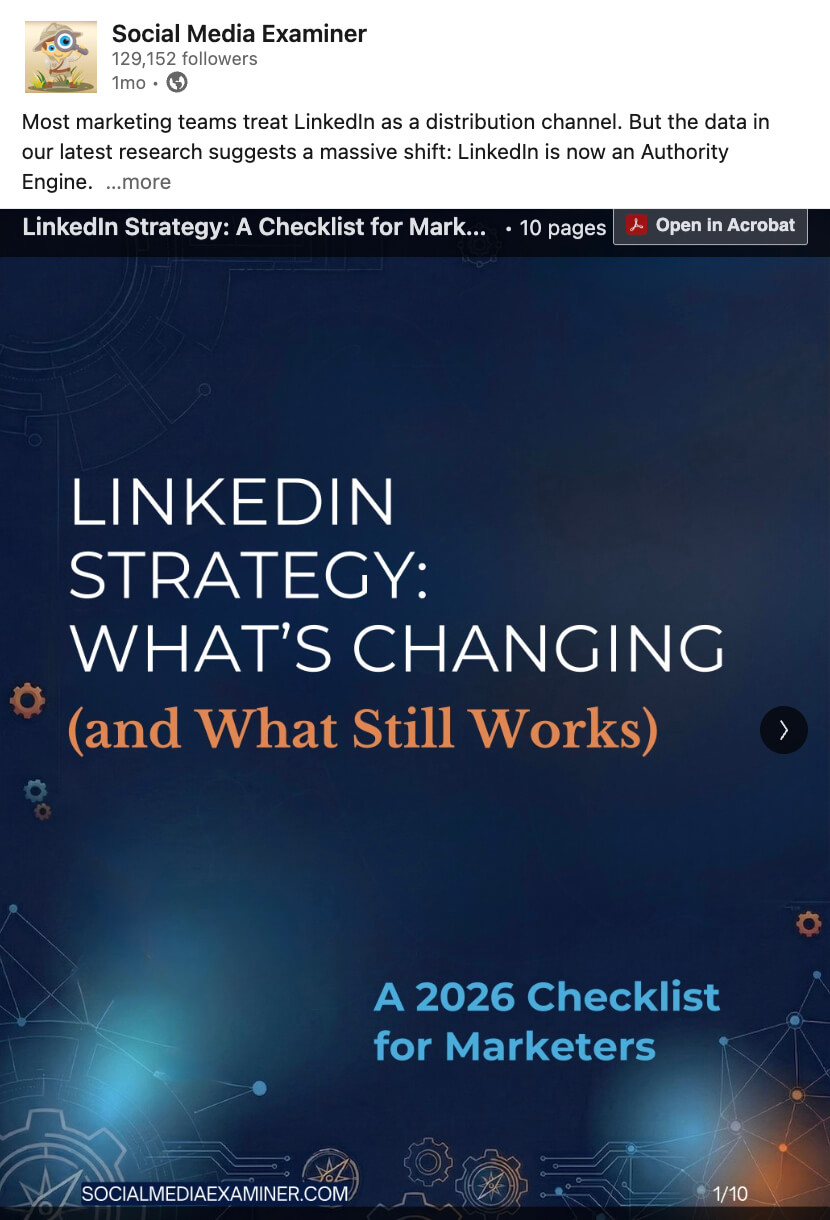
- Prioritize Carousels: Since "swiping" is an invisible signal, document posts that require users to interact with multiple slides are gold mines for reach.
- The "More" Hook: Because LinkedIn truncates long posts, the first three lines are the most valuable real estate in your content. If you don’t earn the "See More" click, the algorithm assumes the post is uninteresting and halts distribution.
- Specific CTAs: Asking a generic "What do you think?" is now less effective than a targeted question. Frame your calls to action around specific elements of your post to reduce friction for the reader.
Official Responses and Expert Insights
The platform’s move toward AI-driven curation is part of a broader industry trend toward "interest-based social media." By removing the friction of manual networking and focusing on content quality, LinkedIn is attempting to increase the "time spent" on the platform.
Expert AJ Wilcox emphasizes that the "Comment Density" is the final piece of the puzzle. The algorithm no longer just counts the number of comments; it measures the depth of the conversation. One-word comments or AI-generated spam are being effectively de-prioritized.
"Focus your replies on comments that engage with something specific," Wilcox advises. "Answering every meaningful comment builds an expectation of dialogue, which encourages your readers to engage more deeply in the future." Furthermore, responding to comments within the first hour of publication is critical. This initial burst of "depth" acts as a catalyst, signaling to the platform that the post is generating a genuine, substantive conversation.
Conclusion: Adapting to the New Reality
The era of "posting and praying" is over. LinkedIn’s new algorithm rewards the intentional, the expert, and the conversationalist. To succeed in this new environment, you must:
- Define your pillar topics and stick to them to build topical authority.
- Focus on "Invisible Signals" by using carousels, writing compelling hooks that force a "See More" click, and producing content that encourages long-form discussion.
- Engage in high-quality dialogue rather than seeking vanity metrics.
As LinkedIn continues to refine its AI, the creators who win will be those who stop treating the platform as a place to broadcast and start treating it as a place to facilitate deep, interest-driven discovery. The algorithm is no longer a wall between you and your audience; it is a bridge. Your task is to provide the content that makes that bridge worth crossing.