InMobi’s IPO Ambitions: The Adtech Giant Gears Up for a Landmark D-Street Debut
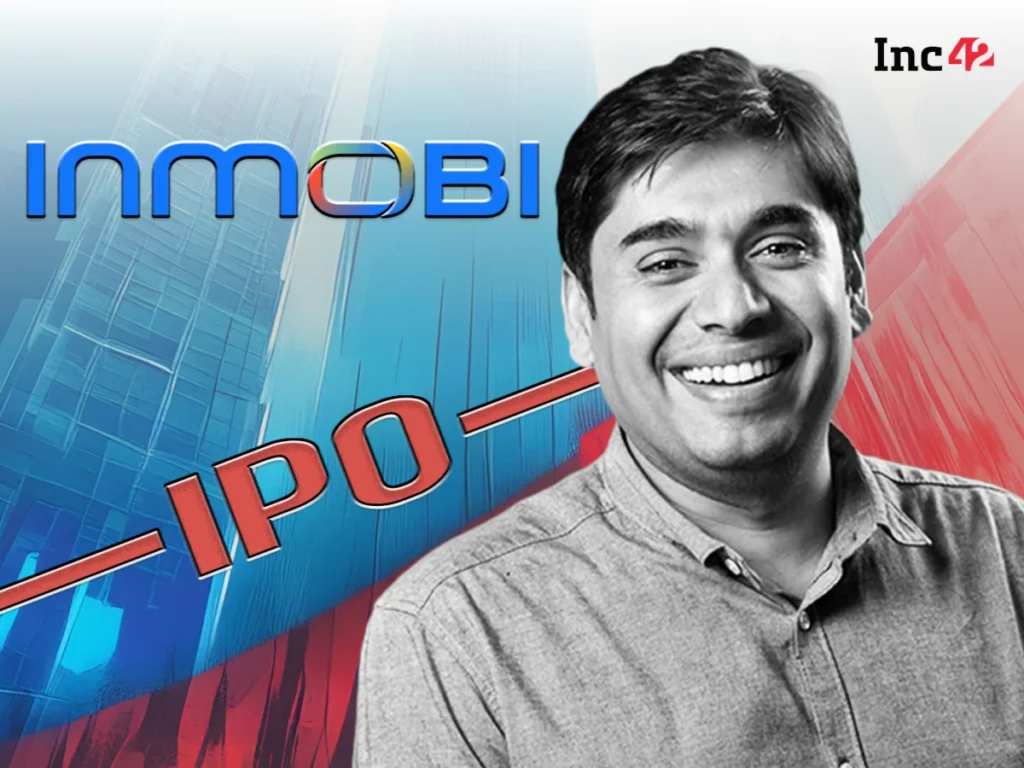
The landscape of India’s public markets is bracing for a potential watershed moment. InMobi, the SoftBank-backed adtech powerhouse and one of the country’s earliest unicorns, has officially set its sights on a public listing. After years of speculation, strategic pivots, and shifting market tides, the company has reportedly engaged a quartet of top-tier financial institutions to steer its initial public offering (IPO).
As the Indian startup ecosystem matures, InMobi’s move to tap the capital markets signifies more than just a liquidity event for its early investors; it marks the maturation of a homegrown giant that helped define the nation’s digital trajectory.
The Mandate: Assembling a Financial Powerhouse
According to reports from Bloomberg, InMobi has appointed JPMorgan Chase & Co., Jefferies, Kotak Mahindra Capital, and Axis Capital to manage its upcoming public issue. While the company has yet to finalize the exact size of the offering, the consensus points toward a target of approximately $1 billion (roughly ₹9,634 Cr).
Sources close to the matter indicate that the company is expected to initiate formal IPO proceedings as early as this week, with an eye toward a listing within the coming months. While the valuation parameters remain fluid—having fluctuated between $6 billion and $10 billion in previous reports—the appointment of these specific investment banks suggests a high-level strategy aimed at securing robust institutional interest.
Currently, the company is navigating the complex regulatory and logistical process of shifting its corporate domicile from Singapore back to India. This "reverse flip" is a growing trend among Indian unicorns, aimed at aligning their corporate structure with the home market where their primary operations and investor base reside.
A Chronology of Ambition: The Long Road to the Bourse
InMobi’s journey to the stock exchange has been far from linear. Founded in 2007 by Naveen Tewari, Piyush Shah, Mohit Saxena, and Abhay Singhal, the company quickly became a global leader in mobile advertising, providing sophisticated marketing and monetization solutions to brands and publishers.
The Early Days and Unicorn Status
Long before the term "unicorn" became a household word in India, InMobi achieved the status in 2011. Its ability to scale globally while remaining anchored in Bangalore earned it a reputation as a pioneer. Having raised over $320 million from marquee investors like SoftBank, Kleiner Perkins, and Sherpalo Ventures, the company proved that an Indian software-as-a-service (SaaS) entity could compete with the giants of Silicon Valley.
The 2021 Pivot and the "Funding Winter"
The company’s first serious flirtation with an IPO occurred in 2021. However, as global markets turned volatile and the "funding winter" settled over the tech sector, InMobi—like many of its peers—wisely opted to shelve its plans. The company used this interim period to diversify its portfolio, most notably through the launch of Glance, an AI-driven lockscreen platform that transformed from a feature into a standalone unicorn, further broadening InMobi’s enterprise value.
Reclaiming Control: The Buyback Strategy
A pivotal development occurred ahead of this current IPO push: the co-founders initiated a massive buyback of shares from SoftBank. By acquiring a 25-30% stake, Tewari, Singhal, and Shah effectively increased their cumulative shareholding to roughly 60%. This consolidation of power is widely viewed by analysts as a move to ensure founder-led stability as the company transitions into a publicly traded entity.
Strategic Expansion
In May 2024, the company signaled its ongoing commitment to growth by acquiring the San Francisco-based app analytics platform MobileAction. By integrating these advanced marketing analytics into its ecosystem, InMobi has bolstered its value proposition, ensuring that its service suite remains indispensable to global advertisers.
Supporting Data: The Broader Market Context
InMobi’s IPO comes at a time when the Indian capital markets are witnessing an unprecedented wave of tech listings. The "D-Street" debut of new-age tech companies has become the central theme of 2024 and 2025.
- The IPO Tracker: As of mid-2025, seven startups have already successfully made their public debuts, with at least 28 others currently in the pipeline having filed their Draft Red Herring Prospectuses (DRHP) with the Securities and Exchange Board of India (SEBI).
- The Competition: The market is currently crowded with high-profile names. Travel-tech giant MakeMyTrip has recently filed for an IPO of its India subsidiary via the confidential pre-filing route. Similarly, fitness unicorn Cult.fit has submitted papers for an issue comprising a fresh issue of ₹950 Cr.
- The OYO Factor: The hospitality behemoth OYO (Oravel Stays) continues to navigate its own path to the bourse, having recently updated its DRHP for a massive fresh issue of ₹6,650 Cr.
These filings suggest that investors have moved past the skepticism of the post-2021 era and are now showing a renewed appetite for profitable or growth-focused tech companies with clear paths to fiscal sustainability.
Implications: What an InMobi IPO Means for India
The potential listing of InMobi is more than just a financial transaction; it is a barometer for the health of the Indian startup ecosystem.
1. The Validation of the "Reverse Flip"
InMobi’s decision to move its domicile back to India is a major win for the Indian government’s efforts to encourage domestic listings. By bringing its primary entity to India, the company will likely provide a blueprint for other offshore-domiciled unicorns to follow suit, effectively capturing the value of Indian innovation within the Indian tax and regulatory jurisdiction.
2. Setting a New Benchmark for Adtech
For years, the adtech sector was viewed as cyclical and susceptible to macroeconomic downturns. By successfully transitioning to a public company, InMobi would prove that adtech businesses—when coupled with AI-driven consumer platforms like Glance—can provide the kind of long-term, stable growth that public market investors crave.
3. Founder-Led Governance
The recent stake buyback by the founders is a strong signal of confidence. In an era where corporate governance in startups has come under intense scrutiny, InMobi’s clear founder-led structure provides a level of comfort to institutional investors who prefer management teams that are deeply invested in the long-term success of the company.
4. Liquidity for Early Backers
For investors like SoftBank and others who have supported the company since 2007, this IPO represents a long-awaited exit opportunity. Successful exits for early-stage venture capital are the lifeblood of the startup ecosystem; they provide the liquidity necessary for those funds to reinvest in the next generation of Indian entrepreneurs.
Looking Ahead: The Final Hurdles
While the appointment of merchant bankers is a definitive step forward, the road to the bell-ringing ceremony at the Bombay Stock Exchange (BSE) or the National Stock Exchange (NSE) is still subject to market conditions.
The company must now navigate the SEBI approval process, perform extensive roadshows to convince institutional investors of its valuation, and ensure that its financial disclosures meet the rigorous standards of public markets. Furthermore, the company must articulate a clear vision for how it plans to sustain its growth against global giants like Google and Meta in an increasingly privacy-conscious digital advertising environment.
If InMobi successfully navigates these hurdles, it will cement its place not just as a pioneer of the Indian startup movement, but as a cornerstone of the modern Indian economy—a testament to the fact that with the right strategy, patience, and scale, an Indian startup can indeed conquer the global stage.