Google Expands AI Frontier: Unveiling Gemini 3.6 Flash, 3.5 Flash-Lite, and the Cybersecurity-Focused 3.5 Flash Cyber
In a significant expansion of its artificial intelligence portfolio, Google has officially pulled back the curtain on its latest generation of Gemini models. This release marks a strategic pivot toward balancing high-octane performance with specialized, low-latency utility. As the enterprise demand for multimodal AI continues to surge, Google’s latest offerings—Gemini 3.6 Flash, 3.5 Flash-Lite, and the niche-focused 3.5 Flash Cyber—aim to cement the company’s position as the primary engine for global developer and enterprise workflows.
Main Facts: A Trio of New Capabilities
The announcement introduces three distinct models, each engineered for specific operational parameters.
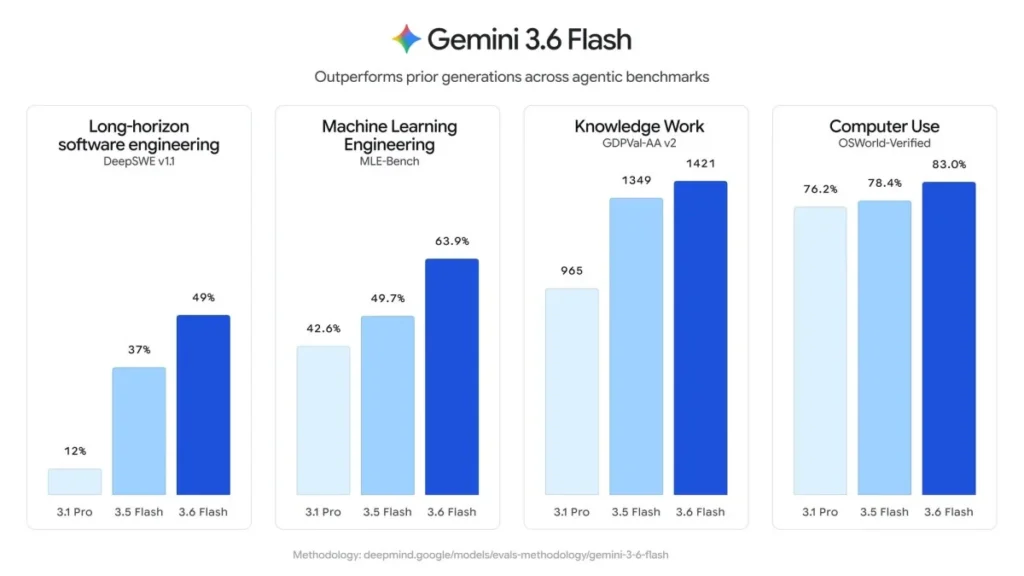
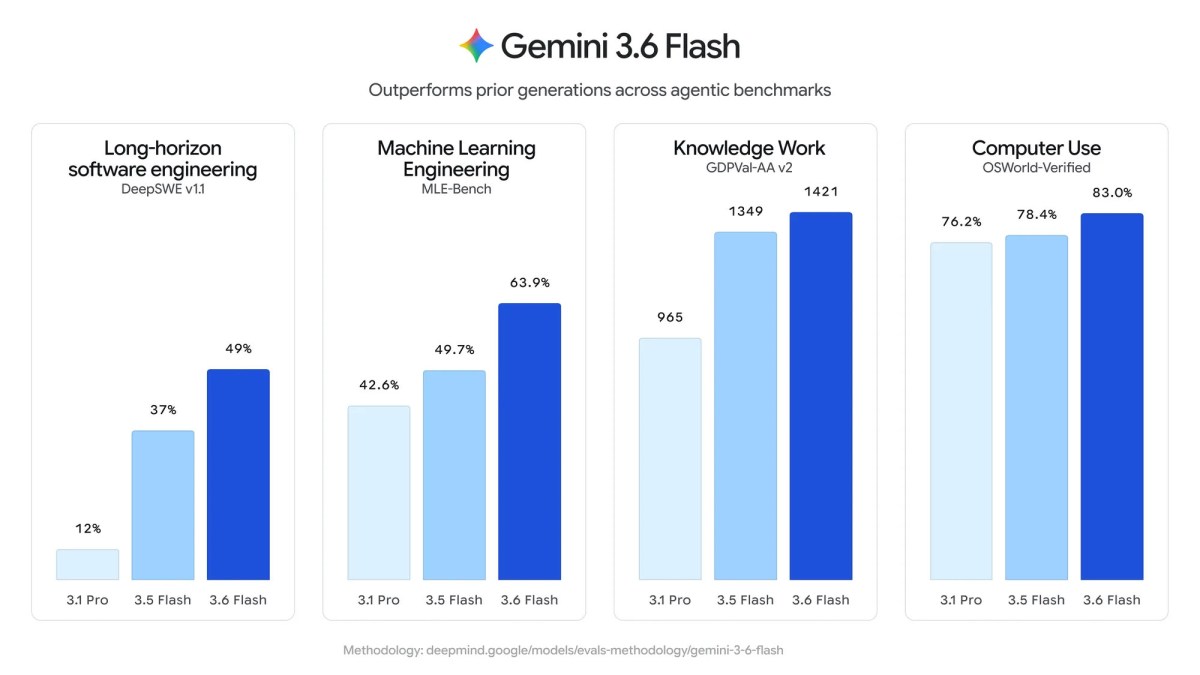
Gemini 3.6 Flash serves as the new "workhorse" of the fleet. Designed to supersede its predecessor, this model is optimized for high-volume coding tasks, complex knowledge retrieval, and nuanced multimodal processing. Google claims that early adopters have already utilized the model to streamline document parsing, extract insights from complex data visualizations, and automate the drafting of comprehensive business reports.
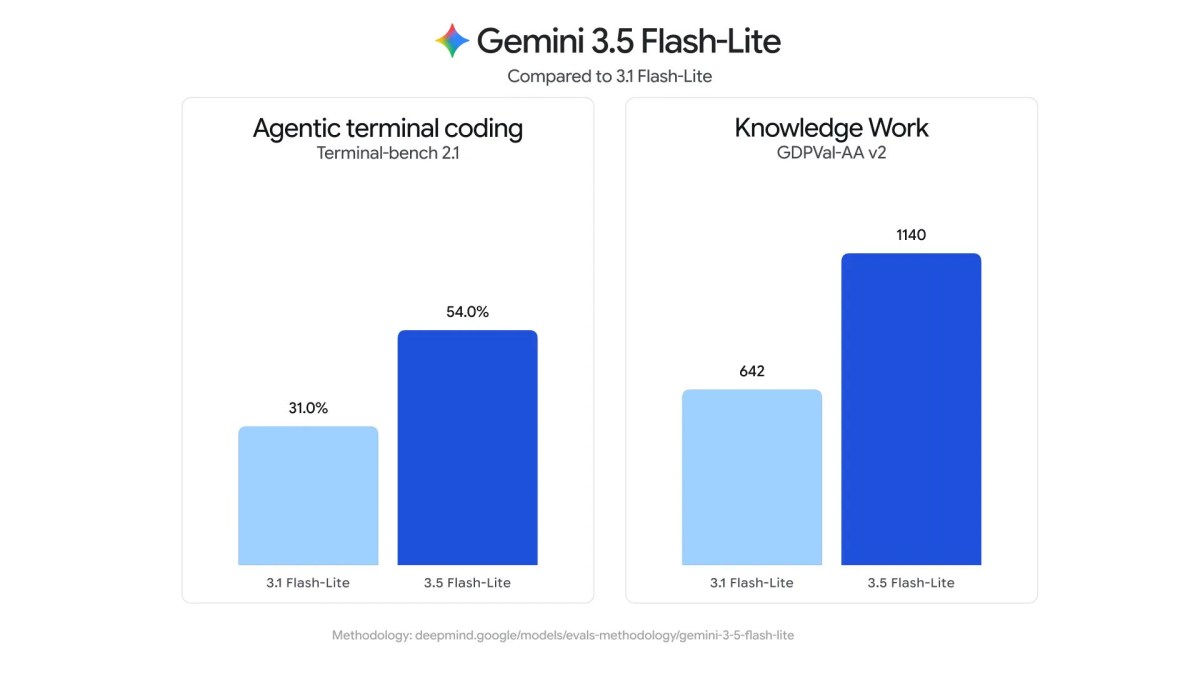
Gemini 3.5 Flash-Lite shifts the focus to speed and efficiency. Positioned as the fastest iteration within the 3.5 series, it is purpose-built for low-latency requirements. Its architecture is specifically tuned for agentic search and high-throughput document processing—scenarios where milliseconds matter as much as accuracy.
Gemini 3.5 Flash Cyber represents Google’s foray into specialized security applications. By fine-tuning a model specifically for the identification and remediation of cybersecurity vulnerabilities, Google is attempting to democratize high-level threat hunting. By offering this at a lower price per token compared to its massive, generalized counterparts, the company is encouraging more frequent and cost-effective security audits.
Chronology: The Evolution of the Gemini Ecosystem
To understand the weight of today’s announcement, one must look at the rapid progression of Google’s AI roadmap over the last 24 months.
- The Prototyping Phase (Early 2023): Google began integrating Large Language Model (LLM) capabilities into its core infrastructure, transitioning from the experimental Bard stage to the more robust Gemini architecture.
- The Multimodal Breakthrough (Late 2023): The introduction of Gemini 1.0 showcased Google’s ability to process text, images, audio, and video concurrently. This laid the foundation for the current multimodal focus.
- The Efficiency Era (2024): With the release of the "Flash" series, Google pivoted toward making AI cost-effective for developers. This was a response to market feedback that indicated "Goldilocks" models—those not too large to be slow, but not too small to be inaccurate—were the most in demand.
- The Specialization Pivot (Mid-2025): The current release of the 3.6 and 3.5 variations signals a shift from "general-purpose" AI to "application-specific" AI, marking a maturation in how Google approaches enterprise-grade machine learning.
Supporting Data: Why "Flash" Matters
The technical specifications and performance benchmarks provided by Google suggest that the "Flash" architecture has undergone a significant architectural overhaul.
Performance Gains
In internal testing, the Gemini 3.6 Flash model demonstrated a marked improvement in reasoning capabilities. When compared to the previous generation, the model shows a higher "pass rate" in coding benchmarks, specifically in environments requiring the synthesis of multiple external data sources.
Throughput and Latency
The 3.5 Flash-Lite model is designed for a specific segment of the developer market. In high-throughput testing, where thousands of queries are processed per second, Flash-Lite maintained a significantly lower "Time to First Token" (TTFT) compared to its peers. For businesses relying on AI agents to perform real-time search, this reduction in latency is the difference between a seamless user experience and a bottlenecked application.
Cost-Efficiency
The introduction of the 3.5 Flash Cyber model is particularly notable for its pricing strategy. By limiting the model’s focus to cybersecurity-specific token patterns and vulnerability signatures, Google has managed to keep the computational overhead low. This allows security operations centers (SOCs) to run continuous, deep-packet analysis or code audits without the prohibitive costs associated with using a general-purpose model like Gemini Ultra or 1.5 Pro.
Official Responses and Strategic Vision
In a statement accompanying the launch, Google’s leadership emphasized that the focus is shifting from "model size" to "model utility."
"Our customers are no longer asking for the biggest model; they are asking for the most useful model," said a Google spokesperson during the press briefing. "Gemini 3.6 Flash is the direct result of listening to developers who need a reliable, high-performance engine that doesn’t sacrifice speed for capability. With Flash-Lite and the Cyber variant, we are empowering developers to build specialized tools that were previously too expensive or too slow to operate at scale."
Google has been particularly transparent about the limitations of the current releases, specifically regarding the "Flash Cyber" model. By restricting its availability to governments and "trusted partners," the company is acknowledging the sensitive nature of cybersecurity AI. The goal is to ensure that the tool is used for defense, not malicious activity, through a tightly controlled pilot program.
Implications: A New Era for Developers and Enterprise
The release of these three models will have a profound ripple effect across the technology sector.
1. The Democratization of Security
The 3.5 Flash Cyber model, while limited in its initial rollout, could fundamentally change how cybersecurity is managed. If smaller firms can leverage the same diagnostic power as government entities, the general baseline for software security will rise. This could lead to a significant reduction in zero-day vulnerabilities across the open-source and enterprise ecosystem.
2. The Rise of "Agentic" Workflows
With the low-latency improvements in Gemini 3.5 Flash-Lite, we are likely to see an explosion in "agentic" search applications. These are AI agents that don’t just provide a summary of information, but actively navigate through databases, perform actions, and iterate on their findings in real-time. This is a leap forward from the static chat interfaces that have dominated the last two years.
3. Economic Pressures on Competitors
Google’s aggressive pricing on token-heavy tasks places immense pressure on competitors like OpenAI and Anthropic. By creating a tiered system—where the user pays only for the level of intelligence they actually need—Google is effectively commoditizing the AI stack. This makes it increasingly difficult for smaller AI labs to compete on price, potentially leading to further consolidation in the AI industry.
4. Ethical and Regulatory Considerations
The controlled rollout of the cybersecurity model is a preemptive strike against regulatory scrutiny. By self-imposing restrictions on who can access the Cyber model, Google is signaling to policymakers that they are capable of responsible AI governance. However, this also raises questions about "gatekeeping." As these models become the standard for security, the question of who gets access to the most powerful tools will become a central theme in the global AI policy debate.
Conclusion
Google’s launch of Gemini 3.6 Flash, 3.5 Flash-Lite, and 3.5 Flash Cyber represents a maturation of the AI industry. The days of treating AI as a monolithic "black box" are ending. In its place, we are seeing the rise of a modular, specialized ecosystem where developers can select the right tool for the specific job at hand. Whether it is the robust reasoning of 3.6 Flash, the lightning-fast reflexes of 3.5 Flash-Lite, or the defensive posture of 3.5 Flash Cyber, Google has provided the building blocks for the next generation of digital infrastructure.
As these models move from the pilot phase into the wider developer community, the industry will be watching closely to see if they can truly bridge the gap between AI potential and practical, large-scale utility. For now, Google has set a high bar, forcing the rest of the industry to rethink their own strategies for balancing efficiency, speed, and specialization.