Bridging the Data Gap: A Comprehensive Guide to Migrating from Oracle to Google BigQuery
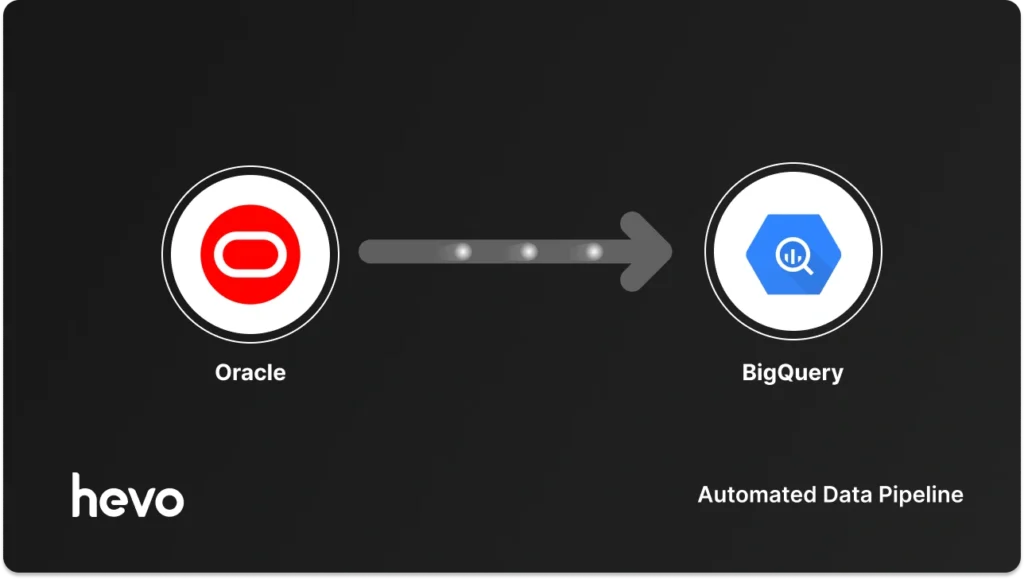
In the modern enterprise ecosystem, data is the lifeblood of decision-making. However, many organizations find themselves trapped in a "data gravity" paradox: their operational data resides in robust, legacy systems like Oracle, while their analytical needs demand the lightning-fast, elastic power of modern cloud warehouses like Google BigQuery.
Shifting your database from Oracle to BigQuery is more than a simple IT migration; it is a strategic evolution. By decoupling your operational heavy lifting from your analytical deep dives, you open the door to custom reporting, seamless Google Cloud integration, and the high-performance computing required for real-time business intelligence. This guide explores the methodologies, technical requirements, and strategic implications of making that move.
The Strategic Imperative: Why Migrate to BigQuery?
Oracle remains the gold standard for transactional processing (OLTP), ensuring data integrity for day-to-day operations. However, it was not architected for the massive parallel processing (MPP) required for today’s petabyte-scale analytics.
When you move your data to BigQuery, you gain:

- Separation of Concerns: Keep your production applications snappy by removing the strain of heavy analytical queries from your Oracle instance.
- Elastic Scalability: BigQuery’s serverless architecture automatically scales compute resources to meet query demand, eliminating the need for manual server provisioning.
- Advanced Analytics Integration: Direct access to Google’s AI/ML ecosystem, including Vertex AI and Looker, allows for deeper insights into historical data.
- Cost Efficiency: With a pay-as-you-go model, you eliminate the overhead of maintaining costly on-premise infrastructure.
The Migration Spectrum: Choosing Your Path
There is no "default" button for moving data between these two giants. Your choice depends on one critical factor: your tolerance for maintenance.
The Three Pillars of Migration
- Automated ETL/ELT (The "Set and Forget" Approach): Utilizing third-party platforms like Hevo Data to manage the pipeline, change data capture (CDC), and schema mapping.
- Managed Native Services: Leveraging Google’s BigQuery Data Transfer Service for scheduled, low-code ingestion.
- Manual Engineering: Building custom pipelines using Python, Java, or Dataflow for maximum control and zero licensing fees—at the cost of significant operational overhead.
| Method | Best For | Pros | Cons |
|---|---|---|---|
| Automated (Hevo) | Real-time sync, low maintenance | No-code, CDC support, auto-mapping | Requires subscription |
| Data Transfer Service | Scheduled, native ingestion | Google-managed, no file handling | Limited transformation power |
| Manual/Custom | High-compliance, complex logic | Full control, no dependencies | High dev effort, maintenance burden |
Method 1: The Automated Approach (Hevo Data)
For teams aiming to minimize downtime and developer intervention, automated pipelines are the industry standard. By utilizing Change Data Capture (CDC), these tools read Oracle’s Redo Logs to replicate changes in near real-time without impacting production performance.
Implementation Steps
- User Provisioning: Create a dedicated database user in Oracle with specific
GRANTpermissions, includingLOGMININGandSELECTaccess to system views. - Enable CDC: Ensure your Oracle instance is in
ARCHIVELOGmode and enable supplemental logging to capture granular row-level changes. - Pipeline Setup: Within the automation tool, define your Oracle source credentials and point them to your BigQuery destination.
- Staging: Configure a Google Cloud Storage (GCS) bucket as a staging area to facilitate high-speed data ingestion.
- Mapping & Execution: The platform automatically maps Oracle data types (e.g.,
NUMBER,VARCHAR2) to BigQuery equivalents, triggering an initial historical load followed by continuous synchronization.
Method 2: Manual Migration and Native Utilities
If your organization requires a "one-time" move or has strict internal protocols against third-party tools, Google provides manual pathways.
Option A: BigQuery Data Transfer Service (DTS)
The DTS acts as a bridge, allowing users to schedule data pulls from Oracle without manual file handling.

- Prerequisites: Requires a Cloud VPN or Interconnect if the Oracle database is on-premise, along with a service account that has
BigQuery Data Editorpermissions. - Workflow: Define the connection string, select your tables, and set a refresh frequency. The service handles the extraction and ingestion, though it lacks the sophisticated transformation capabilities of ETL tools.
Option B: The "Export-to-GCS" Strategy
For massive, multi-terabyte datasets, the traditional file-based approach remains the most reliable for initial backfills.
- Export: Use Oracle SQL Developer to extract data in a performant format like Parquet or Avro. These binary formats are preferred over CSV for their compression and schema-retention benefits.
- Stage: Use
gsutilor the Google Cloud Console to upload these files to GCS. - Load: Use the
bq loadcommand or the BigQuery UI to ingest the data from GCS into your tables.
Alternative Engineering: Custom Pipelines
When your migration requires complex transformations "in-flight," you may look toward Google Cloud Dataflow.
Dataflow Templates
Dataflow is a fully managed service for stream and batch processing. You can deploy pre-built templates that connect via JDBC to Oracle, transform the data using Apache Beam, and stream it into BigQuery. While this offers infinite flexibility, it requires your team to manage schema evolution, handle network latency, and debug execution failures.
Custom Python/Java Scripts
The "DIY" route is often chosen by large enterprises with dedicated data engineering teams. By writing custom code, you control every byte. However, consider the "hidden costs":

- Handling Schema Drifts: What happens when an Oracle DBA adds a column? Your custom code will likely break.
- Network Reliability: Managing retries and back-off strategies for intermittent network blips between on-premise servers and the cloud.
- Scalability: As your data grows, your script’s performance may degrade, necessitating a rewrite.
Implications: The Human and Technical Cost
Migrating to the cloud is as much a cultural shift as it is a technical one.
Implications for the Data Team
Moving away from manual maintenance allows your data engineers to transition from "pipeline plumbers" to "analytics architects." Instead of spending 40 hours a month debugging a broken Oracle connection, they can focus on data modeling, building dashboards, and optimizing query costs in BigQuery.
Technical Hurdles
- Data Type Mapping: Oracle’s
DATEtype behaves differently than BigQuery’sTIMESTAMP. You must ensure that timezone conversions and null-handling logic are strictly mapped during the migration. - SQL Dialect Differences: Oracle’s PL/SQL is not 1:1 compatible with BigQuery’s Standard SQL. Functions like
NVL()must be rewritten toIFNULL(), and complex window functions may require refactoring.
Frequently Asked Questions
Q: How do I handle complex Oracle queries in BigQuery?
A: You must map Oracle-specific functions to their BigQuery counterparts. While the logic remains the same, the syntax often requires minor updates. We recommend using a SQL translation tool or manual peer review for complex stored procedures.
Q: Can I keep my Oracle database running while I migrate?
A: Yes. By using CDC-based migration tools (like Hevo), you can perform an initial load while keeping the production Oracle database online, then switch over once the BigQuery instance is fully synced.

Q: What is the biggest challenge in this migration?
A: The most frequent challenge is "Schema Drift." As the source system changes, the destination must adapt. Automation is the most effective way to mitigate this, as it eliminates the need for manual configuration updates every time a source table is altered.
Conclusion: Making the Right Choice
The transition from Oracle to BigQuery represents a move toward modernization and analytical maturity. If your priority is business continuity and speed, automated solutions provide the highest ROI by offloading the technical burden of pipeline maintenance. If your organization demands custom-built infrastructure and has significant engineering resources, manual or native methods offer the granular control you require.
Ultimately, the goal is not just to move data, but to ensure that your data is useful, accessible, and high-performing. Whether you choose a tool like Hevo to handle the heavy lifting or build a bespoke Dataflow pipeline, the result is the same: an enterprise-grade analytics foundation that allows your business to move as fast as the market.
Ready to start? Assess your data volume, audit your current schema complexity, and choose the path that aligns with your team’s bandwidth. The shift to the cloud is inevitable; taking control of the process now will ensure your team remains a driver of innovation rather than a victim of legacy constraints.