Revolutionizing Generative AI: AWS Unveils Amazon Bedrock Managed Knowledge Base
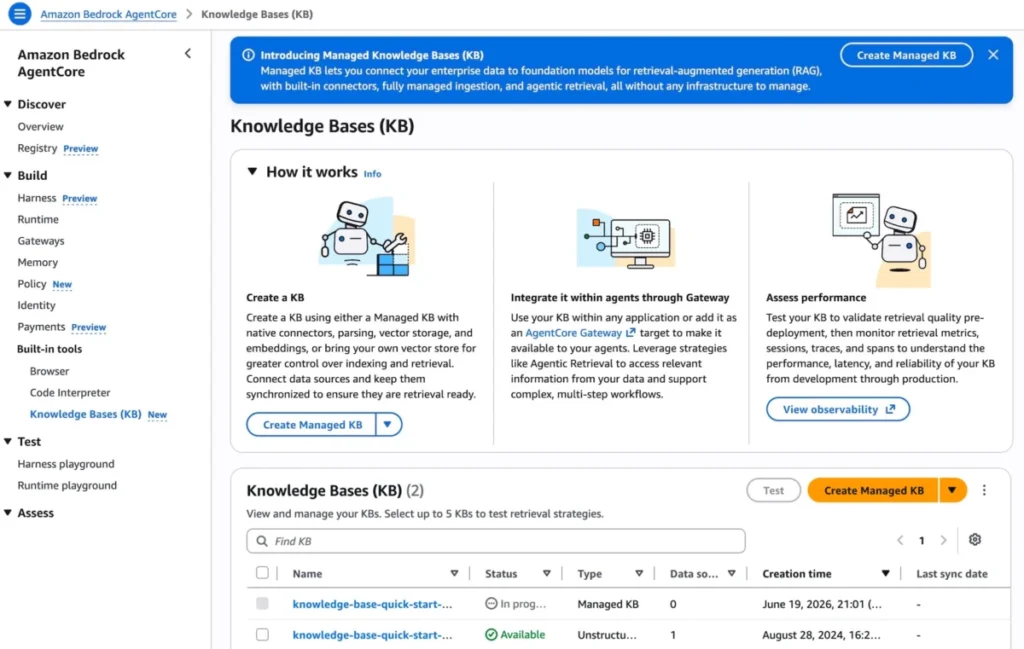
In a significant leap forward for enterprise-grade generative AI, Amazon Web Services (AWS) has announced the launch of Amazon Bedrock Managed Knowledge Base. This new suite of capabilities is designed to dismantle the barriers that have historically prevented organizations from quickly deploying reliable, secure, and context-aware AI agents. By abstracting the complex infrastructure required for Retrieval-Augmented Generation (RAG), AWS is enabling developers to transition from months of engineering labor to mere minutes of configuration.
The State of Enterprise AI: Addressing the "Undifferentiated Heavy Lifting"
For many organizations, the promise of generative AI has been tempered by the reality of implementation. Building a production-ready agent that can interact with proprietary data requires more than just a foundation model; it requires a sophisticated RAG pipeline. Developers have traditionally been forced to spend an inordinate amount of time managing storage, retrieval logic, embedding models, re-ranking mechanisms, and the delicate balancing act of foundation model selection.
This cycle of "undifferentiated heavy lifting"—where engineering teams build the same plumbing repeatedly—diverts focus from high-value business outcomes. Amazon Bedrock Managed Knowledge Base directly targets these inefficiencies by consolidating these disparate infrastructure components into a single, managed primitive.
Chronology of Development: From Concept to Managed Service
The introduction of the Managed Knowledge Base follows a period of rapid iteration within the Bedrock ecosystem.
- Initial Foundation: AWS first introduced Bedrock to provide a scalable way to access leading foundation models.
- The RAG Challenge: As enterprises began integrating proprietary data, they encountered issues with data ingestion, "hallucinations," and the inability to handle complex, multi-step queries.
- The Agentic Shift: With the rise of agentic AI—systems that can perform actions and reason through multi-step workflows—the need for a unified, intelligent retrieval layer became critical.
- Today’s Milestone: By June 2026, AWS has successfully integrated these lessons into the Managed Knowledge Base, providing a streamlined interface via the Bedrock AgentCore console. This release represents the culmination of feedback from early enterprise adopters who demanded a "set it and forget it" approach to data ingestion and retrieval.
Core Innovations: Smart Parsing and the Agentic Retriever
The power of the Managed Knowledge Base lies in its ability to automate the most difficult aspects of data preparation and retrieval.
Smart Parsing for Data Ingestion
One of the most persistent hurdles in RAG is the diversity of enterprise data. Whether it is a messy PDF, a complex spreadsheet, or a sprawling Confluence page, "garbage in, garbage out" remains a constant threat. The new Smart Parsing feature eliminates the need for manual data pre-processing. By automatically identifying the document type and applying the optimal parsing strategy—combining structural analysis, semantic chunking, and metadata extraction—the system ensures high-quality retrieval without requiring weeks of custom coding.

The Agentic Retriever: Solving Complex Reasoning
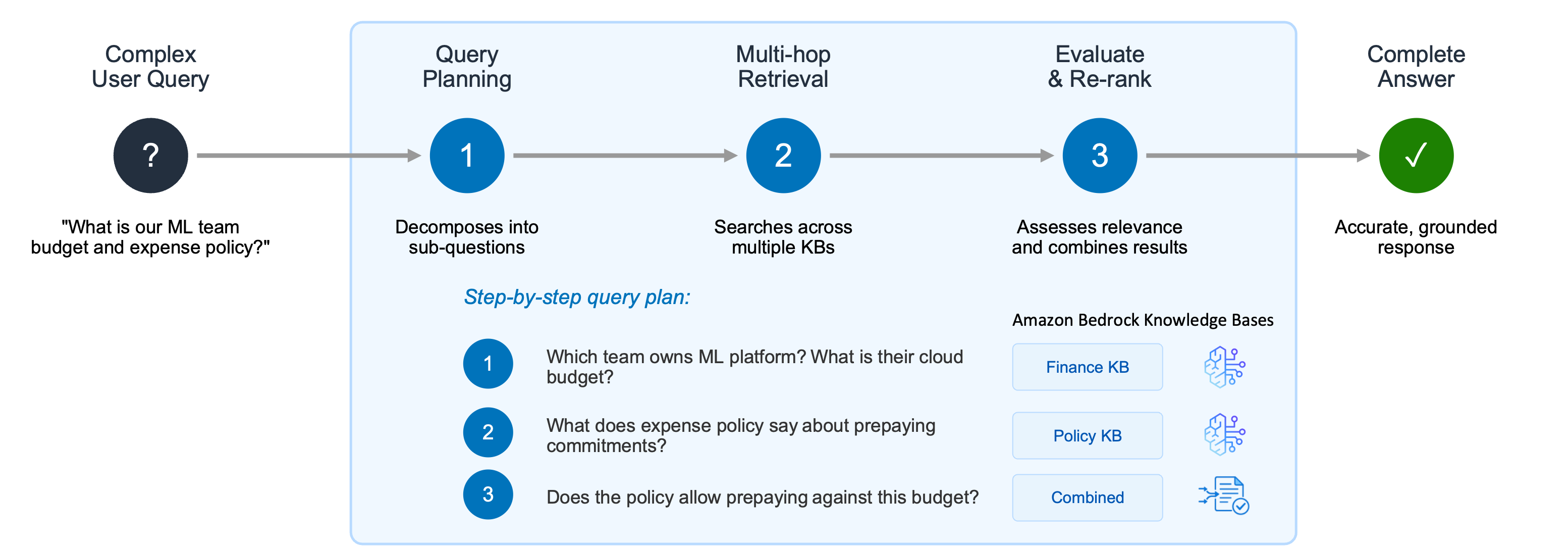
Standard retrieval systems often fail when faced with complex, multi-hop questions. For example, if an employee asks, "Does our expense policy allow for the prepaying of annual commitments given our current team budget?" a standard system might struggle to link the policy document with the financial database.
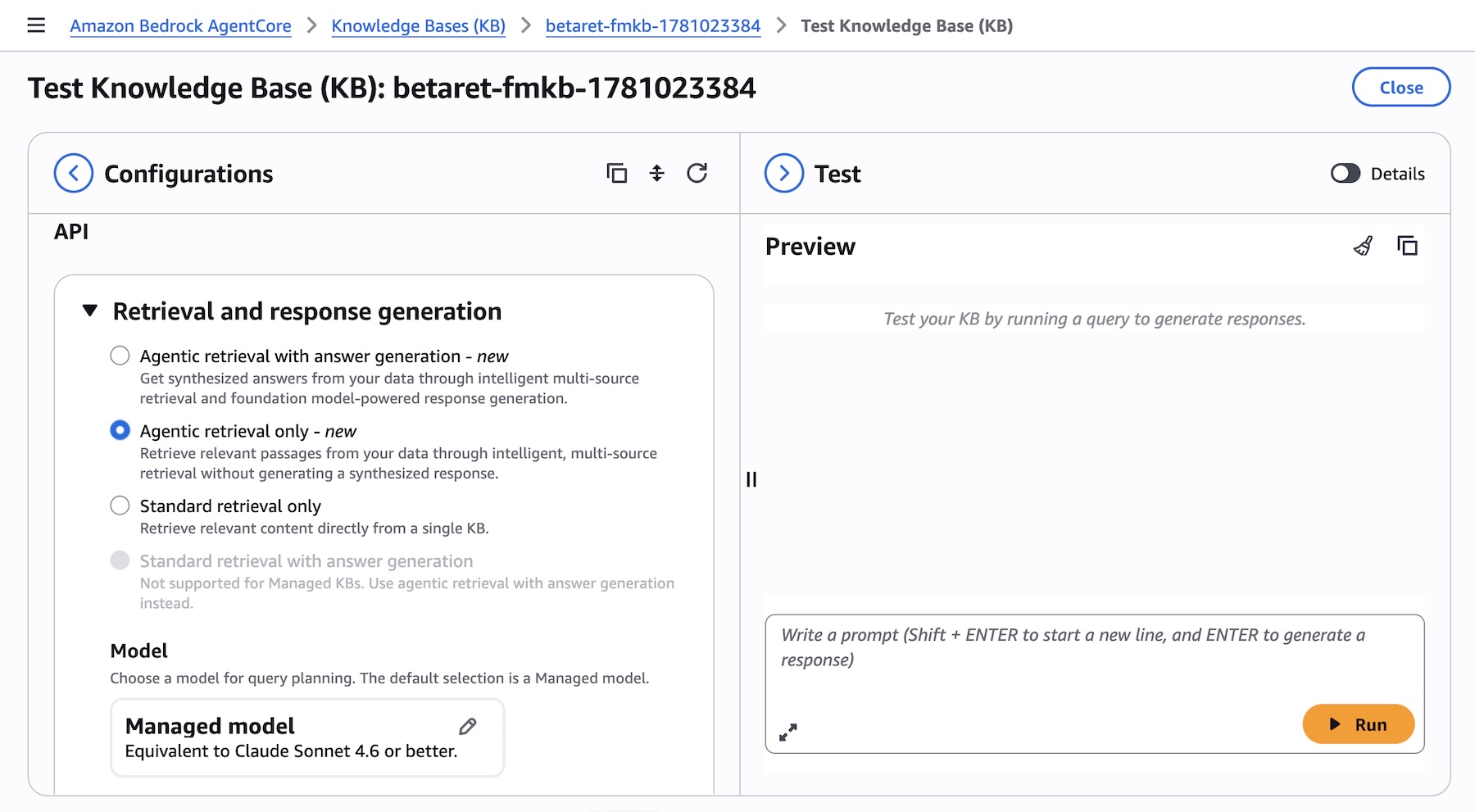
The Agentic Retriever solves this by breaking the query into a logical execution plan. It performs multi-step retrieval, evaluates intermediate results, and synthesizes an answer that is grounded in specific, retrieved evidence. This reduces the burden on developers to manually code orchestration logic for every potential edge case.
Integration via AgentCore Gateway and MCP
A standout feature of this release is its native integration with the Amazon Bedrock AgentCore Gateway. By treating the Managed Knowledge Base as a pre-built target, AWS has simplified the integration process to just a few lines of code.
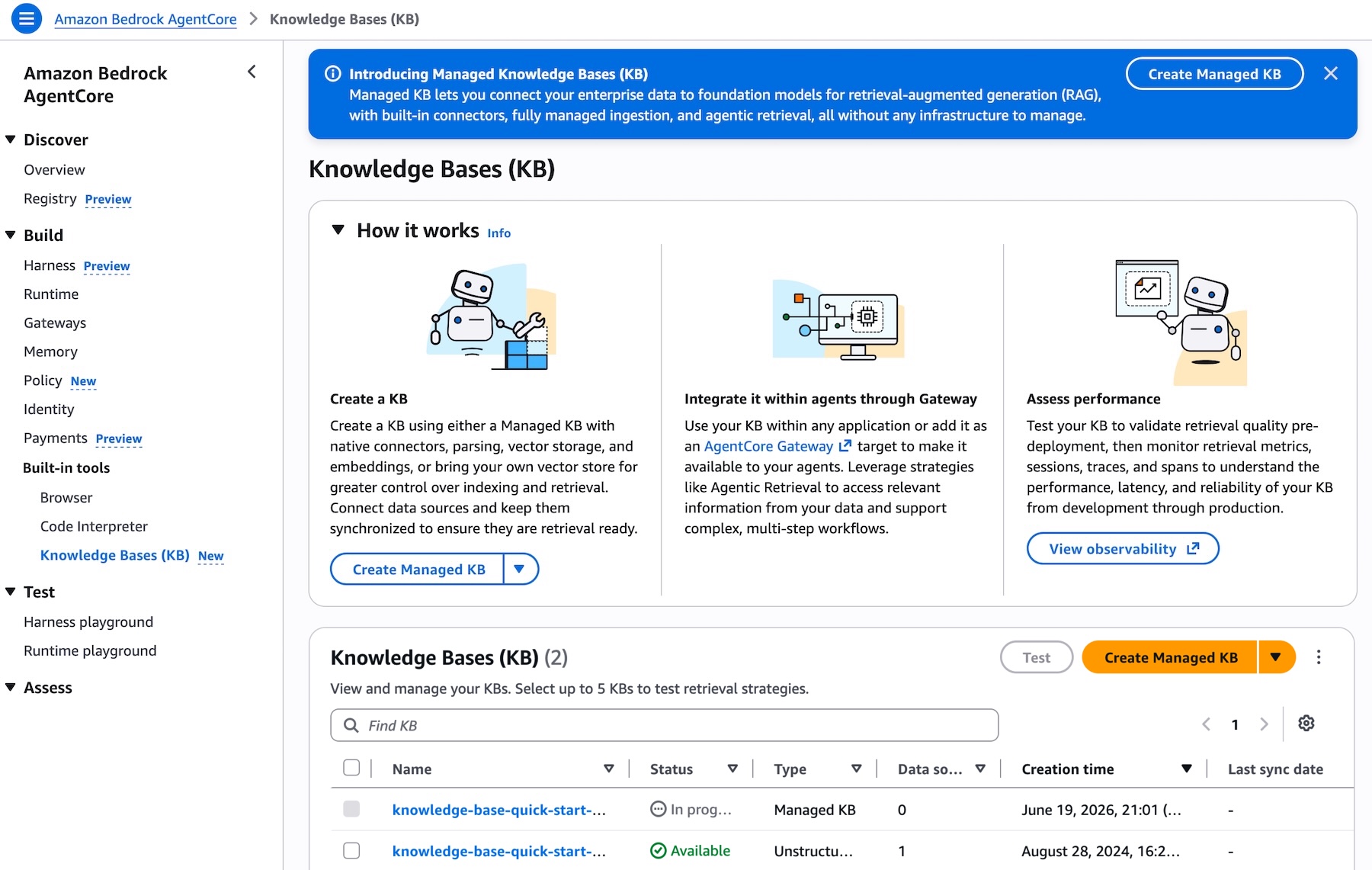
Perhaps most importantly, the Gateway exposes the Model Context Protocol (MCP). This is a game-changer for ecosystem interoperability. Because the service adheres to the standard MCP, it is immediately compatible with a vast array of frameworks, including LangChain, CrewAI, LlamaIndex, and LangGraph. Organizations are no longer locked into a proprietary silo; they can plug their managed knowledge bases into their existing AI-assisted development environments with zero friction.
Implications for the Enterprise
The release of this service has profound implications for the enterprise AI landscape:
- Democratization of AI: By reducing the barrier to entry, smaller development teams can now build sophisticated, data-rich AI agents that were previously the domain of massive AI labs.
- Cost and Performance Optimization: Because AWS decouples infrastructure management from model selection, enterprises maintain the flexibility to switch between different embedding and re-ranking models as new technology emerges. This allows teams to optimize for cost-performance without having to re-engineer their entire data pipeline.
- Security and Compliance: Through the automatic generation of IAM roles and permissions, the Managed Knowledge Base ensures that data access is governed by the same strict security standards that define the rest of the AWS ecosystem, which is a prerequisite for highly regulated industries like finance and healthcare.
Data-Driven Flexibility: A Strategic Advantage
Unlike many "black-box" AI solutions, the Bedrock Managed Knowledge Base is built on the philosophy of choice. Every foundation model available on Bedrock can be used to power the generation step. This is critical for companies that need to balance performance with budget. A firm might use a high-performance model for complex financial analysis while opting for a more cost-effective model for routine internal queries.
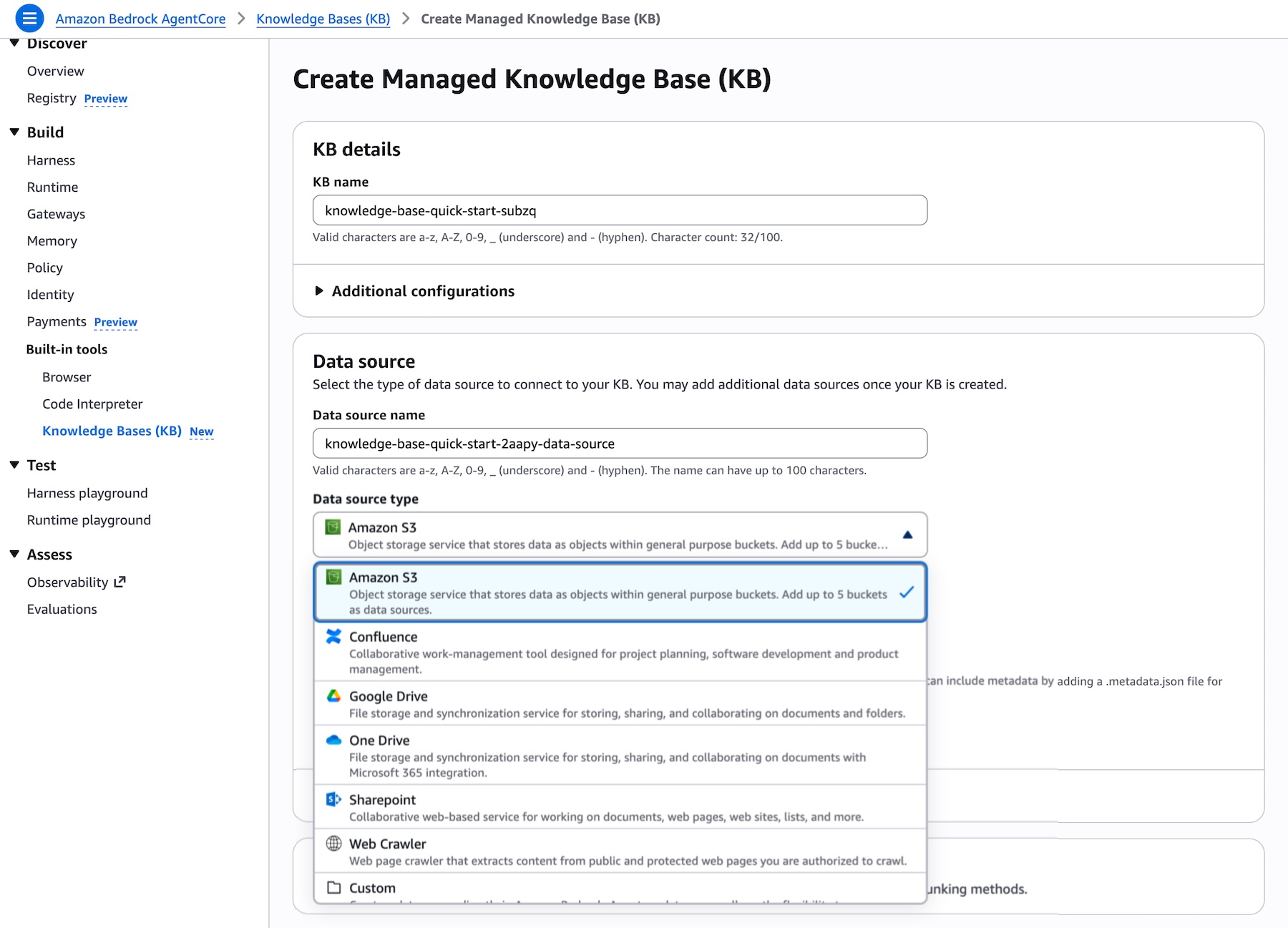
The service provides:
- Infrastructure Abstraction: Connectors for S3, Confluence, Google Drive, SharePoint, and more are handled natively.
- Customizability: While the defaults are optimized for speed, developers retain the ability to fine-tune the retrieval behavior for specific, high-stakes use cases.
- Observability: Through the AgentCore dashboard, teams gain deep visibility into how their agents are performing, which queries are failing, and how the retrieval process is evolving.
Expert Perspectives: Why This Matters
Industry analysts note that this release signifies a transition in the AI market from "experimentation" to "operationalization."
"For the past two years, companies have been playing with generative AI prototypes," says one enterprise cloud strategist. "The challenge has always been the ‘last mile’—getting the AI to actually understand the company’s specific, private data accurately. AWS is effectively turning RAG into a utility. By making it a managed service, they are signaling that the era of building bespoke RAG infrastructure is coming to a close."
Getting Started: A Path to Production
For organizations ready to deploy, the process is straightforward. Through the AWS console, administrators can:
- Create a Managed KB: Select the "Create Managed KB" option within the Bedrock console.
- Connect Data Sources: Choose from the pre-built connectors to link existing repositories.
- Deploy via Gateway: Add the Knowledge Base as a target in the AgentCore Gateway to make it available to any MCP-compliant agent.
The service is currently available in multiple regions, including US East (N. Virginia), US West (Oregon), Asia Pacific (Sydney, Tokyo), and Europe (Dublin, Frankfurt, London), as well as AWS GovCloud.
Conclusion: The Future of Agentic AI
As generative AI continues to evolve, the distinction between "smart models" and "smart applications" will become the primary competitive differentiator. Amazon Bedrock Managed Knowledge Base serves as the bridge between raw data and actionable, intelligent agent behavior. By handling the complex, error-prone tasks of data ingestion, retrieval, and reasoning, AWS is allowing developers to reclaim their time—shifting their focus from the "how" of infrastructure to the "what" of business value.
As of June 2026, the toolset is not just an addition to the AWS catalog; it is a foundational shift in how enterprises will build the next generation of intelligent software. Whether integrated into a simple chatbot or a complex autonomous agentic network, the Managed Knowledge Base provides the reliability, security, and scalability that the modern enterprise demands.