Political Turmoil in the Capital: INDIA Bloc Escalates Protests Against Election Commission Over Electoral Roll Revisions
NEW DELHI – The political landscape in the national capital reached a boiling point this week as the INDIA bloc, led by prominent opposition figures, intensified its agitation against the Election Commission of India (ECI). Following a dramatic day of detentions and a high-stakes standoff with law enforcement on October 6, 2026, the opposition has signaled that its campaign to demand the resignation of Chief Election Commissioner (CEC) Gyanesh Kumar and the reversal of controversial electoral roll policies is far from over.
On Wednesday, October 7, 2026, security was significantly bolstered around the Parliament Street police station. The heightened presence of security forces comes as the Cockroach Janta Party (CJP), a key constituent in the broader opposition protest movement, announced plans to submit a formal "intimation letter" to Delhi Police regarding a mass demonstration scheduled for October 10 at Jantar Mantar.
The Spark: A Day of Detention and Defiance
The current unrest traces its roots back to Tuesday, October 6, when a massive march organized by the INDIA bloc from the Parliament complex to the Election Commission headquarters turned into a confrontation with the Delhi Police.
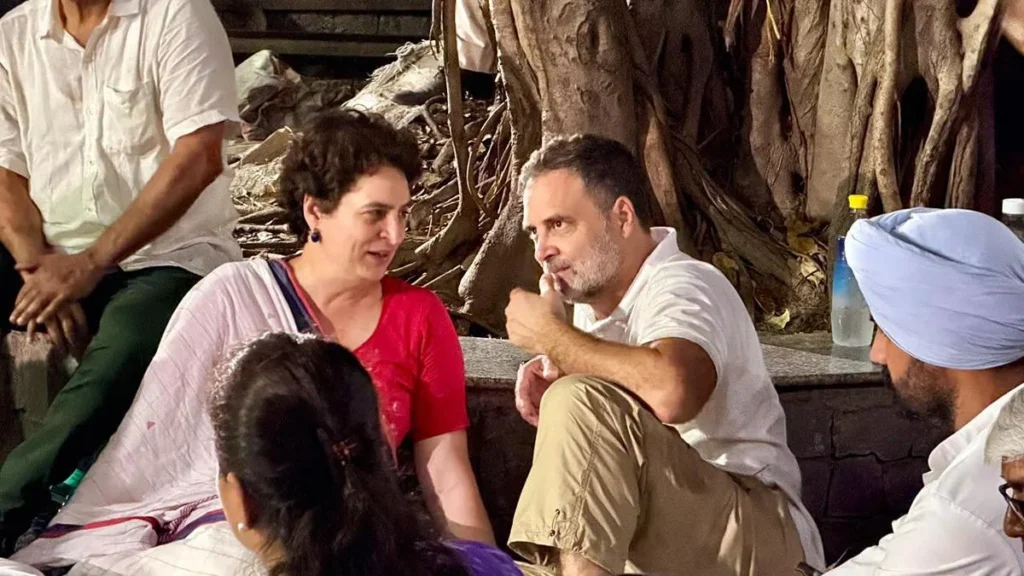
Approximately 260 protesters, including 10 sitting Members of Parliament, were taken into custody by authorities as they attempted to reach the ECI office. Among those detained were senior Congress leaders, including Leader of the Opposition (LoP) in the Lok Sabha, Rahul Gandhi, along with Priyanka Gandhi Vadra, K.C. Venugopal, and Pawan Khera. The leaders were apprehended following a determined sit-in protest at Akashvani Bhawan, where they refused to disperse despite repeated police warnings.
While the detained leaders and activists were eventually released late Tuesday evening, the incident has galvanized the opposition. Speaking during the protest, Rahul Gandhi leveled a severe indictment against the current administration and the election watchdog, stating, "What has been done to my country is treason."
Core Demands: The Controversy Over ‘SIR’
At the heart of the ongoing agitation is the implementation of the "Special Intensive Revision" (SIR) of electoral rolls. The INDIA bloc claims that this administrative exercise has been weaponized to disenfranchise legitimate voters.

The opposition’s primary demands are threefold:
- The Resignation of CEC Gyanesh Kumar: The bloc alleges that the current leadership of the ECI has compromised the impartiality of the institution.
- Scrapping of the SIR: Opposition parties argue that the Special Intensive Revision lacks transparency and has resulted in the systematic removal of voters from the rolls, particularly in areas deemed unfavorable to the ruling party.
- Restoration of Deleted Names: The coalition is demanding an immediate audit and reinstatement of all voters removed during the recent revision process.
The ECI, however, has maintained that the SIR is a routine administrative process designed to update and clean the electoral database. In a recent fact-check issued following observations from the Supreme Court, the ECI defended its protocols regarding ‘Form 6,’ which is used for the inclusion of names in the electoral roll. The Commission insists that all deletions and additions have been conducted in accordance with established legal procedures.
Chronology of the Escalation
- September 2026: Initial concerns regarding the SIR process are raised by regional opposition parties, citing an unusual spike in voter deletion reports.
- October 1, 2026: Opposition leaders attempt to meet with the ECI to discuss the electoral roll discrepancies but are denied an audience, with the ECI stating that the request "could not be accepted" under existing protocol.
- October 6, 2026: The INDIA bloc organizes a "March to ECI." The protest culminates in a sit-in at Akashvani Bhawan and the subsequent detention of 260 protesters, including top-tier leadership.
- October 7, 2026: Security is tightened in Delhi. The CJP announces a follow-up protest for October 10.
- October 10, 2026 (Scheduled): A mass demonstration is planned at Jantar Mantar to sustain pressure on the government and the Election Commission.
Official Responses and Institutional Friction
The relationship between the Election Commission and the Opposition has soured significantly over the last month. When the Opposition sought a meeting at the Parliament Annexe to deliberate on these issues, the ECI issued a firm refusal, noting that such a meeting would fall outside its mandate and procedural norms.
This refusal has deepened the divide. Opposition spokespersons have argued that the ECI’s refusal to engage in dialogue is indicative of a "shrinking democratic space." Conversely, supporters of the Commission argue that the ECI must remain insulated from political pressure and that its refusal to meet in the Parliament Annexe was a defense of its constitutional autonomy.
"The ECI is an independent constitutional body," said a senior government source speaking on condition of anonymity. "The attempt to force a meeting under political duress is an attempt to undermine the integrity of the electoral process itself."
Implications for Indian Democracy
The standoff highlights a growing crisis of confidence in the neutrality of India’s election machinery. The intensity of the protests—and the fact that top opposition leadership is willing to face detention—underscores the depth of the distrust surrounding the 2026 election cycle.

Impact on Voter Participation
If large swaths of the electorate perceive the electoral rolls as manipulated, it could lead to widespread disillusionment and a decline in voter turnout. Trust in the integrity of the ballot is the bedrock of any democracy, and the current political temperature suggests that the opposition is prepared to make this a central issue in the coming months.
Legal and Constitutional Challenges
The involvement of the Supreme Court, through its recent observations on Form 6, suggests that the judiciary may eventually be called upon to adjudicate on the validity of the SIR process. If the courts find merit in the opposition’s claims, it could force a massive administrative overhaul of the electoral rolls, potentially delaying upcoming electoral timelines.
The Street-Level Outlook
As the CJP prepares for the October 10 demonstration, the Delhi Police face the challenge of managing public order while navigating the sensitivities of handling high-profile political figures. The deployment of additional forces at Parliament Street indicates that authorities are bracing for potential civil unrest.
Conclusion: A Turning Point
The events of October 6 and 7 represent more than just a protest over procedural updates; they reflect a fundamental disagreement over the fairness of India’s democratic processes. As the INDIA bloc gears up for further demonstrations, the onus remains on the Election Commission to clarify its actions and restore public confidence.
Whether the ECI chooses to engage in a transparent audit of the electoral rolls or continues to stand by its administrative protocols remains to be seen. However, one thing is certain: until the concerns regarding the Special Intensive Revision are addressed to the satisfaction of the stakeholders, the specter of political instability will continue to loom over the national capital.
The upcoming protest on October 10 at Jantar Mantar will serve as a litmus test for the strength of the opposition’s movement and the government’s response to sustained civil dissent. As the nation watches, the integrity of the 2026 electoral landscape hangs in the balance.