Empowering AI Autonomy: AWS Launches Web Search for Amazon Bedrock AgentCore
In a significant stride toward more intelligent and reliable enterprise AI, Amazon Web Services (AWS) has officially announced the general availability of Web Search on Amazon Bedrock AgentCore. This new capability represents a paradigm shift in how AI agents interact with the real world, allowing them to ground their responses in live, verified web data without compromising the security or privacy of the user’s AWS environment. By integrating advanced search infrastructure directly into the Bedrock AgentCore ecosystem, AWS is addressing one of the most persistent challenges in generative AI: the tendency for models to rely solely on static, outdated training data.
The Evolution of Agentic AI: Core Facts
The introduction of Web Search on Bedrock AgentCore is designed to bridge the gap between static LLM knowledge and the rapidly changing landscape of global information. At its heart, the tool serves as a "bridge" for AI agents, enabling them to execute natural-language queries that trigger real-time web searches.
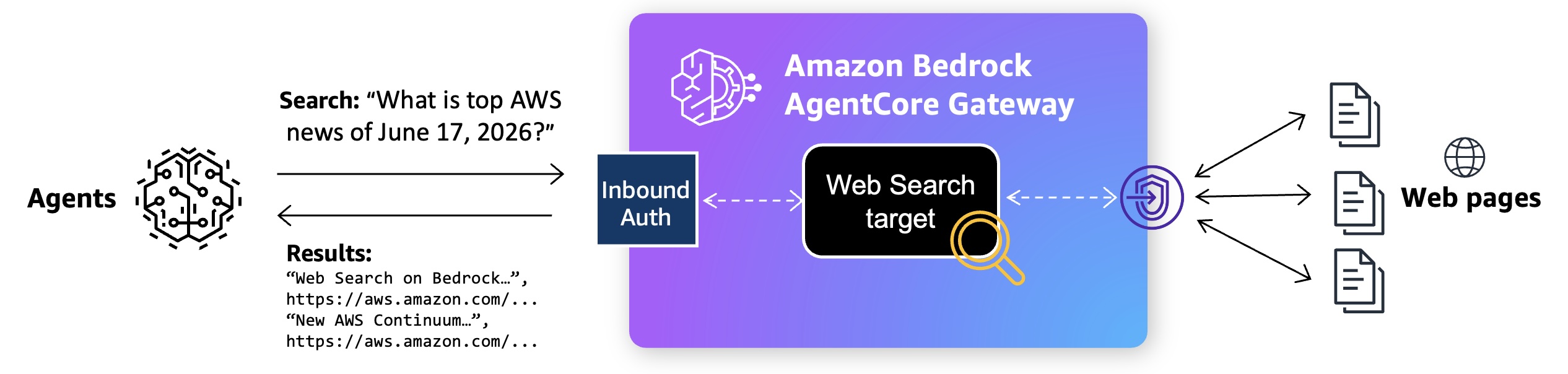
Unlike traditional RAG (Retrieval-Augmented Generation) implementations that often require complex manual plumbing, this tool is a fully managed, turnkey solution. Utilizing the Model Context Protocol (MCP), Bedrock AgentCore acts as a gateway that facilitates communication between the AI agent and the web. When a user poses a question that requires current context—such as "What are the latest regulatory changes for pharmaceutical exports?" or "What is the current status of this cyber threat?"—the agent automatically formulates a search, retrieves snippets, source URLs, and publication dates, and synthesizes that information into a coherent, grounded response.

The architectural genius of this release lies in its "zero egress" design. Historically, enterprise customers were hesitant to connect AI agents to the open web, fearing that their proprietary data or user prompts would be leaked to third-party search APIs. With this launch, the search process remains encapsulated within the secure AWS perimeter. The data retrieved is returned to the agent, but the metadata and query context are handled through a proprietary Amazon-indexed pipeline, ensuring that sensitive enterprise environments remain shielded from external exposure.
A Chronology of Innovation
The journey to this release is rooted in years of internal R&D at Amazon. The company’s search prowess, which powers its massive e-commerce and cloud ecosystems, served as the bedrock for this new functionality.
- The Foundation: Amazon has spent years refining agentic search across its proprietary platforms. Technologies utilized in Alexa+, the efficiency of Amazon Quick, and the advanced retrieval logic of Kiro have collectively informed the architecture of this new tool.
- The Beta Phase: Prior to today’s general availability, select enterprise partners—including innovators like Benchling and Gen Digital—were granted early access to the tool. During this period, AWS refined the integration, focusing on the stability of the MCP connector and the accuracy of the knowledge graph integration.
- The Launch: On June 18, 2026, AWS confirmed the general availability of the service in the US East (N. Virginia) region, marking the transition from a specialized testing phase to a production-ready enterprise utility.
Supporting Data and Technical Architecture
The efficacy of the Web Search tool is derived from a "multi-source grounding" approach. It does not simply scrape the internet in a vacuum; rather, it combines the vast, expansive Amazon web index with structured knowledge graph data. This is a critical distinction. While a standard search engine might return a high-ranking article that contains misinformation, the Amazon Knowledge Graph provides an additional layer of verification, cross-referencing facts against known, reliable data points.

For developers and architects, the integration process is streamlined:
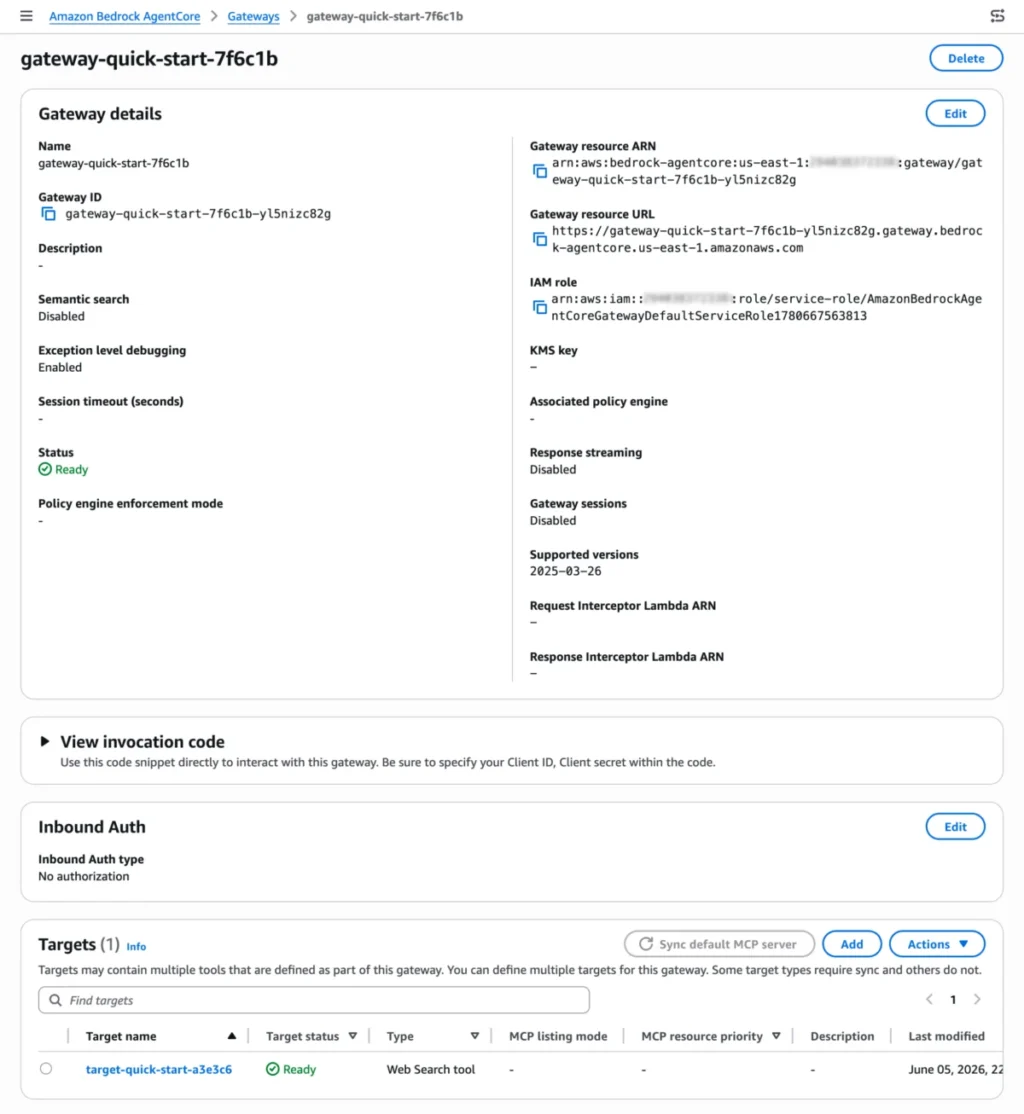
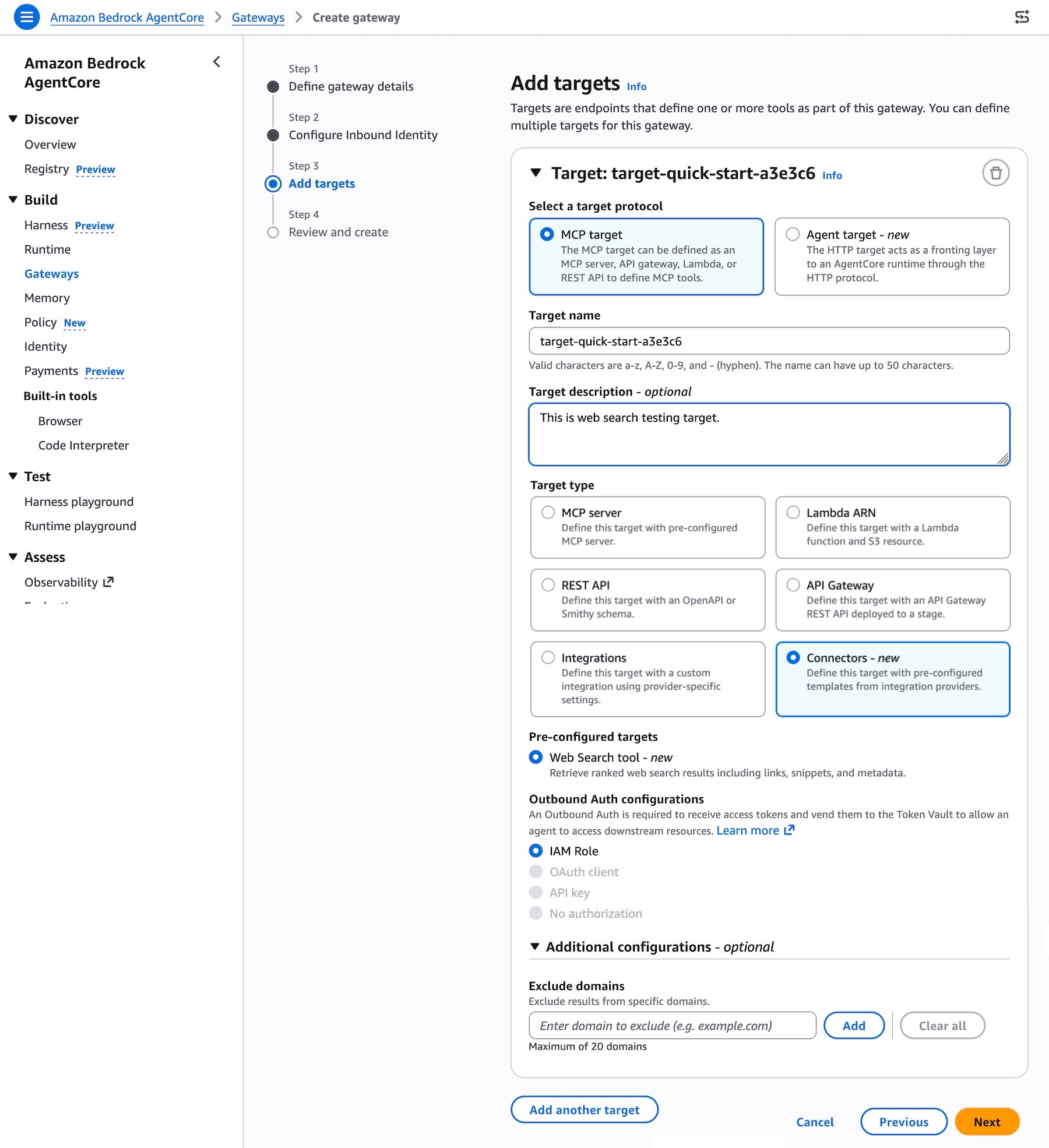
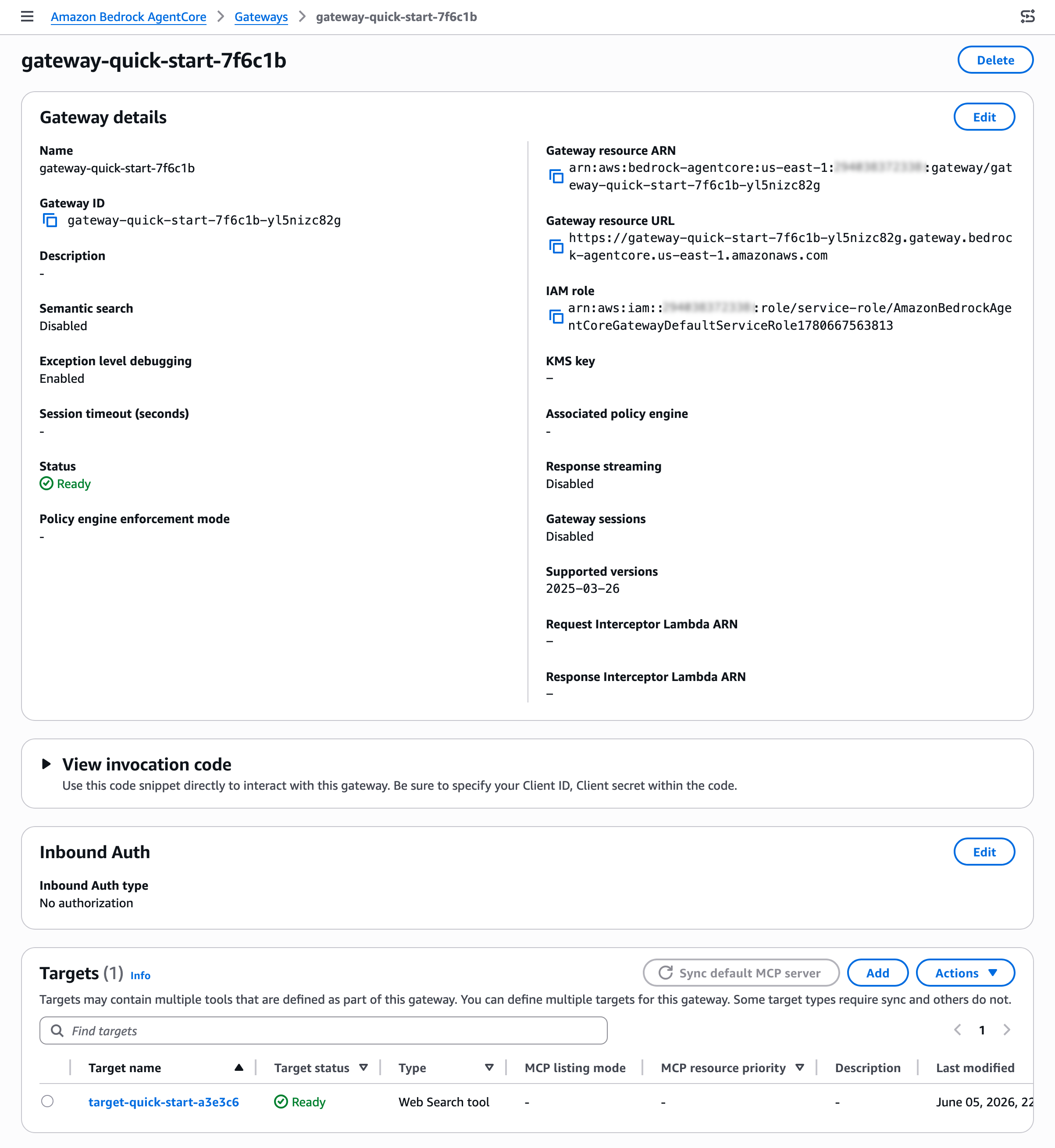
- Gateway Configuration: Within the Bedrock AgentCore console, users establish a Gateway using the MCP protocol.
- Connector Selection: By choosing the "Web Search tool" as a preconfigured target, developers can immediately link their agents to the web index.
- Deployment: Using the provided Python SDK, MCP Inspector, or standard API calls, teams can test, debug, and monitor how their agents handle external queries.
The pricing model is designed for accessibility, targeting a pay-as-you-go structure. At $7 per 1,000 queries, it allows startups and large-scale enterprises alike to scale their AI operations based on actual usage rather than expensive, fixed-cost infrastructure investments.
Official Perspectives: Industry Adoption
Early adopters of the tool have highlighted its impact on workflow efficiency and accuracy.
Benchling: Accelerating Scientific Discovery
For Benchling, a platform focused on life sciences, the integration of Web Search is a force multiplier. Nicholas Larus-Stone, Head of AI Agents at Benchling, noted that the tool allows scientists to bridge the gap between their private laboratory data and the vast body of public scientific literature. "The result is more complete science, and hypothesis generation done right," Larus-Stone stated. The primary benefit cited is the ability to maintain a strictly governed environment—a non-negotiable requirement for life sciences—while still benefiting from the intelligence provided by global research databases.
Gen Digital: Enhancing Cyber Safety
Gen Digital, the parent company of Norton, has utilized the tool to improve the relevance of their "Norton Revamp" product. Iskander Sanchez-Rola, Senior Director of AI & Innovation at Gen Digital, emphasized that the ability to ground AI responses in "what’s actually happening in the world today" is a game changer for online reputation management. By keeping the queries within the AWS-managed search index, Gen Digital can ensure that its users’ interactions remain secure and compliant with global privacy standards.
The Broader Implications for Enterprise AI
The release of Web Search on Bedrock AgentCore has profound implications for the future of the enterprise software landscape.
1. The Death of Stale Knowledge
For years, the Achilles’ heel of LLMs has been their "knowledge cutoff." Businesses have struggled to build reliable chatbots because the models were fundamentally incapable of knowing about events that occurred after their training finished. By providing a native, managed bridge to the live web, AWS is effectively rendering the "knowledge cutoff" issue obsolete for agentic workflows.
2. Democratizing Complex Engineering
Previously, building an agent that could browse the web and synthesize information required a full team of engineers to build, maintain, and secure a custom search pipeline. They had to manage API keys, deal with rate limiting, and implement complex security layers to prevent data leakage. By abstracting this into a "Web Search tool," AWS is enabling smaller teams to build sophisticated, production-grade agents in a fraction of the time.
3. Governance as a Competitive Advantage
In an era where data privacy is at the forefront of every boardroom conversation, the "zero data egress" promise is perhaps the most significant feature. By ensuring that user prompts and retrieved search results stay within the AWS ecosystem, Amazon is making a bold statement that enterprise AI does not need to sacrifice security for utility. This will likely push other cloud providers to accelerate their own internal search integration strategies.
4. Moving Toward Agentic Autonomy
This is a clear move toward the "agentic" future, where AI is not just a chatbot, but an active participant in workflows. An agent that can perform a search is an agent that can act on behalf of a user—conducting research, verifying facts, and then triggering subsequent actions, such as updating a CRM or drafting a report.
Conclusion: A New Standard
As AWS continues to expand the regional availability of the Web Search tool, it is clear that the company is setting a new standard for what it means to be an "enterprise-grade" AI agent. By combining the power of the web with the rigor of the AWS security model, Amazon is providing the tools necessary for businesses to move past the novelty of generative AI and into a phase of deep, functional, and highly reliable automation.
For developers ready to integrate these capabilities, the path forward is clear. Whether through the Bedrock AgentCore console or the robust suite of MCP tools, the barrier to building agents that are as informed as they are secure has never been lower. As we look toward the remainder of 2026, it is likely that this tool will become the industry benchmark for how we connect the world’s knowledge to the enterprise’s most critical AI systems.