Evolution of India’s Digital Payments: Decoding the New UPI Merchant Discount Rate (MDR) Framework Effective October 15
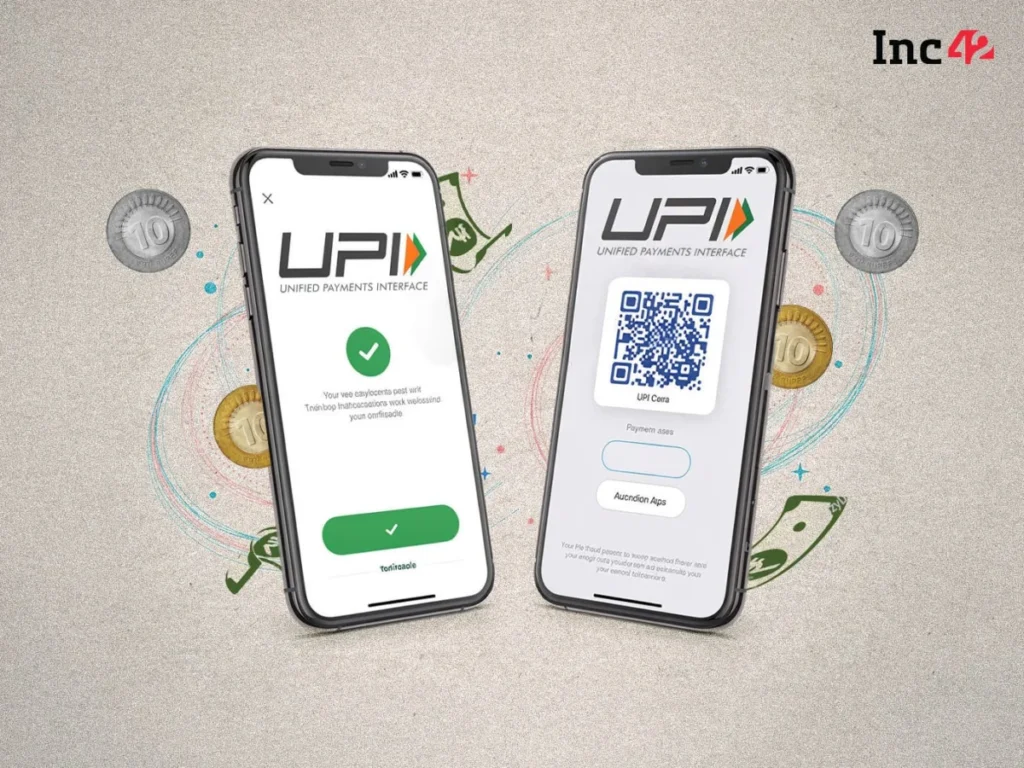
NEW DELHI — India’s ubiquitous Unified Payments Interface (UPI), a digital public infrastructure that has fundamentally transformed how the world’s most populous nation transacts, is approaching a landmark regulatory and structural turning point. Effective October 15, the National Payments Corporation of India (NPCI) and ecosystem stakeholders are rolling out a targeted Merchant Discount Rate (MDR) framework.
For years, India’s digital payments revolution has been built on the bedrock of a zero-MDR model—meaning transactions carried out through UPI incurred no fees for either the consumer or the merchant. While this zero-fee structure fueled unprecedented adoption, scaling UPI to process billions of transactions monthly has exerted immense financial pressure on banks, payment apps, and fintech infrastructure providers.
The upcoming transition introduces a calibrated, threshold-based commercial framework. Crucially, it does not make UPI a paid service for end consumers. Instead, it establishes a sustainable economic framework on the merchant side, protecting small vendors while balancing the financial books of the country’s vast digital payments pipeline.
1. Main Facts: Understanding the October 15 UPI MDR Overhaul
The introduction of the new MDR framework marks a fundamental shift away from an entirely subsidized ecosystem toward a self-sustaining financial model. Here is a comprehensive breakdown of what is changing, who is affected, and how the new charges will be structured:
- Effective Date: The new guidelines go into effect on October 15, 2026.
- Threshold for Charges: Regular Person-to-Merchant (P2M) transactions valued at ₹2,000 or below will continue to attract zero MDR.
- Standard Merchant Charges: For regular P2M transactions above ₹2,000, merchants will be charged a standard MDR of 0.4% of the transaction value.
- High-Value Caps: To protect commercial entities from disproportionate fee burdens on large-ticket sales, the MDR is capped at a maximum of ₹300 for transactions valued at ₹75,000 and above.
- Consumer Protection: UPI remains entirely free for everyday consumers. P2P (Person-to-Person) transfers—such as sending money to friends, family, or between a user’s own bank accounts—remain untouched and free of charge. Furthermore, UPI applications are strictly prohibited from levying platform fees, convenience charges, or monthly quotas on consumer-facing transactions.
- Small Merchant Safeguards: Small vendors operating under the Person-to-Person-Merchant (P2PM) framework—specifically those receiving up to ₹1 Lakh per month via UPI QR codes—are completely exempt from the 0.4% MDR. Their existing QR codes and soundboxes will continue to function without modification.
2. Chronology: The Journey from Total Subsidy to a Sustainable Model
To understand why this structural shift is happening now, it is necessary to examine the chronological trajectory of UPI since its inception in 2016 by the NPCI under the guidance of the Reserve Bank of India (RBI).
- 2016–2019 (Inception & Early Adoption): UPI was launched as an experimental interoperable platform. To drive rapid adoption in a cash-dominant economy, the government and regulators enforced a strict zero-MDR policy. Banks and Third-Party Application Providers (TPAPs) absorbed the operational costs out of pocket.
- 2020–2023 (Exponential Scale): Catalyzed by smartphone penetration and pandemic-era safety protocols, UPI transaction volumes skyrocketed. The system crossed the milestone of billions of transactions a month, eventually eclipsing traditional credit and debit card volumes combined. However, the financial strain on the backend infrastructure began to show, with banks and fintechs absorbing billions of rupees in maintenance costs without direct monetization avenues.
- 2024–2025 (Policy Discussions and Industry Pushback): Industry bodies, including the Payments Council of India (PCI), repeatedly flagged that maintaining a high-performance, secure payments switch entirely on zero-MDR was unsustainable. Discussions intensified between the RBI, NPCI, and ecosystem players to devise a threshold-based compromise that would protect financial inclusion while injecting commercial viability.
- August 2026 (Record Volumes): UPI processed an unprecedented 24.51 billion transactions valued at an astonishing ₹29.82 Lakh Crore in August 2026 alone. This monumental scale underscored the urgent need for robust infrastructure investments in cybersecurity, anti-fraud mechanisms, and server bandwidth.
- October 15, 2026 (The Implementation Milestone): The new targeted MDR framework officially takes effect, marking the end of the pure zero-MDR era for medium-to-large merchants and institutional payments.
3. Supporting Data: Sectoral Bifurcations and Revenue Splits
Not all commercial transactions are treated equally under the new framework. Recognizing the distinct nature of various industries, the NPCI has introduced specialized caps and alternative flat-rate structures for essential services and capital markets.
Sector-Specific MDR Caps
- Utilities and Essential Services: Sectors such as railways, telecom, insurance, fuel, and utility payments (electricity, water, piped natural gas) for transactions above ₹2,000 will not attract the standard 0.4% rate. Instead, they will be governed by a flat MDR of ₹5 for transactions exceeding ₹2,000. For instance, a ₹10,000 fuel or insurance premium payment will incur an MDR of just ₹5, rather than the ₹40 that a 0.4% calculation would dictate.
- Capital Markets and Investments: Transactions involving mutual funds, securities, stockbrokers, and dealers registered with the Securities and Exchange Board of India (SEBI) will attract a much lower MDR of 0.02%, capped at a maximum of ₹300. This ensures that investment-related inflows are not discouraged by high transaction costs.
- Credit-Linked UPI Transactions: Payments executed via RuPay credit cards linked to UPI or pre-sanctioned bank credit lines operate under separate credit-product guidelines and are exempt from this direct account-to-merchant debit framework.
How the MDR Revenue is Distributed
When a medium-to-large merchant pays the 0.4% MDR on an eligible transaction, the revenue is not pocketed by a single entity. Instead, it is systematically bifurcated across the transaction chain to compensate every stakeholder involved in securing and routing the payment:
- Total Merchant MDR: 0.40% (e.g., ₹0.40 on a ₹100 transaction paid to the acquiring bank).
- Issuer Bank Share (Interchange): 0.28% is paid by the acquiring bank to the customer’s issuing bank to cover the cost of managing the customer’s account and authorizing the debit.
- TPAP / PSP Share: 0.08% goes to the payment app provider (such as Google Pay, PhonePe, Paytm, etc.) to support customer-facing app infrastructure.
- Acquiring Bank Share: 0.04% is retained by the bank that manages the merchant’s UPI account and handles point-of-sale settlement.
4. Official Responses and Industry Perspectives
The introduction of the MDR framework has elicited broad support from industry leaders who view it as a necessary evolution for India’s fintech ecosystem, provided that inclusion remains a priority.
Vishwas Patel, Chairman of the Payments Council of India (PCI) and CEO of AvenuesAI, emphasized that the commercial layer is essential for long-term viability, but cautioned that accessibility must not be compromised.
"At the same time, sustainability must not cost financial inclusion. The continued zero-MDR protection for eligible small and micro merchants, along with support for expanding digital acceptance in Tier III and IV centers, will help preserve UPI’s accessibility," Patel stated.
According to industry estimates cited by framework architects, maintaining India’s massive UPI operations requires an annual expenditure of approximately ₹20,000 Crore. This capital goes directly into maintaining fault-tolerant server architectures, scaling bandwidth to handle peak festive traffic, deploying advanced real-time fraud detection systems, and upgrading banking cybersecurity infrastructure.
Furthermore, the framework outlines the creation of a dedicated small-merchant fund. Funded by portions of the structural revenue, this pool will be utilized in consultation with the RBI over the next three months to incentivize digital payment acceptance, subsidize merchant onboarding, and deploy infrastructure in underserved regions, including Tier III and Tier IV centers, the northeastern states, Jammu & Kashmir, and Ladakh.
5. Implications: What This Means for Merchants, Banks, and the Future of UPI
The implementation of the October 15 MDR framework carries profound implications for all stakeholders in India’s digital economy:
- For Consumers: The message is clear and unambiguous—UPI remains free. Consumers will not face platform fees, transaction quotas, or hidden surcharges when transferring money or paying merchants. The regulation explicitly prohibits merchants from passing down the 0.4% MDR fee to the customer at the point of sale.
- For Small Vendors: Small businesses taking in less than ₹1 Lakh per month via UPI are shielded by the P2PM exemption framework. They do not need to replace their existing QR codes, upgrade soundboxes, or worry about sudden fee deductions, ensuring that neighborhood Kirana stores and street vendors continue to embrace digital payments friction-free.
- For Medium and Large Merchants: Businesses with high turnover will need to account for the 0.4% MDR (capped at ₹300) as an operational cost of doing business digitally. However, industry experts point out that this cost is vastly outweighed by the benefits of faster checkout times, reduced cash-handling risks, and access to a wider consumer base.
- For Fintechs and Banks: The allocation of interchange fees provides a predictable, recurring revenue stream. This financial cushion will allow banks and third-party apps to invest more aggressively in cutting-edge fraud prevention, biometric authentication models, and customer service infrastructure, securing India’s position as a global leader in real-time payments.
As October 15 approaches, India’s digital payments ecosystem stands on the brink of maturity—proving that financial inclusion and long-term economic sustainability can coexist through thoughtful, tiered regulation.