NDA Unity Faces Litmus Test: Key Allies Navigate Amit Shah’s UCC Roadmap for 2029
By Political Correspondent
September 16, 2026
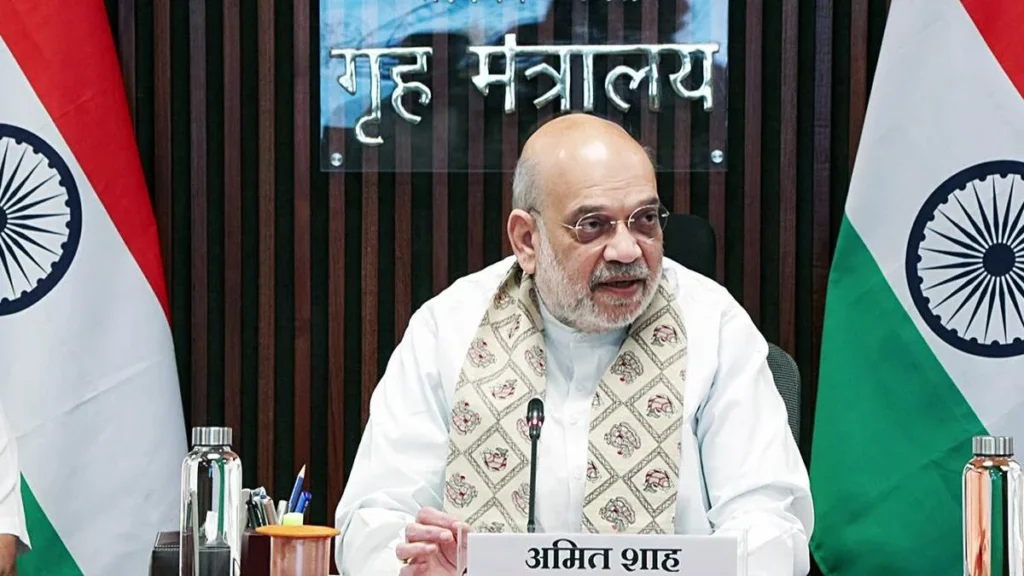
The political landscape of India is currently witnessing a high-stakes recalibration of the National Democratic Alliance (NDA) internal dynamics. Following Union Home Minister Amit Shah’s definitive assertion that a Uniform Civil Code (UCC) will be implemented across all NDA-governed states before 2029, the coalition is grappling with the complexities of balancing ideological consolidation with the diverse regional mandates of its constituents. As of Tuesday, September 15, 2026, the alliance presents a picture of cautious alignment, with some partners offering unconditional support while others adopt a strategic wait-and-see approach.
The Core Mandate: Shah’s 2029 Vision
The push for a Uniform Civil Code—a long-standing cornerstone of the Bharatiya Janata Party’s (BJP) core ideology—has been thrust into the center of national discourse. Home Minister Amit Shah’s recent declaration that the UCC would be enacted in all 22 NDA-ruled states by 2029 serves as a clear signal of the government’s legislative trajectory. For the BJP, the UCC is framed as a civilizing instrument meant to ensure "one country, one law," aimed at streamlining personal laws across religious lines to promote gender equality and national integration.
However, the implementation of such a policy requires a delicate consensus within the NDA, which relies on the legislative strength of key partners like the Telugu Desam Party (TDP), the Shiv Sena, and the Janata Dal (United) [JD(U)].
Chronology of the Current Stance
The recent discourse began in early September 2026, following heightened speculation regarding the BJP’s legislative agenda for the remainder of its term.

- September 14, 2026: Maharashtra Chief Minister Devendra Fadnavis signaled that the state was prepared to move forward pending a draft report. Concurrently, senior JD(U) leader Shyam Rajak voiced strong opposition, citing the party’s long-standing apprehension regarding implementation in Bihar.
- September 15, 2026: TDP leadership in Andhra Pradesh formally declared its alignment with the Home Minister, prioritizing the coalition’s integrity. Meanwhile, JD(U) Deputy CM Vijay Kumar Chaudhary moderated the party’s earlier dissent, suggesting a formal review process rather than outright rejection.
- Ongoing: Opposition leaders, including J&K Chief Minister Omar Abdullah and AIMIM chief Asaduddin Owaisi, have stepped up their criticism, framing the state-by-state approach as a "backdoor" legislative strategy.
Strategic Alignment: The TDP and Shiv Sena Perspective
The support of the TDP, with its 16 Lok Sabha MPs, and the Shiv Sena, with 13, is mathematically and politically vital for the Modi government. Both parties have positioned their support as a matter of coalition discipline and ideological synergy.
P. Srinivasa Rao, the TDP’s Andhra Pradesh president, clarified the party’s stance in Amaravati. "We are bound to go by the Union Home Minister’s statement," Rao noted, acknowledging that while the UCC faces public debate regarding religious freedom, the TDP views it as a mechanism to strengthen national unity and reduce gender-based legal disparities. This pivot by the TDP underscores a shift toward prioritizing national-level NDA stability over potential localized backlash.
In Maharashtra, the Shiv Sena (led by Eknath Shinde) has leaned heavily into its ideological roots. Invoking the legacy of the late Balasaheb Thackeray, Deputy Chief Minister Shinde described the UCC as the fulfillment of the party founder’s vision for "one country, one law." By framing the UCC through the lens of Hindutva and legal uniformity, the Shiv Sena has effectively shielded itself from internal dissent, positioning the policy as a natural extension of its political identity.
The JD(U) Conundrum: A Guarded Approach
Perhaps the most scrutinized response has come from the JD(U), the BJP’s primary partner in Bihar. With 12 Lok Sabha MPs, the JD(U) holds significant leverage. The party’s official position has been one of tactical ambiguity.
Deputy Chief Minister Vijay Kumar Chaudhary’s press conference served as a diplomatic buffer to the earlier, more combative statements made by party colleagues. "We will not oppose it for no reason," Chaudhary stated, emphasizing that the party requires the details of the legislation before making a final commitment. This approach allows the JD(U) to maintain its secular image in Bihar while avoiding a direct confrontation with the BJP high command. The party’s national working president, Sanjay Kumar Jha, is expected to hold direct consultations with Amit Shah, signaling that the JD(U) is seeking concessions or modifications rather than a blanket veto.

Opposition Critique and the "Backdoor" Narrative
The opposition has been quick to interpret the BJP’s state-centric strategy as a sign of weakness in Parliament. Jammu and Kashmir Chief Minister Omar Abdullah, in a sharp critique, argued that if the government truly possessed the mandate for a UCC, it would bring the bill to the floor of the Lok Sabha rather than relying on state legislatures.
"They are bringing it through the backdoor," Abdullah remarked. He suggested that the lack of internal consensus within the NDA—highlighted by the conflicting statements from JD(U) leaders—is the primary reason the BJP is avoiding a central parliamentary vote.
Similarly, AIMIM president Asaduddin Owaisi has issued a challenge to the NDA allies. Addressing a gathering in Bhopal, Owaisi accused the BJP and RSS of using the UCC to target India’s 180 million Muslims and erode constitutional protections under Articles 25, 26, and 29. He urged the TDP and JD(U) to reconcile their stated differences with the BJP’s ideology by actively opposing the move, suggesting that continued support for the policy amounts to an endorsement of the BJP’s core agenda.
Implications for the NDA and the 2029 Horizon
The push for the Uniform Civil Code represents a definitive test for the NDA’s federalist structure. By moving the policy through state governments, the BJP is attempting to bypass potential legislative gridlock in the Rajya Sabha while simultaneously setting a regional precedent that could create a "domino effect" across the country.
1. Legislative Impact
If successfully implemented in states like Maharashtra, Andhra Pradesh, and potentially others, the UCC will become a de facto national reality, regardless of a central act of Parliament. This would force the judiciary to grapple with conflicting personal laws and potentially lead to a landmark Supreme Court intervention that could redefine the scope of secularism in Indian jurisprudence.

2. Social and Cultural Friction
The assertion by the CPI(M) that the UCC is a diversionary tactic to distract from youth unemployment and economic stagnation suggests that the battleground will not be limited to legal chambers. Protests, such as those recently seen at Jantar Mantar, indicate a restive younger generation that is increasingly skeptical of identity-based politics.
3. The Future of Coalition Governance
The "guarded" response of the JD(U) and the "bound" compliance of the TDP suggest two distinct models of coalition management. The TDP has chosen the path of total integration, hoping to secure developmental benefits for Andhra Pradesh in exchange for ideological alignment. The JD(U), conversely, is utilizing a "bargaining" model, attempting to retain its distinct regional identity while remaining within the NDA tent.
Conclusion
As the 2029 deadline approaches, the Uniform Civil Code is set to become the defining legislative legacy of the current government. Whether it acts as a unifying force for the nation or a source of enduring political friction remains to be seen. For the NDA, the challenge lies in maintaining a balance between the BJP’s monolithic vision and the pluralistic needs of its regional partners. The coming months will likely see intense back-channel negotiations as the government moves to draft the specific provisions of the UCC, ensuring that the "one country, one law" slogan finds a consensus that is as durable as it is transformative.